


SEO Title: 10 Things to Check Before Buying an Automotive Thermal Night Vision System
- How Automotive Thermal Night Vision Works
- 1. Check the Useful Detection Range, Not Just the Maximum Number
- 2. Evaluate Image Resolution, Frame Rate, and Display Clarity
- 3. Confirm the Field of View Fits Your Driving Environment
- 4. Examine Pedestrian, Animal, and Vehicle Recognition
- 5. Test Whether the Alerts Are Timely Without Becoming Distracting
- 6. Verify Performance in Your Most Common Poor-Visibility Conditions
- 7. Inspect Camera Durability and Weather Protection
- 8. Review Installation, Calibration, and Vehicle Compatibility
- 9. Check Recording, Storage, Privacy, and Software Support
- 10. Calculate the Complete Ownership Cost and Warranty Coverage
- A Practical Decision Framework
- Family and Suburban Driving
- Rural Roads
- Highway and Long-Distance Driving
- Frequent Fog, Rain, or Snow
- Commercial or Multi-Vehicle Use
- Red Flags to Avoid When Comparing Systems
- Safety Boundaries Every Buyer Should Understand
- FAQ
- Is thermal night vision better than a regular night vision camera?
- Can automotive thermal cameras see through fog or rain?
- What detection range should a car thermal system have?
- Is professional installation necessary?
- Can thermal night vision replace headlights?
- Does a thermal night vision system work during the day?
- Conclusion
Meta Description: Learn what to check before buying an automotive thermal night vision system, including detection range, image quality, alerts, installation, weather resistance, and real-world limitations.
Driving after dark can make pedestrians, animals, disabled vehicles, and roadside obstacles harder to identify in time. A thermal night vision system can support earlier hazard awareness, but products differ significantly in imaging quality, detection logic, installation requirements, and usability. If you are researching what to look for in automotive thermal night vision system options, focus on how reliably the equipment helps you interpret the road, not on an impressive-looking specification list alone.
This buying guide covers ten practical checks, explains the trade-offs behind them, and highlights the limitations every driver should understand before adding thermal imaging to a vehicle.
How Automotive Thermal Night Vision Works
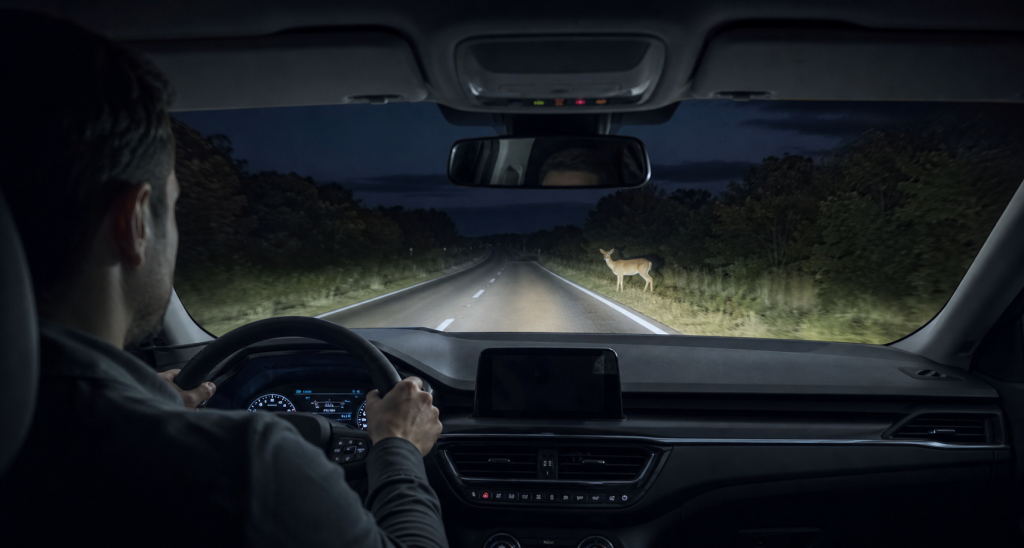
An automotive thermal imaging system detects heat energy emitted by objects and converts that information into a visible image. People, animals, engines, tires, and other relatively warm objects may stand out against cooler surroundings, even when conventional lighting is limited.
That makes thermal imaging different from a standard dashboard camera or low-light camera. Conventional cameras depend on visible light and may use image sensors, infrared illumination, or digital processing to brighten a scene. Thermal cameras visualize temperature differences rather than simply amplifying available light.
More EV News
This distinction can be valuable on an unlit rural road, where a pedestrian in dark clothing or an animal near the shoulder may blend into the background through the windshield. A thermal display may make the heat signature more noticeable. However, it does not reveal every road detail equally well. Lane markings, road signs, potholes, cold debris, and traffic-signal colors may be clearer through normal vision or a conventional camera.
Thermal night vision should therefore be treated as a supplementary driver-assistance technology, not an alternative way to drive without properly functioning headlights or direct observation.
1. Check the Useful Detection Range, Not Just the Maximum Number
Detection range is often the first specification buyers notice, but a headline distance does not tell the whole story. The more useful question is what the system can detect, recognize, and clearly present at various distances.
These are different capabilities:
- Detection means the sensor can distinguish a potential heat source from the background.
- Recognition means the system or driver can identify it as a person, animal, vehicle, or another type of object.
- Actionable visibility means the object is displayed clearly and early enough to support an appropriate response.
A system might detect a warm object far ahead without providing enough detail to classify it reliably. Ask whether the stated range applies to pedestrians, animals, or vehicles and under what conditions it was established. Also consider whether that range is relevant to your normal speed and environment.
Longer reach can be especially useful on open highways and rural roads. In dense city traffic, clarity at shorter distances, accurate object classification, and controlled alert behavior may matter more.
No detection range guarantees sufficient stopping distance. Speed, road surface, tire condition, vehicle load, visibility, reaction time, and braking performance all affect whether a driver can respond safely.
2. Evaluate Image Resolution, Frame Rate, and Display Clarity
A thermal image must be understandable at a glance. Resolution affects the amount of detail captured, while frame rate determines how smoothly movement is represented.
Low resolution can make distant pedestrians or small animals appear as indistinct clusters of pixels. A low frame rate may cause moving objects to look jerky or delayed, particularly when the vehicle is traveling quickly. Neither specification should be judged in isolation: image processing, lens quality, field of view, display scaling, and contrast also influence the result.
When evaluating image examples or demonstrations, look for:
- Clear separation between warm objects and the background
- Stable images while vehicles and pedestrians are moving
- Readable detail at realistic road distances
- Minimal lag between real movement and the displayed image
- Contrast modes that remain usable without hiding important details
- A display that is legible without becoming excessively bright
Display placement also matters. A large screen is not automatically safer if it obstructs the windshield or requires the driver to look far away from the road. The image should be large enough to interpret quickly but positioned to limit distraction.
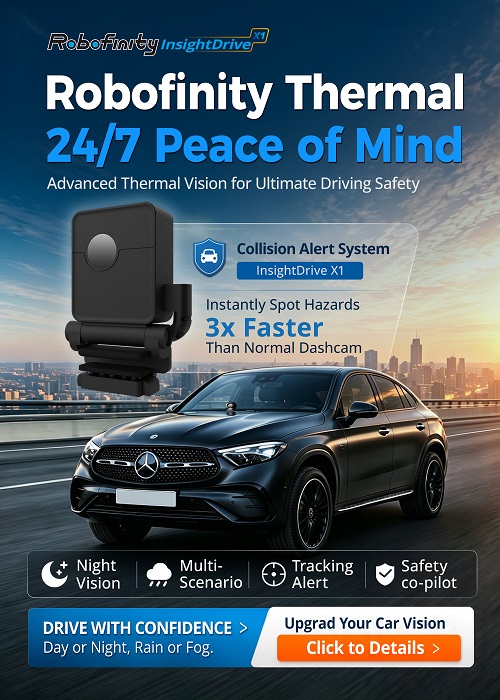
For context, Robofinity InsightDrive is an automotive thermal night vision system that combines AI-powered thermal imaging with a 25 Hz frame rate and recognition of pedestrians, animals, and vehicles. Those features illustrate the type of combined hardware and detection capability buyers can examine, but they still need to be assessed alongside installation quality, alert usability, and the driver’s actual road conditions.
3. Confirm the Field of View Fits Your Driving Environment
Field of view describes how much of the scene the camera captures. A wide view provides more coverage toward the sides of the road, while a narrower view generally places more image detail on the area directly ahead.
Neither is universally better.
A wider field of view may be helpful on suburban streets, winding rural roads, and areas where pedestrians or animals can enter from the shoulder. It can provide useful peripheral context, but distant objects may appear smaller on the display.
A narrower field can make the forward corridor easier to inspect at longer distances, which may suit open-road or highway driving. The trade-off is reduced side coverage.
Consider your routine routes rather than selecting a lens based on one impressive demonstration. A driver traveling through wooded back roads has different needs from someone navigating crowded European city streets. If field-of-view information is unclear, ask for representative footage from the installed camera position rather than relying on isolated product images.
4. Examine Pedestrian, Animal, and Vehicle Recognition
A basic thermal camera displays heat signatures. More advanced systems may analyze the image and classify likely pedestrians, animals, or vehicles. This can reduce the mental effort required to interpret an unfamiliar thermal scene, especially when an object is distant or partially obscured.
Recognition is useful only when the classifications are dependable and easy to understand. Before buying, investigate:
- Which object categories the system recognizes
- Whether classification works while both the vehicle and object are moving
- How detected hazards are marked on the screen
- Whether recognition covers the full displayed area
- Whether detection sensitivity can be adjusted
- How the system handles multiple objects simultaneously
- Whether software updates are available and how they are installed
No recognition system is infallible. Warm exhaust components, machinery, reflections, roadside objects, and overlapping heat signatures can complicate interpretation. Conversely, a person partially hidden behind an object or insulated by heavy clothing may not appear as expected.
Treat classification labels as prompts to inspect the road, not as definitive judgments about whether it is safe to proceed.
5. Test Whether the Alerts Are Timely Without Becoming Distracting
Real-time alerts can draw attention to a potential hazard that the driver has not yet noticed. Depending on the system, warnings may be visual, audible, or both.
The challenge is balancing sensitivity with usefulness. Alerts that arrive too late provide little practical value. Alerts that activate constantly can become distracting and may eventually be ignored. This is particularly important in urban traffic, where pedestrians, cyclists, parked vehicles, and other heat sources are frequently present.
Look for controls that allow sensible adjustment of alert volume, hazard categories, detection zones, or sensitivity. Confirm that alerts are distinct but not startling. The system should communicate where the hazard is located and why it has been highlighted without requiring prolonged attention to the display.
During a demonstration, pay attention to ordinary scenarios rather than only staged hazards. Observe behavior around parked vehicles, roadside pedestrians, traffic queues, overpasses, warm road surfaces, and oncoming traffic. A useful warning system should help prioritize relevant information rather than simply identify every thermal object.
6. Verify Performance in Your Most Common Poor-Visibility Conditions
Thermal imaging can support road awareness in darkness and certain visually difficult conditions, but buyers should avoid interpreting “all-weather” language too broadly. Fog, rain, snow, road spray, dirt, ice, and temperature changes can all affect performance.
Thermal energy may remain detectable when visible-light contrast is poor, which can make warm people or animals easier to distinguish in some situations. However, water droplets and atmospheric moisture can reduce thermal contrast or obscure the sensor’s view. Heavy precipitation may still limit how far ahead the system can provide useful information.
Ask how the camera performs in:
- Total darkness on unlit roads
- Light and heavy rain
- Fog of varying density
- Falling or accumulated snow
- Road spray from trucks
- Headlight glare and oncoming traffic
- Hot summer conditions with warm backgrounds
- Cold weather immediately after startup
Thermal contrast can change with the environment. On a cool night, a person may stand out strongly against the background. On a hot day or warm evening, the difference between a heat source and its surroundings may be less pronounced.
Use thermal imaging as another source of information in poor visibility, not as permission to maintain normal speed when conditions require slowing down.
7. Inspect Camera Durability and Weather Protection
The camera usually sits outside the passenger compartment, where it faces water, dust, vibration, road salt, insects, stones, and repeated temperature changes. Physical durability is therefore central to long-term ownership.
Check the documented environmental protection rating and understand what it covers. An ingress-protection rating can indicate resistance to dust and water under specified test conditions, but it does not automatically prove resistance to every pressure-washing method, chemical cleaner, impact, or winter road treatment.
Also examine:
- Operating and storage temperature ranges
- Housing and connector quality
- Cable protection near hot or moving components
- Resistance to vibration
- Availability of replacement mounting hardware
- Recommended cleaning procedures
- Whether the lens has a practical shield or accessible surface
Mounting location affects both durability and image quality. A low position may collect more dirt and spray, while a position behind certain types of glass or plastic can interfere with thermal sensing. Installation instructions should specify an appropriate unobstructed location.
Regular inspection is part of ownership. A sound system can still produce a poor image when its lens is covered by mud, snow, condensation, wax, or road grime.
8. Review Installation, Calibration, and Vehicle Compatibility
Thermal night vision is not always a simple plug-in accessory. Installation may involve mounting an external camera, routing wiring, supplying stable power, positioning a display, and aligning the camera with the vehicle’s forward path.
Before purchasing, confirm compatibility with your specific vehicle rather than only its broad category. Important questions include:
- Is there an unobstructed mounting position?
- Will the camera interfere with active grille shutters, parking sensors, radar units, or airflow?
- Can cables be routed without exposure to sharp edges, heat, or moving parts?
- Does the system require permanent drilling?
- What voltage and electrical connection does it use?
- Will it shut down correctly to avoid draining the battery?
- Is calibration required after installation or suspension changes?
- Can the display be mounted without blocking airbags or the driver’s view?
Professional installation may be worthwhile when the system connects to vehicle wiring or when front-end trim must be removed. Modern vehicles can have sensitive electrical networks and tightly packaged sensor arrays. Incorrect routing or power connections may cause reliability problems even when the thermal hardware itself is sound.
Drivers in both the United States and Europe should also verify applicable local rules concerning windshield obstruction, dashboard-mounted screens, electrical modifications, and when a display may be used. Requirements vary by jurisdiction and can change.
9. Check Recording, Storage, Privacy, and Software Support
Some thermal systems provide real-time viewing only, while others can record video. Recording may be useful for reviewing an incident or understanding how a hazard appeared, but it introduces additional ownership considerations.
Confirm what is recorded, where it is stored, and whether older footage is overwritten automatically. Check supported memory-card capacity, file format, clip length, and how easily footage can be exported. A system that records continuously should also have a practical method of protecting important clips from deletion.
Software support deserves equal attention. Ask whether firmware can be updated, whether updates require an app or removable storage, and whether core functions depend on a cloud service or account. If a companion app is required, review the permissions it requests and whether the product remains functional without a continuous data connection.
Privacy and recording laws vary by location, especially where footage captures identifiable people or crosses national borders. Buyers should understand local obligations before routinely storing or sharing road video.
Long-term support can be difficult to predict, but clear update procedures, accessible documentation, replaceable storage, and standard electrical connections generally make ownership easier.
10. Calculate the Complete Ownership Cost and Warranty Coverage
The advertised price may not reflect the full cost of putting the system into dependable service. Budget for professional installation if needed, mounting equipment, wiring accessories, storage media, replacement components, and any future recalibration.
Warranty terms should be reviewed carefully. Check which components are covered, how long the coverage lasts, whether labor and removal costs are included, and whether professional installation is required to preserve coverage. Do not assume the camera, display, cables, and accessories all have identical terms.
Also consider repairability. A modular system may allow a damaged camera or display to be replaced separately. A fully integrated design may require replacing a larger assembly. Ask whether replacement cables, brackets, and connectors can be purchased independently.
Value should be judged against actual usage. A driver who regularly travels before dawn on rural roads may benefit more from thermal hazard detection than someone who drives almost exclusively in well-lit city centers. The best purchase is the system that addresses recurring conditions without adding excessive distraction or maintenance burden.
A Practical Decision Framework
Specifications become easier to compare when they are tied to a defined use case. Before narrowing your shortlist, write down three things: where you drive, what hazards concern you, and how the system will fit into your normal scanning routine.
Family and Suburban Driving
Prioritize a wide and clear field of view, usable pedestrian recognition, restrained alerts, and a display position that does not obstruct the windshield. Consider how the system behaves around busy sidewalks, schools, driveways, and parked vehicles, where too many warnings could reduce usefulness.
Rural Roads
Look closely at animal and pedestrian recognition, meaningful forward range, side-of-road coverage, camera resistance to mud and weather, and image quality in complete darkness. Drivers should still reduce speed where wildlife may enter the road suddenly; detection cannot guarantee enough time or distance to stop.
Highway and Long-Distance Driving
Image stability, low display latency, longer-range detection, fatigue-resistant screen brightness, and reliable mounting become more important. The system should not demand continuous viewing. It should complement normal scanning through the windshield and mirrors.
Frequent Fog, Rain, or Snow
Review representative footage in the conditions you actually encounter and ask how the lens remains clear. Do not rely on a generic claim that thermal imaging “sees through” bad weather. Dense fog, heavy precipitation, and spray can limit any forward-looking technology.
Commercial or Multi-Vehicle Use
Consider installation repeatability, driver training, update management, replacement-part access, and recording policies. A fleet installation also needs consistent procedures so drivers understand what alerts mean and do not treat the display as a substitute for direct observation.
Red Flags to Avoid When Comparing Systems
A product deserves extra scrutiny when its marketing promises more than the available documentation supports. Warning signs include:
- A long detection range with no explanation of the target or conditions
- Sample images with no indication of distance, speed, or weather
- Claims that imply the system can replace headlights or attentive driving
- No published installation guidance
- No clear camera protection or operating-temperature information
- Recognition claims without visible examples of classification behavior
- Alerts that cannot be adjusted or silenced appropriately
- Unclear update, warranty, or replacement-part procedures
- A display mount that obstructs the road or creates a long eyes-off-road glance
- No distinction between detecting an object and identifying a hazard
Strong documentation is not merely a convenience. It helps establish whether the product’s capabilities, limitations, and maintenance needs are understood well enough for responsible use.
Safety Boundaries Every Buyer Should Understand
Thermal night vision can provide information that is difficult to obtain from headlights alone, but it remains an assistance layer. The driver is responsible for vehicle control and must keep looking through the windshield, checking mirrors, observing traffic signs, and maintaining an appropriate following distance.
Thermal systems may miss or poorly represent objects that lack a useful temperature contrast. They may not show road texture, lane boundaries, signals, reflective signs, ice, or cold obstacles as clearly as visible-light systems. Detection can also be affected by blockage, weather, alignment, contamination, and software limitations.
A warning should prompt controlled attention to the road, not an abrupt maneuver based only on the display. Drivers should brake or steer according to the full traffic situation and applicable laws. Headlights, tires, brakes, windshield wipers, defogging systems, and clean glass remain fundamental nighttime safety equipment.
FAQ
Is thermal night vision better than a regular night vision camera?
Thermal imaging is often better at highlighting warm people, animals, and vehicles without relying on visible light. A conventional low-light camera may show lane markings, signs, buildings, and general road detail more naturally. The technologies serve different purposes, so neither is universally better.
Can automotive thermal cameras see through fog or rain?
They may retain useful contrast in some fog, rain, glare, or darkness, but they do not see through every weather condition without degradation. Dense fog, heavy rain, snow, spray, and contamination on the lens can reduce range and image clarity.
What detection range should a car thermal system have?
There is no single ideal range. It should provide useful recognition at distances appropriate to your driving speed and environment. Compare pedestrian, animal, and vehicle recognition distances rather than relying only on a maximum detection figure.
Is professional installation necessary?
It depends on the vehicle and system. Professional installation is sensible when exterior trim must be removed, wiring connects to the vehicle’s electrical system, camera alignment is critical, or the installation could affect existing sensors. Always follow the manufacturer’s compatibility and mounting instructions.
Can thermal night vision replace headlights?
No. Headlights illuminate the roadway, signs, lane markings, and objects that may not have a distinct heat signature. Thermal imaging supplements headlights and direct observation; it does not replace them.
Does a thermal night vision system work during the day?
Thermal cameras can operate in daylight because they detect heat rather than visible light. Their practical effectiveness depends on temperature contrast, and warm daytime backgrounds may make some objects less distinct than they appear on a cool night.
Conclusion
Choosing an automotive thermal night vision system requires more than finding the longest advertised range or largest screen. Start with useful object recognition, image clarity, frame rate, field of view, and alert behavior. Then examine weather performance, camera durability, installation requirements, software support, privacy implications, and the complete ownership cost.
The strongest option is one that fits your regular routes and presents relevant information early without pulling attention away from the road. Compare documented capabilities, request realistic demonstrations where available, and plan the installation carefully. Used within clear safety boundaries, thermal imaging can be a practical road-awareness upgrade for drivers who frequently travel at night or in poor-visibility conditions.