


2026 Toyota Camry Prices are already on many shoppers’ radar because the Camry has long been a practical, efficient midsize sedan with a strong reputation for day-to-day usability. If you’re asking how much a 2026 Toyota Camry will cost, the honest answer is that pricing depends on which trim you choose, whether you get hybrid power, and what options (like comfort or driver-assist features) you add. While Toyota has not finalized every market detail for the 2026 model year, the expected pricing structure is likely to stay close to the current Camry lineup, with the biggest cost shifts coming from higher trims, available all-wheel drive, and more feature-rich packages.
- 2026 Toyota Camry Prices: What to Expect at Launch
- 2026 Camry LE: The Affordable Entry Point
- 2026 Camry SE: Sportier Style for a Modest Increase
- 2026 Camry XLE: Comfort and Refinement
- 2026 Camry XSE: Sport Meets Premium
- Top Trim and Package Pricing
- Factors That Affect the Final Cost
- 1) Drivetrain and efficiency
- 2) Options and accessories
- 3) Market conditions and incentives
- 4) The “out-the-door” total
- Is the 2026 Camry Worth the Price?
- Final Thoughts
Below is a clear, trim-by-trim breakdown of what you can reasonably expect to pay, plus the key factors that can change the final out-the-door price. Use this guide to compare what matters most—budget, comfort, and long-term value—before you talk to a dealer.
- 2026 Toyota Camry Prices: What to Expect at Launch
- 2026 Camry LE: The Affordable Entry Point
- 2026 Camry SE: Sportier Style for a Modest Increase
- 2026 Camry XLE: Comfort and Refinement
- 2026 Camry XSE: Sport Meets Premium
- Top Trim and Package Pricing
- Factors That Affect the Final Cost
- Is the 2026 Camry Worth the Price?
2026 Toyota Camry Prices: What to Expect at Launch
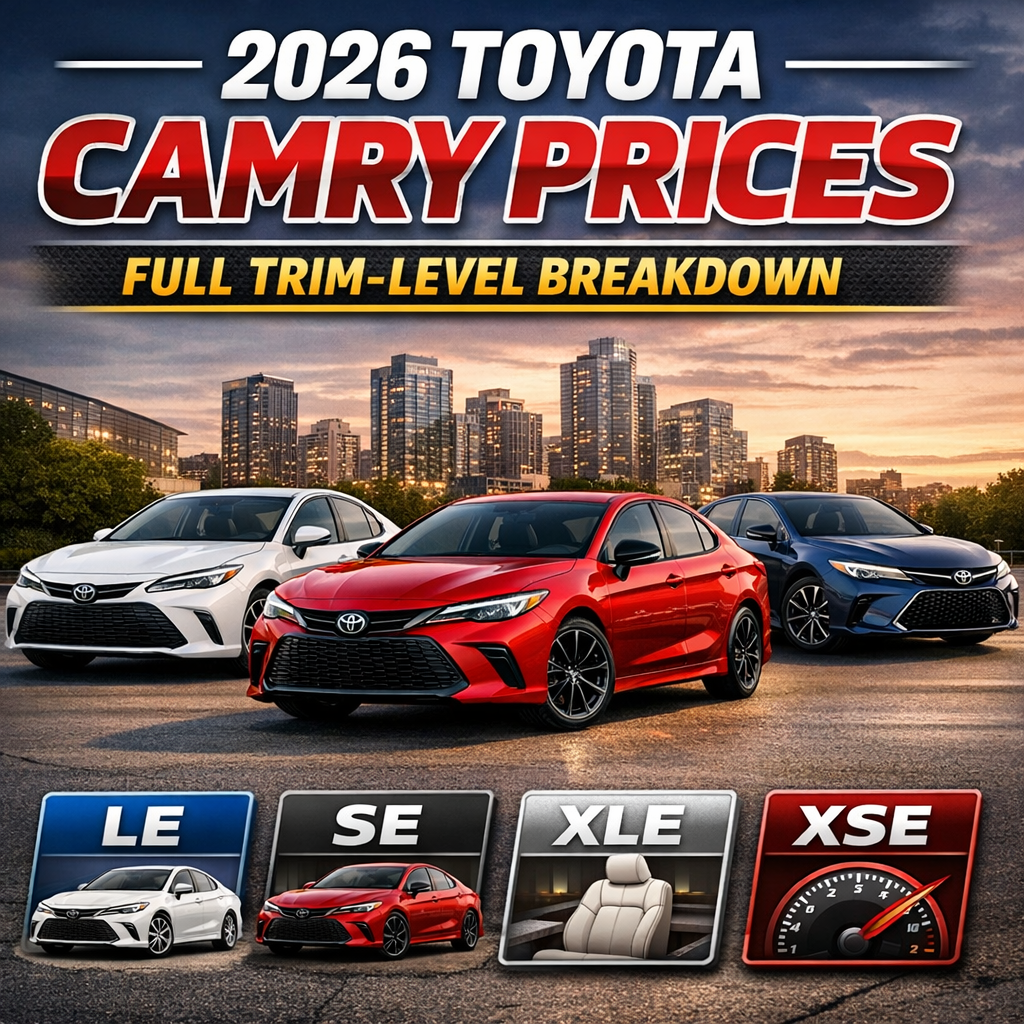
Before looking at the individual trims, it helps to understand the “why” behind the numbers. The 2026 Camry is expected to remain hybrid-focused, and that typically shapes pricing in two ways: first, hybrid hardware and software can influence base MSRP; second, higher trims often bundle more convenience and safety tech as the range climbs.
As you evaluate 2026 Toyota Camry prices, keep in mind that official configurations, standard equipment, and packages can vary by model year and region. For the most current updates as production begins, it’s best to watch Toyota’s official Camry information page: Toyota Camry model information.
Expected price range, in plain terms
In most recent Camry lineups, the model has a wide price ladder. That gives buyers options depending on whether they prioritize the lowest entry price, extra styling, or a more comfortable interior experience. For 2026, the practical expectation is a starting point in the low-to-mid $30,000 range when you account for typical destination and configuration differences—while well-equipped higher trims could push beyond the $40,000 mark.
Here’s a projected trim-level breakdown based on common Camry positioning and typical market pricing patterns:
- LE: estimated starting around $29,000 to $31,000
- SE: estimated starting around $31,000 to $33,000
- XLE: estimated starting around $34,000 to $36,000
- XSE: estimated starting around $35,000 to $37,000
- Limited or top hybrid trim: estimated starting around $38,000 to $41,000
These are estimates rather than confirmed MSRP figures. The point is to help you budget realistically when comparing trims. Even if the exact numbers shift when Toyota finalizes details, the relative differences between trims usually remain consistent.
2026 Camry LE: The Affordable Entry Point
The LE trim is typically the easiest way to get into a new Camry while keeping costs controlled. For 2026, the LE is expected to appeal to shoppers who want dependable transportation, strong fuel efficiency, and modern technology without paying for higher-end interior materials or more dramatic exterior packages.
What you get at the LE level
Even at the base trim, the LE generally focuses on the essentials most buyers want from a current-generation Camry:
- Toyota Safety Sense driver-assist features
- A touchscreen infotainment system
- Wireless smartphone integration
- LED lighting
- Comfortable cloth seating
- Strong fuel economy potential for everyday driving
When evaluating 2026 Toyota Camry prices by trim, the LE is the most straightforward choice for value. It tends to minimize “extras” and focuses on the combination of efficiency and everyday comfort that most drivers need.
Who should consider the LE
- Commuters who care about predictable fuel costs.
- Families on a budget who want a safe, practical sedan.
- Buyers who plan to keep it long-term and prefer not to pay for premium appearance features.
How the LE price can change
Even within the same trim, the final cost can move due to destination charges, regional packaging, and dealer-installed accessories. If you’re trying to estimate your out-the-door budget, ask your dealer about any port-installed options and confirm whether the vehicle is equipped for your specific driving needs (like winter tires or floor liners, if relevant).
2026 Camry SE: Sportier Style for a Modest Increase
The SE trim is typically where the Camry starts to feel more “expressive.” Compared to the LE, the SE usually adds sportier exterior design elements and a more engaging interior look, while keeping the overall price jump reasonable.
Why the SE may be the sweet spot
Buyers often choose the SE because it delivers style upgrades without forcing them into the higher price tiers. Depending on the exact 2026 configuration, you can expect a combination of:
- Unique exterior styling
- Sport seats and interior trim accents
- Larger alloy wheels
- Drive-mode enhancements or paddle shifters in certain setups
- Improved cabin details over the base model
Many shoppers find that this is where 2026 Toyota Camry prices start to feel like better “all-around” spending. You’re paying for features that you’ll see and use every day—especially the steering feel, cabin appearance, and overall presence of the car.
Tips for choosing the right SE package
If you’re comparing SE options, focus on the packages that align with your real priorities:
- Comfort: seating upgrades, climate enhancements, and improved visibility features.
- Tech: larger displays, premium audio, and upgraded connectivity.
- Safety/driver assist: make sure you understand what’s included versus optional.
If you’re also curious how ownership costs can compare across brands over time, you may want to read: Car Brand Reliability: What Car Brand Has the Least Problems?
2026 Camry XLE: Comfort and Refinement
The XLE trim is expected to shift the Camry’s focus toward comfort, convenience, and a more refined cabin experience. In other words, this is the trim level that aims to feel less like a basic commuter and more like a comfortable daily driver you’ll enjoy taking on longer trips.
Features that drive the higher price
Compared with the SE, the XLE generally adds comfort-oriented equipment such as:
- Softer interior materials
- More advanced infotainment or instrument display options
- Power-adjustable seating
- Heated front seats
- Enhanced climate control
- Additional driver assistance features
- Optional premium audio
For shoppers who spend a lot of time behind the wheel, this comfort layer often justifies the cost difference. When comparing 2026 Toyota Camry prices with other trims, the XLE stands out as the “refinement” step that can make everyday driving feel quieter and more premium.
Who should consider the XLE
- Drivers who want maximum comfort without going fully “top trim.”
- People with commute + road trip routines who value a smoother experience.
- Families who appreciate upgraded seating and convenience features.
2026 Camry XSE: Sport Meets Premium
The XSE is often considered the best combination of styling and everyday usability. It typically blends the more dramatic exterior look of the SE with additional upscale touches found in the higher trims. That means the XSE can feel more personal and “finished” than other mid-level versions.
Why the XSE costs more
Depending on how Toyota configures 2026 options, the XSE may include:
- Distinctive sport-inspired exterior design
- Premium interior accents
- Larger wheels and bolder styling
- Advanced infotainment and display options
- More available package upgrades
- A stronger emphasis on driver engagement
In practical terms, 2026 Toyota Camry prices on the XSE usually reflect a step up in both appearance and feature content—without forcing buyers to go all the way to the top trim.
Is the XSE worth it?
If you care about how the car looks in your driveway and you want a more feature-rich cabin, the XSE is commonly the trim that feels “worth it” for the money. It often becomes the most popular pick for buyers who want a sporty profile and premium touches in one package.
Top Trim and Package Pricing
At the top of the range, the Camry typically includes the most luxurious comfort features and the most extensive technology and driver-assist content available in the lineup. For 2026, that could mean a Limited trim or another similarly positioned premium hybrid configuration, depending on how Toyota structures the range.
What pushes the price higher
Top trims often add equipment that increases both comfort and convenience, such as:
- Leather or premium-trim seating surfaces
- Ventilated front seats
- Heated rear seating in some configurations
- Navigation
- Premium audio
- Larger digital displays
- More advanced driver-assistance technology
- Sunroof or panoramic roof options
Once packages, accessories, and all-wheel drive (if available) are added, 2026 Toyota Camry prices can rise quickly. That’s why it’s smart to look at the “total” that matters—how a specific build compares to your budget—rather than only focusing on the starting MSRP number.
How to budget for the top trim
When you’re estimating your cost for a higher-trim Camry, plan for:
- Destination and dealer fees that vary by region
- Taxes and registration that can be significant depending on where you live
- Option packages that bundle features (sometimes at better value than selecting items individually)
Factors That Affect the Final Cost
Sticker price is only part of the story. Even when two buyers choose the same trim, the final price can differ based on drivetrain choice, option packages, and market conditions. If you want a realistic number, you need to account for the full pricing picture.
1) Drivetrain and efficiency
If Toyota continues offering hybrid-focused configurations, the powertrain will be a major driver of pricing. In many cases, all-wheel drive can increase the MSRP. However, it can also be a practical upgrade for drivers in areas that experience snow, heavy rain, or icy winter conditions.
2) Options and accessories
Factory packages can significantly change the total cost. Examples include upgraded wheels, premium audio, advanced safety suites, and appearance packages. Even small additions—like floor liners, advanced interior protection, or convenience upgrades—can affect your final invoice.
3) Market conditions and incentives
Pricing is not static. Regional demand, dealer inventory, and promotional incentives can influence what you ultimately pay. In high-demand markets, discounts may be smaller. In markets with more inventory, launch incentives, end-of-year promotions, or limited-time offers can make a measurable difference.
4) The “out-the-door” total
When comparing 2026 Toyota Camry prices, consider your out-the-door total that includes:
- MSRP or negotiated selling price
- Destination and handling fees
- Taxes and registration
- Any dealer add-ons (which may be optional)
- Financing costs, if applicable
This approach helps you avoid surprises and makes it easier to compare different dealer quotes.
Is the 2026 Camry Worth the Price?
For most buyers, the Camry tends to be a smart value choice because it balances dependable performance, strong resale prospects, and lower day-to-day ownership costs. If the 2026 model continues improving standard features and maintaining strong hybrid efficiency, it should remain a top contender in the midsize sedan category.
When you evaluate 2026 Toyota Camry prices, the biggest “value” advantage typically shows up for shoppers who intend to keep their vehicle for multiple years. With efficiency and a reputation for long-term ownership, the cost can spread out in a way that makes the higher-trim spend feel more justified—especially if the added features reduce daily inconvenience (better infotainment, comfort seating, and more comprehensive driver assistance).
Best value recommendations by buyer type
- Choose the LE if your priority is the lowest entry price and excellent fuel efficiency.
- Choose the SE if you want sporty styling and a more engaging look without stepping into premium pricing.
- Choose the XLE if comfort and refinement matter most, especially for frequent commuting or road trips.
- Choose the XSE if you want a balanced blend of style, tech, and premium appeal.
Quick comparison mindset
Instead of asking whether the Camry is “expensive” in general, ask whether 2026 Toyota Camry prices match the experience you want. A higher trim can be worth it if it adds features you’ll use every day. If not, staying at the LE or SE level can deliver the same core ownership benefits at a more budget-friendly cost.
Final Thoughts
So, how much is a 2026 Toyota Camry prices range likely to be? Based on how the lineup typically stacks, you can expect pricing to start in the low $30,000s and climb into the low $40,000s for higher trims and well-optioned builds. The exact number will ultimately depend on trim, drivetrain, and the option packages you select, but the overall Camry value story should remain consistent: a dependable, efficient sedan with practical day-to-day comfort.
For shoppers comparing midsize sedans, 2026 Toyota Camry prices make it a compelling choice across the lineup. Whether you want a straightforward commuter or a more feature-rich family sedan, there’s likely a trim that fits your budget—and your driving style.