

Night vision cameras for cars have become increasingly popular among drivers who want better visibility after dark, in fog, or during heavy rain. If you are shopping for one, the first question is usually the same: how much does it cost? The price of a night vision camera for a car can vary widely depending on the technology, image quality, installation needs, and brand. Some basic models are affordable, while advanced systems can cost significantly more. Understanding what drives the price will help you choose a camera that fits your budget and your driving needs.
- What Affects the Cost of a car night vision camera price?
- 1. Type of Night Vision Technology
- 2. Build Quality and Image Resolution
- 3. Brand and Features
- 4. Installation Costs
- Typical Price Ranges
- Budget Models: Around $50 to $150
- Mid-Range Models: Around $150 to $500
- High-End Systems: Around $500 to $2,500 or More
- Is a More Expensive Camera Worth It?
- Other Costs to Consider
- How to Choose the Right Night Vision Camera
- Final Thoughts
What Affects the Cost of a car night vision camera price?
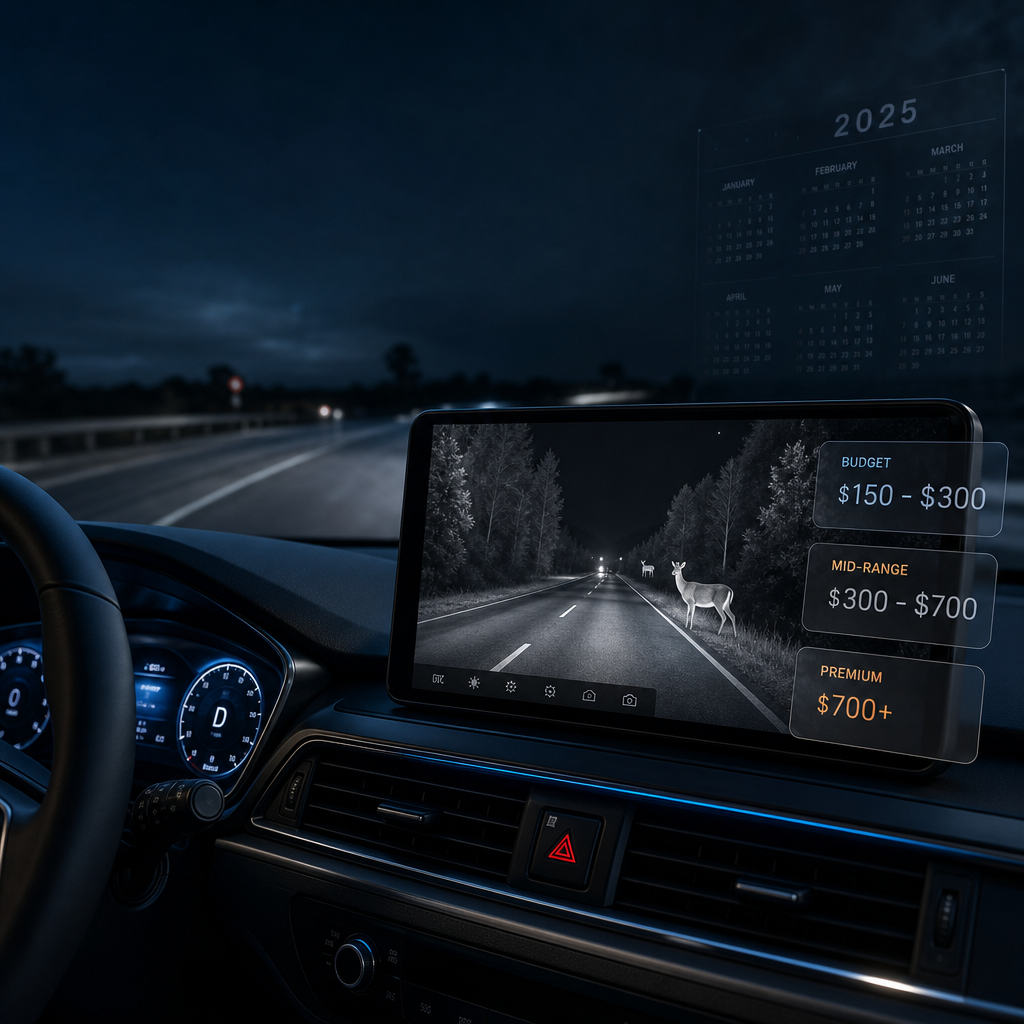
Several factors influence the final price of a night vision camera for a vehicle. These include whether the camera is standalone or integrated into a larger safety system, the type of night vision technology used, and whether professional installation is required.
1. Type of Night Vision Technology
Not all night vision systems work the same way. Some use infrared LEDs to illuminate the road in darkness, while others rely on thermal imaging or low-light enhancement.
- Infrared cameras are usually the most affordable option. They work by capturing images with the help of infrared light, making them a common choice for budget-conscious buyers.
- Low-light enhancement cameras improve visibility in dim conditions without necessarily using infrared illumination.
- Thermal imaging systems are the most advanced and also the most expensive. They detect heat signatures, which can help identify pedestrians, animals, and objects even when visibility is poor.
2. Build Quality and Image Resolution
A camera with higher resolution will generally cost more, but it also provides a clearer image. This matters a lot when driving at night because details such as road markings, obstacles, and movement are harder to see in low light. Cameras with better sensors, wider dynamic range, and more durable housings usually come at a premium.
3. Brand and Features
Well-known automotive brands often charge more because they offer stronger warranties, better support, and more reliable performance. Extra features can also raise the price, including:
- Motion detection
- Parking assist
- Dashboard integration
- Smartphone connectivity
- Recording and playback functions
- Wide-angle viewing
4. Installation Costs
Some night vision cameras are easy to install, while others need professional wiring and calibration. If the camera is part of a full system that connects to the vehicle’s display or electrical system, installation can add a noticeable amount to the total cost.
Typical Price Ranges
The cost of a night vision camera for a car can fall into several general categories. These are not fixed prices, but they offer a useful guide when comparing products.
Budget Models: Around $50 to $150
Entry-level systems are usually basic infrared cameras or simple rear-view night cameras. They may be suitable for drivers who want a low-cost solution for occasional nighttime use. However, these models often have limited image quality, fewer features, and a shorter lifespan than premium options.
Mid-Range Models: Around $150 to $500
This is where many drivers find the best balance of price and performance. Mid-range cameras often provide better image clarity, stronger low-light performance, and additional functions such as parking assistance or recording. They are a solid choice for daily commuters who want improved safety without spending too much.
High-End Systems: Around $500 to $2,500 or More
Advanced night vision systems, especially those using thermal imaging or factory-integrated technology, can be expensive. These are typically found in luxury vehicles or installed by drivers who want top-tier safety and visibility. While costly, they offer excellent performance in challenging conditions.
Is a More Expensive Camera Worth It?
Whether a higher price is worth paying depends on how and where you drive. For example, if you often travel on dark rural roads, drive in areas with poor street lighting, or encounter wildlife at night, a more advanced system may be a smart investment. The added visibility can improve reaction time and reduce stress behind the wheel.
On the other hand, if most of your driving happens in well-lit city streets, a mid-range or budget camera may be enough. The key is to match the system to your actual needs rather than paying for features you may never use.
Other Costs to Consider
The purchase price is only part of the total expense. Before buying, it is important to account for additional costs that can affect your budget.
Professional Installation
Installation fees can range from $50 to several hundred dollars depending on the complexity of the system. Vehicles with integrated infotainment systems or advanced electronics may require specialized work.
Maintenance and Repairs
Most night vision cameras do not require much maintenance, but they may need cleaning, occasional calibration, or replacement if the lens or wiring gets damaged. Premium systems may also have higher repair costs.
Compatibility with Your Vehicle
Some cameras are universal, while others are designed for specific car models. If a system needs adapters, extra wiring, or custom mounting hardware, that can add to the total price.
How to Choose the Right Night Vision Camera
Choosing the right camera starts with thinking about your driving habits, budget, and safety goals. A few practical questions can help narrow the options:
- Do you mainly need better parking visibility at night?
- Are you looking for a front-facing system to detect hazards on dark roads?
- Is recording capability important to you?
- Do you want a simple add-on camera or a full integrated safety system?
If your priority is basic nighttime assistance, a low- to mid-range camera may be enough. If safety is your top concern and you drive in difficult conditions often, investing in a higher-end model may be worthwhile.
Compare Image Quality, Not Just Price
A lower price can be attractive, but it should not be the only factor. Poor image quality can make a camera less useful when you need it most. Look for clear reviews, real-world sample footage, and features that improve performance in darkness.
Check Warranty and Support
A good warranty can save money later. Reliable customer support is especially important if you are buying a more complex system that needs setup help or troubleshooting.
Final Thoughts
The price of a night vision camera for a car depends on the technology, features, image quality, and installation requirements. Basic models may cost under $150, while advanced thermal systems can run into the thousands. For most drivers, the best option is one that offers a good mix of visibility, reliability, and affordability.
Instead of focusing only on the lowest price, consider how the camera will perform in the situations you face most often. A well-chosen system can make nighttime driving safer, reduce blind spots, and give you greater confidence on the road.