

Thermal Imaging Safety helps driver-assistance systems detect people, animals, and other hazards when visible-light cameras struggle, improving awareness during night driving and poor-visibility conditions. It’s an extra layer of perception—not a replacement for headlights, mirrors, or attentive driving—designed to reduce how often hazards are noticed too late.
- What Thermal Imaging Actually Sees
- Why It Improves Driver Assistance Safety
- It Helps in Darkness Without Depending on Street Lighting
- It Can Support Earlier Pedestrian Detection
- It Can Improve Animal Detection on Rural Roads
- It Adds Redundancy When Vision-Based Systems Struggle
- It Can Reduce “Time-to-Notice” for the Driver
- It Helps With “Ambiguity” in Low-Contrast Scenes
- Where Thermal Imaging Helps Most
- Rural Roads and Unlit Highways
- Fog, Rain, and Snow
- Headlight Glare and Sharp Lighting Changes
- Long Night Drives and Fatigue-Prone Trips
- What Thermal Imaging Does Not Do
- Thermal Imaging vs. Cameras and Radar
- A Practical Example of How the Technology Is Being Used
- What to Look For in a Thermal Imaging Safety System
- Detection and Alert Quality
- Real-World Usability
- Suitability for Your Roads
- Environmental Durability
- How It Fits With Existing Safety Features
- Safe Driving Habits Still Matter Most
- FAQ
- Does thermal imaging work in complete darkness?
- Can thermal imaging detect pedestrians and animals?
- Is thermal imaging the same as night vision?
- Does thermal imaging replace a driver’s attention?
- Is thermal imaging useful in bad weather?
- Who benefits most from thermal imaging in a vehicle?
- Conclusion
Thermal Imaging Safety improves driver-assistance safety by giving the vehicle a way to detect heat signatures in darkness, glare, fog, rain, and snow. In practical terms, that means it can better recognize pedestrians, animals, and other hazards when the scene is dim—especially at night, on rural roads, or during bad weather. It is not a replacement for safe driving habits, but it can add an important layer of road awareness when vision-based systems are limited.
What Thermal Imaging Actually Sees
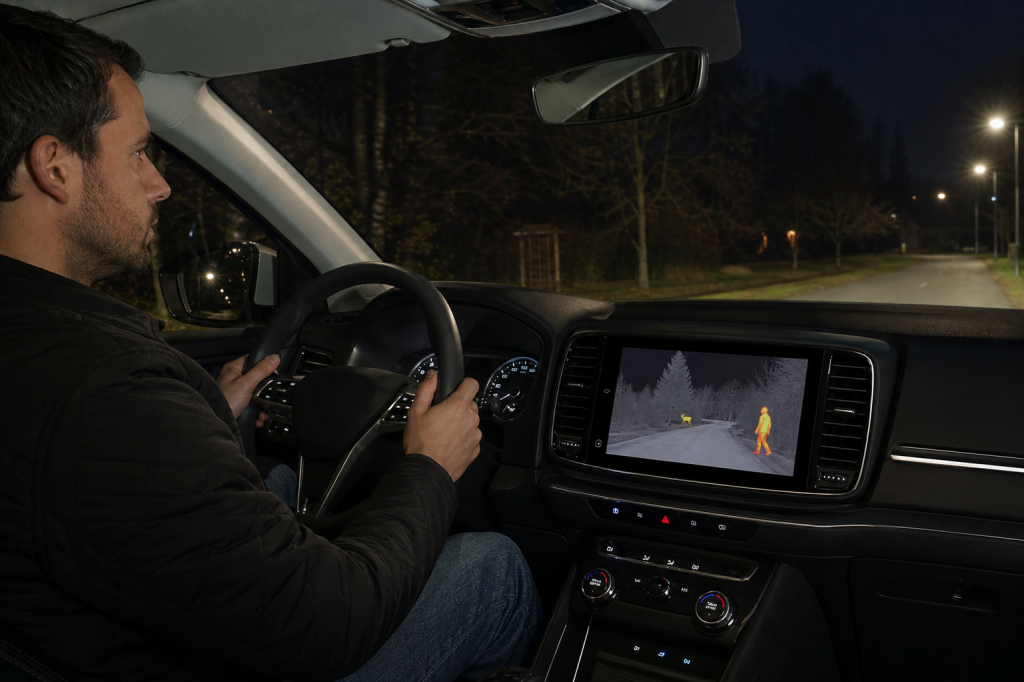
A thermal imaging system does not “see” the road the way your eyes do. Instead, it detects differences in heat and converts them into an image that highlights warmer objects against cooler backgrounds. People, animals, recently driven vehicles, and some road edges or obstacles can stand out more clearly than they would in a standard camera feed at night.
This is why thermal imaging safety is often described as “heat-based vision.” Rather than depending on ambient light, the system focuses on temperature contrasts—so objects that emit or retain heat can remain detectable when visible contrast drops.
For drivers, the practical result is earlier awareness. If a person steps onto an unlit road or an animal moves near the shoulder, thermal imaging safety can help the system flag that presence before it becomes obvious to the human eye alone.
Why It Improves Driver Assistance Safety
Thermal Imaging Safety improves safety by strengthening a vehicle’s ability to detect hazards that are easy to miss in low visibility. That does not mean the technology solves every risk. It means it can reduce the chance that a driver-assistance system sees too late, or fails to distinguish a real hazard from background darkness.
More EV News

It Helps in Darkness Without Depending on Street Lighting
Night driving safety is a recurring problem because the road environment changes quickly. A lit urban street, a dim suburban road, and an unmarked rural lane create different visibility challenges. Thermal imaging safety helps bridge those gaps by detecting the heat of a person, animal, or vehicle even when the surrounding scene is too dark for a regular camera to read confidently.
This is especially important where headlights only illuminate a narrow patch ahead. The driver may not see the full picture until very late, while the thermal system continues scanning beyond the area that looks obvious to the eye.
It Can Support Earlier Pedestrian Detection
Pedestrian detection is one of the clearest use cases for thermal imaging safety. A person at the roadside, in dark clothing, or partially hidden by shadows can be hard to separate from the background in poor light. Because the body emits heat, a pedestrian may stand out more clearly in a thermal view.
That does not make detection automatic or perfect. A child behind a parked car, someone behind a barrier, or a pedestrian in a crowded scene still creates challenges. But compared with a camera that depends on visible contrast, thermal imaging safety can give the system another chance to identify a person before the situation becomes critical.
It Can Improve Animal Detection on Rural Roads
Animal detection is another important use case for thermal imaging safety, especially on roads that pass through fields, forests, or open land. Deer, livestock, and other large animals can enter the roadway with little warning. At night, they may be difficult to distinguish until headlights are already on them.
A thermal imaging system can help a driver-assistance platform notice body heat at the roadside or in the path ahead, giving the driver more time to react. This is valuable not only for avoiding collisions, but also for reducing sudden swerving, hard braking, and the chain reaction that can follow when a driver is startled.
If you want a deeper look at how thermal sensing supports night driving awareness for wildlife, see Vehicle thermal imaging: How It Helps Drivers See Pedestrians and Animals at Night.
It Adds Redundancy When Vision-Based Systems Struggle
Driver-assistance technology is strongest when it uses multiple sensing methods together. Cameras are good at recognizing shape, lane markings, signs, and context in daylight. Radar is useful for motion and distance. Thermal imaging adds another layer by focusing on heat instead of light.
That redundancy matters because road conditions do not stay ideal. Fog rolls in, rain scatters light, and oncoming traffic produces glare. Thermal imaging safety can help keep a vehicle’s awareness from dropping off as sharply as a camera-only setup might.
It Can Reduce “Time-to-Notice” for the Driver
Even when a feature doesn’t immediately brake, warnings still help. Thermal imaging safety can shorten the time between when a hazard exists in the environment and when it is recognized by the system. With more lead time, drivers are more likely to adjust speed, maintain lane position, and plan a safe response.
It Helps With “Ambiguity” in Low-Contrast Scenes
At night, many hazards aren’t just hidden—they’re ambiguous. A dark shoulder can look like an empty stretch of road, and an animal’s silhouette can be difficult to interpret. By highlighting heat differences, thermal imaging safety can turn uncertainty into clearer visual cues for the driver and the onboard system.
Where Thermal Imaging Helps Most
The value of thermal imaging safety is easiest to understand in the real situations where it is most useful.
Rural Roads and Unlit Highways
These are classic high-risk environments for low-light driving. The road may have limited reflectors, few streetlights, and unpredictable wildlife movement. Drivers often travel faster here than they realize, which reduces reaction time. Thermal imaging safety can help the system notice movement at the edges of the road before the driver can pick it out visually.
It also helps with the “it looked empty” problem. In darkness, a shoulder or driveway entrance can blend into the surrounding landscape. Thermal imaging can make a warm body or vehicle stand out from cooler pavement and vegetation.
If you drive rural routes often, you may also like Car Thermal Imaging: Boost Night Safety on Rural Roads.
Fog, Rain, and Snow
Poor-visibility conditions reduce contrast and make objects blend into the background. Headlights can bounce off moisture in the air and create a wall of reflected light. In those conditions, thermal imaging safety may preserve some degree of detection where normal visibility falls off quickly.
It is important to stay realistic here. Heavy weather can affect every sensor in some way. Thermal imaging safety is helpful, but it is not magic. Drivers still need to slow down, increase following distance, and treat the roadway as uncertain.
Headlight Glare and Sharp Lighting Changes
Oncoming headlights, exit ramps, tunnel transitions, and bright signage can all interfere with visual scanning. Human eyes need time to adapt, and regular cameras can be temporarily overwhelmed by contrast changes. Thermal imaging safety can reduce dependency on those changing light conditions because it isn’t interpreting brightness in the same way.
Long Night Drives and Fatigue-Prone Trips
A long drive after dark is not only a visibility issue. It is also an attention issue. Fatigue makes it easier to miss something at the edge of the road or to react too slowly. Thermal imaging safety cannot cure fatigue, but it can give the driver-assistance system more opportunity to flag a hazard in time—when attention naturally begins to drift.
In practice, this means the technology can be an additional safeguard during moments when the driver might otherwise rely on limited cues.
What Thermal Imaging Does Not Do
The biggest mistake drivers make with advanced safety tech is assuming that a useful tool is an all-purpose solution. Thermal imaging safety is not.
It does not replace attentive driving. It does not eliminate stopping distance. It does not guarantee that every pedestrian, animal, or vehicle will be detected in time. It does not solve reckless speed, distraction, bad road design, or poor weather.
It also has practical limits:
- Small or partially hidden objects may be harder to identify.
- Heat signatures can be less distinct when ambient temperatures are close to body temperature.
- Complex scenes can make interpretation harder, especially if the system is not well designed.
- A thermal image may show an object clearly but still require the driver to decide what it is and how to respond.
That is why thermal imaging safety should be treated as driver assistance, not autonomous decision-making. The best systems support awareness; they do not take over responsibility.
Why Interpretation Still Matters
Even when a heat signature is detected, driver-assistance systems must interpret context. Speed, relative motion, road boundaries, and surrounding objects influence whether an alert feels accurate and useful. A well-calibrated system can reduce nuisance warnings, but it cannot remove the need for the driver to confirm hazards.
Thermal Imaging vs. Cameras and Radar
A good way to think about thermal imaging safety is as one part of a broader safety stack.
Compared with Visible-Light Cameras
Visible-light cameras are excellent at detail. They can read lane lines, signs, and object shapes in favorable conditions. Their weakness is dependence on light and contrast. Thermal imaging safety is better when the issue is darkness, glare, or a subject blending into the background.
Compared with Radar
Radar is strong at measuring distance and motion, even in some adverse weather conditions. But radar is less helpful for detailed visual identification. Thermal imaging can help the system understand what the object might be, while radar helps determine where it is and how fast it is moving.
Compared with Headlights Alone
Headlights are essential, but they are not an advanced sensing tool. They illuminate a limited part of the road and can be affected by angle, weather, and brightness around the vehicle. Thermal imaging safety extends awareness beyond what the beam pattern alone can reveal.
For most drivers, the right takeaway is not “thermal imaging instead of other systems.” It is “thermal imaging alongside other systems.”
A Practical Example of How the Technology Is Being Used
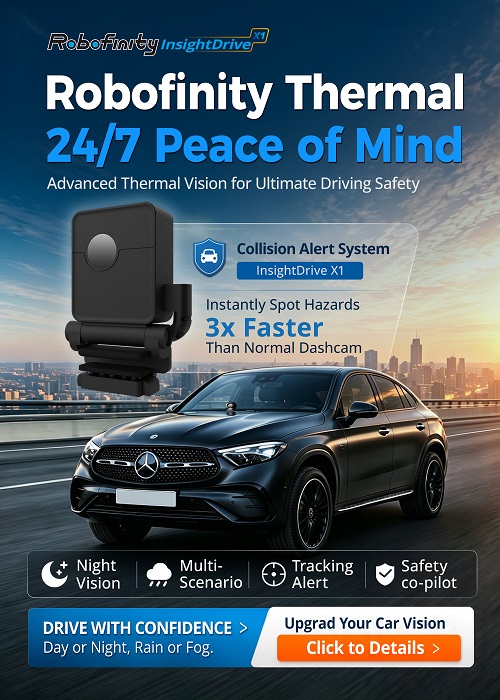
Some vehicle safety systems package thermal imaging with alerts designed to help the driver notice people, animals, vehicles, and obstacles earlier in low-light conditions. This type of approach is often discussed alongside AI-powered thermal imaging and real-time alerts for poor-visibility driving.
The point is not that every driver needs the same setup. The point is that thermal imaging safety is moving from a niche concept into a practical driver-assistance option for people who regularly deal with night roads, rural routes, or weather that reduces visibility.
If you’re researching what to expect from these systems, you may also find Car Thermal Night Vision System: Is It Really Useful? (2026 Guide) helpful for real-world expectations and limitations.
What to Look For in a Thermal Imaging Safety System
If you are evaluating a vehicle thermal imaging system, focus on how it will actually help in daily driving rather than on marketing language. These factors are key for thermal imaging safety.
Detection and Alert Quality
A good system should do more than display a heat image. It should help the driver understand when something matters. Clear alerts, sensible prioritization, and readable on-screen presentation are more valuable than flashy visuals.
Real-World Usability
Consider how the system fits into the cabin, how quickly it updates, and whether the display is easy to understand at a glance. In driver-assistance technology, interface design matters. A tool that demands too much attention can reduce the safety benefit.
Suitability for Your Roads
A driver who spends most of the time in daylight traffic may not need thermal imaging safety. A driver who regularly travels at night, crosses rural areas, or deals with poor-visibility conditions is more likely to benefit. The best setup depends on your route, not on a spec sheet alone.
Environmental Durability
If the system includes an external camera or sensor, it should be suited to real road conditions. Rain, grime, vibration, and temperature swings all matter. A feature is only useful if it keeps working after weeks of ordinary use, not just in a clean showroom setting.
How It Fits With Existing Safety Features
Thermal Imaging Safety is most effective when it supports other driver-assistance tools rather than competing with them. It should complement headlights, lane guidance, braking systems, mirrors, and the driver’s own scanning habits.
For a deeper look at how thermal sensors are used in night driving systems, see Thermal Night Vision Technology for Night Driving.
Safe Driving Habits Still Matter Most
The real value of thermal imaging safety is that it improves the odds of noticing something sooner. It does not change the fundamentals of safe driving.
Keep these habits in place:
- Slow down when visibility drops.
- Increase following distance at night or in bad weather.
- Use headlights correctly and keep them clean.
- Scan the roadside, not just the lane ahead.
- Avoid overtrusting alerts or screens.
- Treat every hazard warning as a cue to verify, not as a promise.
That is the right way to use any driver-assistance technology. It should sharpen your awareness, not replace your judgment.
For background on how lighting and visibility affect road safety, the U.S. Federal Highway Administration provides safety guidance and research resources here: FHWA on night visibility and roadway safety.
FAQ
Does thermal imaging work in complete darkness?
Yes. Thermal imaging safety does not depend on visible light the way a normal camera does. It can still detect heat signatures in dark conditions, though performance depends on the system and the scene.
Can thermal imaging detect pedestrians and animals?
It can help identify pedestrians and animals by highlighting heat signatures. However, thermal imaging safety still has limits, especially if the subject is partially hidden or the scene is crowded.
Is thermal imaging the same as night vision?
Not exactly. Some people use the terms loosely, but thermal imaging safety detects heat, while other night vision systems may rely on amplified visible or infrared light. The practical goal is similar: better awareness in low-light driving.
Does thermal imaging replace a driver’s attention?
No. Thermal imaging safety supports awareness, but it does not replace safe driving habits, road scanning, or traffic-law compliance.
Is thermal imaging useful in bad weather?
It can be useful in fog, rain, and snow because it is less dependent on visible contrast than a standard camera. However, no sensor is immune to severe weather conditions.
Who benefits most from thermal imaging in a vehicle?
Drivers who regularly travel at night, use rural roads, encounter wildlife, or drive in poor-visibility conditions tend to benefit the most from thermal imaging safety.
Conclusion
Thermal Imaging Safety improves driver assistance by adding a different way of perceiving the road. Instead of depending only on visible light, it helps a vehicle recognize heat signatures that may reveal pedestrians, animals, vehicles, or other obstacles sooner in darkness and poor visibility. That makes it especially relevant for night driving, rural travel, and weather that reduces what a driver can see.
The technology is most useful when it works as part of a broader safety approach. It can sharpen awareness, but it cannot replace judgment, speed control, or proper scanning of the road ahead. For drivers who spend real time in low-light conditions, thermal imaging safety is exactly the kind of support worth understanding—and using responsibly.