

If you drive often after dark, on rural roads, in fog, or during heavy rain, you may have wondered whether a car thermal night vision system is actually worth it. The short answer is yes, it can be useful, but only if you understand what it does well and where its limits are. For many drivers, the value is not in replacing normal visibility tools, but in adding another layer of road awareness when human vision and standard cameras start to struggle.
- What a Car Thermal Night Vision System Actually Does
- Why Drivers Ask Whether It Is Worth It
- Where Thermal Night Vision Helps Most
- Night Driving on Rural Roads
- Highway Driving at Night
- Fog, Rain, and Snow
- Headlight Glare and Low-Contrast Conditions
- What It Can Detect in Real Driving
- What It Does Not Do
- How It Compares with Other Driver-Assistance Tools
- Who Is Most Likely to Benefit
- What to Look for Before Buying
- Common Mistakes Drivers Make with Thermal Night Vision
- Practical Ways to Use It Well
- FAQ
- Is a car thermal night vision system worth it for everyday driving?
- Can thermal night vision see through fog or rain?
- Does thermal night vision replace headlights?
- What does a thermal night vision system usually detect?
- Is Robofinity InsightDrive a safety replacement?
- Do these systems help at highway speed?
- Conclusion
Thermal night vision technology has moved from a niche feature into a practical driver-assistance option for people who want better hazard detection in low-light driving. It is especially relevant for seeing pedestrians, animals, vehicles, and other obstacles that may not stand out clearly in the dark. Still, usefulness depends on the road you drive, the weather you face, and how you expect the system to fit into your driving routine. For a closer look at how this technology works in practice, see does automotive thermal imaging really work in 2026?.
- What a Car Thermal Night Vision System Actually Does
- Why Drivers Ask Whether It Is Worth It
- Where Thermal Night Vision Helps Most
- What It Can Detect in Real Driving
- What It Does Not Do
- How It Compares with Other Driver-Assistance Tools
- Who Is Most Likely to Benefit
- What to Look for Before Buying
- Common Mistakes Drivers Make with Thermal Night Vision
- Practical Ways to Use It Well
- FAQ
- Conclusion
What a Car Thermal Night Vision System Actually Does
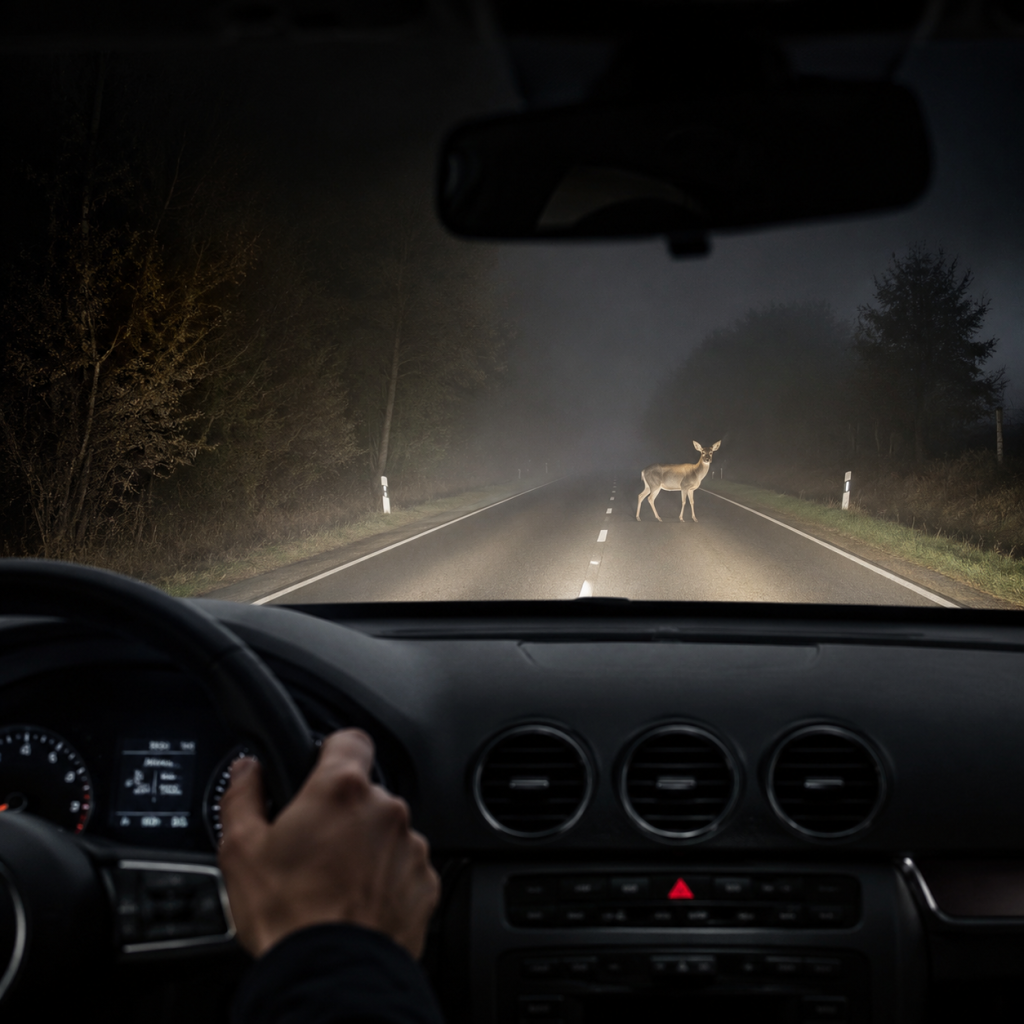
A car thermal night vision system detects heat signatures rather than relying only on visible light. That is the core reason it can work when the road is dark, when headlights are scattered by rain or fog, or when an object blends into the background.
Instead of trying to brighten the scene like a regular camera, the system looks for temperature differences. A pedestrian, a deer near the roadside, or a vehicle ahead often shows up more clearly because it emits or reflects heat differently than the surrounding environment. In practice, that gives drivers an earlier visual cue that something is ahead.
This is different from standard headlights, dash cams, or parking cameras. Those tools are valuable, but they still depend on visible light. A thermal imaging system can extend your awareness beyond the range where the eye alone starts losing detail.
In simple terms, a car thermal night vision system helps you see what headlights may not reveal soon enough. That is why it appeals to drivers who spend time in low-light conditions and want a clearer picture of the road ahead.
Why Drivers Ask Whether It Is Worth It
Most drivers do not buy advanced safety tech because they want more features on a spec sheet. They buy it because they have a real problem to solve. In this case, the problem is poor visibility.
That becomes obvious in situations such as:
- Driving on unlit rural roads where animals can appear suddenly
- Traveling at highway speeds in darkness, where reaction time matters more
- Going through fog, snow, or rain when contrast is low
- Facing headlight glare from oncoming traffic
- Driving long distances at night and feeling eye fatigue reduce attention
In these cases, a car thermal night vision system may help you notice a hazard sooner than you would otherwise. That does not mean it makes the road safe on its own. It means it can improve road awareness in situations where your normal line of sight is less reliable.
For a driver who has ever missed a person at the roadside or a deer in the dark, the appeal is easy to understand. The system is useful because it adds time, and extra time is often what prevents a close call from becoming a crash.
For more background on how heat-based imaging supports real-world driving, the National Highway Traffic Safety Administration’s night driving safety advice is a reliable reference for the core risks of low-light driving.
Where Thermal Night Vision Helps Most
Night Driving on Rural Roads
Rural roads are one of the strongest use cases for thermal imaging. They often have less lighting, less shoulder visibility, and more unpredictable hazards. A person walking near the edge of the road, a deer crossing, or a stalled vehicle can be difficult to see until you are already close.
Thermal imaging is useful here because living beings and other heat-producing objects often stand out more clearly than they do under standard headlights alone. For drivers who regularly travel through remote areas, the extra awareness can be meaningful.
In this setting, a car thermal night vision system can make a drive feel less uncertain. Even when the road itself is familiar, nighttime wildlife and roadside activity can change quickly, so a clearer image can be a real advantage.
Highway Driving at Night
Highway driving at night is another situation where thermal night vision can make sense. Higher speeds reduce the time you have to react, and large stretches of dark road can make it easy to miss something until it is too late to brake comfortably.
A car thermal night vision system can help you identify a vehicle ahead that is moving slowly, a person on the shoulder, or debris that may not be obvious under poor lighting. It is not a substitute for scanning the road properly, but it may give you a clearer picture sooner.
That extra awareness can be especially valuable on long trips, when attention tends to drift and the road looks the same mile after mile. A thermal display gives the driver another way to notice something unusual before it becomes a surprise.
Fog, Rain, and Snow
Poor weather is where many standard systems lose reliability. Fog diffuses light. Heavy rain creates glare and reflections. Snow can flatten contrast and hide edges. In all of these conditions, thermal imaging may offer a better view of heat-emitting objects than visible-light cameras can.
That makes it a practical driver-assistance technology for people who live in regions with frequent weather changes. The benefit is not magic clarity. It is more about preserving useful awareness when the environment makes ordinary vision work harder.
When weather reduces contrast, a car thermal night vision system can become even more valuable than it looks on paper. The reason is simple: drivers do not need a perfect picture to gain a useful warning. They just need enough of a signal to slow down, look again, and respond in time.
Headlight Glare and Low-Contrast Conditions
Headlight glare from oncoming traffic can be more than just annoying. It can reduce contrast, wash out detail, and make it harder to spot a person or animal at the edge of the road.
Thermal systems do not eliminate glare in the usual sense, but they can help the important shapes remain visible in the background. That can reduce the odds that your attention is pulled away from something critical just because the lighting is bad.
This is one of the reasons a car thermal night vision system can feel more useful than a standard camera in some conditions. It is not trying to brighten the same image. It is finding the warm object that matters, even if the rest of the scene is hard to read.
What It Can Detect in Real Driving
One reason thermal night vision gets attention is that it is not limited to lane lines or reflective surfaces. In a practical driving setting, the useful targets are:
- Pedestrians crossing or standing near the road
- Animals near rural shoulders or roadway edges
- Vehicles ahead that may be stopped, slow-moving, or partially obscured
- Obstacles that stand out through thermal contrast
This matters because the biggest nighttime risk is often not the obvious obstacle in front of you. It is the one you do not notice in time to adjust speed, lane position, or braking.
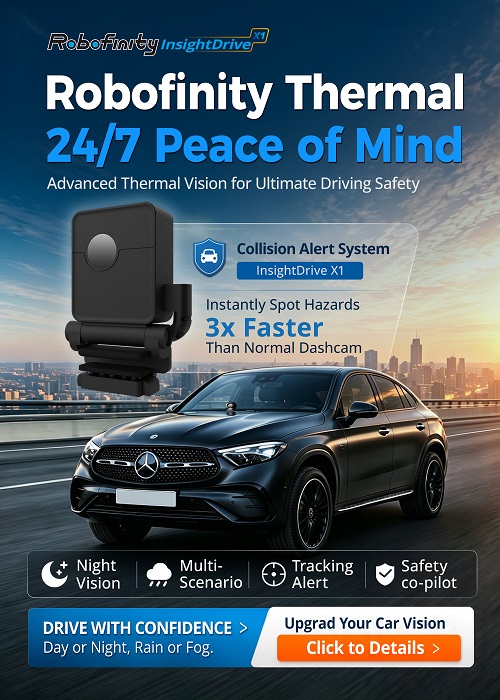
A system like Robofinity InsightDrive Car Thermal Night Vision is built around that idea, using AI-powered thermal imaging to help make hard-to-see road risks more visible in darkness and poor-visibility conditions. Used properly, that kind of setup can support awareness, not replace driving judgment.
To understand more about the limits and strengths of thermal detection, this guide on thermal camera range is a helpful related resource.
The useful takeaway is not that a thermal system detects everything. It is that it can highlight the kind of hazards drivers most want warned about before they are close enough to react late.
What It Does Not Do
This is where expectations need to stay realistic. A thermal night vision system is helpful, but it is not a replacement for the basics.
It does not replace:
- Headlights
- Mirrors
- Safe following distance
- Traffic laws
- Driver attention
- Defensive driving habits
It also cannot guarantee that every hazard will be detected in every environment. A system may be less useful in some edge cases, and a driver still needs to interpret the scene, react calmly, and brake appropriately.
That distinction matters. The real value of thermal imaging is not in claiming perfect safety. It is in adding useful information when the scene is difficult to read.
Put another way, a car thermal night vision system is best treated as a visibility aid. It helps you make better decisions, but it does not make the decision for you.
How It Compares with Other Driver-Assistance Tools
Many people compare thermal night vision with dash cams, night cameras, and ADAS features. The comparison is useful, but they solve different problems.
Dash cams record what happened. They are valuable for evidence and review, but they do not typically help you see more in the moment.
Visible-light night cameras can improve certain views, but they still depend on lighting conditions. They may struggle with glare, fog, or low-contrast objects.
ADAS features such as automatic emergency braking or lane keeping are useful, but they are usually built around a different sensor mix and may not always detect the same hazards in the same way.
Thermal imaging sits in a different category. It is most useful as a visibility and awareness tool, not as a fully automated protection layer. For some drivers, that makes it a strong complement to other vehicle safety technology.
For a broader comparison of vehicle safety technologies, you may also want to read Car Reliability Comparison: Toyota vs. Honda vs. Lexus in 2026.
That comparison helps show where a car thermal night vision system fits: not as a replacement for every safety feature, but as a specialized tool for specific driving conditions.
Who Is Most Likely to Benefit
A car thermal night vision system is not necessary for every driver. The people most likely to find it useful are those who regularly face challenging visibility conditions.
That includes:
- Commuters who drive before sunrise or after dark
- Drivers in rural or suburban areas with unlit roads
- People who frequently encounter fog, rain, or snow
- High-mileage drivers and long-distance travelers
- Truck and commercial drivers who spend many hours on the road
- Drivers in areas where deer or other animals are common near roadways
If your driving is mostly in well-lit urban areas at lower speeds, the value may be smaller. In that setting, street lighting and normal traffic conditions often reduce the advantage of thermal imaging.
For many owners, the decision comes down to whether the car thermal night vision system solves a recurring problem. If night driving is rare, the system may feel unnecessary. If night driving is part of everyday life, the benefit becomes easier to justify.
What to Look for Before Buying
If you are considering a thermal night vision system, focus on practical features rather than marketing language.
Look at detection range first. A system that can identify hazards earlier is more useful on open roads and highways.
Check the screen size and image clarity. If the output is too small or too hard to read, the benefit drops quickly.
See whether the system is designed to recognize pedestrians, animals, vehicles, and obstacles. Those are the categories most drivers care about.
Consider weather resistance and durability. A camera designed for automotive use should handle rain, snow, and temperature changes.
Review whether the system provides real-time alerts. Visual information is helpful, but timely alerts can make the feature more practical in active driving.
Robofinity InsightDrive, for example, combines AI-powered thermal imaging with real-time hazard awareness and is positioned for drivers who need support in night driving and poor-visibility conditions. It is the kind of system that makes most sense when used as an extra layer of awareness rather than a replacement for good judgment.
For a deeper product-focused look at this category, see STG Thermal Night Vision for Vehicle: 7 Smart Benefits.
Before you buy, it also helps to think about installation and daily use. A good car thermal night vision system should be easy to view at a glance, stable enough for rough roads, and practical enough that you will actually keep using it.
Common Mistakes Drivers Make with Thermal Night Vision
Some buyers expect the system to do more than it can. That leads to disappointment.
One common mistake is thinking thermal imaging will make every object obvious at all times. It will not. A car thermal night vision system improves visibility in many cases, but it still depends on conditions, installation, and how well the driver reads the display.
Another mistake is treating it like an autonomous safety feature. If a driver stops scanning mirrors or stops paying attention to lane position and speed, the value disappears—no matter how good the thermal output looks.
A third mistake is buying based on a single use case without considering everyday driving. The best investment is one that fits your actual routes, not just one dramatic scenario.
There is also a temptation to expect a car thermal night vision system to perform equally well in every environment. Like any vehicle technology, it works best when the driver understands what it can and cannot show.
Practical Ways to Use It Well
To get real value from a thermal system, use it as a support tool.
Keep your eyes moving between the road, mirrors, and the thermal display.
Use it more actively in darkness, fog, rain, or on rural roads.
Pay attention to any heat signature that appears near the roadway edge.
Treat alerts as a prompt to look and react, not as an instruction to brake abruptly.
Combine thermal awareness with sensible habits like reducing speed in poor-visibility conditions and leaving more space ahead.
The best driver-assistance technology works when it reinforces good behavior instead of encouraging overconfidence.
When you want to compare how thermal systems fit into vehicle ownership and long-term use, the article on Older Car Reliability: Are Older Cars More Reliable? offers a useful perspective on practical decision-making.
In real use, a thermal night vision setup becomes most helpful when the driver already practices defensive habits. The technology can support careful driving, but it works best in the hands of someone who still watches the road actively.
FAQ
Is a car thermal night vision system worth it for everyday driving?
For many drivers, it is most useful for night driving, rural roads, and poor-visibility conditions. If you mainly drive in well-lit city areas, the value may be more limited.
Can thermal night vision see through fog or rain?
It can often help more than visible-light systems in fog, rain, or snow, but it does not eliminate the effects of bad weather. Visibility still depends on the conditions and the system’s design.
Does thermal night vision replace headlights?
No. Headlights are still necessary, and the system should be treated as an added awareness tool, not a replacement for standard lighting or safe driving habits.
What does a thermal night vision system usually detect?
It is commonly used to detect pedestrians, animals, vehicles, and other obstacles that create a visible thermal contrast against the background.
Is Robofinity InsightDrive a safety replacement?
No. Robofinity InsightDrive is a driver-assistance solution designed to improve awareness in low-light and poor-visibility driving, not a replacement for attention, mirrors, or safe speed.
Do these systems help at highway speed?
They can, especially because earlier detection matters more when you are moving faster. That said, the driver still needs to interpret the scene and respond appropriately.
Conclusion
A car thermal night vision system is useful when it solves a real visibility problem. It is most valuable for drivers who spend a lot of time in darkness, on rural roads, in fog, rain, snow, or other poor-visibility conditions where hazards can appear too late for comfort.
The technology is best understood as a road awareness upgrade. It can help you notice pedestrians, animals, vehicles, and obstacles earlier, and it can make nighttime driving feel more manageable. But it does not replace the basics that keep driving safe: attention, speed control, headlights, mirrors, and sound judgment.
For drivers who want an added layer of thermal imaging support, learning more about Robofinity InsightDrive may help clarify how this kind of driver-assistance technology can fit into everyday night driving and vehicle safety planning.
Overall, a car thermal night vision system can be a smart upgrade for the right driver, especially when it is matched to the roads, weather, and driving habits where it adds the most value.
If you are weighing a car thermal night vision system against other safety upgrades, the right answer usually comes down to your routes, your weather, and how often you need better visibility after dark.