


Active Safety Systems in cars are designed to help you avoid a crash before it happens, or reduce how severe it is if a collision becomes unavoidable. They work by monitoring the road, warning you of danger, and sometimes intervening with braking, steering, or stability control. If you’ve ever wondered how warning alerts differ from automatic emergency braking or lane-keeping assist, this guide breaks down the key technologies and their real-world limits.
- What Active Safety Systems Actually Do
- The Main Types of Active Safety Systems
- Automatic Emergency Braking
- Forward Collision Warning
- Lane Departure Warning and Lane Keeping Assist
- Blind Spot Monitoring
- Rear Cross Traffic Alert
- Adaptive Cruise Control
- Electronic Stability Control
- Traction Control
- Driver Attention Monitoring
- How These Systems Work Together
- Why Active Safety Systems Matter in Real Driving
- What Active Safety Systems Cannot Do
- How to Judge Whether a Car Has Good Active Safety Tech
- Active Safety and Driver Behavior
- Maintenance and Reliability Considerations
- Where Active Safety Fits in the Bigger Safety Picture
- FAQ
- What is the difference between active and passive safety?
- Is automatic emergency braking the same as forward collision warning?
- Do active safety systems work in all weather conditions?
- Can lane keeping assist drive the car by itself?
- Are active safety systems worth it when buying a car?
- How should I use active safety systems safely?
- Conclusion
Active Safety Systems are now common across many vehicles, from compact hatchbacks to large SUVs and commercial vans. They matter more than ever because traffic is more complex, distractions are more common, and many roads present challenges like poor weather, glare, congestion, and fatigue. Understanding what these systems do—and what they can’t—makes it easier to choose the right car and use the technology correctly.
Table of Contents
- What Active Safety Systems Actually Do
- The Main Types of Active Safety Systems
- How These Systems Work Together
- Why Active Safety Systems Matter in Real Driving
- What Active Safety Systems Cannot Do
- How to Judge Whether a Car Has Good Active Safety Tech
- Active Safety and Driver Behavior
- Maintenance and Reliability Considerations
- Where Active Safety Fits in the Bigger Safety Picture
- FAQ
- Conclusion
What Active Safety Systems Actually Do

Active Safety Systems help the driver avoid danger while the vehicle is moving. They’re different from passive safety systems, which protect occupants during or after a crash, such as seat belts, airbags, and crumple zones.
An active system can do one or more of the following:
- Detect a hazard
- Warn the driver
- Assist with steering, braking, or acceleration
- Intervene automatically if the driver does not respond in time
- Help keep the car stable in low-grip or emergency conditions
The goal isn’t to remove driver responsibility. It’s to add a layer of support when the road situation becomes difficult or unexpected.
The Main Types of Active Safety Systems
Active safety features vary by manufacturer and trim level, but several technologies are widely recognized.
Automatic Emergency Braking
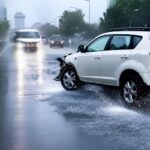
Automatic emergency braking, often abbreviated as AEB, uses sensors to detect a likely collision and can apply the brakes if the driver does not react quickly enough.
This system is useful in stop-and-go traffic, urban driving, and situations where another car, cyclist, pedestrian, or obstacle appears suddenly. It’s especially valuable because many rear-end collisions happen in just a few seconds of inattention.
AEB is helpful, but it isn’t a substitute for following distance. If traffic is heavy or the road is slippery, the system may reduce impact speed rather than avoid impact entirely.
Forward Collision Warning
Forward collision warning alerts the driver when the vehicle is approaching another object too quickly. Unlike automatic braking, it usually does not take physical control of the car.
This is a simple but important layer of protection. It gives the driver time to slow down before the situation becomes critical. Some drivers find alerts easy to ignore at first, which is why understanding the system’s sensitivity settings and warning thresholds matters.
Lane Departure Warning and Lane Keeping Assist
Lane departure warning alerts you when the car starts to drift out of its lane without signaling. Lane keeping assist takes a step further by gently steering the vehicle back toward the center.
These features are most useful on highways and long, monotonous drives where fatigue or distraction can cause unintentional drifting. They can also help during moments of low concentration, but they should not be treated as self-driving functions.
Their limits matter. Lane markings can be faded, obscured by snow, or hard to detect in heavy rain. Road curves, construction zones, and narrow rural roads can reduce reliability.
Blind Spot Monitoring
Blind spot monitoring checks areas that are difficult to see in mirrors and warns the driver if another vehicle is in that zone, usually with an indicator light or audible alert.
This is especially useful when changing lanes on highways or merging into traffic. Even careful mirror checks can miss vehicles in the adjacent lane—particularly at night or in bad weather.
Blind spot monitoring supports safer lane changes, but mirrors and shoulder checks still matter. If you want more practical guidance for night driving, see Night Vision Driving: 7 Powerful Safety Tips.
Rear Cross Traffic Alert
Rear cross traffic alert helps when backing out of parking spaces or driveways. It warns you if a vehicle, cyclist, or pedestrian is crossing behind the car.
This is one of the more practical active safety systems in daily use because it addresses a common risk in parking lots and suburban driveways where visibility is limited by parked vehicles, walls, or landscaping.
Adaptive Cruise Control
Adaptive cruise control maintains a set speed like conventional cruise control, but it also adjusts speed to keep a following gap from the vehicle ahead.
On long highway trips, adaptive cruise control can reduce fatigue and make traffic flow feel smoother. It’s not only a comfort feature. It can also reduce the urge to accelerate too aggressively or tailgate.
Still, the driver must remain alert. Traffic can change quickly, and not every active safety system reacts the same way in cut-in traffic, sharp curves, or stop-and-go congestion.
Electronic Stability Control
Electronic stability control, often called ESC or ESP depending on the market, helps prevent skidding by detecting when the vehicle is starting to lose traction or rotate unexpectedly.
ESC is a major active safety system because it can help during emergency maneuvers, slippery roads, sudden avoidance actions, or wet and icy conditions. It works quietly in the background, but it’s one of the most important stability-related technologies in modern cars.
Traction Control
Traction control limits wheel spin when accelerating on slippery surfaces. It’s closely related to stability control and is useful on rain-soaked roads, snow, gravel, or steep hills.
Drivers often notice traction control only when it activates, but it can make a meaningful difference when pulling away from a stop on low-grip pavement.
Driver Attention Monitoring
Driver attention monitoring looks for signs of fatigue or distraction, often using steering behavior, camera inputs, or lane-keeping patterns. Some active safety systems issue alerts if they think the driver should take a break.
These systems are increasingly relevant on long-distance trips. Fatigue is a major factor in road risk, and an alert that encourages a break can be more valuable than it first appears.
How These Systems Work Together
Most active safety systems are part of a broader driver-assistance suite. They do not work in isolation. A car may combine radar, cameras, ultrasonic sensors, and software to build a more complete picture of the environment around it.
That combination matters because no single sensor is perfect, and no single active safety system catches everything.
- Cameras are good at recognizing lane markings, signs, and object shapes
- Radar is useful for measuring distance and relative speed
- Ultrasonic sensors help at close range during parking and slow maneuvering
- Software interprets the inputs and decides when to warn or intervene
The result is a layered safety approach. One active safety system may catch what another misses. For example, lane keeping assist may help on the highway, blind spot monitoring may help during merging, and automatic emergency braking may help if traffic stops suddenly ahead.
Why Active Safety Systems Matter in Real Driving
Active safety features are not just marketing extras. They solve everyday driving problems by improving reaction time, alerting you to risks, and helping maintain control.
City Driving
In cities, hazards appear quickly. Pedestrians step off curbs, cyclists approach from blind angles, and traffic can stop without much warning. Automatic emergency braking, pedestrian detection, and rear cross traffic alerts are especially useful in these situations.
Highway Driving
At highway speeds, the main risks are lane drift, unsafe following distance, and sudden speed changes. Adaptive cruise control, lane keeping assist, and forward collision warning help reduce the burden of long-distance concentration.
Night Driving
Night reduces visibility and makes it harder to judge distance. Headlight glare from oncoming traffic can further reduce perception. Active safety systems can help compensate by adding detection and warning layers that don’t rely only on human eyesight.
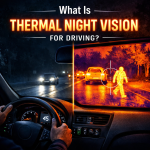
For drivers who frequently travel after dark or on dark rural roads, some also consider thermal imaging and night vision awareness tools. For example, Far Infrared Automotive Night Vision: 7 Powerful Safety Benefits explains how far-infrared technology can add an extra layer of awareness when light is limited.
Bad Weather
Rain, fog, snow, and spray from other vehicles can reduce what the driver can see. In those conditions, active safety systems still have limits, but they can help when lane lines are hard to see or when traffic behavior becomes harder to predict.
Parking and Low-Speed Maneuvering
A lot of minor damage happens at low speed in parking areas. Rear cross traffic alert, parking sensors, surround-view cameras, and low-speed automatic braking can reduce the chance of scraping another vehicle or missing a person behind the car.
What Active Safety Systems Cannot Do
Many drivers misunderstand how these technologies behave.
Active Safety Systems are support tools, not guarantees. They can reduce risk, but they can’t eliminate it. They may struggle when:
- Sensors are blocked by dirt, snow, ice, or heavy rain
- Lane markings are faded or missing
- Road layout is confusing or under construction
- A hazard appears outside the system’s detection range
- The driver is speeding or following too closely
- Visibility is poor enough that the system cannot interpret the scene reliably
Active Safety Systems also may not react in every situation the way a human expects. If a driver assumes the car will handle everything, they can become less attentive—defeating the purpose of the technology.
The safe approach is simple: use active safety as a backup, not a replacement for driving judgment.
How to Judge Whether a Car Has Good Active Safety Tech
If you’re comparing vehicles, the label on the brochure isn’t enough. Ask practical questions before you decide.
Look Beyond the Feature List
Two cars may both claim to have blind spot monitoring, but that doesn’t mean they behave the same way. Consider:
- How many active safety systems are included as standard
- Whether features are available across all trims or only higher-cost versions
- Whether alerts are clear or overly intrusive
- Whether the system can be adjusted to your driving style
- Whether it performs well in the conditions you actually face
Match the Tech to Your Driving Pattern
The best active safety setup depends on where and how you drive.
- City commuters may value automatic emergency braking and pedestrian detection
- Highway drivers may care more about adaptive cruise control and lane support
- Rural drivers may want better low-light awareness and animal detection
- Families may prioritize rear cross traffic alert and easy parking aids
- New drivers may benefit from clear, simple warnings rather than overly complex menus
Check the Interface
An active safety system is only useful if you understand when it’s active and what it’s doing. Clear dashboard icons, sensible audio alerts, and easy-to-read status indicators matter more than some buyers expect.
If a system is too confusing, the driver may ignore it or turn it off.
Active Safety and Driver Behavior
Technology can support safe driving, but habits still matter more than any single feature. Active safety systems work best when the driver also does the basics well:
- Keep a proper following distance
- Use mirrors and shoulder checks
- Avoid distractions
- Slow down in poor visibility
- Maintain tires, brakes, lights, and wipers
- Adapt speed to weather and traffic
- Stay alert to signs of fatigue
Active Safety Systems can warn you about danger, but they can’t make every judgment call for you. The safest outcome usually comes from combining human attention with useful assistance technology.
Maintenance and Reliability Considerations
Active Safety Systems depend on proper maintenance like any other technology.
Dirty sensors, cracked camera lenses, blocked radar units, or misaligned body panels can reduce performance. After a minor collision or bumper repair, it’s worth checking whether sensor calibration was restored correctly. On some vehicles, even a small change in alignment can affect how the car reads the road.
If warning lights appear, or if an active safety system starts behaving inconsistently, don’t assume it’s only a software quirk. It may need inspection.
This matters because active safety is only as strong as the sensors behind it.
Where Active Safety Fits in the Bigger Safety Picture
A safe car isn’t defined by one technology. It’s defined by the overall system: brakes, tires, suspension, visibility, structural protection, and driver-support features all working together.
Active Safety Systems help prevent accidents.
Passive safety systems help protect people when prevention isn’t enough.
Good driving habits connect the two.
That’s the right way to think about modern vehicle safety technology: layered, practical, and limited in the real ways driving is limited.
FAQ
What is the difference between active and passive safety?
Active safety helps prevent a crash or reduce the chance of one happening. Passive safety helps protect occupants during a crash, such as airbags and seat belts.
Is automatic emergency braking the same as forward collision warning?
No. Forward collision warning alerts the driver to a possible impact. Automatic emergency braking can apply the brakes if the driver doesn’t respond in time.
Do active safety systems work in all weather conditions?
Not perfectly. Heavy rain, snow, fog, dirt, and glare can reduce sensor performance. Drivers should treat active safety systems as support tools, not replacements for caution.
Can lane keeping assist drive the car by itself?
No. Lane keeping assist is meant to help keep the car centered or nudge it back into the lane. The driver still needs to steer, monitor traffic, and remain in control.
Are active safety systems worth it when buying a car?
For many drivers, yes. Active safety systems can reduce stress and improve awareness in common driving situations. The best value depends on your commute, road type, and how much of the suite comes standard.
How should I use active safety systems safely?
Use them as backups. Keep your attention on the road, maintain safe speed and following distance, and don’t assume the car can handle every hazard on its own.
Conclusion
Active Safety Systems in cars are designed to help drivers avoid danger, not just survive it. They can warn, assist, and sometimes intervene when traffic, weather, fatigue, or visibility make driving harder than expected. The most useful active safety systems are the ones that fit your real driving conditions—whether that’s city traffic, long highways, parking lots, or dark rural roads.
If you’re shopping for a vehicle, pay attention to how active safety works in practice, how clearly it communicates, and where limitations begin. Used correctly, these active safety systems add meaningful support. Used carelessly, they can create false confidence. The right mindset is simple: let the car assist, but keep the driver in charge. For background on collision-avoidance performance and safety considerations, you can also review guidance from the U.S. National Highway Traffic Safety Administration (NHTSA) on collision-avoidance technologies.