

Why Long-Haul Truck Drivers Benefit from Thermal Cameras
Meta Description: Learn why thermal cameras can help long-haul truck drivers spot people, animals, and hazards in low-light and poor-visibility conditions, plus their limits and buying considerations.
- What a thermal camera does for a truck driver
- Why long-haul driving creates a stronger need for thermal imaging
- Night driving is part of the schedule
- Fatigue makes visual scanning harder
- Rural routes and roadside wildlife are a real issue
- Loading docks and terminals are not always well lit
- What thermal cameras can help you notice sooner
- Where a thermal camera fits into real truck driving
- Limitations long-haul drivers should understand
- It does not replace headlights
- It does not read signs, lane markings, or text
- It is not perfect in every weather condition
- It can miss low-contrast objects
- It is only as useful as the driver’s attention
- Driver-assistance upgrades beyond factory tech
- What to look for when evaluating a thermal camera for trucking
- 1. Display clarity and placement
- 2. Detection behavior
- 3. Alert style
- 4. Durability for commercial use
- 5. Camera angle and mounting position
- 6. Ease of maintenance
- Practical driving habits that make thermal cameras more effective
- Who benefits most from thermal cameras
- Thermal cameras vs. other truck safety tools
- FAQ
- Do long-haul truck drivers really need thermal cameras?
- Can a thermal camera replace regular headlights?
- Are thermal cameras useful in bad weather?
- What do thermal cameras detect best?
- Are thermal cameras hard to use while driving?
- Should fleets consider thermal imaging for every truck?
- Conclusion
Long-haul truck driving demands constant awareness, especially when the road stretches into darkness, fog, rain, or remote terrain. A thermal camera can help by making heat signatures visible when the human eye struggles to pick up movement ahead. For drivers who spend hours on interstates, rural highways, job sites, and unfamiliar delivery zones, that extra layer of road awareness can be genuinely useful. It is not a replacement for safe driving habits, but it can support quicker recognition of hazards that are easier to miss at night.
What a thermal camera does for a truck driver
A thermal camera detects heat rather than visible light. In practice, that means it can highlight people, animals, engines, and other warm objects even when the scene is dark or cluttered by glare. For truck drivers, the main advantage is not “seeing in the dark” like daylight; it is recognizing potential hazards earlier than standard vision may allow.
That difference matters in commercial driving because trucks need more time and space to react. A hazard spotted a few seconds earlier can give a driver more room to slow down, change lanes, or prepare for a stop.
Thermal imaging is especially relevant when conditions make regular headlights less effective:
- unlit rural roads
- dark shoulders and medians
- fog and mist
- heavy rain or spray
- glare from oncoming traffic
- yards, loading areas, and construction detours
In these situations, the camera does not remove risk, but it can improve situational awareness in a way mirrors and headlights cannot always match.

Why long-haul driving creates a stronger need for thermal imaging
Long-distance truckers face a broader mix of road environments than many passenger-vehicle drivers. A route may begin on well-lit interstate lanes, then move into a remote stretch with no streetlights, and end in a warehouse yard with poor lighting and cross traffic. That variation is a big reason thermal cameras make sense for this job.
Night driving is part of the schedule
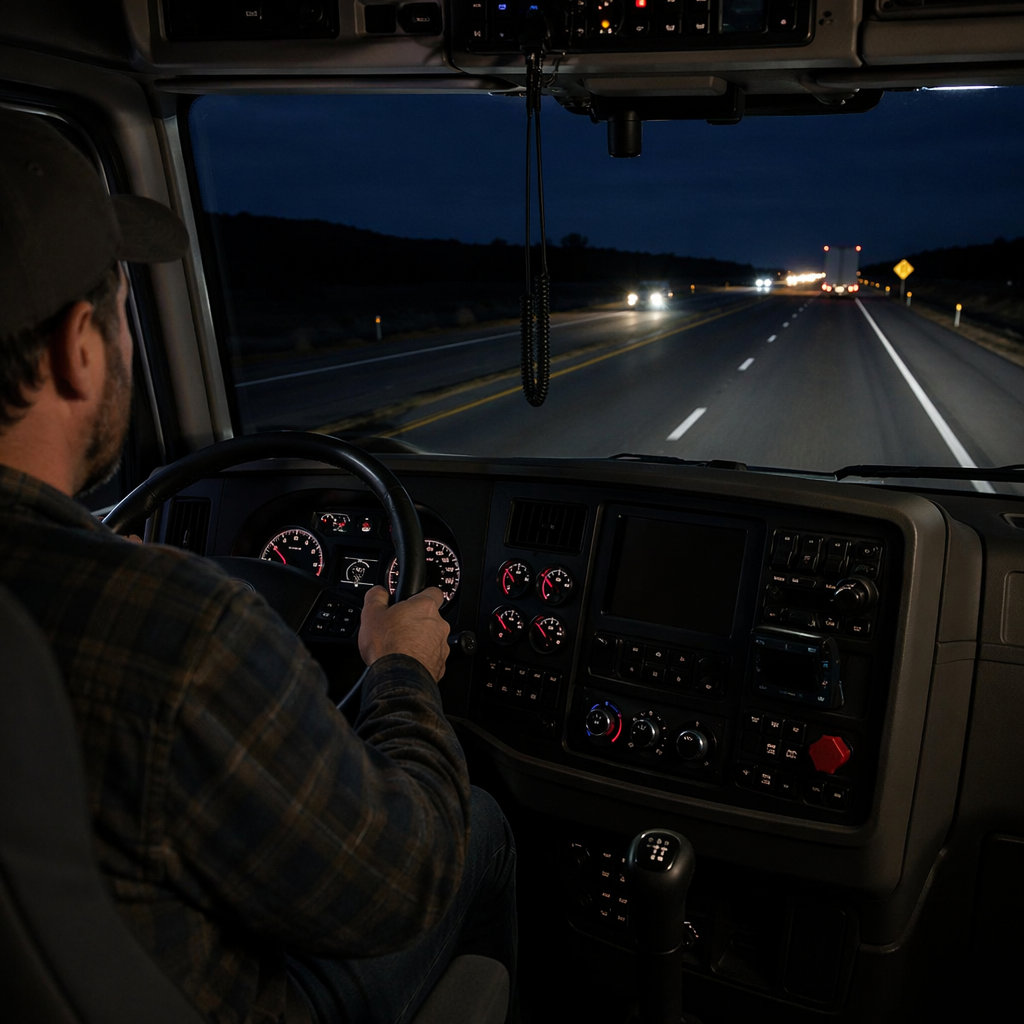
Many long-haul schedules include overnight runs or early-morning delivery windows. Night driving lowers visibility for everyone, but large vehicles feel the effect more sharply because:
- stopping distances are longer
- lane changes take more planning
- hazards can appear suddenly at the roadside
- smaller objects are harder to notice at speed
Even with strong headlights, a person standing near a dark shoulder or an animal near the pavement edge may be difficult to see until the truck is already close. Thermal imaging can help bring attention to warm bodies or moving objects sooner.
Fatigue makes visual scanning harder
Fatigue is one of the biggest safety concerns in long-haul work. Even when a driver is alert enough to remain on task, tired eyes do not scan as efficiently. A thermal camera adds another visual input that can help reduce the chance of overlooking a hazard during a long shift.
That does not mean the camera substitutes for rest. It simply supports a driver who is already managing a demanding workload with limited visual margin.
Rural routes and roadside wildlife are a real issue
Long-haul drivers often travel where deer, elk, livestock, and other animals are common near the pavement. Animals do not always stay in the open long enough for headlights to catch them clearly, and many of them move in unpredictable ways. Because thermal cameras detect body heat, they can make an animal stand out from the background more clearly than a standard forward view.
That can be particularly helpful on two-lane roads, dark frontage roads, and stretches where roadside brush limits sightlines.
Loading docks and terminals are not always well lit
The need for better visibility does not end on the highway. Truck yards, warehouse entrances, and delivery docks often have mixed lighting, moving pedestrians, parked trailers, forklifts, and tight maneuvering space. Thermal cameras can help drivers notice a person, vehicle, or obstacle that may blend into shadows.
For long-haul drivers, this matters because many serious close-call situations happen during low-speed maneuvers rather than on open road.
What thermal cameras can help you notice sooner
A thermal camera is most useful when the hazard has a temperature contrast against its surroundings. In trucking, that usually means:
- pedestrians near the roadside or in a yard
- animals crossing or standing near the shoulder
- other vehicles with warm engines or recent road use
- disabled vehicles or stopped traffic ahead
- workers in dark or poorly lit zones
This is where thermal imaging differs from conventional headlights. Headlights help you illuminate the scene, but they do not always separate a person or animal from a dark background as clearly as a thermal signature can.
That said, thermal cameras are not magic sensors. They work best as part of a wider awareness strategy that includes mirrors, lane discipline, safe speed, and good planning.
Where a thermal camera fits into real truck driving
A thermal camera is most effective when it complements the driver’s normal visual routine instead of replacing it. The best approach is to think of it as an extra layer of information.
On the highway
On long highway runs, the camera can help the driver scan the far edge of the road, especially in darkness or mild weather haze. It may make a pedestrian on the shoulder or an animal near the median more noticeable before it becomes a direct hazard.
In rural and regional transport
For routes that include two-lane roads, logging roads, oilfield access roads, or farm-country highways, thermal imaging can be especially valuable. These roads often have fewer lights, more wildlife, and fewer visual cues for the driver to rely on.
In yards and docks
In close quarters, the camera can help drivers watch for people moving behind trailers, near blind corners, or around poorly lit loading zones. It can be useful during backing, though it should never be treated as a replacement for a spotter, mirrors, or a proper backing procedure.
In bad weather and poor visibility
Thermal cameras are often discussed as a night-driving tool, but they can also help when smoke, light fog, or spray reduces contrast. The image may not always be perfect, but even partial improvement in hazard recognition can be valuable in a truck.
Limitations long-haul drivers should understand
Thermal imaging has strong benefits, but responsible drivers need to know what it does not do.
It does not replace headlights
Headlights still matter for lane position, sign visibility, road-edge awareness, and overall legal driving requirements. Thermal cameras do not project illumination onto the road. They only help reveal heat patterns.
It does not read signs, lane markings, or text
A thermal system is not the right tool for reading traffic signs, spotting lane paint, or identifying road text. Drivers still need normal forward visibility and reflective road cues.
It is not perfect in every weather condition
Thermal imaging can be helpful in poor visibility, but dense fog, heavy rain, snow, and road spray can still reduce how clearly a hazard appears. Drivers should never assume the camera provides full visibility when the weather is severe.
It can miss low-contrast objects
Some objects do not stand out much thermally, especially if their temperature is close to the background. A flat object lying on the pavement may not always be obvious. Drivers still need to watch the road surface and keep a safe following distance.
It is only as useful as the driver’s attention
If a driver treats the camera as an autopilot for hazard detection, the value drops quickly. Thermal imaging works best when the driver remains engaged, scans the full road picture, and responds appropriately.
Driver-assistance upgrades beyond factory tech
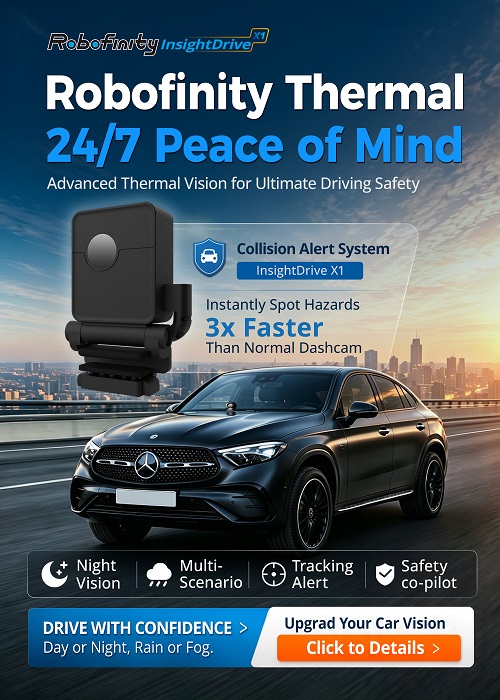
Factory ADAS features can be helpful, but long-haul work often pushes vehicles into conditions they were not specifically optimized for. That is why some drivers look at aftermarket visibility tools as part of a broader safety strategy. Robofinity InsightDrive is one example of a vehicle thermal imaging night vision system designed to support awareness of pedestrians, animals, vehicles, and obstacles in low-light conditions.
The important point is not the brand name itself. It is the idea that driver-assistance technology can be chosen around the actual route a driver runs most often: dark highways, rural corridors, fog-prone areas, or poorly lit delivery zones.
What to look for when evaluating a thermal camera for trucking
If you are considering a thermal imaging system for long-haul use, focus on practical fit rather than marketing claims.
1. Display clarity and placement
The driver should be able to view the image without taking eyes far from the road. A display that is too small, too dim, or awkwardly mounted may be more distracting than helpful.
2. Detection behavior
Some systems are better at highlighting moving heat sources, while others prioritize a wider scene view. Think about whether your routes are mostly highway, rural, urban, or yard-based.
3. Alert style
Some systems provide real-time alerts or visual highlighting when they detect pedestrians, animals, or vehicles. Alerts can be useful, but they should not be so sensitive that they become distracting.
4. Durability for commercial use
Truck environments involve vibration, temperature swings, moisture, and dust. A system designed for passenger cars may not be ideal for a long-haul truck unless it can handle tough daily conditions.
5. Camera angle and mounting position
The right mounting setup matters. A camera that is positioned poorly may miss roadside hazards or create an awkward viewing angle. Installation should support the driver’s normal line of sight without blocking other important information.
6. Ease of maintenance
A thermal camera should be easy to keep clean and inspect. Like any external sensor, it can become less effective if it is covered in grime, slush, or road film.
Practical driving habits that make thermal cameras more effective
A thermal camera is most valuable when it is part of disciplined professional driving. These habits help:
- keep a safe following distance
- reduce speed in rural or foggy conditions
- scan both shoulders, not just the lane ahead
- watch for movement near medians, tree lines, and dark ditches
- use mirrors frequently and intentionally
- be extra cautious near yards, docks, and pedestrian zones
- keep the camera lens clean and unobstructed
- avoid overtrusting any single safety tool
The goal is to use thermal imaging as a support layer, not as a reason to relax your driving standards.
Who benefits most from thermal cameras
Thermal cameras are not essential for every commercial driver, but they can be especially useful for:
- owner-operators who run long night miles
- regional and long-haul drivers on rural routes
- fleets operating in areas with frequent wildlife crossings
- drivers who often enter dark job sites or industrial yards
- teams that work in fog, snow, or low-light environments
- truckers who want an added layer of awareness beyond mirrors and headlights
Drivers who stay mostly on well-lit urban corridors may see less benefit. The value tends to rise as visibility drops and the consequences of missing a hazard become greater.
Thermal cameras vs. other truck safety tools
It helps to compare thermal imaging with familiar equipment.
Mirrors
Mirrors are essential for lane changes, backing, and overall situational awareness. Thermal cameras do not replace them.
Backup cameras
Backup cameras are excellent for close-range maneuvering. Thermal cameras are more useful for seeing heat signatures farther ahead or in darker conditions.
Dash cams
Dash cams record events. Thermal cameras are about live hazard awareness.
Blind-spot systems
Blind-spot monitors help with side coverage. Thermal imaging is more about forward and roadside visibility in low-light environments.
A good truck safety setup uses the right tools together. No single system covers everything.
FAQ
Do long-haul truck drivers really need thermal cameras?
Not every driver needs one, but they can be very helpful for routes that include night driving, rural roads, poor lighting, wildlife, or frequent yard maneuvers.
Can a thermal camera replace regular headlights?
No. Headlights are still necessary for road illumination, sign visibility, and legal driving. Thermal cameras only add another layer of hazard awareness.
Are thermal cameras useful in bad weather?
They can be, but they are not perfect. Light fog or moderate visibility problems may still allow the system to help, while heavy rain, snow, or dense fog can reduce effectiveness.
What do thermal cameras detect best?
They tend to be strongest at highlighting warm bodies and heat-producing objects such as pedestrians, animals, and vehicles.
Are thermal cameras hard to use while driving?
They should be easy to interpret at a glance. If a system is distracting or complicated, it may not be a good fit for professional driving.
Should fleets consider thermal imaging for every truck?
Not necessarily. Fleets should weigh route type, night mileage, weather exposure, and operational needs before deciding whether the added visibility is worth it.
Conclusion
For long-haul truck drivers, thermal cameras make sense because they address a real-world problem: limited visibility in the conditions where trucks often operate. Night routes, rural roads, poor weather, loading docks, and roadside wildlife all create moments where standard vision can come up short. A thermal imaging system can help highlight people, animals, and vehicles sooner, giving drivers more time to react.
Still, the technology works best when it is treated as a support tool rather than a safety guarantee. Good driving habits, proper speed, clean equipment, and steady attention remain essential. If your routes regularly take you into dark or low-visibility environments, thermal imaging is worth understanding as part of a practical truck safety strategy.