


Choosing the right 7-seater SUV in 2026 is about much more than just finding enough seats. For large families, the best 3-row SUV needs to balance space, safety, comfort, fuel efficiency, technology, and day-to-day practicality. Some families need maximum cargo room for road trips and sports gear. Others want easy third-row access, strong towing ability, or a hybrid powertrain to help with fuel costs. The market in 2026 is packed with excellent options, which makes the decision both exciting and challenging.
- What Matters Most in a Family SUV
- Seating comfort and access
- Cargo flexibility
- Safety and driver assistance
- Powertrain efficiency
- Ride quality and daily usability
- Best 3-Row SUVs for Large Families in 2026
- Toyota Grand Highlander
- Honda Pilot
- Kia Telluride
- Hyundai Palisade
- Chevrolet Traverse
- Mazda CX-90
- Toyota Sequoia
- How these 7-seater SUV choices compare
- Gas, Hybrid, or Electric?
- How to Choose the Right One for Your Family
- Final Thoughts
If you are shopping for the best family SUV this year, the good news is that automakers have made major improvements in third-row comfort, infotainment, driver assistance, and cabin flexibility. The challenge is narrowing down which model truly fits your family’s needs. Below, we break down the most important factors to consider and highlight some of the strongest choices for large households. If you want to plan your purchase carefully, it also helps to think beyond the sticker price and compare ownership costs, family needs, and long-term reliability before you choose a 7-seater SUV.
Table of Contents
What Matters Most in a Family SUV
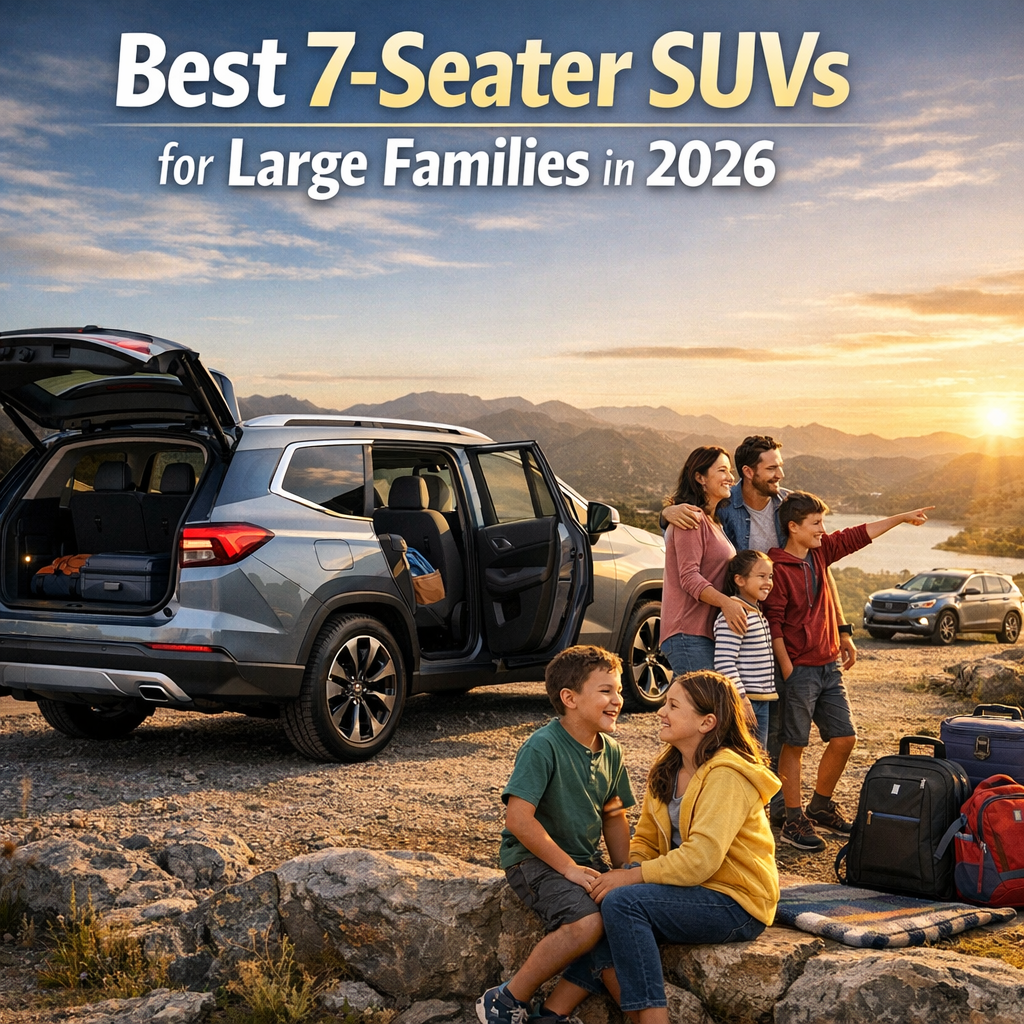
Before comparing models, it helps to define what “best” means for your situation. A 7-seater SUV may look ideal on paper, but not every three-row SUV works well for real family life. Some are better for hauling children and gear every day, while others shine on long highway drives, winter travel, or weekend adventures. The best family choice is the one that matches your routine instead of forcing you to adapt to the vehicle.
Seating comfort and access
The third row is often the deciding factor. In some SUVs, that last row is best reserved for small children. In others, adults can sit there comfortably for shorter trips. Look for easy second-row sliding and folding seats, wide door openings, and a cabin layout that makes loading kids simple. A 7-seater SUV should make school runs and family outings easier, not more stressful.
Pay attention to how the seats fold, how much legroom is available in the second and third rows, and whether the floor is flat enough for easier entry. Small details can have a big impact when you are buckling in children, helping grandparents climb in, or loading a full car for a weekend away.
Cargo flexibility
Large families rarely travel with only people. Strollers, groceries, backpacks, sports equipment, and luggage all need space. A good 3-row SUV should offer practical cargo room even when the third row is in use. That matters just as much as passenger volume because daily life often involves a mix of both. A roomy 7-seater SUV can save you from constantly folding seats or leaving gear behind.

Look for split-folding rear seats, a low lift-over height, underfloor storage, and a hatch opening that makes it easy to stack boxes or groceries. When the third row is folded flat, the vehicle should transform into a capable hauler for home projects, vacation bags, or bulky items.
Safety and driver assistance
In 2026, most top SUVs include advanced safety technology such as automatic emergency braking, blind-spot monitoring, adaptive cruise control, lane-centering assist, and rear cross-traffic alerts. For families, these features are no longer luxuries—they are essentials. A well-equipped 7-seater SUV should also offer strong crash-test performance and reliable visibility for busy parking lots, school drop-offs, and highway merging.
For a helpful safety reference, see the National Highway Traffic Safety Administration. Checking official safety ratings can help you compare models more confidently and narrow your options before visiting a dealership.
Powertrain efficiency
Fuel economy matters more than ever, especially for families driving long distances or using their SUV as a daily commuter. Hybrid and plug-in hybrid versions are becoming increasingly popular, though traditional gas engines and some EV models still offer compelling value. The right powertrain can make a major difference in how expensive the vehicle feels to own over time, especially if your 7-seater SUV is used for commuting, errands, and weekend trips all in the same week.
Think about your annual mileage, your access to charging, and how often you drive with a full cabin. A powertrain that saves fuel in city traffic may be the smartest choice even if it costs a little more upfront.
Ride quality and daily usability
Large families spend a lot of time in the car, so comfort matters. A smooth suspension, quiet cabin, and supportive seats can make a major difference on long drives. Some three-row SUVs feel more like trucks, while others focus on a softer, more car-like ride. The best 7-seater SUV for your family should reduce fatigue during everyday driving, not add to it.
Also think about visibility, parking aids, phone connectivity, and how easily the vehicle fits into your garage or driveway. A great family vehicle is one you do not mind living with every day.
Best 3-Row SUVs for Large Families in 2026
Here are some of the strongest candidates if you are trying to decide which seven-passenger vehicle deserves a spot in your driveway. If you are also comparing ownership costs, you may want to read Buying a Car: Smart Tips for the Best Deal before you visit a dealership. It can help you approach the purchase with a clearer budget and better negotiating strategy.
Toyota Grand Highlander
The Toyota Grand Highlander is one of the most family-friendly SUVs on the market because it solves one of the biggest complaints about three-row models: third-row space. It offers a roomy cabin, generous cargo capacity, and a hybrid option that makes it especially appealing for budget-conscious families. For many shoppers, it is one of the most complete answers in the 7-seater SUV category.
The Grand Highlander stands out for its practical packaging. Adults can actually fit in the third row better than in many rivals, and the overall cabin feels calm and upscale without being overly expensive. It also comes with a strong set of standard safety features and Toyota’s reputation for long-term reliability. That combination makes it a smart choice for families that want peace of mind as well as space.
It is also easy to live with during busy weeks because the controls are straightforward and the interior layout is sensible. If you want a three-row vehicle that feels like it was designed by people who understand family life, this one belongs near the top of your list.
Honda Pilot
The Honda Pilot has long been a favorite among families, and the 2026 version continues that tradition with a cabin designed for everyday usability. It offers a comfortable ride, flexible seating arrangements, and easy access to the third row. The Pilot is one of those vehicles that may not call attention to itself, but it quietly does nearly everything a large family needs.
What makes the Pilot especially attractive is its blend of space and simplicity. Controls are intuitive, storage bins are cleverly placed, and the interior is durable enough to handle years of family use. For parents who want a dependable all-around SUV rather than a flashy one, the Pilot remains a top pick. As a practical 7-seater SUV, it is one of the easiest to recommend for long-term ownership.
It also does a good job of balancing daily driving with road-trip comfort. If your family wants a vehicle that feels predictable, sensible, and easy to trust, the Pilot makes a strong case.
Kia Telluride
The Kia Telluride remains one of the most compelling 3-row SUVs thanks to its upscale interior, excellent packaging, and strong value. It delivers a premium feel without the premium price tag, making it especially appealing for larger families who want luxury-like comfort without moving into luxury-brand territory.
The Telluride’s third row is more usable than many competitors, and the second row is spacious enough for car seats or growing kids. Add in high-quality materials, a polished ride, and modern tech, and it is easy to understand why the Telluride continues to be such a popular choice. Many families looking for a stylish 7-seater SUV are drawn to the Telluride because it feels rich without being difficult to justify financially.
For parents who want a refined cabin, good road manners, and a strong list of features, the Telluride is a standout. It feels modern, well thought out, and ready for family duty.
Hyundai Palisade
Closely related to the Telluride, the Hyundai Palisade offers a similarly refined experience with its own distinct personality. It emphasizes comfort, quietness, and thoughtful family features. The available premium trims can feel near-luxury, while the lower trims still deliver strong value.
Families will appreciate the easy-to-use infotainment system, abundant USB ports, and available second-row captain’s chairs. The Palisade is ideal for buyers who want a smooth, comfortable SUV that makes every trip feel a little more relaxed. It is a particularly appealing 7-seater SUV for households that spend a lot of time on the road and want the cabin to feel calm and organized.
The Palisade also has the kind of layout that makes it easy for different drivers in the family to jump in and feel comfortable quickly. That ease of use matters more than many shoppers expect.
Chevrolet Traverse
If interior space is your top priority, the Chevrolet Traverse deserves serious consideration. It is one of the roomiest mainstream three-row SUVs, with a focus on cargo flexibility and passenger comfort. The latest versions have also become more modern in appearance and technology.
The Traverse is a strong choice for big families who routinely carry both passengers and gear. It offers a practical layout, a good-sized third row, and a cabin that feels built for real-world family life. For those who want space above all else, it may be one of the best answers. In the 7-seater SUV segment, it stands out for families who need to load up without constantly rearranging the cabin.
If you often use all three rows and still need room for bags, groceries, or travel gear, the Traverse can be a very smart fit. Its strength is not flash; it is usefulness.
Mazda CX-90
The Mazda CX-90 brings a more premium driving experience to the 7-seater SUV segment. While some three-row SUVs prioritize sheer utility, the CX-90 adds elegant styling, sharper handling, and a more refined cabin. It is a great option for families who want their SUV to feel enjoyable behind the wheel.
The interior is upscale, the materials are impressive, and available hybrid powertrains improve efficiency. Its third row is not the largest in the class, but the overall experience is excellent if your family values comfort, style, and driving dynamics. For buyers who want an SUV that feels more engaging and polished, the CX-90 offers a compelling blend of personality and practicality.
This is the model to consider if your priorities include a quieter cabin, premium details, and a more sophisticated feel without moving to a luxury badge.
Toyota Sequoia
For families who need serious capability, the Toyota Sequoia offers a full-size SUV experience with strong towing, a bold presence, and enough room for larger households. It is especially well-suited for families that travel with lots of gear, tow boats or campers, or need extra confidence in difficult weather and road conditions.
Because it is a full-size model, the Sequoia gives you a more commanding driving position and a bigger overall footprint. That can be a plus for some buyers and a drawback for others, depending on parking and city driving needs. But as a large family hauler, it is hard to ignore. If your ideal 7-seater SUV needs to double as a tow vehicle or long-distance road-trip machine, the Sequoia deserves attention.
Its size also makes it appealing for families that regularly travel with more people and more equipment than most midsize SUVs can comfortably handle.
How these 7-seater SUV choices compare
When you compare these options side by side, the best fit often comes down to daily use. The Toyota Grand Highlander and Honda Pilot are especially strong for balanced family duties. The Kia Telluride and Hyundai Palisade lean toward comfort and value. The Chevrolet Traverse gives you more room for people and cargo, while the Mazda CX-90 adds a more premium driving experience. The Toyota Sequoia is the pick for buyers who want maximum size and capability.
For many shoppers, the best 7-seater SUV is the one that solves the most annoying part of family life. If your kids are getting older, a roomy second row and easy third-row access matter a lot. If you haul sports gear or luggage every week, cargo flexibility may matter more than luxury touches. If you keep vehicles for a long time, resale value and reliability should carry more weight.
It can also help to test drive multiple models back to back. That makes it easier to notice differences in visibility, seat support, road noise, and how naturally the cabin fits your family’s habits.
Gas, Hybrid, or Electric?
One of the biggest questions in 2026 is whether to choose a gas, hybrid, or electric 3-row SUV. That decision affects not only fuel spending, but also refueling convenience, maintenance habits, and long-term family use. For broader ownership planning, the guidance at EPA Green Vehicles can help you compare efficiency and emissions information.
Gas SUVs
Traditional gasoline SUVs still make sense if you want lower upfront costs, longer range, and easy refueling. They are often the most familiar choice for buyers who tow or take long road trips. If your family travels to places where charging is inconvenient, a gas-powered 7-seater SUV may still be the most practical option.
Gas engines also tend to be simple to live with in daily use. For buyers who want a straightforward vehicle and do not want to plan around charging stops, they remain a dependable choice.
Hybrid SUVs
Hybrids are increasingly the sweet spot for families. They offer better fuel economy without sacrificing range or convenience. For many households, a hybrid 7-seater SUV provides the best balance of savings and practicality.
That balance is especially helpful for families that split time between school commutes, errands, and longer highway drives. You get meaningful efficiency benefits without changing your routine very much.
Electric SUVs
Electric three-row SUVs are improving fast, but charging convenience and range remain important considerations. If your family has home charging and mainly drives locally, an EV can work beautifully. If you frequently travel long distances, you will want to compare charging access carefully.
Before choosing an electric 7-seater SUV, think about your daily mileage, winter driving habits, and how much time you are willing to spend planning routes around charging stations. EVs can be excellent family vehicles, but the right fit depends on your lifestyle.
In practice, the right powertrain often depends on your routine. A family that does school runs, grocery trips, and weekend activities in town may benefit most from a hybrid. A household that tows, road-trips, or lives far from reliable charging may still prefer a gas model. The latest 7-seater SUV choices make both approaches easier to live with than before.
How to Choose the Right One for Your Family
The best SUV for one large family may not be the best for another. To narrow your choice, think about how you actually use the vehicle. A stylish model may look great in photos, but a practical one will feel better every day once school runs, groceries, and weekend activities become part of the routine.
Ask these questions:
- Will the third row be used daily or only occasionally?
- Do you need easy car-seat installation in the second row?
- How much cargo space do you need with all seats in use?
- Is fuel economy a major concern?
- Do you tow, road trip, or drive in snowy conditions often?
- Do you prefer luxury comfort or maximum value?
If your third row will be used often, prioritize room and access above style. If your kids are still young, focus on second-row flexibility and storage. If you drive a lot, a hybrid may save money over time. And if you want a more premium feel, consider options like the Mazda CX-90 or higher trims of the Telluride and Palisade. The right 7-seater SUV should fit your habits now and still make sense as your family grows.
It also helps to test the vehicle with your real family setup. Bring the car seats, folding stroller, or sports bags you use most often. Sit in the third row yourself. Open the rear hatch with the seats up and folded. Small details can make a big difference in daily life, especially when you are evaluating a 7-seater SUV for years of use.
If possible, compare the vehicles on the same day so the differences are fresh in your mind. The best family vehicle is often the one that feels easiest to live with, not just the one with the longest features list.
Budget, warranty, and ownership costs
Price matters, but so do the costs you will face after purchase. Insurance, fuel, maintenance, and depreciation can all change the true cost of ownership. A lower-priced vehicle may not always be the cheapest one to own, especially if it uses more fuel or lacks the features your family really needs.
Warranty coverage is another factor worth checking. Families that keep vehicles for a long time often value longer coverage, strong reliability, and good resale potential. A 7-seater SUV can be a major investment, so it pays to think about the next five to ten years instead of just the next payment.
Technology and convenience features
In family life, convenience features can matter more than flashy performance numbers. Look for multiple USB ports, wireless smartphone integration, rear-seat reminders, easy-to-clean materials, and a user-friendly infotainment system. Features like a hands-free liftgate, power-folding seats, and a surround-view camera can also make everyday use much easier.
These details may seem minor at first, but they save time and reduce frustration when your vehicle is busy from morning to night. A thoughtful 7-seater SUV makes it easier to stay organized and less likely to feel chaotic during the week.
Final Thoughts
There is no single “best” 7-seater SUV for every large family in 2026, but there are several excellent choices depending on your priorities. The Toyota Grand Highlander and Honda Pilot stand out for practicality and everyday family use. The Kia Telluride and Hyundai Palisade deliver a near-luxury experience with strong value. The Chevrolet Traverse leads when cargo space is a top concern. The Mazda CX-90 is ideal for buyers who want refinement and driving enjoyment. And the Toyota Sequoia is a strong pick for families needing full-size capability.
The right choice comes down to how much space you need, how often you use the third row, and what kind of driving experience matters most. For large families, the best SUV is not just one that fits everyone—it is one that makes every trip easier, safer, and more comfortable. If you shop carefully, the right 7-seater SUV can serve as your family’s everyday vehicle, road-trip companion, and long-term investment all at once. That is why choosing the right 7-seater SUV is worth the extra time, attention, and comparison shopping.
Take your time, compare the fit, and think about how the vehicle will work not just today, but five years from now. The best 7-seater SUV is the one that keeps your family comfortable, organized, and ready for whatever comes next.
When the shortlist is down to two or three models, revisit the one that feels easiest to use in real life. A well-chosen 7-seater SUV should make family travel smoother from the first week you own it, and it should still feel like the right answer after years of school runs, vacations, and weekend errands.