

Car Night Vision Systems vs LED headlights solve different night-driving problems, but both can improve safety when you choose based on how you actually drive. LED headlights make the road visible, while advanced night vision helps you detect hazards that are difficult to notice with light alone—especially in darkness, fog, rain, or snow.
- What Each Technology Is Designed to Do
- LED headlights: illuminate the road ahead
- Car Night Vision Systems: detect hazards that are hard to see
- How LED Headlights Help, and Where They Fall Short
- How Car Night Vision Systems Help, and Where They Fall Short
- Which One Helps More in Real Driving?
- What Drivers Often Get Wrong About the Comparison
- Where Aftermarket Night Vision Fits
- How to Choose Based on Your Driving Needs
- LED headlights are the priority if you:
- Car Night Vision Systems are more compelling if you:
- Both make sense if you:
- Practical Buying Advice for Night Driving Upgrades
- FAQ
- Are LED headlights enough for safe night driving?
- Do car night vision systems work in daylight?
- Can car night vision systems replace headlights?
- Is night vision useful in cities?
- What is the biggest advantage of car night vision systems over headlights?
- Should I upgrade headlights first or buy car night vision systems first?
- Where can I learn more about safer night driving habits?
- Conclusion
If you’re deciding what matters more for your next upgrade, the practical answer is that lighting and sensing work best together. In this guide, you’ll learn what each technology is designed to do, where it falls short, and how to pick the right option for real roads and real conditions.
Table of Contents
- What Each Technology Is Designed to Do
- How LED Headlights Help, and Where They Fall Short
- How Car Night Vision Systems Help, and Where They Fall Short
- Which One Helps More in Real Driving?
- What Drivers Often Get Wrong About the Comparison
- Where Aftermarket Night Vision Fits
- How to Choose Based on Your Driving Needs
- Practical Buying Advice for Night Driving Upgrades
- FAQ
- Conclusion
What Each Technology Is Designed to Do
A useful comparison starts with the basic job of each system.
LED headlights: illuminate the road ahead
LED headlights are a lighting system. Their purpose is straightforward: make the road visible to the driver and help other drivers see your vehicle. Modern LED headlights are popular because they are efficient, durable, and often brighter than older halogen setups. They can improve forward visibility, road sign visibility, and lane marking visibility, especially on dark roads.
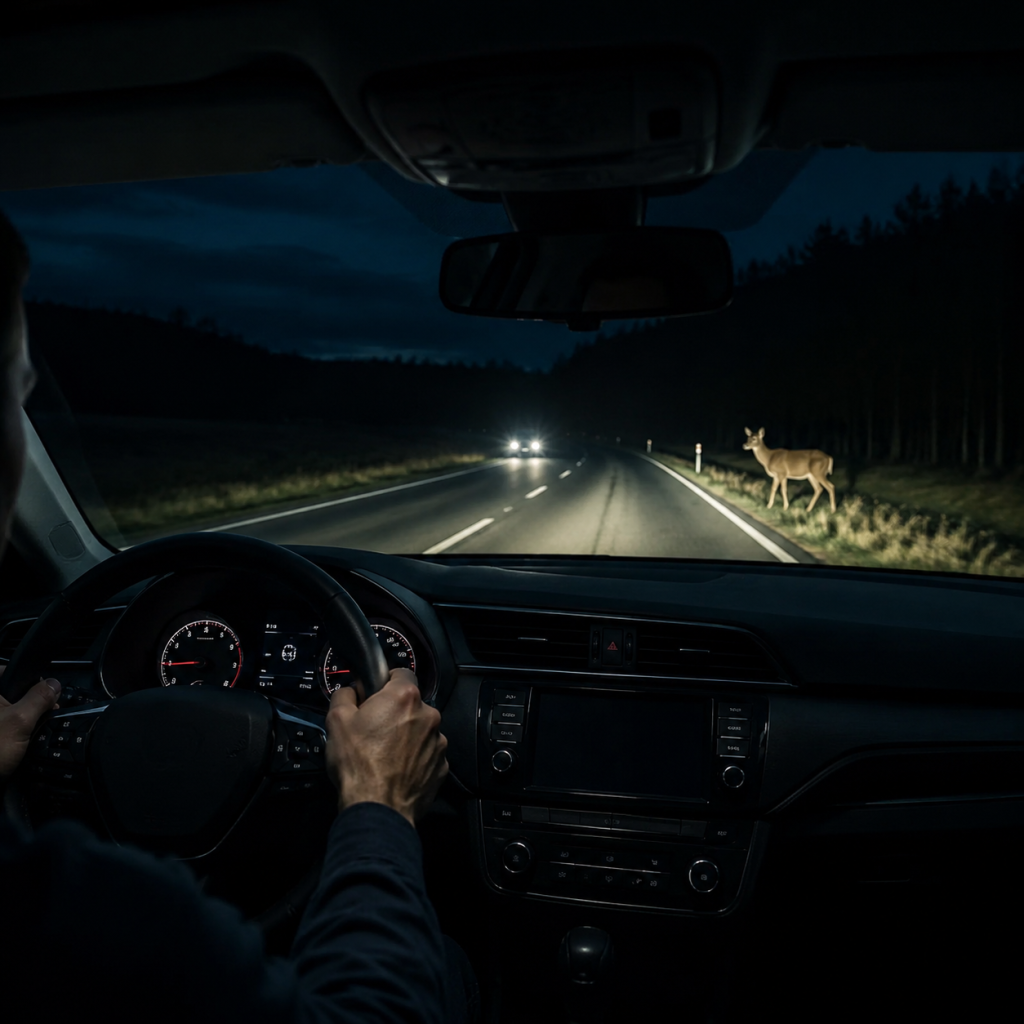
But headlights have limits. They only illuminate what is inside the beam pattern. If a pedestrian is dressed in dark clothing, if an animal is standing near the edge of the road, or if an obstacle is outside the direct beam, you may not notice it early enough. Glare from oncoming traffic, rain, fog, or snow can also reduce how well the light helps.
Car Night Vision Systems: detect hazards that are hard to see
Car Night Vision Systems are driver-assistance technologies, not lighting systems. They use thermal imaging or other sensing methods to help identify heat signatures and objects in darkness or poor visibility. In practical terms, car night vision systems are meant to make hidden road risks easier to notice before they enter the range of your headlights.
More EV News
That makes them useful for spotting pedestrians, animals, vehicles, and roadside hazards in situations where visible light alone is not enough. The goal is better awareness, not replacing the driver’s own judgment. If you want a deeper breakdown of how the technology works in practice, see our Car Thermal Night Vision System: Is It Really Useful? (2026 Guide).
How LED Headlights Help, and Where They Fall Short
LED headlights are a major improvement over older lighting setups, but they are still bound by physics.
Strengths of LED headlights
LED headlights are useful because they:
- brighten the road directly in front of the vehicle
- help you see lane markings, signs, and road edges
- improve visibility compared with many older headlight types
- usually last longer and use less energy than halogen bulbs
- can provide a cleaner, more focused beam pattern when properly designed
For most drivers, that means a safer and more comfortable night-driving experience. Good headlights are the first line of defense after driving behavior itself.
Limitations of LED headlights
Even excellent headlights do not solve every night-driving problem. Their key limits include:
- they only light what is in their beam pattern
- curves, hills, and dips can hide hazards until you are close
- glare from reflective signs, wet pavement, fog, or opposing traffic can reduce clarity
- they may not reveal a person or animal at the side of the road until later than you would like
- they do not detect movement or identify objects on their own
This is why LED headlights should be viewed as lighting, not sensing. They support visibility, but they do not actively warn you about road hazards.
How Car Night Vision Systems Help, and Where They Fall Short
Car Night Vision Systems add a different kind of value. They are not there to make the road brighter; they are there to help you notice what standard headlights may miss.
Strengths of car night vision systems
A well-designed car thermal night vision system can help with:
- pedestrian detection in darkness
- animal detection on rural roads
- early awareness of vehicles or obstacles ahead
- visibility in fog, rain, or snow where ordinary cameras struggle
- detection beyond the immediate reach of headlights
That last point matters. Headlights illuminate the road in front of you, but car night vision systems may help you notice a hazard sooner, giving you more time to react. In night driving, time is often the real advantage. More reaction time can mean smoother braking, less panic steering, and better overall control.
Car Night Vision Systems can also be helpful when light conditions are inconsistent. For example, when you move between street lighting and dark stretches, heat-sensing displays may keep awareness more consistent than relying on glare and shadow.
For drivers who want broader context on the safety side of dark-road driving, the tips in Night Vision Driving: 7 Powerful Safety Tips are a useful companion read.
Limitations of car night vision systems
Car Night Vision Systems are helpful, but they are not magic. Drivers should understand the limits:
- they are a support tool, not a substitute for attention
- they do not eliminate blind spots, physics, or stopping distance
- they may not show every road hazard equally well
- they do not replace headlights, mirrors, turn signals, or careful scanning
- the driver still needs to interpret what is displayed and respond properly
That last point is important. Car night vision systems may highlight a threat earlier, but they do not brake, steer, or decide for you. If you treat the display as a guarantee, you can create new risk.
Which One Helps More in Real Driving?
The better option depends on the scenario, and the “winner” can change by road type, speed, and weather.
On highways
Highway driving at night is often about speed, distance, and consistency. LED headlights help you track lane markings, traffic ahead, and road signs. Car night vision systems can add value if wildlife, unlit obstacles, or crossing pedestrians are possible, but they are not a substitute for disciplined speed management and following distance.
For most highway drivers, headlights are the foundation. Car night vision systems are best viewed as a layer that can help you spot threats earlier at the edges of what your beams clearly show.
On rural roads
Rural roads are where car night vision systems start to matter more. There may be no street lighting, more sharp turns, less predictable shoulder space, and a higher chance of encountering animals. LED headlights still matter, but they cannot always give enough advance warning. This is where thermal imaging can be especially useful because it may reveal a person or animal before your beams fully reach them.
If you often drive where animals cross or where dark ditches line the roadway, car night vision systems can offer earlier awareness—so you can slow down and adjust before the hazard is close.
In fog, rain, or snow
Bad weather changes the equation again. LED headlights still help, but glare and scattering can limit how effective they are. Car night vision systems are often discussed in these conditions because they can support awareness when visible-light systems are strained. That said, no technology removes the need to slow down and drive conservatively in poor weather.
If the main concern is visibility, our Night Driving Safety in Fog: Key Tips article offers practical advice that applies whether you use LED headlights alone or with thermal sensing.
In city traffic
In well-lit urban areas, LED headlights may be enough for many drivers. Street lighting, reflective signage, and lower speeds reduce the need for extra sensing. Car night vision systems may still help, especially where pedestrians step out unexpectedly or where intersections are poorly lit, but their value is usually less dramatic than on dark rural roads.
What Drivers Often Get Wrong About the Comparison
A common mistake is thinking this is an either-or choice. It is not.
LED headlights and car night vision systems are complementary. Headlights help you see the road. Car night vision systems help you notice hazards that may not be obvious in your direct line of sight. If you treat car night vision systems as a replacement for good lighting, you will misunderstand the technology. If you treat headlights as enough for every situation, you may underestimate how often hidden hazards appear at night.
Another mistake is expecting one system to solve driver fatigue. Tired driving, distraction, speed, and poor judgment still create risk even with advanced equipment. The best safety technology is still limited by the person behind the wheel.
Where Aftermarket Night Vision Fits
Some drivers are looking beyond factory lighting upgrades and into driver-assistance tools. That is where aftermarket thermal imaging can be relevant. Aftermarket setups vary widely, but most are intended to act as an added awareness layer rather than a complete safety system.
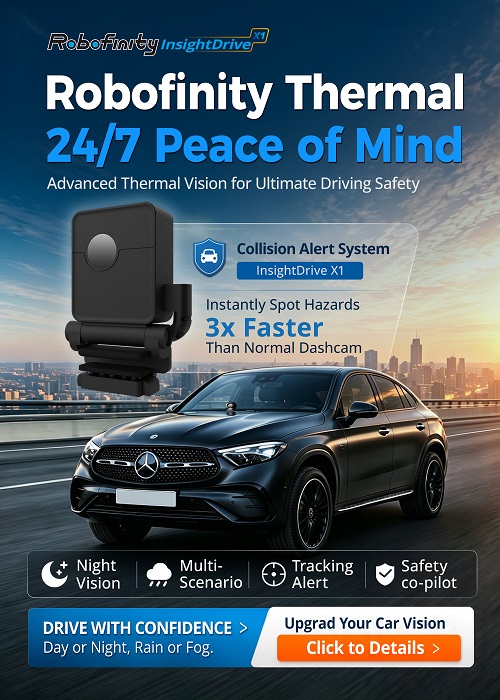
Robofinity InsightDrive, for example, is marketed as a vehicle thermal night vision system designed to support awareness of pedestrians, animals, vehicles, and obstacles in low-light and poor-visibility conditions. It is best understood as an added layer of road awareness, not a replacement for headlights or safe driving habits.
This kind of system can make the most sense for drivers who frequently travel at night on rural roads, highways, or in weather that reduces visibility. For a closer look at installation-style use cases, you can also review Vehicle Mounted Thermal Camera for Night Vision.
Drivers comparing visibility tech may also want to understand related safety tradeoffs, such as how lighting and tint interact. Our guide on Window Tint: Should You Tint the Windows of a New Car? can help with that broader decision.
Bonus: why “better lighting” doesn’t always equal “better detection”
Even when LED headlights look brighter, you may still struggle to detect hazards at the edges of your beam pattern or beyond your immediate path. Car night vision systems are built to address that gap by sensing differences in heat rather than relying only on reflected light.
How to Choose Based on Your Driving Needs
If you are deciding whether to invest in better headlights, car night vision systems, or both, start with your actual driving patterns.
LED headlights are the priority if you:
- drive mostly in well-lit cities
- want a reliable lighting upgrade
- are replacing weak or aging factory lights
- care about better forward illumination and energy efficiency
- need an affordable, practical improvement
Car Night Vision Systems are more compelling if you:
- drive often on dark rural roads
- frequently encounter animals near the road
- travel long distances at night
- deal with fog, snow, or heavy rain regularly
- want earlier hazard awareness beyond the beam of the headlights
Both make sense if you:
- drive in mixed environments
- prioritize night-driving safety
- want stronger illumination plus earlier detection
- own a vehicle that you plan to keep for a long time
- regularly transport family, passengers, or cargo at night
The best answer is often not choosing one over the other. It is making sure your headlights are strong and properly aimed, then deciding whether car night vision systems add meaningful value for your routes.
For many drivers, a well-rounded setup pairs lighting upgrades with safer habits. If that is your situation, the article on Far Infrared Automotive Night Vision: 7 Powerful Safety Benefits can help you compare sensing options more clearly.
Practical Buying Advice for Night Driving Upgrades
When evaluating any night-driving technology, ask a few simple questions:
-
What problem am I trying to solve?
If you want better illumination, focus on headlight performance. If you want earlier awareness of hazards, look at car night vision systems. -
Where do I drive most?
Rural, mountainous, and poorly lit roads increase the usefulness of thermal imaging systems. -
How often do I drive in bad weather?
Fog, rain, and snow can make extra sensing more valuable. -
Do I understand the limits?
No system should be treated as a complete safety solution, including car night vision systems. -
Will I still drive responsibly?
Technology only helps when it supports good driving habits.
That framework keeps the decision practical instead of emotional. It also helps prevent overspending on features that do not fit your actual use case.
For the safest results, think of night-driving technology in layers: lighting first, sensing second, and attentive driving always.
Practical setup tips
- Aim your headlights correctly. Even the best LEDs can underperform if they are misaligned.
- Use lower speeds when visibility drops. Car night vision systems can help you see threats earlier, but stopping distance still depends on speed and traction.
- Learn how the display behaves. Different units may highlight heat differently, so take time to understand the signals.
- Keep expectations realistic. Car night vision systems can improve awareness, not replace mirror checks, lane discipline, or safe following distance.
FAQ
Are LED headlights enough for safe night driving?
For many drivers, LED headlights are a strong baseline, but they are not enough in every situation. They improve illumination, yet they cannot detect hazards that appear outside the beam or in poor visibility.
Do car night vision systems work in daylight?
Car Night Vision Systems are typically designed primarily for low-light and poor-visibility conditions. Their main value is at night, in fog, rain, snow, or other situations where visible-light viewing is limited.
Can car night vision systems replace headlights?
No. Car night vision systems support awareness, but they do not replace headlights. You still need proper lighting to see the road and to remain visible to other drivers.
Is night vision useful in cities?
Sometimes, but its biggest advantage is usually on dark roads, rural routes, and in weather that reduces visibility. In well-lit urban areas, the benefit is often smaller.
What is the biggest advantage of car night vision systems over headlights?
The main advantage is earlier hazard awareness. Car night vision systems can help identify pedestrians, animals, or obstacles before they are easy to see with headlights alone.
Should I upgrade headlights first or buy car night vision systems first?
Most drivers should start with proper headlights, because lighting is essential. Car night vision systems become more valuable when your driving regularly includes dark roads, poor weather, or wildlife exposure.
Where can I learn more about safer night driving habits?
A good starting point is NHTSA’s night driving safety guidance, which covers visibility, speed, and hazard awareness in low-light conditions.
Conclusion
LED headlights and car night vision systems serve different purposes, and that is why they work best when you understand them as complementary tools. Headlights illuminate the road. Car night vision systems help reveal hazards that may not be visible soon enough through light alone.
The most practical approach is to make sure your headlights are doing their job, then decide whether car night vision systems add meaningful value for the conditions you actually face. If you drive often at night or in low-visibility conditions, learning more about thermal imaging technology can help you make a more informed choice—while still using the driver’s judgment as the final safety system.
Before you compare features, it also helps to remember that not every headlight or sensing upgrade is equally useful in every environment. The right setup is the one that improves real-world awareness on the roads you drive most often.
Ultimately, safer night driving comes from combining the right equipment with the right habits. That means strong lighting, sensible speed, careful scanning, and a clear understanding of what your vehicle can and cannot detect.