

STG Thermal Night Vision for Vehicle upgrades are becoming one of the most practical ways to improve visibility after dark without spending a fortune. Night driving brings real challenges: reduced contrast, glare from oncoming headlights, fog, rain, wildlife crossings, and pedestrians wearing dark clothing can all make hazards harder to spot in time. A thermal night vision system helps solve that problem by detecting heat signatures, making objects and living beings stand out even when the road ahead looks nearly invisible to the naked eye.
- What Makes Thermal Night Vision Different
- Why STG Thermal Night Vision for Vehicle Stands Out
- Key Benefits for Everyday Drivers
- How It Supports Safer Driving in Poor Conditions
- Is It Easy to Install and Use?
- Who Can Benefit Most from This Upgrade?
- What to Look for in a Thermal Night Vision System
- How Thermal Vision Fits Into Better Driving Habits
- A Smart, Affordable Step Toward Better Safety
For many drivers, the idea of thermal imaging sounds like something reserved for luxury cars or military equipment. But that is no longer the case. Today’s vehicle-mounted thermal systems are more accessible, more compact, and more useful than ever. The STG thermal night vision for vehicle option is especially appealing because it offers a balance of affordability, performance, and everyday driving safety. Whether you commute at night, travel on rural roads, or simply want more confidence behind the wheel, this upgrade can make a meaningful difference.
Table of Contents
- What Makes Thermal Night Vision Different
- Why STG Thermal Night Vision for Vehicle Stands Out
- Key Benefits for Everyday Drivers
- How It Supports Safer Driving in Poor Conditions
- Is It Easy to Install and Use?
- Who Can Benefit Most from This Upgrade?
- What to Look for in a Thermal Night Vision System
- A Smart, Affordable Step Toward Better Safety
What Makes Thermal Night Vision Different
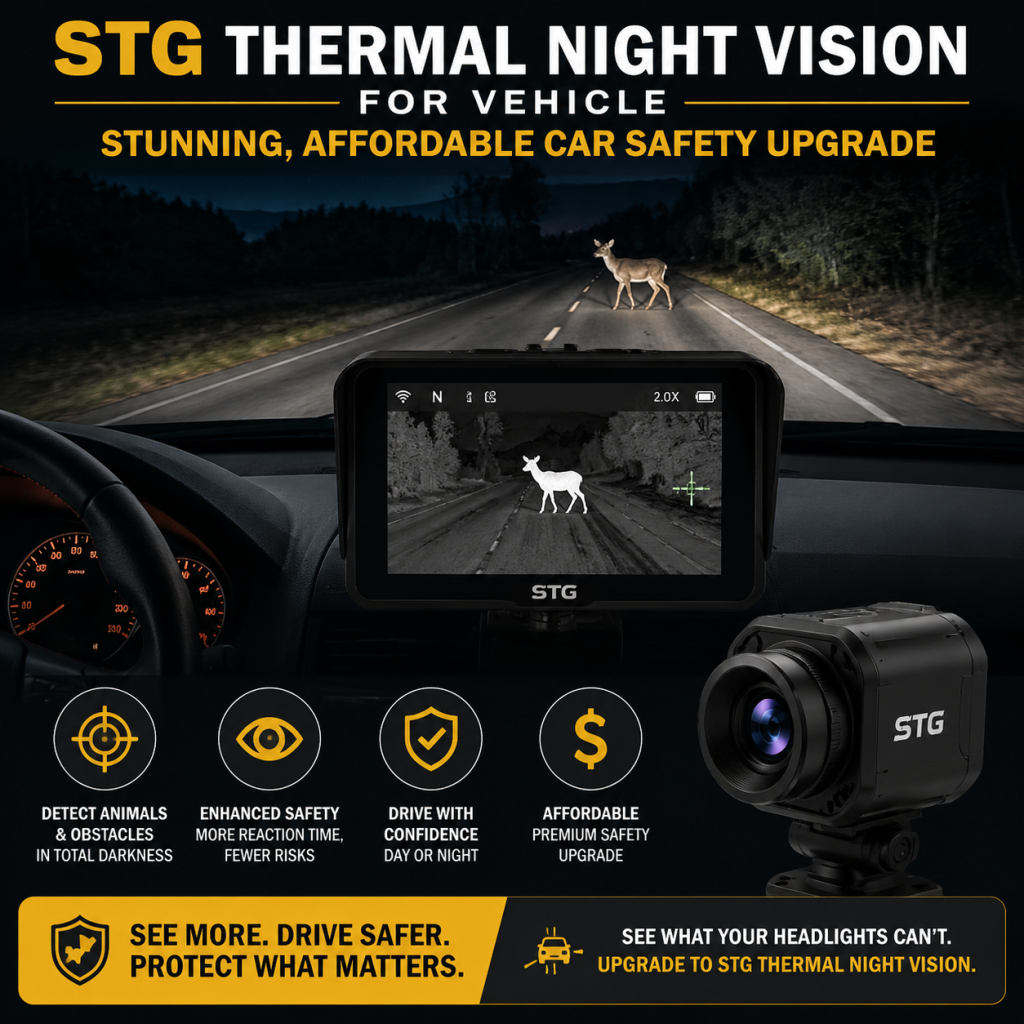
Traditional headlights and camera systems depend on visible light. That means if there is fog, darkness, glare, or low contrast, they can only do so much. Thermal night vision works differently. Instead of relying on light, it detects infrared radiation, which is emitted by warm objects such as people, animals, engines, and tires.
This means a thermal camera can often identify a pedestrian crossing the road, a deer near the shoulder, or a vehicle hidden in shadows long before standard headlights fully reveal them. It is not about replacing normal driving vision; it is about giving the driver an earlier warning and more time to react.
That extra reaction time matters. At highway speeds, even one or two seconds can be the difference between a safe stop and a collision. Thermal imaging helps extend what the driver can see beyond the limits of standard lighting.
In practical terms, STG thermal night vision for vehicle use gives drivers a second layer of awareness. The road still looks like the road, but the display can highlight heat sources that would otherwise blend into the dark. As a result, the driver can make smoother decisions, brake earlier, and feel less pressure when conditions become unpredictable.

There is also a comfort factor. Night driving often creates mental fatigue because the eyes keep searching for details that are hard to see. When a thermal display reveals movement and heat in a clearer way, the experience can feel less stressful. That calmer driving style can matter just as much as the technical advantage.
Why STG Thermal Night Vision for Vehicle Stands Out
There are several reasons drivers are paying attention to STG thermal night vision for vehicle applications. First, it is designed to be practical. Some advanced driver-assistance systems can be complicated, expensive, or tied to high-end trim packages. A thermal night vision upgrade focused on real-world use is much more attractive for everyday drivers.
Second, affordability matters. Many people want better safety but do not want to spend thousands of dollars on a premium factory upgrade. STG thermal systems are positioned as a cost-conscious solution, making thermal technology more realistic for a wider range of vehicle owners.
Third, these systems are useful in more than just complete darkness. They can also improve visibility in conditions where regular cameras struggle, such as light fog, smoke, rain, or on poorly lit roads. This versatility is one of the main reasons thermal imaging has become so valuable in vehicles. For readers comparing options, this aftermarket thermal night vision guide is a helpful next step.
Another reason this category stands out is that it focuses on useful information rather than visual gimmicks. A bright display or complex interface does not help if it distracts the driver. A strong system should keep the image simple and readable. That way, the technology supports driving instead of competing with it.
It is also worth noting that thermal systems are often more consistent than people expect. They do not need perfect lighting, and they do not depend on street lamps or reflective road markings. For drivers who regularly travel through unlit corridors, industrial areas, back roads, or long suburban stretches, that consistency can be very valuable.
Key Benefits for Everyday Drivers
One of the biggest benefits of STG thermal night vision for vehicle use is improved hazard detection. Drivers often focus on the illuminated road lane directly ahead, but the real danger may be off to the side or just outside the beam of the headlights. Thermal imaging can reveal movement and heat from a distance, giving drivers a better chance to respond early.
Another advantage is better awareness of wildlife. Rural roads and suburban areas often see deer, raccoons, dogs, or other animals suddenly entering the roadway. Since animals give off heat, they can appear clearly in a thermal image before they become visible in normal headlights.
Pedestrian safety is another major benefit. People walking at night may wear dark clothing or stand near unlit areas, making them very difficult to see. Thermal imaging can help identify them sooner, which is especially important in neighborhoods, parking lots, and urban streets.
Thermal systems can also support fatigue management. Night driving is tiring, and the driver’s visual focus can weaken over time. Having an extra layer of visibility can reduce stress and make long drives feel more controlled.
There is a useful ripple effect here as well. When a driver spots a hazard earlier, the rest of the drive tends to feel less reactive. Braking becomes smoother, steering inputs become more deliberate, and the vehicle feels easier to manage. That does not just help in emergencies. It can improve the overall quality of night driving.
For many owners, the biggest payoff is simple peace of mind. Knowing that a thermal system is helping scan for heat signatures can make late-night errands, work shifts, and family trips feel safer. That confidence is one of the reasons many drivers start looking into thermal technology after a close call or a frustrating experience on dark roads.
If you want a broader look at how this technology compares with other options, this car thermal imaging camera article covers the same safety benefits in more detail.
How It Supports Safer Driving in Poor Conditions
Bad weather makes driving harder for everyone. Fog, mist, rain, and haze can reduce contrast and make objects blend into the background. Headlights often create glare in these conditions, which can further limit what the driver can see. Thermal imaging is not magical, but it can offer a major advantage because it detects heat instead of light.
In situations where the road disappears into darkness or visibility drops sharply, the thermal display can provide an additional reference point. This can help drivers spot the shape of a person, animal, or vehicle that would otherwise be hidden until it is too close.
For highway driving, that added visibility can improve lane-level awareness and help with speed decisions. For city driving, it can help when crossing intersections, merging, or maneuvering through poorly lit streets and parking areas.
According to the National Highway Traffic Safety Administration, nighttime crashes remain a serious safety concern, which is one more reason drivers keep looking for better visibility tools.
Light fog can be especially deceptive. A road may appear clear at first glance, yet a pedestrian, cyclist, or stopped vehicle can remain hidden until the last moment. In those moments, STG thermal night vision for vehicle use can act like an early warning system. It does not remove the need for caution, but it gives the driver more information to work with.
Rain and spray create another challenge. Water on the windshield, road mist, and reflections from wet asphalt can all reduce what the eyes can process quickly. Thermal imaging helps by highlighting body heat and engine heat, which may remain visible even when the visual scene becomes messy and hard to interpret.
Because of that, thermal assistance can be useful in more than one environment. It helps on empty country roads, but it also adds value in traffic-heavy places where pedestrians and vehicles move unpredictably. The common thread is simple: better visibility leads to better decisions.
Is It Easy to Install and Use?
A good vehicle thermal night vision system should be easy to understand and integrate into the driving experience. The best setups are designed to provide a clean display without overwhelming the driver with unnecessary information. Simple interfaces are important because the goal is to reduce stress, not create another complicated device to manage.
Installation can vary depending on the vehicle and the specific system, but many modern solutions are designed to be more straightforward than older aftermarket technologies. Drivers should always ensure proper mounting, correct alignment, and reliable wiring so the system performs accurately. A poorly installed thermal camera will not provide the safety benefits it is capable of delivering.
Ease of use matters too. Drivers should be able to glance at the display quickly and interpret the image without distraction. The most effective systems present thermal information in a way that supports quick decision-making on the road.
When the setup is simple, STG thermal night vision for vehicle use becomes easier to trust on daily trips. That confidence matters as much as the hardware itself.
Before buying, it helps to think about where the display will sit and how you naturally drive. A system that requires too much attention can become annoying fast. By contrast, a well-placed thermal display should feel like a helpful instrument, almost like an upgraded set of mirrors that offers a different kind of information.
Drivers also benefit when the system starts up quickly and remains reliable in varying temperatures. Cold mornings, hot summers, and rough roads are part of real-world use. A dependable thermal setup should remain stable through those conditions so the driver can focus on the road, not on troubleshooting a device.
Who Can Benefit Most from This Upgrade?
While nearly any driver can appreciate better nighttime visibility, some groups may benefit even more from STG thermal night vision for vehicle use. Daily commuters who drive before sunrise or after sunset will likely notice increased confidence on the road. Rural drivers can gain valuable protection from wildlife. Rideshare and delivery drivers, who spend many hours driving at night, may also find the added awareness useful.
Families who regularly travel in the evening can benefit from the peace of mind it brings. Professional drivers, including fleet operators and service technicians, may see value in reducing accident risk and protecting both passengers and equipment.
Even cautious drivers who already use high-quality headlights may discover that thermal imaging fills an important gap. Headlights help illuminate the road, but they do not always reveal what is coming next. Thermal vision adds that next layer of safety.
It can also be helpful for older drivers who want more confidence without relying on sharper vision alone. Since thermal imaging does not depend on the same visual contrast as the human eye, it can support drivers who want a clearer picture of their surroundings at night.
Adventure drivers and road-trippers may also appreciate the benefit. Long-distance travel often means unfamiliar roads, unfamiliar lighting, and sudden changes in weather. A thermal camera can help reduce the uncertainty that comes with those trips.
For anyone comparing advanced driving tools, how reliable car thermal cameras are is a helpful article to read before making a final decision.
What to Look for in a Thermal Night Vision System
If you are considering this kind of upgrade, focus on image clarity, detection range, durability, and ease of use. A thermal system should be able to reliably detect heat signatures without excessive noise or confusing visuals. Strong performance in real driving conditions is more important than flashy specifications.
Durability is also important because vehicle electronics must withstand vibration, weather changes, and temperature extremes. A good system should be built for long-term use and consistent performance.
Finally, consider how the system fits into your vehicle and your driving habits. A clean, driver-friendly design will always outperform a complicated setup that is hard to read or distracting to use.
It also helps to compare reliable use cases before buying. This guide on car thermal camera fog performance can help set realistic expectations.
Another useful factor is detection distance. A system that only shows nearby heat sources may help with parking or slow-speed maneuvers, but a longer-range setup can be far more useful on roads with higher speeds. The best option depends on how and where you drive most often.
Image processing matters too. A readable display with good contrast can make a thermal view much easier to understand at a glance. You want to identify a hazard quickly, not study the screen for several seconds. In night driving, speed of recognition is one of the real benefits of the technology.
Integration with your vehicle is also worth considering. Some drivers prefer a dedicated screen, while others may want a system that blends more cleanly into the cabin. Either way, the goal is the same: make the tool feel natural so it adds value every time you drive.
How Thermal Vision Fits Into Better Driving Habits
Thermal technology works best when it supports good driving habits rather than replacing them. Drivers still need to slow down in low-visibility areas, keep safe following distances, and stay alert for sudden movement. However, STG thermal night vision for vehicle use can make those habits easier to maintain because it gives the driver more context.
For example, a driver approaching an unlit curve may see a heat signature on the shoulder and decide to reduce speed early. Likewise, a person crossing a dim parking lot can become visible sooner, which gives the driver more time to yield. These small moments add up.
It also encourages more measured driving in difficult conditions. Instead of reacting late, the driver can anticipate potential problems earlier. That shift from reaction to anticipation is one of the strongest arguments for thermal assistance.
In many cases, better awareness can reduce anxiety too. Drivers often tense up when they cannot clearly see what is ahead. A thermal display can ease that tension by showing movement and heat in a more readable way. As a result, the driver may feel less rushed and more in control.
That is why thermal vision is not just about technology. It is about improving the driving experience itself. When used well, it supports patience, awareness, and safer decisions.
A Smart, Affordable Step Toward Better Safety
STG Thermal Night Vision for Vehicle use offers a compelling combination of affordability and practical safety. It gives drivers more information when they need it most, especially in the dark or in difficult conditions where standard headlights and cameras fall short. By revealing heat signatures from people, animals, and vehicles, it helps create earlier awareness and more time to respond.
For drivers who want to improve nighttime confidence without moving into luxury-car pricing, this kind of upgrade makes a lot of sense. It is a modern safety enhancement that focuses on real-world driving problems and delivers meaningful value. If you often drive after dark, the extra visibility provided by thermal night vision may be one of the smartest upgrades you can make.
In short, STG thermal night vision for vehicle ownership is about safer decisions, calmer driving, and better reaction time. That combination can make every dark commute feel more controlled.
It is also worth remembering that good safety tools work best when they are easy to use every day. A system that sits on the dash, stays readable, and helps the driver spot danger sooner has real-world value beyond the novelty factor. That is where thermal imaging stands out. It is not just interesting technology; it is a practical aid for people who drive in challenging conditions.
For that reason, many drivers view thermal imaging as a sensible long-term investment. Once you experience how much earlier a hazard can appear on screen, it becomes easier to understand why so many people look for this kind of upgrade. In the right vehicle, on the right roads, STG thermal night vision for vehicle use can deliver a meaningful safety advantage every time the sun goes down.
If you want to explore related driving technology, car thermal imaging camera options are another useful comparison point for safer night travel.