

Car Night Vision systems can work in rain, but performance depends on the type of night vision technology and how the system is maintained. Rain doesn’t just make the road darker—it adds water droplets, glare, and road spray that can blur what sensors pick up. The good news is that many car night vision setups (especially thermal-based systems) can still provide meaningful alerts and improved awareness in wet, low-light conditions.
- The Short Answer: Yes, But With Limits
- Why Rain Changes What Night Vision Can See
- Visible-light cameras struggle more in rain
- Thermal imaging behaves differently
- Rain still interferes with thermal systems
- When Night Vision Is Most Helpful in Rain
- Where Night Vision Struggles in Wet Weather
- 1. Heavy downpours
- 2. Road spray from traffic
- 3. Dirty camera surfaces
- 4. Small or low-heat objects
- 5. Fast-changing weather
- Thermal Night Vision vs. Regular Camera Systems in Rain
- Practical Tips to Get Better Performance in Rain
- Keep the camera clean
- Check the mounting position
- Understand what alerts mean
- Reduce speed when visibility drops
- Use headlights correctly
- Keep expectations realistic
- Improve visibility beyond the screen
- What to Look for If You Drive in Rain Often
- Real-World Driving Scenarios Where It Can Make a Difference
- What Night Vision Cannot Replace
- Is It Worth It for Rainy Climate Drivers?
- FAQ: Car Night Vision Systems in Rain
- Do car night vision systems work in heavy rain?
- Is thermal night vision better than regular camera systems in rain?
- Can night vision see through rain?
- What should I clean first if the image looks worse in wet weather?
- Does night vision replace safe driving in bad weather?
- Is night vision useful for spotting pedestrians and animals in rain?
- Conclusion
Still, it’s important to understand the limits. Heavy downpours, dirty lenses, and harsh reflections can reduce detection range and make images harder to interpret. Below, we’ll break down how car night vision behaves in rain, when it helps most, and what to do so drivers can get the best results.
Table of Contents
- The Short Answer: Yes, But With Limits
- Why Rain Changes What Night Vision Can See
- When Night Vision Is Most Helpful in Rain
- Where Night Vision Struggles in Wet Weather
- Thermal Night Vision vs. Regular Camera Systems in Rain
- Practical Tips to Get Better Performance in Rain
- What to Look for If You Drive in Rain Often
- Real-World Driving Scenarios Where It Can Make a Difference
- What Night Vision Cannot Replace
- Is It Worth It for Rainy Climate Drivers?
- FAQ: Car Night Vision Systems in Rain
- Conclusion
The Short Answer: Yes, But With Limits
Car Night Vision systems can help drivers in rain, especially when the system relies on thermal imaging rather than standard visible-light video. Because thermal sensors detect heat differences, car night vision can continue outlining a person, animal, or vehicle even when the environment is visually confusing.
That advantage doesn’t mean “perfect vision.” Even with good hardware, rain affects visibility and can change the clarity of what car night vision displays. Heavy rain, water droplets on the lens, dirty protective covers, and poor calibration or installation can all reduce how useful the system feels in real driving.
Rain also matters because it’s one of the most common low-visibility driving conditions. It can make pedestrians harder to spot, wash out lane markings, and shorten the time you have to react to animals, stopped vehicles, or obstacles. Understanding how car night vision behaves in rain helps you know where it’s likely to perform well, where it struggles, and how to use it safely.
For a deeper look at the technology behind thermal detection, see Car Thermal Night Vision System: Is It Really Useful? (2026 Guide).

Why Rain Changes What Night Vision Can See
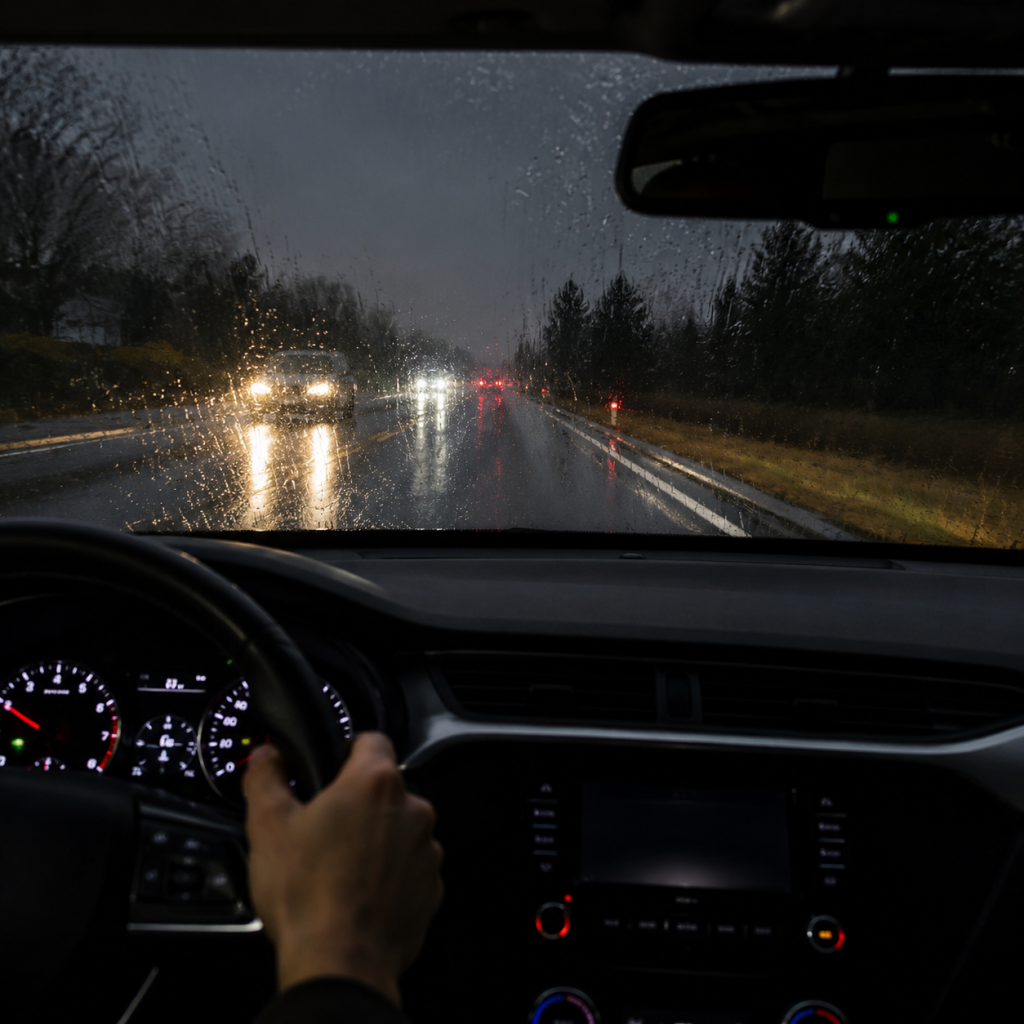
Rain creates a different visibility problem than darkness alone. In the dark, the main issue is a lack of light. In rain, the problem becomes a mix of light scatter, reflections, water droplets, and moving mist in the air.
Visible-light cameras struggle more in rain
Traditional cameras depend on light. In rainy weather, headlights can reflect off wet pavement, droplets can blur the lens, and contrast can drop sharply. Bright glare from oncoming traffic and reflections from puddles can also make objects harder to distinguish, even when car night vision features are enabled.
Thermal imaging behaves differently
Thermal imaging doesn’t rely on visible light in the same way. It reads heat, so car night vision systems can still detect the presence of warm bodies and outline differences between objects and backgrounds—even when the scene looks darker or “washed out” to the human eye.
That’s why thermal-based car night vision often performs better than standard cameras in many low-light, wet-weather situations. The display may look less like a normal video feed and more like a heat-based map, but it can still help you spot hazards earlier.
Rain still interferes with thermal systems
Even though car night vision may have an advantage with heat detection, rain can still interfere with what the system shows. Dense spray can block the line of sight. Water on the lens or a protective cover can weaken the image quality, reduce alert accuracy, and create confusing artifacts. Heavy rain can also reduce the effective detection range because the scene is disrupted by moving water and mist.
For additional background on low-contrast conditions and why hazards are harder to detect at night, review NHTSA’s night driving safety guidance.
When Night Vision Is Most Helpful in Rain
Car Night Vision systems tend to be most useful when rain is moderate and visibility is reduced, but not completely overwhelmed. In these conditions, the system can help drivers notice something earlier than they might with the naked eye.
Common situations where it may help
- Dark rural roads: A pedestrian, cyclist, deer, or parked vehicle may stand out as a heat source in a car night vision display.
- Unlit highways: Car night vision can add awareness when headlights alone don’t reveal distant movement.
- City driving in rain: It may help identify people crossing the street, especially where lighting is uneven or reflections cause glare.
- Poorly marked roads: When lane visibility is weak, car night vision can provide extra awareness of obstacles farther ahead.
- Foggy rain conditions: Thermal-based car night vision may remain more informative than a normal camera feed, though it can still be limited by dense spray.
The real benefit is not that car night vision “sees everything.” It’s that it can make certain hazards more noticeable earlier—giving drivers an extra moment to adjust speed, scan mirrors, or prepare for braking.
Where Night Vision Struggles in Wet Weather
It’s equally important to understand where car night vision does not perform as well. In some rain conditions, the limiting factor isn’t the algorithm—it’s the environment.
1. Heavy downpours
When rain is intense enough to create a near-wall of water, even thermal-based car night vision may struggle. Hazards may appear only at shorter range, and the display can become less distinct as spray fills the sensor’s view.
2. Road spray from traffic
Spray from trucks and fast-moving cars can obscure what’s ahead. On highways, moving water mist can reduce contrast for both thermal and visible-light approaches, making it harder for car night vision to separate targets from the background.
3. Dirty camera surfaces
Mud, salt, grime, and water spots have a major effect on car night vision. If the lens or protective window is dirty, performance can drop quickly after you drive through slush or heavy rain. In practice, this is one of the most common reasons a car night vision system feels “inaccurate.”
4. Small or low-heat objects
Thermal imaging often highlights people and animals better than tiny debris, cold objects, or narrow lane hazards. A piece of tire tread, a shallow pothole edge, or a fallen branch may be less obvious on a car night vision display because the heat signature is weak or doesn’t contrast enough with the surroundings.
5. Fast-changing weather
A system that performs well in light rain may be less useful in a sudden storm. Conditions can change quickly, and driver behavior matters more than any screen or alert. A car night vision system should be treated as a support tool that adapts poorly compared to human situational awareness when weather becomes extreme.
Thermal Night Vision vs. Regular Camera Systems in Rain
Many drivers lump all night-driving cameras together, but the technology behind car night vision makes a big difference in wet weather.
Thermal night vision
Thermal systems detect heat differences. They’re often stronger for detecting people and animals in darkness and can remain useful in rain, fog, and haze when light-based contrast drops.
Visible-light night vision
Some systems rely on enhanced visible-light sensors or infrared illumination. These can help in low light, but car night vision performance can change more directly with rain glare, spray, and water droplets on the lens.
What this means for drivers
If your main concern is nighttime driving in unpredictable weather, thermal-based car night vision usually has the edge over ordinary camera-based solutions. However, thermal systems still have environmental limits—especially in heavy spray, heavy rain, and dirty mounting locations. Use car night vision to support scanning and decision-making, not to replace it.
Practical Tips to Get Better Performance in Rain
If you already have a night vision system—or you’re shopping for one—your habits and maintenance can affect results as much as the hardware. These steps can improve how dependable your car night vision feels in wet weather.
Keep the camera clean
Cleaning is one of the most important steps. Dirt, water spots, and road grime can make car night vision look “washed out” or inconsistent. Clean the camera regularly, especially after rainstorms, winter road salt, or muddy driving.
Check the mounting position
A camera mounted too low can get splashed more easily. Poor mounting angle can also reduce how far ahead car night vision can see effectively. Proper placement helps the system maintain a clearer view in rain.
Understand what alerts mean
Some car night vision systems provide visual cues or warnings for pedestrians, animals, vehicles, or obstacles. Learn how those alerts behave before you depend on them in bad weather. Determine whether the warning is visual, audio, or both, and how quickly it reacts.
Reduce speed when visibility drops
Car Night Vision can improve awareness, but it does not improve braking distance. In rain, you still need to slow down, increase following distance, and allow more time to react.
Use headlights correctly
Car Night Vision works alongside headlights; it doesn’t replace them. Proper headlight use improves what you can see directly, while the system may help you reveal hazards beyond the strongest part of the beam.
Keep expectations realistic
If the weather is severe enough that you can barely see the lane ahead, car night vision will not solve the problem. It may still provide extra information, but your driving decisions should still be based on the actual road conditions ahead.
Improve visibility beyond the screen
Even the best car night vision system can’t overcome poor visibility from fogging, wiper smears, or headlight issues. Keep windshields clear, ensure wipers and washer fluid work properly, and consider upgrading headlight output or alignment if you routinely drive in rainy conditions.
What to Look for If You Drive in Rain Often
If rain is part of your normal routine—especially at night—look beyond marketing claims and focus on practical features that affect real wet-weather performance. The goal is to make car night vision more reliable when you need it most.
Useful features for wet-weather driving
- Thermal imaging support for low-light awareness
- Clear display visibility so alerts are easy to interpret
- Fast enough image refresh to show movement smoothly
- Weather-resistant camera protection
- Good lens protection or easy cleaning access
- Reliable warning logic that helps identify people, animals, vehicles, or obstacles
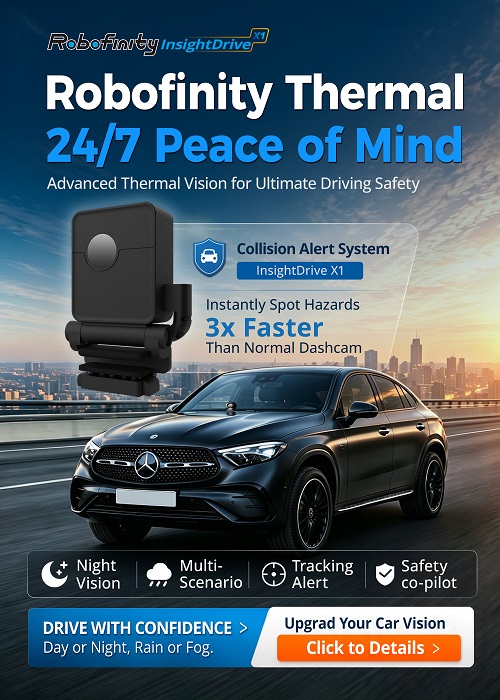
If you are comparing aftermarket options, an example of safety-focused thermal imaging technology is Robofinity InsightDrive, a vehicle thermal imaging night vision system designed to support awareness of pedestrians, animals, vehicles, and obstacles, with up to 200 meters / 656 feet of detection range in poor-visibility driving conditions. Feature clarity like this can matter for drivers who regularly face nighttime rain on rural roads or highways.
For pricing research before buying, it can also help to review the typical car night vision camera price range so you can compare features against budget.
Real-World Driving Scenarios Where It Can Make a Difference
Car Night Vision is easiest to understand when you picture real situations rather than specifications. The best systems can help you detect hazards earlier, which can be useful in rain when contrast is low.
On a rural road in light rain
A thermal-based car night vision display may help you notice a deer near the roadside before it enters the lane. That extra awareness can matter because animals often appear suddenly and can be hard to see in poor lighting.
On a highway at night
Rain and spray can make taillights and lane markings harder to judge. A car night vision display may help you notice a stalled vehicle, a person on the shoulder, or a large obstacle farther ahead.
In city traffic during a storm
Pedestrians stepping off a curb, cyclists at intersections, and delivery vehicles partially hidden by spray may be easier to notice with added thermal support. Even then, you still need to scan mirrors and surroundings constantly because car night vision is not a substitute for situational awareness.
On winding roads
Sharp curves, glare from oncoming traffic, and uneven lighting can make rain especially tiring. Car night vision can add a second layer of awareness when your eyes are already working hard to interpret reflections and movement.
If you want to improve overall readiness for low-visibility weather, also review Night Driving Visibility: Why Night Driving Is More Dangerous and How Drivers Can Improve Visibility.
What Night Vision Cannot Replace
This is one of the most important parts of the discussion. Car night vision is helpful, but it is not a substitute for safe driving habits.
Car Night Vision cannot replace:
- attentive driving
- proper headlights
- safe following distance
- regular mirror checks
- braking distance
- road speed adjustment
- traffic laws
- defensive driving in bad weather
This limitation matters because some drivers may assume that any advanced car night vision system can do more than it actually can. In reality, these tools help you notice risk sooner, but they don’t remove the need for judgment.
When visibility drops, the best first step is still to improve your driving conditions—then use car night vision as extra support. For broader visibility fundamentals, see night driving visibility improvements.
It’s also helpful to compare car night vision with other safety upgrades. Many drivers treat it as one part of a broader setup that includes better headlights, cleaner glass, and reduced speed during poor weather. Even when the display is sharp, car night vision only adds information; it doesn’t change traction limits or stopping distance.
So the sensible approach is to treat car night vision as a backup layer, not a primary driving strategy. When rain gets heavier, the best response is to slow down, increase spacing, and rely on direct road scanning first.
Is It Worth It for Rainy Climate Drivers?
Whether a car night vision system is worth considering depends on your driving environment and how often you deal with wet, low-contrast nights.
It may be worth it if you:
- drive at night often
- travel on rural or unlit roads
- face frequent rain, fog, or snow
- drive long distances on highways
- worry about pedestrians or animals entering the road
- want more awareness in poor visibility
It may be less important if you:
- mainly drive short urban trips in well-lit areas
- rarely drive at night
- already have strong factory driver-assistance features
- do not often encounter low-visibility weather
For many drivers, car night vision becomes most valuable when conditions are bad and attention is stretched thin. Car night vision can be especially appealing if your commute includes unlit roads, wet highways, or frequent late-night travel where glare and spray reduce what’s easy to see.
If you’re still deciding, evaluate use cases instead of novelty. Car night vision is most valuable when the road is dark, the weather is wet, and the hazards you care about are people, animals, or stopped vehicles that may be hard to notice in time.
FAQ: Car Night Vision Systems in Rain
Do car night vision systems work in heavy rain?
They can still work, but performance usually drops in heavy rain. Spray, water on the lens, and reduced contrast can make the car night vision display less clear and limit detection range.
Is thermal night vision better than regular camera systems in rain?
Usually, yes. Thermal systems are less dependent on visible light, so car night vision performance often stays more useful in rain and darkness than standard camera-based night vision.
Can night vision see through rain?
No system truly “sees through” rain. Car night vision may detect heat signatures or provide more than a standard camera in some conditions, but heavy rain still affects visibility and sensor clarity.
What should I clean first if the image looks worse in wet weather?
Start with the camera lens or protective window. Dirt, water spots, and road grime are common reasons car night vision looks worse after rain.
Does night vision replace safe driving in bad weather?
No. Car night vision is a driver-assistance tool that can support awareness, but it does not replace headlights, following distance, speed control, or attention.
Is night vision useful for spotting pedestrians and animals in rain?
Often yes, especially with thermal imaging. With car night vision, people and animals may stand out more clearly than they would in a standard visible-light camera view.
Conclusion
Car Night Vision systems can work in rain, and in many cases they perform better than conventional visible-light camera systems when visibility is compromised by glare, darkness, and wet surfaces. The benefit still depends on the technology type, weather severity, and—critically—camera condition.
Light to moderate rain may allow useful detection of pedestrians, animals, vehicles, and other hazards. However, heavy rain, spray, and dirty lenses can reduce how reliable car night vision feels. The practical takeaway is simple: car night vision can add valuable awareness in wet weather, but it should be treated as a support tool, not a substitute for cautious driving.
If you regularly drive at night in rain, take the time to understand how car night vision behaves in your typical conditions—and pair it with good visibility habits, proper speed, and careful following distance.