


Driving after dark can be manageable in the right conditions, but it becomes much harder when visibility drops, roads are poorly lit, or hazards appear late. If you have a car without night vision system technology, the key is not to panic or assume you are unprotected. Instead, focus on the tools your vehicle already has, the driving habits that matter most at night, and the upgrades that can improve awareness without replacing safe judgment.
- What a night vision system actually does
- Why driving without it is still manageable
- First, make sure your car is ready for nighttime use
- Adjust how you drive after dark
- Slow down before visibility becomes a problem
- Increase following distance
- Scan farther ahead than usual
- Be more cautious in high-risk areas
- Know the limits of your headlights
- When a night vision upgrade may make sense
- Other useful upgrades when your car lacks night vision
- Better headlight performance
- Anti-glare and visibility aids
- Driver-assistance features already built into the car
- Common mistakes drivers make at night
- Driving too fast for the conditions
- Ignoring glare
- Waiting too long to maintain the car
- Overtrusting technology
- How to think about poor-visibility driving conditions
- What to check before buying a night vision upgrade
- A practical checklist before night driving
- FAQ
- Is it safe to drive a car without a night vision system?
- What is the biggest benefit of night vision in a car?
- Can I improve nighttime visibility without buying a night vision system?
- Should I use high beams all the time on dark roads?
- Do thermal imaging systems work in bad weather?
- When is an aftermarket night vision upgrade worth considering?
- Conclusion
Night vision systems can help detect people, animals, vehicles, and obstacles sooner in low-light situations, but they are not standard equipment in most cars. That means many drivers rely on headlights, mirrors, good wiper condition, careful speed control, and disciplined scanning to get through night driving safely. This article explains what to do if your vehicle lacks that feature, what the limits are, and which practical steps make the biggest difference.
Table of Contents
What a night vision system actually does
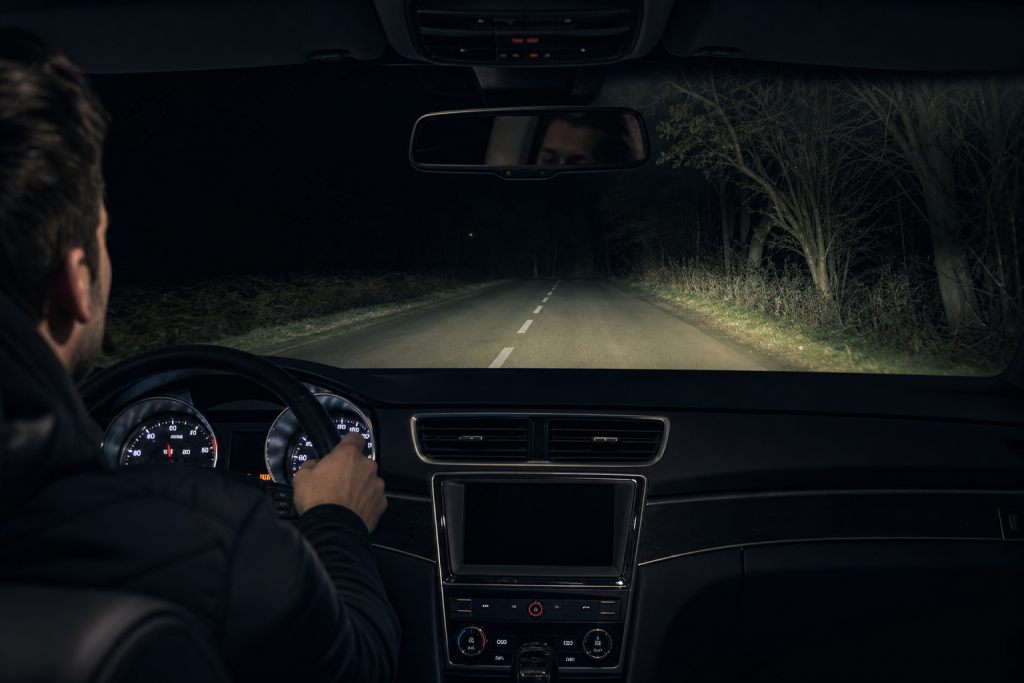
A car night vision system is designed to help drivers see beyond what headlights illuminate. Depending on the technology, it may use infrared or thermal imaging to highlight warm objects such as pedestrians, animals, or other vehicles. Some systems provide visual alerts on a screen, while others emphasize hazard detection through warnings.
The important point is that night vision is an aid, not a replacement for normal driving skills. It can extend awareness in some situations, especially on dark rural roads or in poor-visibility conditions, but it does not remove the need to slow down, keep a safe following distance, and remain alert. If you want a deeper breakdown of the technology, see thermal night vision technology for night driving.
For a driver without that feature, understanding what it would have done helps you compensate more intelligently. You are not trying to recreate the system exactly. You are trying to reduce the risk created by darkness, glare, and delayed reaction time.
Why driving without it is still manageable
Most drivers on the road do not have thermal night vision or similar factory-installed technology. Yet millions of people drive safely at night by relying on fundamentals. The difference is that low-light driving demands more discipline and a cleaner vehicle setup.
More EV News

A car without night vision system support still benefits from:
- Properly aimed and clean headlights
- Clean windshield glass inside and out
- Correctly adjusted mirrors
- Tires with good grip
- Wipers and washer fluid in working order
- Lower speed when visibility is reduced
Night driving becomes difficult when drivers assume the road will reveal itself in time. In reality, darkness compresses your reaction window. That means the most useful upgrade is often not an electronic feature, but a more deliberate driving routine. For a broader look at how these systems affect everyday driving, read is a car night vision system useful after dark.
First, make sure your car is ready for nighttime use
Before spending money on add-ons, check the condition of the vehicle itself. Small maintenance issues can have a large impact at night.
Headlights and exterior lighting
Headlights should be bright enough, aligned properly, and free of heavy haze or yellowing. If the lenses are clouded, light output is reduced even when the bulb is functioning normally. Brake lights, taillights, turn signals, and reverse lights also matter because other drivers need to see you clearly.
If a bulb seems dim or uneven, do not wait for total failure. Uneven lighting creates blind spots and can make judging distance harder. In wet weather, this problem gets worse because reflections reduce contrast.
Windshield, mirrors, and interior glare
A clean windshield is one of the simplest ways to improve nighttime visibility. Dirt, film, and streaks scatter light from oncoming traffic and streetlamps, creating glare. Clean the inside glass as well, since interior haze often becomes obvious only at night.
Mirrors should be positioned so they minimize blind spots without forcing exaggerated head movement. If your car has an automatic dimming mirror, make sure it works correctly. If not, even a small amount of dashboard glare can make the cabin more tiring to drive in after dark.
Tires and braking confidence
Night driving often includes lower visibility and delayed hazard detection, which means your tires and brakes matter more than usual. Tires with worn tread can reduce wet-road confidence, and that becomes a problem if you need to react suddenly to a pedestrian, animal, or object in the road.
You do not need specialized hardware to improve this part of the equation. You need the car to respond predictably when you brake, steer, or change lanes.
Adjust how you drive after dark
When a vehicle lacks advanced night vision, the driver has to make up the difference through technique. That starts with reducing the situations where visibility becomes a guessing game.
Slow down before visibility becomes a problem
A reasonable night speed is one where you can stop within the distance you can clearly see. That sounds simple, but many drivers go too fast because the road feels empty. At night, empty roads can still hide animals, pedestrians, debris, or stalled vehicles.
If your headlights reveal only a short stretch of road, your speed should match that limited view. This is especially important on rural roads, winding two-lane routes, and roads with no shoulders.
Increase following distance
Tailgating is a bad habit in any setting, but it is especially risky in the dark. The car ahead may hide potholes, animals, or debris until the last second. Leaving more space gives you a better chance to see what is happening beyond the vehicle in front.
It also reduces stress. If the driver ahead brakes suddenly, you will have a bigger margin to respond without panic.
Scan farther ahead than usual
At night, your eyes should be working continuously, not fixed on the patch of road directly in front of the bumper. Look farther down the lane, then return to nearer reference points. This scanning pattern helps you spot brake lights, silhouettes, and movement earlier.
Do not stare at oncoming headlights. Briefly look toward the right side of the lane or the fog line if bright glare is affecting you, then resume scanning.
Be more cautious in high-risk areas
Some nighttime environments demand extra attention:
- Rural roads where animals cross unpredictably
- Neighborhood streets with pedestrians in dark clothing
- Highways near construction or merging traffic
- Areas with poor street lighting
- Roads during rain, fog, snow, or heavy mist
A lack of night vision technology matters most where the road itself gives you few clues. In those environments, a cautious driving style is more valuable than any single accessory.
Know the limits of your headlights
Many drivers assume their headlight beam is enough to see anything important. In practice, headlights help, but they do not reveal everything.
High beams can improve forward visibility on unlit roads, but they should be used responsibly and switched off for oncoming traffic or when following another vehicle closely. Low beams reduce glare for others, but they also shorten the visible distance in front of you.
This is why night driving often becomes a compromise between seeing far enough and not blinding others. If you are on a road with frequent dips, curves, or tree cover, your headlights may not show hazards as early as you want. That is the real challenge a night vision system tries to address.
When a night vision upgrade may make sense
For some drivers, better habits and maintenance are enough. For others, an additional awareness tool may be worth considering. This is most relevant if you regularly drive:
- On dark rural roads
- In areas with wildlife crossing risk
- On long night commutes
- In poor-visibility weather
- On unfamiliar roads with limited lighting
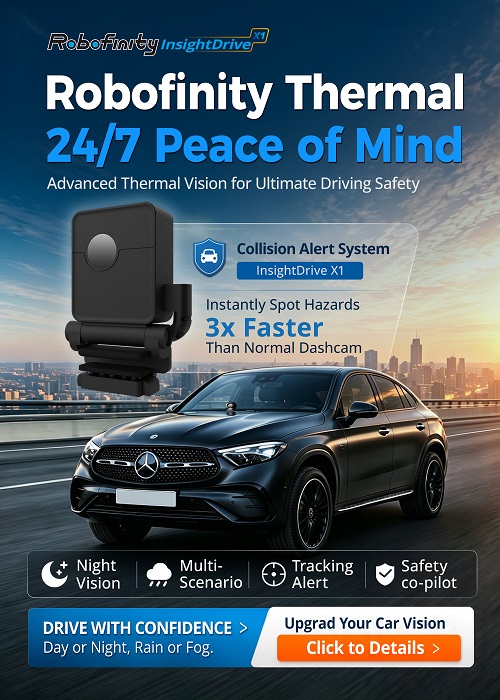
In those cases, an aftermarket driver-assistance option can add another layer of awareness. Robofinity InsightDrive is one example of a vehicle thermal imaging night vision system that is described as supporting awareness of pedestrians, animals, vehicles, and obstacles ahead in poor-visibility conditions. That kind of system can be useful as an aid, but it still does not replace headlights, safe speed, or driver attention.
Manufacturers and safety organizations generally treat these systems as assistance features rather than primary visibility tools. The National Highway Traffic Safety Administration offers useful guidance on night driving and visibility at NHTSA’s night driving safety guidance.
Other useful upgrades when your car lacks night vision
If you are not considering a dedicated night vision system, there are still practical improvements that can make night driving easier.
Better headlight performance
Depending on your vehicle, you may be able to improve lighting through proper bulb replacement, lens restoration, or professional aiming. The goal is not to create excessive brightness. It is to restore the factory lighting performance the car should have had in the first place.
Anti-glare and visibility aids
Some drivers benefit from:
- Cleaner mirror surfaces
- Dimming mirrors
- Improved windshield wiper blades
- Better cabin lighting discipline
- Dash settings that reduce screen brightness at night
These are small changes, but they reduce visual fatigue over longer drives.
Driver-assistance features already built into the car
Even without night vision, your car may already include forward collision warnings, lane departure alerts, blind-spot monitoring, or parking sensors. Those systems do not see like thermal imaging, but they can support safer decision-making when visibility is reduced.
Use them as backup information, not as a reason to drive more aggressively.
Common mistakes drivers make at night
A car without night vision system technology is most vulnerable when the driver makes predictable errors. The most common ones are easy to avoid once you know them.
Driving too fast for the conditions
This is the biggest one. Drivers often keep daytime habits after sunset. If your stopping distance is longer than the illuminated area ahead, your speed is too high for the conditions.
Ignoring glare
Oncoming headlights can be temporarily distracting, but trying to “push through” glare is a poor strategy. Glare affects depth perception and can hide movement near the road edge.
Waiting too long to maintain the car
Dirty glass, weak bulbs, and worn tires all become more serious at night. A car that feels fine in daylight can become far less predictable after dark.
Overtrusting technology
Even if your vehicle has backup alerts or sensor-based features, they are limited. They may not detect everything, especially in bad weather or with unusual road geometry. Night driving still depends on the driver making the final call.
How to think about poor-visibility driving conditions
Night is only one part of the problem. Rain, fog, snow, and road spray can be just as difficult because they reduce contrast and make reflections worse. In these conditions, your goal is not to “see more” in the abstract. It is to simplify the drive.
That means lower speed, more distance, fewer lane changes, and fewer distractions. A car without night vision system support can still be safe in poor visibility if the driver respects the limits of the environment.
If the road conditions are severe enough that you cannot comfortably identify lane boundaries, signs, or hazards, the most responsible move may be to delay the trip.
What to check before buying a night vision upgrade
If you decide that an upgrade is worth exploring, it helps to compare options the same way you would compare any safety-related feature. A useful system should fit your driving pattern, your vehicle, and your expectations.
Check whether the system is designed for your vehicle type, how the display is mounted, and whether the installation will affect your normal driving position. Also consider whether the system uses thermal imaging, infrared illumination, or another detection method, because each approach has different strengths. A detailed buying guide such as do you need a separate car night vision display can help you think through that decision.
It also makes sense to review broader system options before committing. Some drivers prefer a full retrofit approach, while others want a simpler add-on. A comparison like automotive night vision solution by budget can help you match the setup to your needs without overspending.
A practical checklist before night driving
Before a regular nighttime trip, it helps to run through a short mental checklist:
- Are the headlights clean and working properly?
- Is the windshield clear inside and out?
- Are mirrors adjusted correctly?
- Are tires in good condition?
- Is windshield washer fluid topped up?
- Is the route likely to include rural roads, wildlife, or poor lighting?
- Am I prepared to slow down if visibility drops?
This kind of routine is not glamorous, but it is effective. Most nighttime risks become less severe when the car is maintained and the driver is not rushing.
FAQ
Is it safe to drive a car without a night vision system?
Yes, it can be safe if the vehicle is maintained properly and the driver adjusts speed, scanning, and following distance for low-light conditions. Most cars on the road do not have night vision technology.
What is the biggest benefit of night vision in a car?
Its main benefit is earlier awareness of hazards that are hard to see with headlights alone, such as pedestrians, animals, or obstacles ahead in dark areas. It is an aid, not a replacement for driving carefully.
Can I improve nighttime visibility without buying a night vision system?
Yes. Clean and properly aimed headlights, a clear windshield, good tires, working wipers, and reduced speed at night can make a meaningful difference.
Should I use high beams all the time on dark roads?
No. High beams can help on unlit roads when no one else is nearby, but they should be lowered for oncoming traffic and when following another vehicle.
Do thermal imaging systems work in bad weather?
They can be helpful in some poor-visibility situations, but they are still limited by the conditions and by how the system is designed. They do not eliminate risk or replace normal defensive driving.
When is an aftermarket night vision upgrade worth considering?
It may be worth considering if you regularly drive on dark rural roads, encounter wildlife, or travel often in low-light or poor-visibility conditions and want an additional awareness tool.
Conclusion
If you drive a car without night vision system technology, the best response is practical, not complicated. Keep the car’s lighting and glass in good condition, reduce speed when visibility drops, leave more space, and scan the road farther ahead. Those habits do more for real-world safety than many drivers realize.
For some drivers, especially those who regularly face dark rural roads or poor-visibility conditions, advanced driver-assistance options can add another layer of support. Robofinity InsightDrive is one example of a vehicle thermal imaging system aimed at improving awareness of pedestrians, animals, vehicles, and obstacles ahead. Even then, the basics still matter most: attention, patience, and driving within the limits of what you can clearly see.