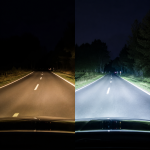



Mountain Road Driving is more dangerous at night because darkness reduces visibility at the same time that curves, steep grades, wildlife, weather, and limited escape routes demand more attention. A road that feels manageable during daylight can become difficult after sunset, especially when headlights reveal only a short section of pavement ahead.
- Why Mountain Road Driving Is Especially Challenging After Dark
- Limited Visibility Reduces Reaction Time
- Curves and Blind Corners Hide Hazards
- Steep Grades Affect Braking and Acceleration
- Wildlife Activity Is Harder to Predict at Night
- Weather Changes Quickly in Higher Elevations
- Headlight Glare Creates a Second Visibility Problem
- Road Edges and Drop-Offs Are Difficult to Judge
- Mechanical Problems Become More Serious in Remote Areas
- Driving Habits That Improve Safety on Mountain Roads at Night
- Slow down before curves
- Look beyond the immediate headlight area
- Leave extra following distance
- Use lights thoughtfully
- Reduce distractions
- Take fatigue seriously
- Can Driver-Assistance Technology Help?
- Planning the Trip Can Reduce Nighttime Risk
- What to Do if You Encounter a Hazard
- FAQ
- Is it safer to drive slower than the posted limit on a mountain road at night?
- Are high beams better for mountain roads?
- Why are animals more dangerous on mountain roads at night?
- Does all-wheel drive make nighttime mountain driving safe?
- Can thermal imaging replace headlights?
- What should I do if I become tired during a night mountain trip?
- Conclusion
The risk is not caused by darkness alone. Mountain roads combine several hazards that become harder to identify and respond to in low light. Drivers may have less time to see a sharp bend, a stopped vehicle, fallen rocks, pedestrians, animals, icy pavement, or a vehicle approaching around a blind curve. Understanding these conditions—and adjusting speed, vehicle preparation, and driving habits—can make nighttime travel safer.
Table of Contents
- Why Mountain Road Driving Is Especially Challenging After Dark
- Limited Visibility Reduces Reaction Time
- Curves and Blind Corners Hide Hazards
- Steep Grades Affect Braking and Acceleration
- Wildlife Activity Is Harder to Predict at Night
- Weather Changes Quickly in Higher Elevations
- Headlight Glare Creates a Second Visibility Problem
- Road Edges and Drop-Offs Are Difficult to Judge
- Mechanical Problems Become More Serious in Remote Areas
- Driving Habits That Improve Safety on Mountain Roads at Night
- Can Driver-Assistance Technology Help?
- Planning the Trip Can Reduce Nighttime Risk
- What to Do if You Encounter a Hazard
- FAQ
- Conclusion
Why Mountain Road Driving Is Especially Challenging After Dark

Mountain roads are often more demanding than ordinary urban or suburban streets because their design leaves less room for mistakes. Lanes may be narrow, shoulders can disappear, and the route may include repeated bends, steep slopes, tunnels, bridges, and abrupt changes in elevation.
During daylight, drivers use the surrounding landscape to anticipate the road. They can often see a curve developing, recognize a steep drop-off, notice a vehicle stopped ahead, or identify a patch of snow near the edge of the lane. At night, much of that visual information disappears.
Headlights provide useful illumination, but they do not show everything a driver needs to know. Low beams generally illuminate a limited area in front of the vehicle, while high beams may be unsuitable because of oncoming traffic, bends, roadside homes, or reflective signs. On a winding road, the vehicle may turn before the headlights fully reveal what is beyond the curve.
This creates a difficult combination: mountain road driving requires anticipation, but nighttime visibility encourages drivers to react only after a hazard enters the headlight beam.
Limited Visibility Reduces Reaction Time
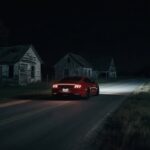
The faster a vehicle is traveling, the more distance it covers before the driver can respond. On mountain road driving routes at night, if a hazard is hidden by darkness, a bend, fog, or vegetation, the driver may see it only when there is little stopping distance left.
A few examples illustrate the problem:
- A deer may step onto the road from a dark wooded shoulder.
- A cyclist or pedestrian may be visible only when illuminated by the headlights.
- A rockslide may leave debris across part of the lane.
- A vehicle with mechanical trouble may be stopped just beyond a bend.
- A patch of ice may blend into wet-looking pavement.
- A sharp turn may be tighter than expected based on the road leading into it.
The appropriate speed is not simply the posted speed limit. Drivers should choose a speed that allows them to stop within the distance they can see clearly. On mountain road driving at night, that may mean traveling considerably slower than the legal maximum.
Curves and Blind Corners Hide Hazards
Mountain routes frequently include hairpin turns, switchbacks, S-curves, and blind corners. These bends can hide both road conditions and other road users—one of the biggest reasons mountain road driving feels far more dangerous after sunset.
A driver approaching a blind curve cannot assume the lane ahead is clear. An oncoming vehicle may cross the center line while avoiding a rock, a cyclist, or a tight turn. A truck or trailer may need additional space. A motorcyclist may be difficult to see, particularly if the rider is positioned near the edge of the lane.
The correct approach is to reduce speed before entering the curve, not while already turning sharply. Braking heavily mid-corner can unsettle the vehicle, especially on a wet, icy, or loose surface. Smooth steering and gradual speed changes provide better control.
Drivers should also avoid “cutting” corners. Moving toward or across the center line may make a turn feel easier, but it reduces the space available for an oncoming vehicle and increases the chance of a collision in a blind section.
Steep Grades Affect Braking and Acceleration
Mountain roads often include long downhill and uphill sections. Darkness makes it harder to judge the steepness of a grade, the distance to the next bend, or whether the pavement changes near the bottom of a slope. This is a common factor behind mountain road driving incidents at night, because braking and traction margins shrink quickly.
Downhill driving
On a long descent, gravity increases the vehicle’s speed. If the driver relies constantly on the brake pedal, the brakes may become overheated and less effective. This is particularly concerning when the descent leads into a sharp turn or a congested section of road—common on mountain road driving at night.
Use a lower gear when appropriate so the engine helps control speed. Automatic vehicles may provide low-range, manual-shift, or downhill-control settings, depending on the model. Drivers should consult the owner’s manual before relying on a specific feature.
Maintain a conservative speed from the beginning of the descent rather than allowing the vehicle to accelerate and then braking hard. Leave additional following distance because the vehicle ahead may slow suddenly for a bend, animal, debris, or icy surface.
Uphill driving
On an uphill section, the vehicle may lose speed unexpectedly, especially when carrying passengers or cargo. Drivers should avoid following slower vehicles too closely and should be cautious when considering an overtake. A hillcrest can hide oncoming traffic, and darkness makes it harder to judge whether the road continues straight beyond the visible section.
Never pass where road markings, signs, visibility, or the road shape make the maneuver uncertain. Reaching the top of a hill does not mean the route ahead is clear.
Wildlife Activity Is Harder to Predict at Night
Mountain environments often contain forests, open grassland, ravines, and water sources that attract wildlife. Animals may cross the road at any time, but night mountain road driving makes them harder to detect and gives drivers less time to react.
Headlights may illuminate an animal’s eyes briefly, but not every animal reflects light in an obvious way. Smaller animals can blend into the roadside, while larger animals may move unpredictably after appearing from behind trees or embankments.
Drivers should be especially alert near:
- Forest edges
- Wildlife warning signs
- Streams and water crossings
- Open fields beside wooded areas
- Routes with frequent animal crossing activity
- Dawn, dusk, and the hours after sunset
If an animal appears, brake firmly while keeping the vehicle under control. Swerving sharply can be more dangerous than slowing in the lane, particularly on a narrow road beside a steep drop or rock wall. The best response depends on the situation, available space, traffic, and vehicle stability.
Weather Changes Quickly in Higher Elevations
Mountain weather can shift quickly, and nighttime temperatures often fall enough to create conditions that were not present earlier in the day. Rain may become sleet or snow, and water on shaded pavement may freeze.
Fog
Fog is one of the most dangerous conditions on mountain road driving because it reduces forward visibility and can scatter headlight beams back toward the driver. High beams often make this glare worse. Low beams, properly adjusted, are generally more useful in fog, although drivers should follow local rules and vehicle guidance.
Slow down before visibility becomes severely restricted. Do not use the taillights of the vehicle ahead as a reason to follow closely. A safe gap remains important because the lead vehicle may encounter a hazard that is not visible to you.
If you’re planning a trip, review practical visibility steps in Night Driving Safety in Fog: Key Tips.
Rain and wet pavement
Rain reduces contrast, makes lane markings harder to see, and increases stopping distance. At night, reflections from the road can also make it difficult to distinguish standing water from ordinary wet pavement. On mountain road driving, that loss of contrast can be the difference between spotting a bend early and realizing it too late.
Avoid abrupt steering and braking. Keep tires properly inflated, ensure the windshield is clean, and replace worn wiper blades. If water begins to pool across the lane, reduce speed before reaching it rather than making a sudden correction afterward.
Snow and ice
Snow can cover lane markings, road edges, and potholes. Ice is especially difficult to identify in darkness, particularly on bridges, shaded bends, and sections near streams.
If winter conditions are possible, check road and weather information before departure. Carry appropriate equipment where required, and do not assume that four-wheel drive or all-wheel drive eliminates the need for reduced speed. Those systems may help a vehicle accelerate, but they do not remove the basic limits of tire grip when braking or turning.
Headlight Glare Creates a Second Visibility Problem
Night driving is not only about seeing less. It is also about being temporarily blinded by light from other vehicles, and this matters a lot on mountain road driving where bends can bring oncoming headlights into view suddenly.
On narrow mountain roads, oncoming headlights can appear suddenly around a bend. High-intensity lamps, poorly aimed headlights, or auxiliary lighting may create glare that takes several seconds to fade. During that time, the driver may lose sight of the lane edge, road markings, or an obstacle ahead.
When facing glare:
- Reduce speed smoothly.
- Keep your eyes directed toward the right edge of your lane without staring directly at the lights.
- Avoid using high beams in response.
- Maintain lane position and do not drift toward the center line.
- Increase following distance after your vision returns.
A clean windshield makes a meaningful difference. Interior glass can develop a thin film that scatters light and produces glare. Clean both sides of the windshield, keep mirrors adjusted, and make sure headlights are functioning and aimed correctly.
Road Edges and Drop-Offs Are Difficult to Judge
Some mountain roads have solid barriers, but others may have narrow shoulders, drainage channels, trees, rocks, or steep drop-offs near the lane. At night, the edge may be difficult to distinguish from the surrounding darkness. For mountain road driving at night, that can turn a small correction into a stability problem.
Drivers should not use the road edge as a guide if it is unclear. Instead, maintain a stable position within the lane by using visible markings, reflective posts, and the road’s natural alignment. If the markings are missing or obscured, slow down until the lane path becomes easier to read.
A vehicle that drifts onto a soft shoulder or gravel edge can lose stability when the driver makes a sudden correction. If this happens, avoid jerking the steering wheel. Ease off the accelerator, keep the vehicle pointed as steadily as possible, and return to the pavement gradually when it is safe.
Mechanical Problems Become More Serious in Remote Areas
A breakdown on a mountain road at night can expose occupants to traffic, cold temperatures, falling rocks, poor phone coverage, and long emergency response times. Preparation is therefore part of nighttime mountain road driving safety.
Before leaving, check:
- Fuel or battery charge
- Tire condition and pressure
- Spare tire or tire repair equipment
- Engine oil and coolant levels
- Headlights, brake lights, and turn signals
- Windshield washer fluid
- Wiper condition
- Phone charge and navigation access
- Emergency supplies suitable for the weather
Useful supplies may include a reflective warning triangle, flashlight, warm clothing, water, basic first-aid items, and a power bank. In winter, additional equipment may be necessary depending on local conditions and legal requirements.
If the vehicle becomes disabled, move as far from the travel lane as possible without creating another hazard. Turn on hazard lights and use reflective warning equipment if it can be placed safely. Do not stand in the roadway or walk around a blind bend to seek help.
Driving Habits That Improve Safety on Mountain Roads at Night
The safest approach is to manage risk before it becomes urgent. Several habits are particularly valuable for mountain road driving after dark.
Slow down before curves
Entering a turn at a manageable speed gives you more control if the curve tightens, the pavement changes, or an obstacle appears. Avoid waiting until the middle of the bend to make a major speed correction. On mountain road driving at night, this is one of the simplest ways to reduce risk.
Look beyond the immediate headlight area
Keep your eyes moving between the visible road, curve direction, mirrors, signs, and potential roadside movement. Do not fixate on one point. On bends, use the road’s shape and markings to anticipate where the lane will lead.
Leave extra following distance
The vehicle ahead may be the first thing to reveal a hazard, but following too closely leaves no time to react. More space also helps when the road is wet, icy, steep, or covered with loose material—conditions that commonly make mountain road driving feel unpredictable at night.
Use lights thoughtfully
Use low beams when approaching or following other vehicles and when visibility conditions make high beams inappropriate. Keep lamps clean and address damaged lenses or poor alignment. Auxiliary lighting should never be used in a way that blinds other road users.
Reduce distractions
A winding mountain road requires continuous attention. Set navigation before departure, secure loose items, silence nonessential phone notifications, and avoid adjusting controls while negotiating complex curves.
Take fatigue seriously
Nighttime driving is more demanding when the driver is tired. Fatigue slows decision-making and can cause missed curves, inconsistent speed, and lane drift. If concentration is declining, stop at a safe location or postpone the trip. Caffeine is not a substitute for adequate rest.
Can Driver-Assistance Technology Help?
Driver-assistance technology can support awareness, but it cannot remove the need for appropriate speed, functioning headlights, safe following distance, careful steering, and full driver attention. On mountain road driving, sensors and cameras may have a harder time with contrast, glare, and roadside obstacles.
Traditional systems such as forward collision warnings, adaptive cruise control, lane-departure alerts, and automatic emergency braking may have limitations on winding, poorly marked, steep, or weather-affected roads. A sensor may not identify a hazard early enough if a curve blocks its view, if road markings are missing, or if snow, rain, or dirt interferes with detection.
Thermal imaging is another type of vehicle safety technology that can provide additional information in some low-light situations. A thermal camera detects heat differences rather than relying only on visible light. This can help distinguish warm objects such as people or animals from a colder background, although the system still depends on its design, display, detection range, calibration, and the driver’s interpretation.
For readers exploring thermal options, consider Thermal Night Vision Technology for Night Driving and Vehicle thermal imaging: How It Helps Drivers See Pedestrians and Animals at Night.
For practical headlight and visibility guidance, the U.S. National Highway Traffic Safety Administration provides roadway safety information at NHTSA Road Safety.
Planning the Trip Can Reduce Nighttime Risk
Many dangerous nighttime mountain journeys begin with poor planning rather than poor driving. Before departure, review the route and consider whether an alternate road or earlier travel time would reduce exposure to hazards—especially on mountain road driving routes.
For mountain road driving, check for:
- Road closures and construction
- Snow, ice, rain, or fog
- Fuel and charging locations
- Areas with limited cellular coverage
- Steep grades and winding sections
- Seasonal restrictions
- Safe stopping areas
Do not rely entirely on a navigation app. Digital maps may not show temporary closures, fallen rocks, damaged pavement, or conditions that changed after the last update. Download route information when possible, and tell someone your expected route if traveling through a remote area.
A useful decision framework is simple: if the trip is optional and conditions are deteriorating, delay it. If the journey is necessary, reduce speed, increase preparation, and allow more time rather than trying to maintain a normal schedule for mountain road driving at night.
What to Do if You Encounter a Hazard
A calm response is more effective than a sudden one. If you see debris, an animal, a stopped vehicle, or an unexpected obstruction on mountain road driving at night:
- Ease off the accelerator.
- Brake firmly but progressively.
- Keep the vehicle pointed in the intended lane.
- Check mirrors before changing position.
- Avoid sudden swerving unless remaining in the lane creates an immediate danger.
- Stop only where there is enough space and visibility for other drivers to react.
If an oncoming vehicle crosses the center line, slow down and move toward the right side of your lane when safe. Do not instinctively steer toward the road edge or drop-off. If the road is blocked, stop before the obstruction and use hazard lights while assessing the safest next step.
FAQ
Is it safer to drive slower than the posted limit on a mountain road at night?
Yes, when visibility, curves, grades, weather, or road conditions prevent you from stopping within the visible distance. The posted limit is a maximum legal speed under applicable conditions, not a requirement to travel that fast for mountain road driving at night.
Are high beams better for mountain roads?
High beams can improve visibility on unlit, open sections when no other road users are present. However, they should be dimmed for oncoming traffic, when following another vehicle, and whenever they create glare or are restricted by local rules. They also do not illuminate around blind curves.
Why are animals more dangerous on mountain roads at night?
Animals are harder to see against dark vegetation and may enter the road suddenly. Their movement can also be unpredictable. Slow down in wooded areas and avoid sharp swerving if an animal appears during mountain road driving.
Does all-wheel drive make nighttime mountain driving safe?
No. All-wheel drive may improve traction during acceleration, but it does not eliminate the risks of limited visibility, poor braking grip, sharp curves, ice, wildlife, or steep drop-offs. Tires and speed remain critical for mountain road driving at night.
Can thermal imaging replace headlights?
No. Thermal imaging may add information about heat-emitting objects in certain low-light or poor-visibility conditions, but it does not replace headlights, road markings, mirrors, normal visual observation, or responsible driving during mountain road driving.
What should I do if I become tired during a night mountain trip?
Stop at a safe, legal location and rest. Do not continue simply because the destination is close. Fatigue can impair reaction time and attention in ways that are especially dangerous on winding roads and during mountain road driving.
Conclusion
Mountain Road Driving is more dangerous at night because several risks appear together: restricted sight distance, blind curves, steep grades, wildlife, rapidly changing weather, glare, narrow lanes, and limited recovery space. The most effective response is not a single piece of equipment but a disciplined approach for mountain road driving after dark.
Prepare the vehicle, check conditions, reduce speed before curves, use lights responsibly, leave extra space, and treat fatigue as a serious safety issue. Driver-assistance and thermal imaging technologies may provide useful additional awareness for mountain road driving, but they work best as part of a broader safety strategy. When visibility or weather becomes unreasonable, postponing the trip is often the safest decision.