

Rear-end collisions are among the most common types of traffic accidents on the road today.
- Master the Art of the “Cushion”: Maintain a Safe Following Distance
- Be a Predictable and Alert Driver: Smooth Braking and Signal Use
- Eliminate the #1 Culprit: Minimize All Driving Distractions
- Adapt to Mother Nature: Adjust for Weather and Road Conditions
- Maintain Your Car’s Safety Systems: Lights, Tires, and Brakes
- Bonus: Embracing Technology for an Extra Layer of Protection
- Seeing the Unseeable: How Thermal Vision is Revolutionizing Night and Bad Weather Driving
- Conclusion: Safety is a Conscious Choice
They happen frequently. They can range from minor fender-benders to severe, life-altering crashes. The good news? Most rear-end collisions are entirely preventable. They often stem from simple driver errors like distraction, following too closely, or misjudging road conditions.
This guide is here to help. We will walk you through five essential, actionable tips. These tips can dramatically lower your risk of being involved in a rear-end collision, whether you’re the one hitting or the one being hit. Our goal is simple. We want to make you a more aware, more prepared, and safer driver. Let’s dive into these strategies and make our roads safer for everyone.
Master the Art of the “Cushion”: Maintain a Safe Following Distance
This is the golden rule. It is your first and best defense against a rear-end collision. A safe following distance gives you the precious gifts of time and space. You need time to see a hazard ahead. You need time for your brain to process it. And you absolutely need space to stop or slow down safely.
So, what is a “safe” distance? Forget guessing. Use the proven “Three-Second Rule.” It works in any speed. Here is how you do it. Pick a fixed object on the road ahead. A sign, a tree, or a shadow will work. Watch as the car in front of you passes that object. Then, slowly count “one-one-thousand, two-one-thousand, three-one-thousand.” If you pass the object before you finish counting, you are following too closely. Back off. Increase your following distance.
But three seconds is just the minimum for ideal conditions. You must add more cushion when conditions are poor. Make it four, five, or even more seconds in heavy rain, fog, snow, or on icy roads. Your tires grip the road less in these situations. Your stopping distance can double or triple. Also, increase your distance behind large trucks and motorcycles. Trucks block your view. Motorcycles can stop much faster than cars.
Remember, tailgating does not get you there faster. It only increases your stress and your risk of causing a costly and dangerous rear-end collision. That extra space is not a gap for others to cut into. It is your personal safety zone. Protect it fiercely.


Be a Predictable and Alert Driver: Smooth Braking and Signal Use
Sudden, unexpected stops are a major trigger for rear-end collisions. You cannot control the driver behind you. But you can control your own actions. You can make your intentions crystal clear. This makes you predictable. Predictable drivers are safe drivers.
First, always use your turn signals. Signal well before you turn or change lanes. This gives drivers around you time to react. It prevents them from being surprised. A surprised driver is a dangerous driver.
Second, practice smooth braking. Avoid slamming on your brakes unless it is a true emergency. When you see traffic slowing ahead, take your foot off the accelerator early. Then, apply gentle, steady pressure to your brakes. This creates a gradual deceleration. It gives the driver behind you a clear, visual warning through your bright red brake lights. If you are stopping for a long light or in stopped traffic, consider lightly tapping your brakes again after you’ve stopped. This can make your already-lit brake lights “flash,” drawing extra attention from an approaching driver who might be distracted.
Also, pay attention to your own rearview mirror. When you are slowing down, take a quick glance behind you. See how close the next car is. If someone is tailgating you, increase your own following distance from the car in front. This gives you a bigger buffer. If you need to stop suddenly, you can potentially stop more gradually, reducing the chance the tailgater will smash into you.
Eliminate the #1 Culprit: Minimize All Driving Distractions
Distracted driving is a pandemic on our roads. It is a leading cause of all accidents, especially rear-end collisions. When your eyes and mind are not on the road, your reaction time vanishes. You might not see brake lights at all. Or you might see them too late.
The most dangerous distraction is your phone. Texting is a nightmare. It takes your eyes, hands, and mind off driving. But even hands-free calls can deeply distract your cognitive focus. The solution? Put your phone away. Use “Do Not Disturb While Driving” mode. Let your passengers handle navigation or music.
Distractions are not just digital. They can be physical, too. Eating, fiddling with the radio, or having a heated conversation all pull your focus away. Make a conscious choice before you drive. Commit to keeping your eyes on the road and your hands on the wheel. Scan your mirrors frequently. Actively look 10-15 seconds ahead down the road for potential problems.
Remember, it only takes a split second of inattention for a rear-end collision to occur. That text, burger, or podcast is not worth a crash, an injury, or a life. Your primary task when driving is to drive. Everything else can wait.

Adapt to Mother Nature: Adjust for Weather and Road Conditions
Bad weather turns normal driving into a high-stakes challenge. Slick roads dramatically increase stopping distances. This turns a normal following distance into an unsafe one. To avoid a weather-related rear-end collision, you must adapt.
Rain is the most common hazard. A light rain can be just as dangerous as a downpour. Why? Because oil and dirt rise to the road surface when it first gets wet. This creates a slick film. Your first move in rain should be to slow down. Then, double your following distance from three seconds to at least six seconds.
Fog and heavy snow reduce visibility to almost zero. You cannot avoid what you cannot see. In fog, use your low-beam headlights. High beams will reflect off the fog and blind you. Drive at a speed that allows you to stop within the distance you can see. This often means crawling along. Again, increase your following distance massively.
Night driving presents its own challenges. Your depth perception and color recognition are worse. Fatigue can set in. Always ensure your headlights are clean and properly aimed. Reduce your speed at night. Be extra cautious at intersections. Assume other drivers might not see you.
The bottom line? When conditions are less than perfect, your margin for error shrinks. Your safety strategies must expand. Slow down. Increase distance. Use your lights. And if the weather is truly terrible, ask yourself: “Is this trip absolutely necessary?” Sometimes, the smartest way to prevent a rear-end collision is to not drive at all.
Maintain Your Car’s Safety Systems: Lights, Tires, and Brakes
Your car is your partner in safety. If it is not in good shape, even the best driver can get into trouble. A critical part of preventing rear-end collisions is ensuring your vehicle can communicate clearly and stop effectively.
Start with your lights. Your brake lights, turn signals, and headlights are your voice on the road. They tell other drivers what you are doing. A burned-out brake light is a silent killer. The driver behind you might have no idea you are slowing down. Make it a habit to check your lights monthly. Turn them on and walk around your car. Or back up to a wall or garage door and look for the reflections. Clean, bright lights save lives.
Next, your tires. They are the only part of your car touching the road. Worn-down tires have terrible traction, especially in wet conditions. They can cause you to skid or hydroplane, losing control. Check your tire tread depth regularly. The penny test is easy. Insert a penny into the tread with Lincoln’s head upside down. If you can see the top of his head, your tread is too low. Also, keep your tires properly inflated. It improves handling and fuel efficiency.
Finally, your brakes. You should have them inspected at least once a year. Listen for squealing or grinding noises. Pay attention if your brake pedal feels spongy, vibrates, or if your car pulls to one side when braking. These are warning signs. Don’t ignore them. Healthy brakes are your most important mechanical tool for avoiding a rear-end collision.
Bonus: Embracing Technology for an Extra Layer of Protection
Modern cars come with fantastic safety technology. These features are designed specifically to help prevent rear-end collisions. If your car has them, learn how they work and keep them turned on.
Forward Collision Warning (FCW) systems use sensors to watch the road ahead. They will alert you with loud beeps or flashes if you are approaching a vehicle too quickly. Automatic Emergency Braking (AEB) goes a step further. If you don’t react to the warning, it can apply the brakes for you to avoid or lessen the impact of a crash.
Adaptive Cruise Control (ACC) is a game-changer for highway driving. It automatically maintains a set following distance from the car ahead. It speeds up and slows down with traffic. This takes the guesswork out of maintaining a safe cushion. It greatly reduces driver fatigue on long trips.
These systems are amazing helpers. But remember, they are assist features. The driver is still ultimately responsible. Don’t become over-reliant. Always stay engaged. Use technology as your co-pilot, not your replacement.
Seeing the Unseeable: How Thermal Vision is Revolutionizing Night and Bad Weather Driving
We’ve talked about adapting to fog, rain, and darkness. But what if you could literally see through these obstacles? What if you had a superpower that revealed people, animals, and cars far beyond the reach of your headlights? This is no longer science fiction. It’s available now with advanced thermal imaging technology.
Think about the scariest near-miss you’ve had. Maybe a deer leaped out of pitch-black woods. Or a pedestrian in dark clothing stepped out between parked cars on a rainy night. Standard cameras and headlights fail in these exact scenarios. But thermal cameras see heat, not light. They can detect the warmth of a living body or a car’s engine from an incredible distance, even in total darkness, thick fog, or blowing snow.
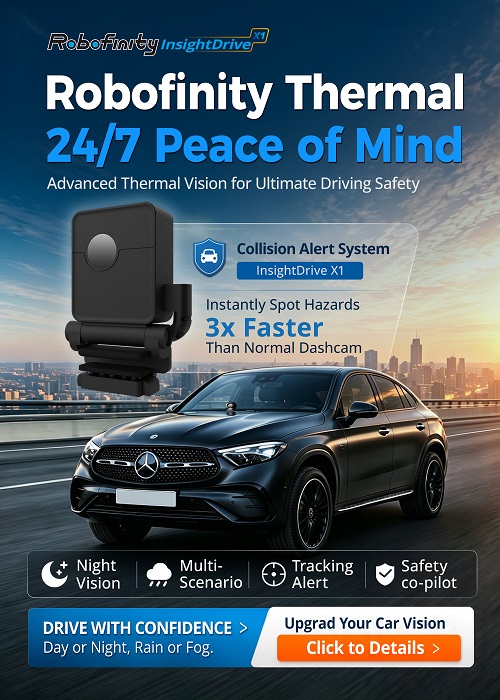
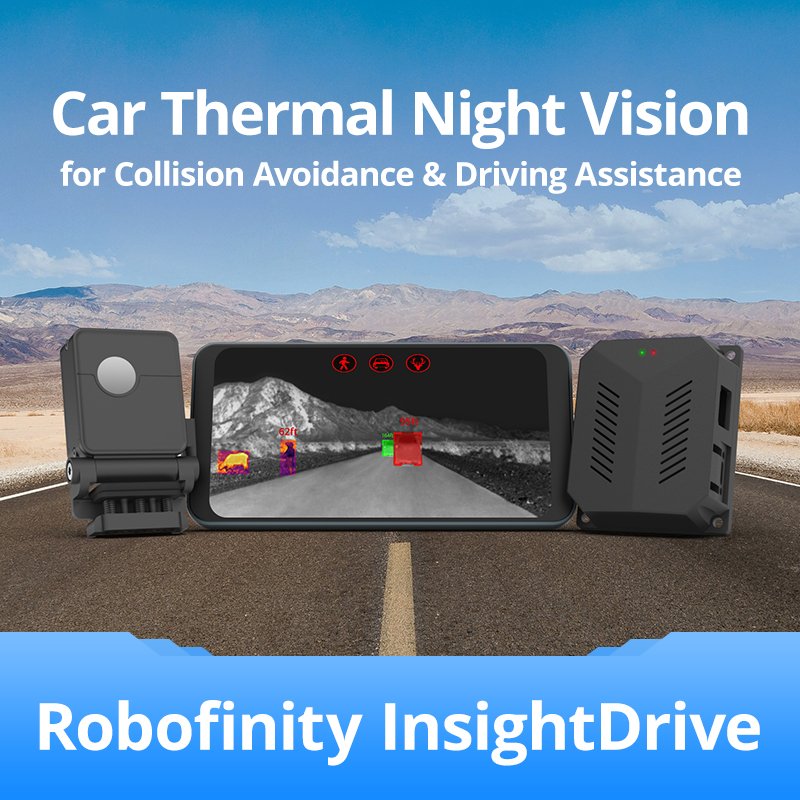
This is where a solution like the Robofinity Car Thermal Night Vision becomes a game-changing safety upgrade. Imagine this device mounted on your dashboard. It’s a simple, quick installation. As you drive, its AI doesn’t just show you a thermal image. It intelligently analyzes the heat signatures. It can distinguish between a person, a vehicle, or an animal on the side of the road.
The key benefit is proactive safety. It’s not just about seeing better. It’s about getting time to react. The system can give you an early audio and visual prompt, like a gentle alert, when it detects a potential hazard up to 200 meters ahead. That’s much farther than your brightest high beams can illuminate. This advanced warning is crucial for preventing those terrifying, sudden rear-end collisions or side impacts that happen when something darts into your path from the unseen shadows.
For any driver who frequently travels at night, lives in rural areas with wildlife, or deals with unpredictable weather, this technology adds an unparalleled layer of security. It complements your defensive driving skills and your car’s standard safety features. It turns invisible dangers into visible, manageable warnings on a simple screen, significantly boosting your confidence and safety behind the wheel in the most challenging conditions.
Conclusion: Safety is a Conscious Choice
Avoiding rear-end collisions boils down to conscious choices. Choose to put the phone down. Choose to leave a bigger gap. Choose to slow down in the rain. Choose to maintain your vehicle. These choices, made every single trip, form the habits of a truly safe driver.
There is no single magic trick. It is the combination of all these tips that builds an impenetrable defense. By mastering the following distance, driving predictably, staying focused, adapting to conditions, and keeping your car in top shape, you take control. You protect yourself, your passengers, and everyone sharing the road with you.
Start implementing these five essential tips today. Make safe driving your most important habit. The road will be a safer place for it.