

Planning a long drive adventure is something almost every driver dreams about.
- Why Preparation Matters for Any Long Drive Adventure
- Step One – Get Your Car Ready for a Long Drive Adventure
- Step Two – Plan Your Route Before Your Long Drive Adventure
- Step Three – Pack Smart for Your Long Drive Adventure
- Step Four – Fight Fatigue on Your Long Drive Adventure
- Step Five – See Better at Night During Your Long Drive Adventure
- Step Six – How Robofinity Makes a Long Drive Adventure Safer
- Step Seven – Driving a Long Drive Adventure With Kids
- Step Eight – Weather and Your Long Drive Adventure
- Step Nine – The Night Before Your Long Drive Adventure
- Step Ten – Mindset on a Long Drive Adventure
- What I Have Learned About Long Drive Adventures
- Final Thoughts on Your Long Drive Adventure
You imagine the open highway stretching out in front of you. You imagine good music, good company, and good food at random roadside diners. But here is the thing nobody tells you. A long drive adventure can turn into a nightmare fast if you do not prepare. I know because I have been there.
A few years ago, I decided to take a long drive adventure across three states. I threw some clothes in a bag, filled up the gas tank, and left. I did not check my oil. I did not check my tires. I did not think about what would happen if something went wrong.
Something went wrong.
My battery died at a rest stop two hundred miles from home. It was late. It was cold. Nobody was around to help. That night, sitting in a dark parking lot waiting for a tow truck, I promised myself I would never take a long drive adventure lightly again.
Since then, I have driven thousands of miles. I have done solo long drive adventures and family long drive adventures. I have driven through heat waves, blizzards, and thunderstorms. I have made mistakes and learned from them.
This guide is everything I wish I knew before my first long drive adventure. It is written for regular people who just want to get where they are going without drama. No fancy terms. No boring technical talk. Just real advice from someone who has done this more times than he can count.

Let us get started.
Why Preparation Matters for Any Long Drive Adventure
Some people think a long drive adventure is just driving. You get in the car, you go, you arrive. Simple, right?
Not exactly.
A long drive adventure puts stress on your vehicle in ways your daily commute does not. Your engine runs longer. Your tires get hotter. Your battery works harder. Your body gets tired. Your focus fades.
When you prepare properly for a long drive adventure, you are not just checking boxes. You are giving yourself a safety net. You are making sure that when something unexpected happens—and something always happens—you are ready to handle it.
I have done long drive adventures where I prepped for hours and long drive adventures where I did zero prep. The difference is night and day. The trips where I prepared were enjoyable. I was relaxed. I actually had fun. The trips where I did not prepare were stressful, exhausting, and expensive.
So yes. Preparation matters. And it starts with the most important part of any long drive adventure.
Your car.
Step One – Get Your Car Ready for a Long Drive Adventure
Your car is the only reason a long drive adventure is possible. Treat it right.
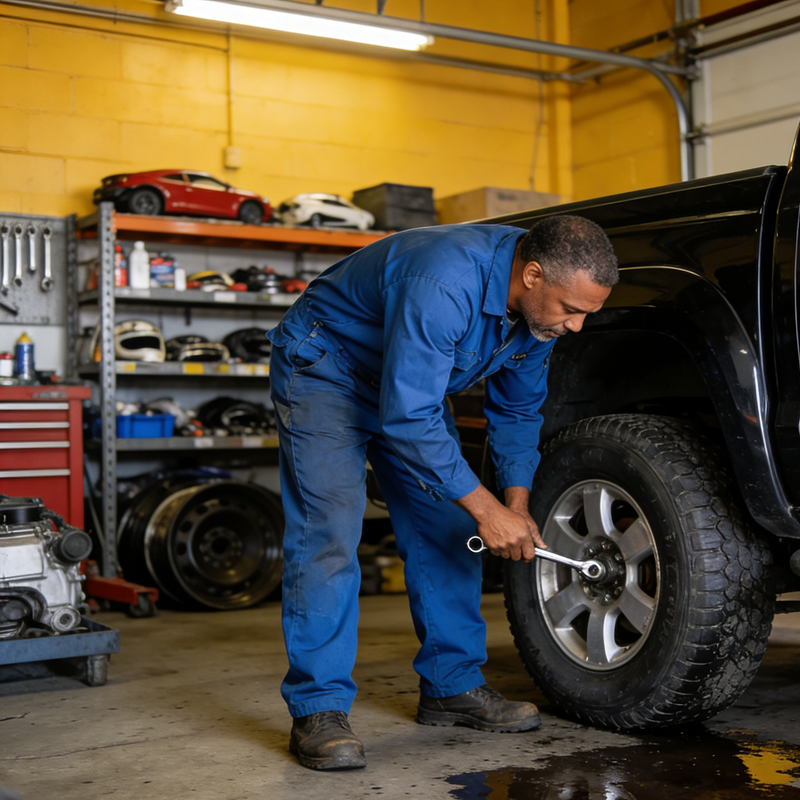
I am not a mechanic. I do not own a lift or a full set of Snap-On tools. But I have learned a simple checklist that anyone can follow before a long drive adventure. You do not need special skills. You just need fifteen minutes and a little attention.
Fluids first.
Pop the hood and check your oil. Pull the dipstick out, wipe it clean, put it back in, pull it out again. The oil should be between the two holes or lines. If it is low, add some. If it is dirty and black, consider an oil change before your long drive adventure.
Check your coolant. The reservoir is usually a translucent plastic tank. There are marks on the side showing minimum and maximum levels. Make sure it is between them. Overheating is one of the most common ways a long drive adventure gets ruined.
Check your windshield washer fluid. You will use more than you think. Bugs, dust, rain, road spray. Clean glass is not a luxury on a long drive adventure. It is a necessity.
Tires are everything.
Here is a fact. The only part of your car touching the road is your tires. Everything else depends on them.
Before any long drive adventure, check your tire pressure when the tires are cold. Look at the sticker inside your driver door frame. That number—not the number on the tire sidewall—is what you should inflate to.
Check your tread depth. Take a penny and insert it into the tread with Lincoln’s head upside down. If you can see the top of his head, your tires are too worn. Replace them before your long drive adventure.
And for God’s sake, check your spare tire. I cannot tell you how many people set out on a long drive adventure with a spare that is flat or missing or older than their kids. Do not be one of them.
Battery check.
Car batteries do not last forever. If yours is more than three years old, get it tested before a long drive adventure. Most auto parts stores do this for free. If the battery is weak, replace it now. Do not wait until you are stranded.
Lights and wipers.
Walk around your car and turn on the headlights. Both working? Good. Hit the brakes and have someone check your brake lights. Test your turn signals.
If any bulb is out, replace it. It is cheap and easy. Driving a long drive adventure with bad lights is dangerous and illegal.
Wipers are easy to forget. If they leave streaks or make noise, swap them out. A two-minute fix that makes a huge difference when you hit rain at night on a long drive adventure.
I know this sounds like a lot. But honestly, you can do everything on this list in under thirty minutes. And those thirty minutes might be the difference between a smooth long drive adventure and a roadside disaster.
Step Two – Plan Your Route Before Your Long Drive Adventure
I used to think route planning was for old people with paper maps. I was young. I had GPS. I did not need to plan.
Then I took a long drive adventure through West Virginia and lost cell signal for three hours. I had no offline maps. I had no idea which exit led to a gas station. I was guessing.
Never again.
Use multiple tools.
Google Maps is great. Waze is great. But they are not perfect. Before any long drive adventure, download offline maps for the entire route. Open Google Maps, search for the area you are covering, and tap download. Do this even if you have unlimited data. Cell towers are not everywhere.
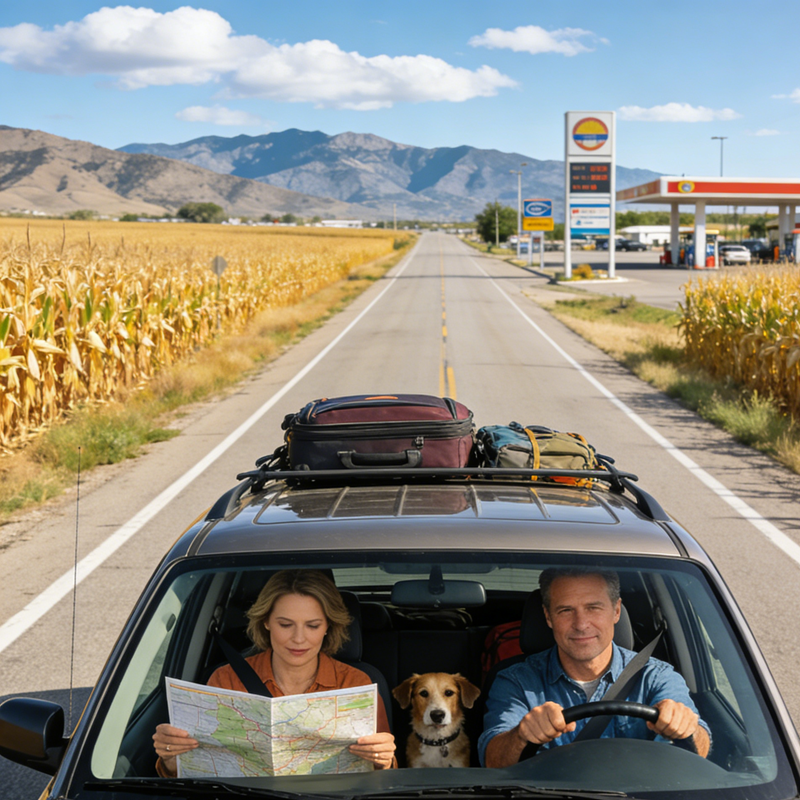
Also consider keeping a physical road atlas in your car. I keep one in my trunk. I have used it twice in the past year. That is twice my phone could not save me.
Know where you are stopping.
On a long drive adventure, you cannot just assume gas stations will appear when you need them. In rural areas, exits can be fifty or sixty miles apart. Do not let your tank drop below a quarter. Fill up when you have the chance.
Same goes for food and bathrooms. If you see a clean restroom, use it. You do not know when the next one is coming.
Book accommodations ahead.
Here is a mistake I made more than once. I thought I would just find a hotel when I got tired. But on a long drive adventure during peak season, hotels fill up. Or the only room left costs four hundred dollars. Or the town you are passing through has a festival and every bed is taken for fifty miles.
Book ahead. Even if you are not sure exactly when you will arrive, book something with free cancellation. You can always change it later.
Share your plan.
Tell someone about your long drive adventure. Send them your route and your expected arrival time. If something happens and you do not show up, they will know to look for you.
This is not paranoia. This is smart.
Step Three – Pack Smart for Your Long Drive Adventure
Packing for a long drive adventure is different from packing for a flight. You have more space, but you also have more responsibility. You cannot just buy what you forgot at the airport gift shop.
Water is non-negotiable.
Bring more water than you think you need. I carry at least one gallon per person per day on any long drive adventure. If you break down in hot weather and help is hours away, water is not a convenience. It is survival.
Food that lasts.
Pack snacks that do not need refrigeration and do not melt. Granola bars, nuts, dried fruit, beef jerky, crackers, trail mix. Avoid chocolate if you are driving through warm areas. It turns into a brown puddle and makes everything sticky.
A small cooler is worth the space if you have room. Sandwiches, yogurt, cheese sticks, cold drinks. It makes a long drive adventure feel less like a chore and more like a picnic.
First aid kit.
Do not buy a cheap plastic first aid kit and throw it in the trunk. Open it. See what is actually inside. Add what is missing.
Bandages in multiple sizes. Antiseptic wipes. Antibiotic ointment. Pain relievers. Allergy medicine. Tweezers. Scissors. Motion sickness tablets. If you take prescription medication, bring double what you think you need. Trips get extended. Delays happen.
Tools that can save you.
You do not need a full mechanic shop. But a few items can turn a disaster into a minor inconvenience on a long drive adventure.
Jumper cables. A portable tire inflator that plugs into your cigarette lighter. A flashlight with fresh batteries. A multi-tool or basic screwdriver set. Duct tape. Zip ties.
These things take up almost no space. You will be grateful for them when something breaks.
Comfort items.
Driving for hours is hard on your body. A small lumbar pillow helps. A blanket keeps you warm if the heater fails or if you have to sleep in the car. Sunglasses that actually block UV rays reduce eye strain.
Phone chargers. Bring two. And a power bank that can charge your devices even when the car is off.
Important documents.
Keep your license, registration, and insurance card somewhere you can reach them quickly. Do not bury them in a suitcase. You do not want to be digging through dirty laundry when a police officer is waiting at your window.
Make photocopies of everything. Keep one set in your bag and one set in the car. If your wallet gets stolen, you still have your documents.
Step Four – Fight Fatigue on Your Long Drive Adventure
Here is something nobody admits. The most dangerous part of any long drive adventure is not the other drivers. It is not the weather. It is your own brain getting tired.
Stop every two hours.
I do not care if you feel fine. I do not care if you are making great time. Set a timer and pull over every two hours. Get out of the car. Walk around for ten minutes. Let your blood circulate and your brain reset.
I have pushed through fatigue on a long drive adventure before. I do not do it anymore. It is not worth the risk.
Do not rely on caffeine.
Coffee and energy drinks give you a temporary boost. But they wear off, and when they wear off, you crash. Hard.
Water is better. Movement is better. Sleep is best.
Share the driving.
If someone else in the car is licensed and willing, trade off every few hours. The driver gets rest. Everyone stays safer. A long drive adventure should not rest entirely on one person’s shoulders.
Night driving is different.
Your body wants to sleep when it is dark. That is biology. If you are doing a long drive adventure that includes night hours, plan extra breaks. Pay close attention to how you feel.
Even if you think you are fine, your reaction time at night is slower than during the day. Your depth perception is worse. You cannot see as far ahead.
This is where many drivers get into trouble on a long drive adventure.
Step Five – See Better at Night During Your Long Drive Adventure
I used to think night driving was no big deal. I have good headlights. I am a good driver. What could go wrong?
Then I almost hit a deer on a dark highway in Pennsylvania. I did not see it until it was right in front of me. I swerved. I got lucky.
After that, I started researching how to see better at night. Because on a long drive adventure, you cannot control what crosses the road.
Headlights have limits.
Even the best headlights only show you about two hundred feet ahead. At highway speed, that is a few seconds of reaction time. If a deer, a person, or a disabled vehicle is in the road, you might not have enough time to stop.
Animals are hard to spot.
Deer are the obvious threat. But also elk, moose, coyotes, dogs, even livestock that have escaped from fields. Their eyes sometimes reflect light, but not always. They blend into the darkness until they are right in front of you.
Weather makes night driving worse.
Rain scatters your headlight beam and creates glare. Fog turns your high beams into a solid white wall. Snow does the same thing.
On a long drive adventure, you cannot just wait for perfect conditions. Sometimes you have to drive in imperfect ones.
This is why I started using thermal imaging.
I am not a tech guy. I do not buy every new gadget. But after that deer incident, I wanted something that could actually help me see what I was missing.
That is when I found Robofinity.
Step Six – How Robofinity Makes a Long Drive Adventure Safer
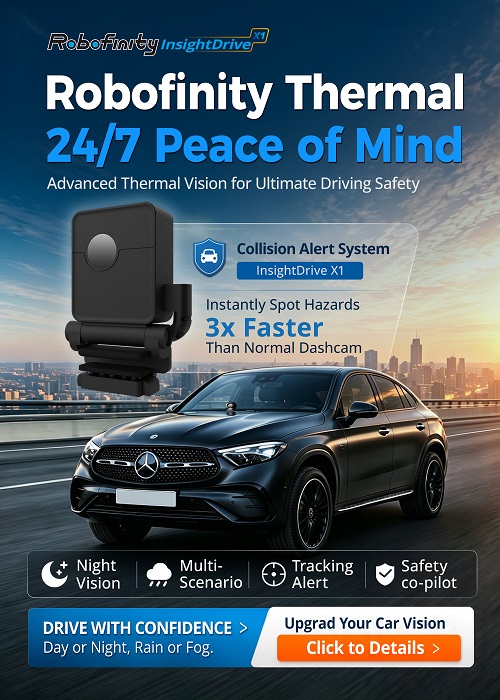
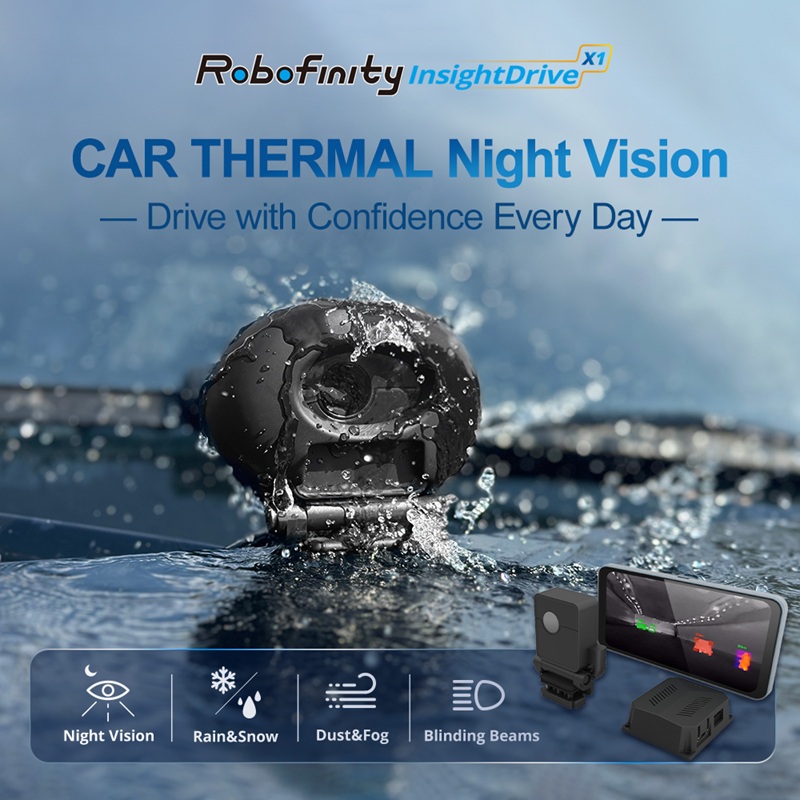
Let me tell you about Robofinity car thermal night vision. Not because I am selling it. I do not work for them. I am just a driver who drives a lot and wants to get home in one piece.
How thermal vision works.
Normal night vision cameras amplify light. That works okay in low light, but it fails in total darkness. It also gets blinded by oncoming headlights. Fog and rain make it useless.
Thermal cameras do not need light. They detect heat.
A person gives off heat. A deer gives off heat. Another car’s engine gives off heat. The thermal camera sees all of this, even in pitch black, even through fog, even in heavy rain.
On a long drive adventure that goes through rural areas or runs late into the night, this is a game changer.
The range is real.
Robofinity detects heat signatures up to two hundred meters ahead. That is more than six hundred feet. By the time something enters your headlight beam, you have already known about it for several seconds.
Those seconds matter. They are the difference between braking smoothly and slamming into something.
It recognizes what it sees.
This part surprised me. The system uses AI to identify what it detects. Pedestrians show up in purple. Vehicles show up in green or red depending on distance. Animals show up clearly against the cold background.
If something is too close, you get a warning. Not a vague beep. A clear alert that there is a hazard ahead.
Real drivers, real stories.
I read about a guy in Ohio who installed Robofinity on his truck before a long drive adventure to Canada. He said installation took ten minutes. No wiring. No special tools. Just plug it in and go.
He tested it in rain, fog, and freezing temperatures. Every time, the image was clear and smooth. No lag. No ghosting. He said it was the best safety upgrade he had ever made.
Another driver said he avoided three deer collisions last winter alone. He said the camera paid for itself on the first near-miss.
A truck driver wrote that the system caught a jaywalker his own eyes completely missed. He said it was worth every penny.
Installation is genuinely simple.
I know what you are thinking. This sounds complicated. I am not handy. I do not want to mess with my car’s wiring.
Here is the good news. You do not have to.
The whole system plugs into your 12V cigarette lighter. Mount the camera behind your rearview mirror. Stick the display on your dashboard. Plug it in. That is it.
You can set it up in under ten minutes. No mechanic. No special skills. No voiding your warranty.
Who should consider this?
Anyone who drives at night. Anyone who drives in rural areas where animals cross the road. Anyone who drives in fog, rain, or snow. Anyone who wants to feel safer behind the wheel.
If you take a long drive adventure regularly, this is the kind of tool that earns its keep the first time it helps you avoid a collision.
Step Seven – Driving a Long Drive Adventure With Kids
I do not have children myself. But I have watched my sister prepare for a long drive adventure with three kids under eight. It is a different sport.
Entertainment is survival.
Download movies and shows before you leave. Do not rely on streaming. Once you leave the city, signal drops fast.
Tablets, handheld games, coloring books, magnetic travel games. Bring variety. Kids get bored quickly, and bored kids make a long drive adventure miserable for everyone.
Snacks must be mess-proof.
Wet wipes. Bring a lot of them. Small trash bags hung from the headrests. Snacks that do not melt, crumble, or stain.
Avoid chocolate in warm weather. I have learned this lesson through observation. It is not pretty.
Stop more often.
Kids cannot sit still for three hours. They should not have to. Plan stops where they can run around and burn energy. Rest areas with grass are better than gas stations with concrete.
Motion sickness is real.
If your child gets car sick, be prepared. Ginger candies, wristbands, whatever your pediatrician recommends. Bring extra clothes and plastic bags just in case.
A long drive adventure with kids requires more patience and more planning. But it is absolutely worth it.
Step Eight – Weather and Your Long Drive Adventure
You cannot control the weather. But you can control how ready you are for it.
Check the forecast along your entire route.
Not just your starting point. Not just your destination. The whole route. Weather changes. Be aware of what is coming.
Rain changes everything.
Wet roads double your stopping distance. Slow down. Turn your headlights on. Increase your following distance.
If it is raining so hard you cannot see, pull over. Wait it out. It is better to arrive late than to not arrive at all.
Heat can be dangerous.
Test your air conditioning before a long drive adventure. A broken AC in 95-degree weather is not just uncomfortable. It is unsafe.
If your AC fails and you cannot get it fixed, drive in the early morning or late evening. Drink lots of water. Take breaks in air-conditioned buildings.
Cold weather has its own challenges.
Check your antifreeze. Keep an extra blanket in the car. Make sure your heater works.
If you are driving through mountain areas, be ready for rapidly changing conditions. Sun at the bottom of the pass. Snow at the top. It happens more often than you think.
Step Nine – The Night Before Your Long Drive Adventure
You have done the big stuff. Your car is ready. Your bags are packed. Your route is planned.
Now do these small things. They matter more than you think.
Wash your windows.
Inside and out. Clean glass reduces glare and helps you see better at night. It takes five minutes.
Top off your fluids one more time.
Oil, coolant, washer fluid. It takes two minutes. Do it now, not on the road.
Check your tire pressure when the tires are cold.
This gives you the most accurate reading. Do it the night before, not after you have already driven to breakfast.
Fill your gas tank.
Do not wait until morning. Do it tonight. One less thing to rush through.
Lay out your clothes.
Know what you are wearing. Have everything ready. Mornings are stressful enough without digging through suitcases.
Go to bed early.
This is the most important one. You cannot drive well when you are tired. You cannot think clearly. You cannot react quickly.
A good night of sleep is the best preparation for any long drive adventure.
Step Ten – Mindset on a Long Drive Adventure
You have prepared your car. You have packed your bags. You have mapped your route. You have a thermal camera on your dash and snacks within reach.
Now you just have to drive.
Stay flexible.
Sometimes the best parts of a long drive adventure are the unplanned ones. A funny roadside sign. A diner that looks interesting. A scenic overlook you did not know existed.
Leave room in your schedule for surprises. Not everything has to be scheduled to the minute.
Check in with yourself.
How are you feeling? Are you getting tired? Are you getting irritable? Are your shoulders tight? Is your jaw clenched?
These are signs that you need a break. Listen to them.
Be patient with other drivers.
Someone cut you off. Someone is going too slow in the left lane. Someone forgot to use their turn signal.
Getting angry does not help. It just raises your blood pressure and makes you more stressed. Take a breath. Let it go.
Remember why you are doing this.
You are not just trying to get from point A to point B. You are having a long drive adventure. Even the boring parts, even the frustrating parts, are all part of the story.
What I Have Learned About Long Drive Adventures
I have done a lot of long drive adventures over the years. Cross-country trips. Weekend getaways. Solo drives and drives with friends.
Every time I learn something new.
I learned that spending an hour on prep saves me ten hours of stress later.
I learned that cheap tools break when you need them most.
I learned that tired driving is dangerous driving and there is no shortcut around rest.
I learned that the best memories from a long drive adventure are not made on highways. They are made at rest stops with bad coffee, at gas stations with weird souvenirs, at scenic overlooks you almost missed.
And I learned that feeling safe behind the wheel is not something to take for granted.
Final Thoughts on Your Long Drive Adventure
A long drive adventure is supposed to be fun. It is supposed to be freeing. It is supposed to make you feel alive.
But none of that happens if you are stressed out, exhausted, or broken down on the side of the road with no water and no phone signal.
Preparation is not about being paranoid. It is about being smart. It is about recognizing that a little effort up front saves a lot of trouble later.
Check your car. Plan your route. Pack what you actually need. Take breaks. Stay alert. Give yourself the tools to see what you are missing.
And then let the rest go.
You cannot control every variable. The weather might not cooperate. Traffic might be worse than you expected. Your kids might fight in the backseat.
That is all normal. That is all part of any long drive adventure.
What matters is that you did your part. You prepared. You gave yourself the best possible chance at a smooth, safe, enjoyable trip.
Now get out there. The road is waiting.