

As a beginner driver, that first solo trip can feel equal parts thrilling and terrifying.
- 1.The Right Mindset: Your Mental Toolkit is Key
- 2.Know Your Vehicle Inside and Out
- 3.Mastering the Fundamentals: Beyond the Basics
- 4.Navigating Common (and Scary) Scenarios
- 5.Conquering Bad Weather and Night Driving
- 6.Parking Like a Pro
- 7.Defensive Driving: Assume Others Will Make Mistakes
- 8.Handling Passengers and Peer Pressure
- 9.What to Do in an Emergency
- 10.The Journey of Continuous Learning
- Investing in Your Safety as a New Driver
The open road symbolizes freedom, but it also demands respect, responsibility, and a solid foundation of knowledge. This comprehensive guide is designed for every new driver ready to transition from learner’s permit to confident navigator. We’ll cover the essential skills, mindset shifts, and practical tips that go far beyond what’s on the standard driving test. For any beginner driver, mastering these fundamentals isn’t just about passing an exam—it’s about building lifelong habits for safety and confidence behind the wheel.
Let’s get you prepared, step by step.
1.The Right Mindset: Your Mental Toolkit is Key
Before you even start the engine, check your mindset. Driving is a serious responsibility. For the beginner driver, overconfidence is just as dangerous as nervousness.
- You are in control of a powerful machine. A car can cause immense damage. Respect that power every single time.
- Focus is non-negotiable. Distractions are the enemy. Put your phone away. Set your GPS and playlist before you move.
- Patience saves lives. Road rage and impatience lead to bad decisions. You will encounter slow drivers, traffic jams, and unpredictable actions from others. Stay calm.
- Admit what you don’t know. It’s okay to be a beginner driver. If you’re unsure about a route or a maneuver, find a safe place to pull over and regroup. Asking for help is smart.
Adopting a safe, attentive, and patient attitude is the most important thing a beginner driver can do.
2.Know Your Vehicle Inside and Out
Don’t just know how to drive a car; know how to drive your car. Every model is slightly different.
- The Owner’s Manual is Your Best Friend. Read it. Know where basic controls are: lights, windshield wipers, hazard lights, defroster, and hood release.
- Pre-Drive “Walk-Around” Habit. Make it a ritual. Check tire pressure (look for obvious flats), look for fluid leaks under the car, and ensure windows and mirrors are clean.
- Adjust Everything BEFORE Driving. Seat position, steering wheel, and all mirrors should be set so you have a clear, comfortable view. You should see the rear corners of your car in the side mirrors.
- Understand the Dashboard Icons. Know the critical warning lights: check engine, oil pressure, battery, brake system, and tire pressure. If a red light comes on while driving, safely address it immediately.
A beginner driver who is familiar with their vehicle feels more in control and can react faster.

3.Mastering the Fundamentals: Beyond the Basics
You learned the mechanics in driver’s ed, but true mastery requires practice.
- Smooth Operations: Practice accelerating, braking, and steering smoothly. Jerky movements are uncomfortable for passengers and can be unsafe.
- The 3-Second Following Rule: Pick a stationary object the car ahead passes. It should take you at least 3 seconds to reach it. Double this in bad weather. This is crucial for a beginner driver to maintain safe stopping distance.
- Scanning, Not Staring: Your eyes should constantly move. Check your mirrors every 5-8 seconds. Look far down the road, not just at the car directly in front of you. This helps you anticipate problems.
- Communicate Your Intentions: Always use your turn signals, even in empty parking lots. Make eye contact with pedestrians and other drivers when possible. If your brake lights are your only communication, use them early and clearly.
4.Navigating Common (and Scary) Scenarios
City Driving: It’s busy and fast-paced.
- Watch for pedestrians everywhere, especially at intersections and when turning.
- Be mindful of cyclists and give them space.
- Understand right-of-way rules at 4-way stops. If in doubt, wave the other person on—it’s safer than a misunderstanding.
Highway/Freeway Driving: High speeds can be intimidating.
- Merging: Use the on-ramp to match highway speed. Signal early, check your blind spot, and merge confidently.
- Lane Discipline: Stay in the right lane except to pass. The left lane is for passing.
- Exiting: Signal and move to the exit lane well in advance. Don’t make last-minute, dangerous cuts across lanes.
5.Conquering Bad Weather and Night Driving
This is where many new drivers feel unprepared.
- Rain: Slow down. Roads are slickest in the first 15 minutes of rain. Increase following distance dramatically. Ensure your tires have good tread.
- Fog: Use low-beam headlights. High beams will reflect back and reduce visibility. Slow down and use roadside reflectors to guide you.
- Night Driving: Visibility is limited. Slow down. Keep your windshield and headlights clean. Avoid looking directly at oncoming headlights—use the right edge of the road as a guide.
These conditions test a beginner driver’s skills. The best strategy is to slow down, increase distance, and if conditions are too severe, delay your trip.
6.Parking Like a Pro
Practice in an empty lot. Know the different types:
- Parallel Parking: Use reference points. Practice until it’s second nature.
- Perpendicular Parking: Aim for the center of the space. Straighten your wheels after turning.
- Angled Parking: Usually easier. Still, take it slow and check your surroundings.

7.Defensive Driving: Assume Others Will Make Mistakes
This is the golden rule. You can only control your own car.
- Have an escape plan. Always leave yourself an “out”—space to move into if the car in front slams its brakes.
- Watch for clues: A car’s wheels turning, a driver’s head movement, or a car drifting in its lane can signal their next move.
- Never assume a green light means “go.” Look both ways before proceeding through an intersection.
A defensive beginner driver is a safe driver.
8.Handling Passengers and Peer Pressure
As a new driver, especially a teen, friends in the car can be a huge distraction.
- Set rules early: Seatbelts on for everyone, no loud music that blocks road sounds, and the driver’s focus is on driving.
- It’s okay to say no. If friends are being rowdy or pressuring you to speed, pull over and explain that safety comes first. A true friend will understand.
9.What to Do in an Emergency
Stay calm. Your priorities are: 1) Ensure safety, 2) Get help.
- Flat Tire: Signal, slow down, and pull over to a flat, safe spot. Turn on hazard lights. Call for roadside assistance if you’re unsure how to change it.
- Overheating Engine: Turn off the A/C and turn on the heater (it pulls heat from the engine). Pull over as soon as safe and turn the engine off. Do not open the hot radiator cap.
- Accident: Move to safety if possible. Turn on hazards. Check for injuries. Call 911. Exchange information and take photos. Never admit fault at the scene.
10.The Journey of Continuous Learning
Getting your license is just the beginning. Consider taking an advanced driving course. They teach skid control and emergency maneuvers you won’t learn in basic training. Every trip is a learning experience for a beginner driver. Reflect on what went well and what you could improve.
Final Words of Encouragement: Confidence comes with miles. Start with short, familiar trips in good weather. Gradually expand your comfort zone. Remember, every expert driver was once a beginner driver. The fact that you’re seeking out this knowledge shows you’re on the right path to becoming a safe, responsible, and skilled driver.
Investing in Your Safety as a New Driver
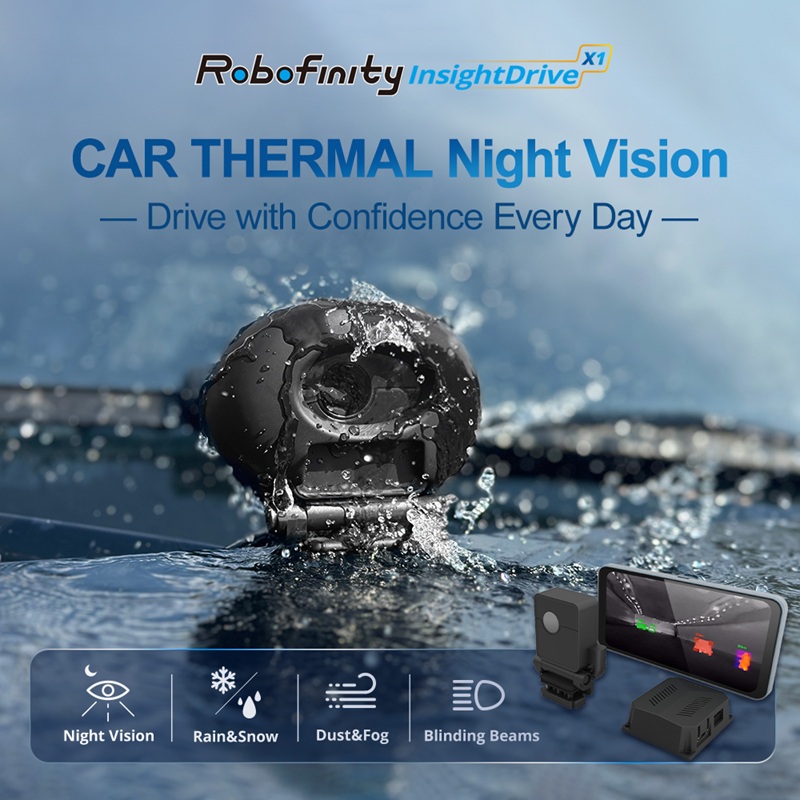
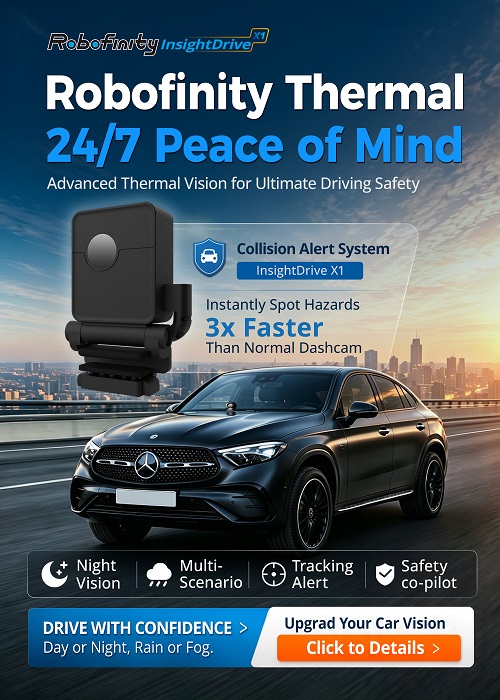
As you build your skills, especially for challenging conditions like night driving or bad weather, modern technology can be an invaluable co-pilot. This is where advanced safety equipment can make a significant difference. For instance, a thermal imaging car camera, like the Robofinity Car Thermal Night Vision, acts as a second pair of superhuman eyes. It uses heat-sensing technology to see what your eyes or standard headlights can’t.
The car thermal night vision can AI-smart identify people, cars, and animals on the road, giving you an early heads-up. Its pre-collision alert system provides crucial extra seconds to react. The biggest advantage? It can see up to 200 meters ahead, cutting through complete darkness, heavy rain, snow, and fog to detect obstacles. For a beginner driver navigating poorly lit roads or sudden weather changes, this added layer of perception is a game-changer. With simple and quick installation, it’s a practical upgrade that directly contributes to enhanced driving safety performance, helping you avoid potential hazards with greater confidence.