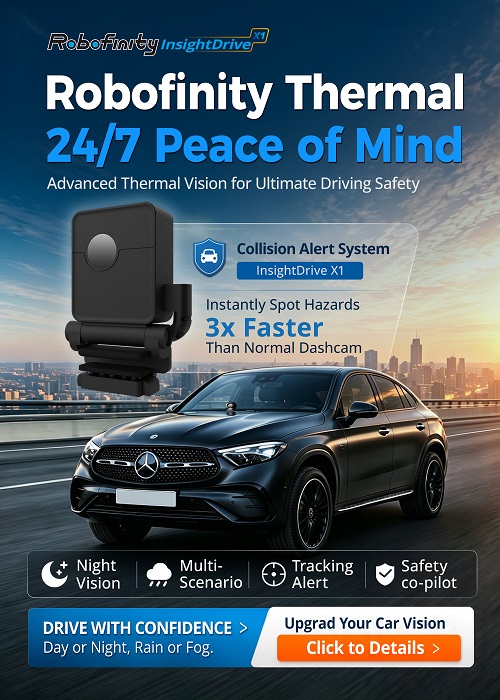


What Is Thermal Night Vision for Driving?
Driving after dark is one of the most demanding situations on the road. Headlights only illuminate a limited distance, glare from oncoming traffic can reduce visibility, and people, animals, or obstacles can appear with little warning. That is why thermal night vision has become an increasingly interesting technology in modern vehicles.
- Understanding Thermal Night Vision
- How Thermal Night Vision for Driving Works
- Why Drivers Use Thermal Night Vision
- Better Detection of Pedestrians
- Improved Awareness of Animals
- Visibility Beyond Headlight Range
- Support in Difficult Conditions
- Thermal Night Vision vs. Conventional Night Vision
- Real-World Driving Examples
- Example 1: Rural Highway at Night
- Example 2: Urban Street With Poor Lighting
- Example 3: Foggy Morning Commute
- Benefits of Thermal Night Vision for Driving
- Limitations and Challenges
- It Does Not Replace Headlights or Safe Driving
- Image Interpretation Can Take Practice
- Performance Can Vary by Conditions
- Cost and Availability
- False Confidence Risk
- Where Thermal Night Vision Is Found
- The Future of Thermal Night Vision in Cars
- Is Thermal Night Vision Worth It?
- Conclusion
Unlike standard night vision systems that rely on amplified light or infrared illumination, thermal night vision detects heat. It can reveal pedestrians, cyclists, large animals, and other warm objects beyond the range of headlights, giving drivers extra time to react. For anyone curious about advanced vehicle safety technology, understanding how thermal night vision works is a useful starting point.
Understanding Thermal Night Vision

At its core, thermal night vision is a system that creates an image based on heat differences rather than visible light. Every object emits some level of infrared radiation depending on its temperature. Warm objects such as people, animals, engines, and even recently driven vehicles emit more heat than cooler surroundings like pavement, trees, or buildings.
A thermal camera mounted on the vehicle detects these temperature differences and converts them into an image displayed for the driver. In many systems, warmer objects appear brighter or are highlighted in a contrasting color, making them easier to identify in darkness.
This is very different from traditional vision systems that need some amount of light to produce a visible image. Thermal imaging does not depend on headlights to “see” a person or animal. As long as there is a temperature contrast, the system can detect it.
How Thermal Night Vision for Driving Works
A vehicle equipped with thermal night vision typically includes several core components:
Thermal Camera
The camera is usually mounted in the front grille, bumper, or near the windshield. It scans the road ahead and detects infrared radiation emitted by objects.
Image Processing Software
The raw thermal data is processed by software that turns temperature readings into a visual image. More advanced systems can also identify likely hazards such as pedestrians or animals.
Driver Display
The image is then shown to the driver on:
- A dashboard screen
- The digital instrument cluster
- A head-up display on the windshield
Some systems simply show a grayscale thermal image, while others actively highlight hazards with boxes, icons, or warning colors.
Alert Features
Many modern systems go beyond passive viewing. If the software detects a person or large animal in or near the vehicle’s path, it may trigger:
- Visual alerts
- Audible warnings
- Highlighted outlines around the hazard
In some high-end applications, the detection system may also work together with automatic emergency braking or other advanced driver assistance features.
Why Drivers Use Thermal Night Vision
The main goal of thermal night vision is to improve safety in low-visibility conditions. Driving at night reduces reaction time because hazards are often seen later than they would be during the day. A thermal system can expand the driver’s awareness beyond what headlights reveal.
Better Detection of Pedestrians
Pedestrians are among the hardest road users to spot at night, especially when wearing dark clothing. A thermal imaging system can make a person stand out clearly because the human body emits heat.
For example, imagine a pedestrian walking along the shoulder of a poorly lit rural road. Even if the person blends into the darkness visually, a thermal display may show them as a bright figure well before they enter the headlight beam.
Improved Awareness of Animals
Large animals such as deer, elk, or livestock can create serious hazards, particularly on country roads. These animals may be nearly invisible until they move into the lane. Since they emit body heat, thermal night vision can help detect them earlier.
This is especially useful in areas where animal crossings are common and there is little street lighting.
Visibility Beyond Headlight Range
One of the biggest advantages of thermal imaging is that it may detect heat signatures farther ahead than headlights effectively illuminate. This extra distance can matter when traveling at highway speeds.
A few more seconds of warning can make the difference between a controlled stop and a sudden emergency maneuver.
Support in Difficult Conditions
Although thermal systems are not perfect in every environment, they can still be helpful in situations where normal visibility is limited, such as:
- Dark rural roads
- Unlit highways
- Light fog or haze
- Areas with heavy shadows
Thermal Night Vision vs. Conventional Night Vision
People often use the phrase “night vision” broadly, but there are different technologies behind it. Understanding the difference helps explain why thermal night vision is unique.
Conventional Night Vision
Traditional night vision typically works by amplifying available light. It may use ambient light from the moon, stars, streetlights, or infrared illuminators to create a visible image. This approach is common in military optics, security devices, and some vehicle systems.
Its performance depends on the presence of at least some light and can be affected by glare.
Thermal Night Vision
Thermal night vision, on the other hand, detects heat rather than reflected light. It does not need visible illumination to identify a warm object. This often makes it more effective for spotting people or animals in total darkness.
Key Difference
A simple way to think about it is this:
- Conventional night vision helps you see what light reveals
- Thermal night vision helps you see what heat reveals
Both technologies have strengths, but for identifying living beings on a dark road, thermal imaging offers a major advantage.
Real-World Driving Examples
To understand the practical value of thermal night vision, it helps to look at a few real-world scenarios.
Example 1: Rural Highway at Night
You are driving on a two-lane road with no streetlights. Your headlights illuminate the lane ahead, but visibility beyond that is limited. A deer is standing near the roadside, partially hidden by brush.
With thermal imaging, the deer’s body heat may appear on the display before it steps into the road, giving you time to slow down.
Example 2: Urban Street With Poor Lighting
A pedestrian is about to cross between parked cars on a dimly lit street. Because the person is wearing dark clothing, they are difficult to spot through the windshield.
A thermal system can show the person as a distinct heat source, increasing your awareness before they move into your path.
Example 3: Foggy Morning Commute
While moderate or heavy fog can reduce the performance of many visual systems, thermal imaging may still help distinguish a warm vehicle engine, cyclist, or person from a cooler background in some cases.
It is not a magic solution, but it can provide another layer of information when the road is difficult to read.
Benefits of Thermal Night Vision for Driving
The appeal of thermal night vision comes from its potential safety benefits. Some of the most important advantages include:
- Earlier detection of pedestrians
- Better visibility of animals near the road
- Improved awareness in unlit areas
- Additional support beyond standard headlights
- Reduced surprise in dark driving conditions
- Potential integration with driver assistance systems
For drivers who frequently travel at night, especially in rural or low-light environments, these benefits can be meaningful.
Limitations and Challenges
While thermal night vision is impressive, it is not a replacement for attentive driving. Like any automotive technology, it has limitations.
It Does Not Replace Headlights or Safe Driving
A thermal display is a support tool, not a substitute for looking at the road. Drivers still need to maintain safe speed, proper following distance, and full attention.
Image Interpretation Can Take Practice
Some drivers may need time to get used to reading a thermal image. Objects do not appear exactly as they do in normal vision, so recognizing shapes and distances can require familiarity.
Performance Can Vary by Conditions
Thermal contrast is strongest when warm objects stand out clearly from the background. In hot weather or environments where surfaces retain heat, the difference between objects may be less obvious.
Cost and Availability
Historically, thermal night vision has been found mostly in premium or luxury vehicles. While costs may decrease over time, it is still not a standard feature in most cars.
False Confidence Risk
Any assistance system can create a temptation to rely too heavily on technology. Drivers should remember that thermal systems may miss objects, misidentify shapes, or provide incomplete information.
Where Thermal Night Vision Is Found
For now, thermal night vision is most commonly associated with higher-end vehicles and specialized automotive safety packages. Some luxury manufacturers have offered thermal-based pedestrian detection and night vision displays for years.
The technology is also relevant in:
- Emergency response vehicles
- Commercial fleet safety systems
- Off-road applications
- Security and surveillance vehicles
As thermal sensors become smaller and more affordable, broader adoption in mainstream vehicles is possible.
The Future of Thermal Night Vision in Cars
The future of thermal night vision looks closely tied to the growth of advanced driver assistance systems and automated driving features. Thermal cameras can add a different type of environmental data that complements regular cameras, radar, and lidar.
In the years ahead, we may see thermal imaging used more often for:
Smarter Hazard Recognition
Systems may become better at distinguishing between a person, an animal, and an inanimate heat source.
Stronger Integration With Safety Features
Thermal detection could be linked more directly with:
- Automatic braking
- Collision warnings
- Adaptive headlights
- Driver alerts
Wider Availability
As sensor costs fall and software improves, thermal night vision may move from luxury cars into more affordable models.
That would make this once-specialized technology a more familiar part of everyday road safety.
Is Thermal Night Vision Worth It?
Whether thermal night vision is worth having depends on how and where you drive. For someone who mostly drives in well-lit city areas, the value may be limited. But for people who often travel on dark roads, through wildlife-prone regions, or in low-visibility conditions, it can offer meaningful support.
It is especially useful for drivers who want:
- More confidence on dark rural roads
- Better detection of pedestrians at night
- Extra awareness in areas with deer or other animals
- An added layer of safety technology in premium vehicles
The most important point is that thermal imaging works best as part of a broader safety mindset, not as a stand-alone solution.
Conclusion
Thermal night vision for driving is a vehicle technology that uses heat detection to reveal people, animals, and other warm objects in low-light conditions. By showing hazards that may be invisible to the naked eye or beyond the reach of headlights, it can improve driver awareness and reaction time.
Although it has limits and is still more common in premium vehicles, thermal night vision represents an important step forward in automotive safety. As the technology becomes more advanced and accessible, it may play a larger role in helping drivers navigate the road more safely after dark.