


Knowing how to estimate car maintenance costs before buying can protect you from choosing a vehicle that fits your purchase budget but strains your finances after the sale. The badge, age, mileage, engine, drivetrain, service history, and previous use all influence what you may spend. A realistic estimate therefore requires more than looking up an average annual figure. You need to identify the exact vehicle, determine which services are approaching, inspect its current condition, and obtain prices from repair shops in your area.
- Start With the Right Cost Categories
- Identify the Exact Vehicle Configuration
- Find the Manufacturer’s Maintenance Schedule
- Compare the Schedule With the Service History
- Calculate Upcoming Scheduled Work
- Estimate Wear Items From Their Current Condition
- Research Model-Specific Problems Carefully
- Get Local Quotes Instead of Depending on National Averages
- Use a Pre-Purchase Inspection to Replace Guesswork
- Build a First-Year Budget and a Normal-Year Budget
- Adjust the Estimate for Powertrain and Vehicle Type
- Keep Optional Technology Outside the Maintenance Total
- Compare Cars Using the Same Time and Mileage Horizon
- Warning Signs That Require a Larger Reserve
- FAQ
- How much should I budget annually for car maintenance?
- Is a newer car always less expensive to maintain?
- Can I estimate maintenance without service records?
- Are electric cars maintenance-free?
- Should I trust an online maintenance cost calculator?
- Is a pre-purchase inspection worth paying for?
- Make the Purchase Decision With Real Numbers
The goal of learning how to estimate car maintenance costs is not to predict every future repair. No buyer can do that with certainty. The practical goal is to build a defensible ownership budget, expose expensive maintenance that may be due soon, and compare vehicles on more than their asking prices.
Table of Contents
- Start With the Right Cost Categories
- Identify the Exact Vehicle Configuration
- Find the Manufacturer’s Maintenance Schedule
- Compare the Schedule With the Service History
- Calculate Upcoming Scheduled Work
- Estimate Wear Items From Their Current Condition
- Research Model-Specific Problems Carefully
- Get Local Quotes Instead of Depending on National Averages
- Use a Pre-Purchase Inspection to Replace Guesswork
- Build a First-Year Budget and a Normal-Year Budget
- Adjust the Estimate for Powertrain and Vehicle Type
- Compare Cars Using the Same Time and Mileage Horizon
- Warning Signs That Require a Larger Reserve
- FAQ
Start With the Right Cost Categories
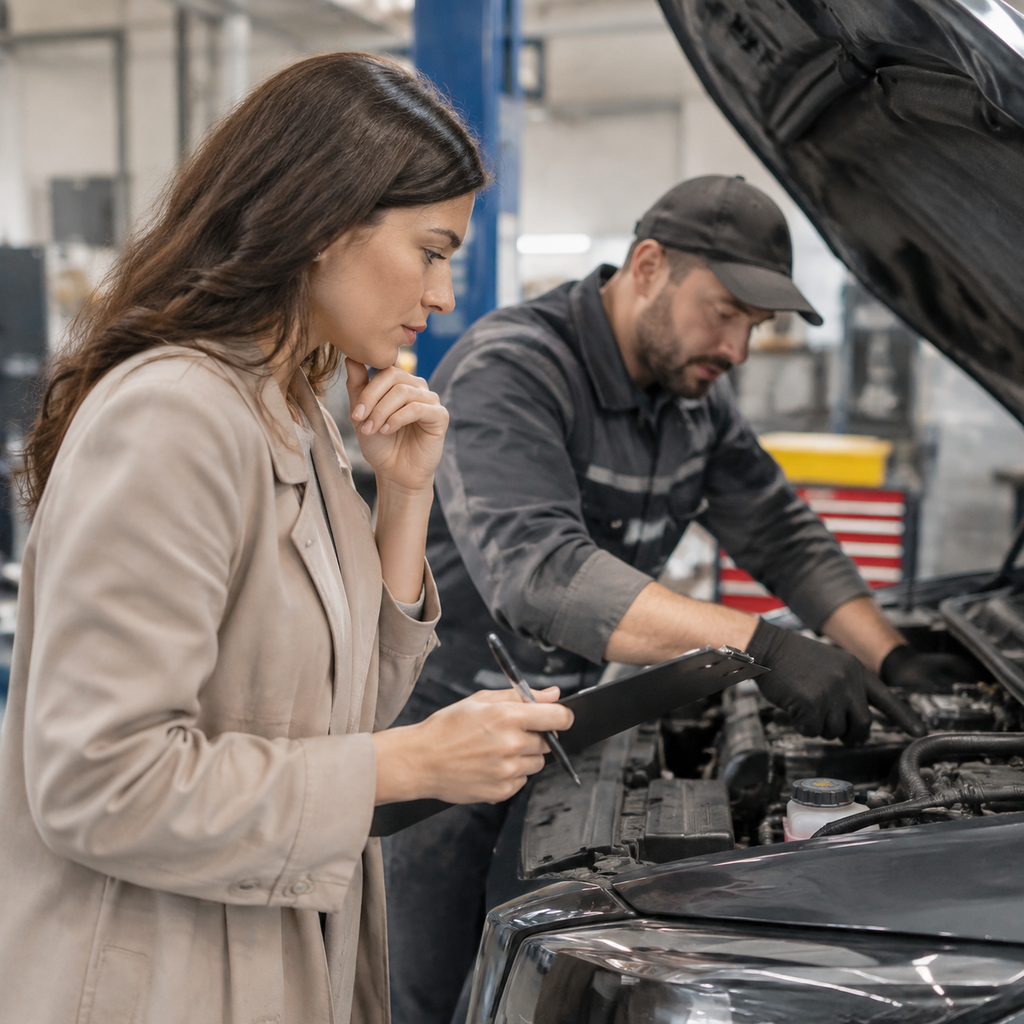
To estimate car maintenance costs accurately, first separate the expenses that keep a vehicle operating from the broader costs of ownership. “Maintenance cost” is often used loosely, which can make comparisons misleading.
A useful pre-purchase estimate should account for:
- Manufacturer-scheduled servicing
- Engine oil, filters, fluids, and inspections
- Tires, brakes, batteries, bulbs, and wiper blades
- Age- or mileage-based services
- Deferred maintenance left by the previous owner
- Model-specific mechanical or electrical repair risks
- Local parts prices and labor rates
- A reserve for unexpected repairs
Fuel, insurance, financing, taxes, registration, depreciation, parking, and road tolls also affect affordability, but they are not maintenance expenses. Calculate them separately when building a complete vehicle ownership budget. This distinction is essential when you estimate car maintenance costs for two vehicles with different fuel or insurance profiles.
One car may have lower fuel costs but require more expensive tires. Another may be inexpensive to service routinely but carry a greater risk of a costly age-related repair. A clear set of categories prevents those differences from disappearing into a single vague annual estimate.

Identify the Exact Vehicle Configuration
Maintenance estimates based only on make and model can be misleading. To estimate car maintenance costs, identify the exact version because a vehicle line may be sold with several engines, transmissions, battery sizes, suspension systems, wheel packages, and drive configurations.
Before researching costs, record:
- Model year
- Trim level
- Engine type and displacement
- Transmission type
- Front-, rear-, or all-wheel drive
- Hybrid, plug-in hybrid, electric, gasoline, or diesel powertrain
- Wheel and tire size
- Current mileage or kilometers
- Vehicle identification number when available
The VIN can help confirm the original specification and may be necessary when checking parts, service records, or manufacturer information. This is especially important when visually similar versions use different timing systems, transmissions, brakes, or service intervals.
Wheel size deserves particular attention. A higher trim with large wheels may use significantly more expensive tires than the base model. Performance-oriented versions may also have larger brakes, specialized suspension components, or shorter replacement intervals for certain consumables. These details can change how you estimate car maintenance costs by hundreds of currency units each year.
Find the Manufacturer’s Maintenance Schedule
The owner’s manual or official maintenance guide is the best starting point for scheduled service. To estimate car maintenance costs over the next few years, look for services triggered by time, mileage, or kilometers. A car that has traveled relatively little can still need brake fluid, coolant, filters, belts, or other items because of age.
Create a list covering at least the next three years or 30,000 to 50,000 miles, depending on how much you drive. European buyers can make the same calculation using kilometers.
Common scheduled items include:
- Engine oil and oil filter changes
- Engine air and cabin filter replacement
- Brake fluid service
- Coolant replacement
- Spark plugs
- Transmission or gearbox fluid
- Differential and transfer-case fluid
- Fuel filters on applicable vehicles
- Timing belt and associated components
- Drive belts
- Hybrid or electric-vehicle coolant inspections
- Manufacturer-required inspections
Do not assume that a “long-life” or “lifetime” fluid means it can be ignored under every ownership pattern. Follow the documentation for the exact model and ask a qualified repair facility how local conditions, towing, repeated short trips, temperature extremes, or heavy traffic affect the schedule.
Apply the Severe-Use Schedule When Appropriate
Many manufacturers distinguish between normal and severe operating conditions. Severe use can include frequent short journeys, extended idling, towing, dusty roads, mountain driving, very hot or cold weather, or dense stop-and-go traffic. These conditions matter when you estimate car maintenance costs from mileage alone.
A vehicle used for deliveries in a city may have accumulated more engine hours, braking wear, and heat cycles than its odometer suggests. A rural vehicle may have lower brake wear but more exposure to rough roads, mud, salt, or animal-related road hazards. Ask how the car was used rather than relying on mileage alone.
Compare the Schedule With the Service History
A maintenance schedule tells you what should have happened. Service records help establish what actually happened, making it easier to estimate car maintenance costs with less uncertainty.
Useful evidence includes dated invoices, digital dealer records, inspection reports, and itemized workshop receipts. A stamped service book can be helpful, but an invoice showing the exact fluid, part, mileage, and date provides more detail.
Check whether major services were performed at the appropriate time. Pay particular attention to items that are expensive or easy to postpone, such as:
- Timing belt replacement
- Transmission servicing
- Cooling-system work
- Spark plug replacement
- Brake and tire replacement
- Differential or transfer-case service
- Diesel emissions-system maintenance
- Hybrid-system inspections
- Manufacturer recall work
Do not treat “recently serviced” as proof that every required item is current. In a sales listing, that phrase may refer only to an oil change. Ask for the invoice and compare it with the official schedule.
Missing records do not prove that a car was neglected. They do, however, increase uncertainty. If a critical service cannot be verified, budget as though it may need to be completed after purchase. For some items, replacing them early is less risky than assuming undocumented work was done correctly.
Calculate Upcoming Scheduled Work
Build a simple worksheet for all services likely to occur during your planned ownership period. Include the due date or mileage, an estimated local price, and the number of years over which you will spread the expense. This worksheet is the foundation for how to estimate car maintenance costs consistently.
A practical formula is:
Annualized scheduled cost = estimated service price ÷ years until the service is due
Suppose a particular service is expected in two years and a local workshop quotes 600 in your currency. Its annualized cost is 300. If you expect to sell the car before that service is due, it may not become your direct expense, although an approaching major service can still affect resale value.
For items due immediately, place the full amount in the first-year budget. Do not spread deferred maintenance over several years merely to make the car appear more affordable.
A working table can look like this:
| Cost category | What to investigate | How to estimate it |
|---|---|---|
| Routine service | Oil, filters, inspections, fluids | Use the official interval and a local written quote |
| Major scheduled work | Timing components, plugs, gearbox service | Confirm the due point and price the full job |
| Tires | Size, tread depth, age, matching set | Price suitable replacement tires and installation |
| Brakes | Pad and rotor condition | Request axle-by-axle estimates |
| Battery | Age, condition, type | Price the correct replacement specification |
| Deferred work | Overdue or undocumented maintenance | Add the full near-term cost |
| Repair reserve | Model-, age-, and mileage-related risks | Use inspection findings and repair quotes |
Estimate Wear Items From Their Current Condition
Wear items do not always align neatly with a manufacturer schedule. Their remaining life depends on driving style, road conditions, climate, vehicle weight, and previous maintenance. These variables are important when you estimate car maintenance costs for a specific used vehicle.
Tires
Record the brand, model, size, age code, tread depth, and condition of all tires. Look for uneven wear, cracking, sidewall damage, mismatched models, and signs of poor alignment. A vehicle with legal tread remaining may still need tires soon.
Replacement timing can also depend on seasonal requirements and climate. Buyers in areas with winter conditions may need a second wheel-and-tire set, while drivers in wet regions may place greater importance on tread depth before the legal minimum is reached.
Price tires that are suitable for the vehicle rather than automatically selecting the least expensive listing. Include mounting, balancing, disposal fees, alignment when necessary, and any tire-pressure sensor service that may apply.
Brakes
Brake pad thickness alone does not tell the whole story. Rotors or discs may be worn, scored, corroded, or close to their minimum specification. Calipers, hoses, parking-brake mechanisms, and brake fluid can also require attention, so include them when you estimate car maintenance costs after an inspection.
Ask the inspecting technician to estimate remaining life for the front and rear brakes separately. This produces a more useful budget than a simple pass-or-fail statement.
Battery
A conventional 12-volt battery is a predictable wear item, but replacement cost varies by size, technology, location, and vehicle programming requirements. Start-stop systems may require a specific battery type.
Hybrid and electric vehicles also have a low-voltage battery in addition to the traction battery. The health of the high-voltage battery should be evaluated separately using model-appropriate information and diagnostics.
Suspension and Steering
Shock absorbers, struts, control-arm bushings, ball joints, wheel bearings, and steering components wear gradually. Warning signs can include clunks, vibration, vague steering, uneven tire wear, or a vehicle that does not settle properly after a bump.
These parts can be difficult for an untrained buyer to assess during a short test drive. A lift inspection is much more informative.
Research Model-Specific Problems Carefully
Reliability research is useful, but it needs context. An online report about a failed component does not reveal how common the problem is, whether it affects the exact engine or model year, or whether the vehicle received proper maintenance. That context helps you estimate car maintenance costs rather than relying on an alarming anecdote.
Look for patterns across several credible sources and confirm:
- Which model years are affected
- Which engine, transmission, or battery version is involved
- At what age or mileage the issue tends to appear
- What symptoms occur before failure
- Whether an updated part or repair procedure exists
- Whether the specific vehicle has already received the repair
- What local shops charge to diagnose and correct it
Recalls and service campaigns are different from ordinary repairs. Check the vehicle’s status using the official NHTSA vehicle recall search or the appropriate government source for your country and specific VIN. Because recall status and eligibility can change, avoid relying solely on an old advertisement or forum post.
Specialized systems can also raise maintenance costs even when they are functioning correctly. Examples include adaptive suspension, complex lighting assemblies, power-operated roof systems, high-performance brakes, advanced emissions equipment, and tightly packaged engines that require more labor access.
Get Local Quotes Instead of Depending on National Averages
Average maintenance figures are useful for initial screening, but actual costs vary by region. Labor rates, taxes, parts availability, vehicle age, and workshop specialization can make a substantial difference. Local quotes make it possible to estimate car maintenance costs using evidence relevant to your budget.
Contact at least two appropriate repair facilities. Provide the exact model year, engine, transmission, and VIN when requested. Ask for estimates covering:
- The next scheduled service
- Any major service due during your ownership period
- Front and rear brake replacement
- A set of correctly sized tires
- A battery replacement
- One or two known model-specific repairs
- Diagnostic or inspection charges
Compare what each quote includes. A low estimate may exclude fluids, hardware, calibration, taxes, or related components commonly replaced during the job. Conversely, a higher quote may include more comprehensive work.
Dealer servicing can be appropriate for warranty work, software-related procedures, recalls, and some specialized systems. An independent specialist may offer lower labor costs or deeper experience with older examples of a particular brand. The right choice depends on the vehicle and the work required.
Use a Pre-Purchase Inspection to Replace Guesswork
A professional pre-purchase inspection is one of the most useful steps in estimating near-term expenses. Arrange it independently rather than relying only on a seller-provided inspection. It also gives you evidence with which to estimate car maintenance costs more precisely.
The technician should ideally examine:
- Fluid condition and visible leaks
- Engine and transmission operation
- Cooling system
- Brakes, tires, steering, and suspension
- Exhaust and emissions components
- Undercarriage corrosion or damage
- Battery and charging system
- Warning lights and diagnostic fault codes
- Heating and air conditioning
- Exterior lighting and electrical equipment
- Evidence of collision repairs or water intrusion
A scan showing no warning lights does not guarantee that every system is healthy. Likewise, stored diagnostic codes require interpretation; they do not always identify the failed part directly.
Ask the inspector to divide findings into three groups: immediate safety or reliability work, maintenance likely within 12 months, and items to monitor. Then request prices for the most important findings. This turns the inspection from a condition report into a usable buying-decision tool.
Build a First-Year Budget and a Normal-Year Budget
The first year of ownership is often more expensive than later years because the buyer may inherit overdue maintenance, worn tires, or incomplete records. Separating these figures is a key part of how to estimate car maintenance costs without understating the initial expense.
Use two separate figures:
First-year maintenance budget = immediate scheduled work + deferred maintenance + expected wear items + repair reserve
Normal annual budget = routine servicing + annualized wear items + annualized major services + repair reserve
Consider this hypothetical example:
- Routine scheduled service: 450
- Tires costing 800 and expected every four years: 200 per year
- Brake work costing 900 and expected every three years: 300 per year
- Immediate catch-up maintenance: 1,200
- Annual repair reserve: 750
The first-year estimate would be 2,900, assuming the annualized tire and brake amounts are included alongside the immediate catch-up work. A later normal-year planning figure would be 1,700. These numbers are illustrative, not market prices; the value lies in using the same method with real quotes for the vehicle you are considering.
Keep the repair reserve in a separate savings account when practical. An estimate is only useful if the money is available when the repair becomes necessary.
Adjust the Estimate for Powertrain and Vehicle Type
Different vehicle designs shift costs rather than eliminating them. The powertrain should be part of any careful effort to estimate car maintenance costs.
Gasoline Vehicles
Gasoline cars typically require engine oil, filters, spark plugs, cooling-system care, and maintenance of belts or timing components where applicable. Turbocharged engines may have additional heat-management and lubrication considerations.
Diesel Vehicles
Diesels may suit frequent long-distance driving, but buyers should investigate fuel-system components, turbocharging, emissions equipment, and the effects of repeated short trips. A vehicle used mainly for brief urban journeys may face different risks from one regularly driven at operating temperature on highways.
Hybrids
Hybrids can reduce friction-brake use through regenerative braking, but they still have fluids, cooling systems, suspension components, tires, and a conventional low-voltage electrical system. Check the service requirements and condition of the hybrid battery using appropriate diagnostic information.
Electric Vehicles
Electric vehicles generally have fewer engine-related service items because they do not use engine oil, spark plugs, or exhaust systems. They still require tires, brake servicing, suspension work, cabin filters, thermal-management maintenance where specified, and low-voltage battery replacement.
Tire wear can be an important budget item on heavier or more powerful vehicles. Battery health, remaining warranty terms, charging history where available, and the cost of repairing model-specific electrical or thermal-management systems also deserve attention.
Luxury and Performance Vehicles
The purchase price of an older luxury or performance car may fall dramatically, but parts and labor do not necessarily become inexpensive with age. Large brakes, wide tires, complex suspension, tightly packaged engines, and specialized electronics can keep maintenance costs high.
Evaluate expenses against the vehicle’s original engineering complexity, not only its current selling price.
Keep Optional Technology Outside the Maintenance Total
Accessories and advanced driver-assistance upgrades should have their own budget line. They may improve convenience or road awareness, but their purchase, installation, calibration, and eventual repair costs are not routine vehicle maintenance.
Drivers who regularly use dark rural roads may investigate aftermarket awareness equipment such as Robofinity InsightDrive, which uses AI-powered thermal imaging to support visibility in challenging conditions. Such technology should be evaluated as an optional safety upgrade and cannot replace functioning headlights, mirrors, appropriate speed, safe braking distance, traffic-law compliance, or attentive driving.
The same budgeting rule applies to dash cameras, parking sensors, upgraded lighting, infotainment systems, roof racks, towing equipment, and security devices. Separating optional upgrades prevents them from obscuring the cost of keeping the underlying vehicle roadworthy.
Compare Cars Using the Same Time and Mileage Horizon
To compare two candidates fairly, estimate each over the same ownership period and expected driving distance. This makes it easier to estimate car maintenance costs on an equal basis. A three-year comparison might include:
- Purchase price
- Immediate maintenance
- Scheduled maintenance over three years
- Tires and brakes likely to be needed
- Model-specific repair reserve
- Fuel or charging costs
- Insurance
- Taxes and registration
- Expected resale value
Do not automatically reject the vehicle with the higher maintenance estimate. A well-maintained example with recent major work may be a better value than a cheaper car with missing records and several overdue services.
Condition and history often matter more than small differences between model averages. Compare actual vehicles, not just reputations.
Warning Signs That Require a Larger Reserve
Increase your estimate or reconsider the purchase when you encounter the following warning signs. They can make it difficult to estimate car maintenance costs with confidence:
- Missing records for critical services
- Multiple dashboard warning lights
- Persistent fluid leaks
- Overheating history
- Mixed, damaged, or unevenly worn tires
- Harsh shifting, slipping, or delayed engagement
- Engine noise during cold start
- Heavy corrosion underneath
- Evidence of flood exposure
- Poorly installed electrical modifications
- A seller who refuses an independent inspection
- Recently cleared diagnostic monitors or unexplained warning-light behavior
Some findings justify a lower offer when the repair is straightforward and accurately priced. Others introduce too much uncertainty to budget responsibly. A suspected overheating problem, structural corrosion, or unresolved transmission fault should not be treated like an ordinary overdue service.
FAQ
How much should I budget annually for car maintenance?
There is no reliable universal amount. Build the figure from the exact vehicle’s service schedule, current condition, local labor prices, expected mileage, and known repair risks. Keep first-year catch-up costs separate from normal annual maintenance.
Is a newer car always less expensive to maintain?
Not always. A newer vehicle may need fewer age-related repairs, but it can have costly tires, complex electronics, or specialized components. Warranty coverage may reduce some risk, while depreciation and insurance may remain higher. Compare total ownership costs rather than age alone.
Can I estimate maintenance without service records?
Yes, but the estimate should include more uncertainty. Treat important undocumented work as potentially due, arrange a pre-purchase inspection, and increase the repair reserve. Missing documentation is especially important when a major time- or mileage-based service is approaching.
Are electric cars maintenance-free?
No. Electric cars avoid many engine-related service items, but they still need tires, brakes, suspension care, cabin filters, low-voltage electrical maintenance, and any specified cooling-system service. Battery condition and model-specific repair risks should also be evaluated.
Should I trust an online maintenance cost calculator?
Use it as a screening tool, not a final answer. Many calculators rely on broad averages and may not account for the exact powertrain, local labor rates, current condition, prior maintenance, or options fitted to the vehicle. Use the results as one input when you estimate car maintenance costs.
Is a pre-purchase inspection worth paying for?
It can reveal immediate work and hidden uncertainty that are difficult to identify during a test drive. The inspection is most useful when performed by an independent technician familiar with the model and followed by written repair estimates.
Make the Purchase Decision With Real Numbers
A strong maintenance estimate combines documentation, inspection results, local quotes, and a realistic repair reserve. Start with the exact vehicle configuration, map its upcoming service schedule, identify worn or overdue items, and annualize predictable expenses over your planned ownership period.
The final number will never be perfect, but it should be specific enough to distinguish a properly maintained vehicle from one carrying expensive unresolved work. Before agreeing to buy, take your completed worksheet, inspection findings, and workshop estimates and confirm that both the first-year cost and the longer-term ownership budget remain comfortable.