


Lexus reliability remains a major reason shoppers choose the brand in 2026, but reputation and real-world ownership are not always identical. Owner reviews, repair data, and long-term durability reports all suggest that Lexus still ranks among the most dependable luxury automakers, even if some models are more trouble-free than others.
If you are comparing luxury brands, Lexus reliability is often the benchmark people return to because it combines comfort, strong resale value, and relatively low-stress ownership. For shoppers who want to compare the wider brand picture, see Car Brand Reliability: What Car Brand Has the Least Problems?
Table of Contents
Why Lexus Has a Reputation for Reliability
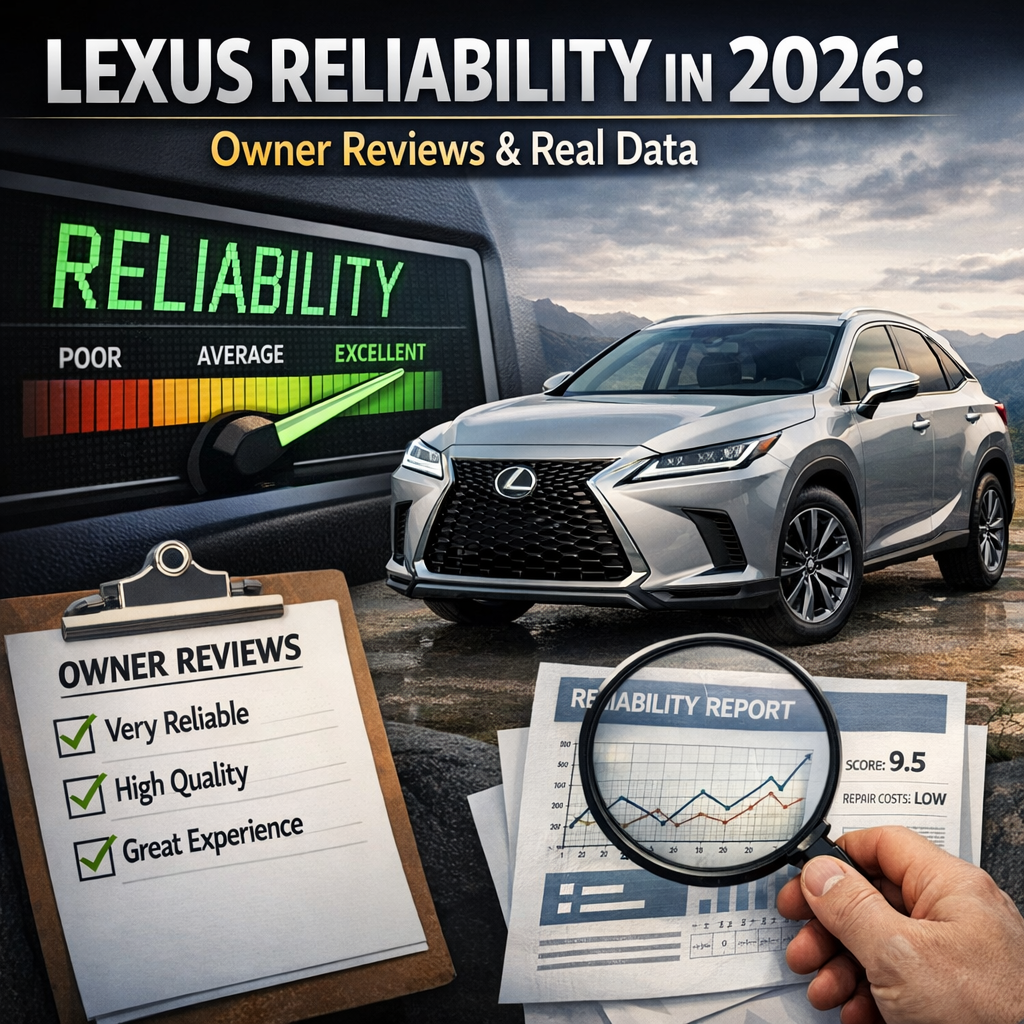
Lexus built its identity around quiet refinement, strong build quality, and low-drama ownership. Compared with many luxury brands, it has historically used conservative engineering, proven powertrains, and a slower pace of redesign. That approach has helped reduce the kinds of early-production problems that often plague rivals.
A big part of Lexus reliability is that the brand tends to feel engineered for longevity. Interior materials usually wear well, engines are often tuned for durability rather than maximum output, and Lexus has generally avoided chasing trends that can create expensive complications later. For buyers who want luxury without constant repair visits, that matters.
The brand’s reputation also comes from consistency. Even when a Lexus does not lead the segment in performance or cutting-edge tech, it often delivers the same calm ownership experience year after year. That steady formula is one reason shoppers keep returning to the brand when they want a premium vehicle they can trust.
Another factor is the way Lexus owners often describe their cars after years of use. The cabin still feels solid, the controls still work as expected, and the driving experience remains predictable. That sense of consistency is a major part of the appeal, especially for shoppers who have already experienced the cost and inconvenience of a less dependable luxury model.

Lexus also benefits from a philosophy that favors refinement over novelty. That can sound conservative, but in the real world it often helps limit risk. Fewer aggressive experiments, fewer unproven systems, and fewer rushed redesigns can translate into better durability. For many buyers, that is the practical side of Lexus reliability that matters most.
It is also worth noting that the brand’s image has been reinforced by long ownership cycles. Lexus vehicles are often kept for many years, and that creates more evidence of durability than a brand that is frequently traded early. The longer people keep them, the more stories emerge about low maintenance stress and strong long-term value.
What 2026 Owner Reviews Reveal
Owner reviews in 2026 continue to support Lexus reliability, but they also show where the brand falls short of perfection. Across forums, dealership feedback, and consumer review platforms, a common pattern emerges: owners praise how little goes wrong, but some complain that Lexus can feel conservative, dated, or less advanced than competitors.
Common Praise From Owners
Many Lexus owners highlight the same strengths:
- Very few unexpected mechanical issues
- Smooth, quiet driving experience
- Strong resale value
- Comfortable interiors that hold up over time
- Lower-stress ownership compared with other luxury brands
Drivers who keep their vehicles beyond the warranty period often report fewer headaches than they experienced with previous luxury cars. That long-term calm is one reason Lexus reliability continues to rank highly in owner satisfaction surveys.
Another recurring theme is confidence. Owners often feel they can buy a Lexus, maintain it on schedule, and expect years of predictable service without frequent surprises. That kind of confidence is hard to quantify, but it is a major part of the ownership experience.
Some owners also mention that the cars simply feel “finished” in a way that older luxury rivals no longer do. Doors close with a reassuring sound, materials age gracefully, and daily use does not seem to shake the vehicle apart. Those details do not always appear in spec sheets, yet they shape the way people talk about Lexus reliability after several years of ownership.
For used-car shoppers, this matters because reviews often reflect real expenses rather than showroom impressions. When owners say their Lexus has been boring in the best possible way, they usually mean that the vehicle has demanded little beyond routine service. In the context of luxury-car ownership, that is high praise.
Common Complaints From Owners
At the same time, 2026 reviews show recurring criticisms:
- Infotainment systems can feel less intuitive than rivals
- Some models prioritize comfort over driving excitement
- Technology updates may lag behind competitors
- Hybrid systems are praised, but some gas-only models feel behind the times
- A few newer features have introduced minor software annoyances
These complaints are not usually about major reliability failures. Instead, they tend to be about user experience, tech design, and the feeling that Lexus sometimes moves cautiously when the market expects more innovation.
For many shoppers, that tradeoff is acceptable because the frustrations are small compared with the convenience of fewer repairs and less downtime. In other words, Lexus reliability can still win even when the interface or feature set does not feel class-leading.
That is an important distinction. A vehicle can be highly dependable without being the most modern or entertaining option in the segment. Lexus has often occupied that space: a brand that owners trust more than they gush about. In the luxury market, trust can be more valuable than flash.
From a buyer’s perspective, the 2026 reviews suggest that Lexus is still strongest for people who want calm, predictable ownership. If your priority is the newest tech or a highly interactive cabin, you may notice the compromises more quickly. But if your priority is reduced hassle, the feedback remains reassuring.
Lexus Reliability in Real-World Data
Owner impressions are useful, but Lexus reliability carries more weight when backed by real-world data. Long-term ownership reports, recall trends, and repair-cost studies consistently place Lexus near the top of the luxury segment. For a broader look at how brands compare over the long haul, you can also read Car Brand Lasts Longest: Top Reliable Picks.
Repair Frequency and Cost
Lexus vehicles generally require fewer repairs than many competing premium brands. When they do need service, the costs are often more manageable than owners expect from a luxury car. Routine maintenance is still essential, of course, but catastrophic failures appear less common than in many German or high-performance competitors.
This is especially important because reliability is not just about whether a car breaks down. It is also about how often small issues become expensive problems. Lexus reliability tends to perform well on both counts, which helps explain why used models remain popular with buyers who value peace of mind.
Most owners are not looking for a perfect car; they are looking for a car that stays predictable. Lexus generally does that better than many of its competitors. Over time, fewer surprise repairs can make the difference between a satisfying ownership experience and a frustrating one.
Repair data also tends to reward vehicles that age slowly. Lexus fits that profile well because many of its parts and systems are not pushed to extremes. When the brand does introduce new technology, it often does so in a way that prioritizes stability over experimentation, which is one reason Lexus reliability keeps showing up favorably in long-term studies.
Long-Term Durability
Models that are maintained properly often remain on the road for well over 150,000 miles, and many exceed 200,000 miles. That kind of longevity is one reason used Lexus vehicles stay in demand. Buyers know that a well-cared-for example can still deliver years of dependable use.
Hybrid models, in particular, have earned a strong reputation. Lexus has invested heavily in hybrid technology, and many owners report excellent durability from these systems when maintenance is kept up. For background on hybrid system ownership and battery care, the U.S. Department of Energy offers a helpful overview at Hybrid Electric Vehicles from the U.S. Department of Energy.
This broader track record matters because it shows how the brand performs after the novelty of a new purchase wears off. A Lexus that still feels solid at high mileage reinforces the brand’s long-standing reputation better than any marketing claim could.
Real-world durability also helps explain why Lexus resale values remain so strong. A used luxury vehicle becomes much easier to recommend when buyers know that routine upkeep is likely to be straightforward. In this way, Lexus reliability supports both first-owner satisfaction and second-owner confidence.
That is one reason many shoppers compare Lexus not just against other luxury nameplates, but against the broader market. If a brand can deliver premium comfort and strong longevity at the same time, it earns attention from buyers who want to keep their total cost of ownership under control.
Where Lexus Stands Out Most
Not every Lexus is identical in reliability, but the brand’s strongest advantage is consistency. Even when a model is not class-leading in performance or technology, it usually delivers a predictable ownership experience. That consistency is a core part of Lexus reliability and a big reason the brand keeps its loyal following.
Lexus Hybrids
Lexus hybrid models often receive some of the best feedback in the lineup. They combine fuel efficiency with a track record of robust long-term performance. For many buyers, this is the sweet spot: luxury, efficiency, and reduced wear on the gasoline engine.
Hybrid owners also tend to like the relaxed character of these vehicles. Smooth power delivery, quiet operation, and strong fuel economy make the ownership experience feel modern without sacrificing the brand’s traditional durability advantage.
In practical terms, hybrids can also reduce some of the strain that comes from stop-and-go driving. That makes them appealing for commuters and families who pile on miles quickly. When a vehicle is easy to live with every day, Lexus reliability becomes more than a talking point; it becomes part of the ownership routine.
Lexus SUVs
SUVs like the RX and GX have helped build Lexus’s dependability image. Owners often value their comfortable ride, strong build quality, and lower-than-expected maintenance needs. These models also tend to retain value well, which reflects buyer confidence in their reliability.
For families and commuters alike, that balance is attractive. A Lexus SUV can feel practical for daily life while still carrying the prestige many shoppers want from a luxury badge.
The RX in particular has long been a favorite because it feels like a safe choice without feeling stripped down. It gives buyers a premium cabin, a calm ride, and a history that supports confidence. The GX attracts a different audience, but the same basic appeal shows up there too: solid construction and a reputation for going the distance.
For anyone who plans to keep an SUV for several years, those traits matter. A vehicle that remains quiet, comfortable, and mechanically steady at higher mileage is easier to recommend than one that impresses on day one but becomes costly later. That is where Lexus reliability becomes especially persuasive.
Lexus Sedans
Sedans such as the ES and LS are frequently praised for smoothness and build quality. They may not always excite enthusiasts, but they are often exactly what reliability-focused shoppers want: calm, refined, and durable transportation.
The best sedan owners often describe the experience in simple terms: little fuss, little surprise, and a cabin that still feels solid years later. That is the kind of long-term value many buyers are actually chasing when they search for Lexus reliability.
The ES has built a reputation as a comfort-first commuter, while the LS has long represented Lexus’s flagship approach to quiet luxury. Neither model depends on gimmicks to make an impression. Instead, they rely on stable engineering and thoughtful packaging, which is why they continue to resonate with people who prefer substance over hype.
Even among luxury sedans, where competition can be intense, Lexus usually stands apart because it does not demand much from the owner. That may sound modest, but low-maintenance luxury is exactly what many buyers want after years of dealing with more temperamental alternatives.
The Models That Deserve Extra Attention
Even a strong brand has weak spots. Lexus reliability varies somewhat by model, year, and drivetrain. Newer technology-heavy vehicles sometimes have more software-related complaints than older, simpler models. That does not mean they are unreliable in the traditional sense, but it does mean buyers should research carefully.
Newer Technology Features
Touchscreen systems, driver-assistance features, and connected-car functions can introduce frustrations. These issues are usually smaller than major mechanical failures, but they matter to owners because they affect daily use. As vehicles become more software-driven, Lexus has had to balance its reliability-first image with the complexity of modern tech.
This is one of the few areas where the brand’s caution can feel like a drawback. A system that avoids major breakdowns can still frustrate drivers if it takes too many steps to use basic functions.
That said, software complaints should be viewed differently from serious mechanical problems. A slow or awkward interface can be annoying, but it does not usually undermine the core case for Lexus reliability. Buyers who prioritize durability may find these issues easy to accept, especially if they plan to keep the car for many years.
Fresh Redesigns
Like many automakers, Lexus sometimes sees more complaints after major redesigns. New platforms can bring improvements in efficiency and comfort, but they can also expose the occasional flaw that older versions had already worked out. Shoppers who value maximum confidence may prefer models with a proven track record rather than the newest launch year.
That said, the risk is usually more about refinement than outright dependability. Most Lexus redesign issues are the kind that get sorted out over time, not the kind that make ownership miserable.
As a buyer, the safest move is usually to pay attention to the first one or two model years of a redesign. Even when the brand remains strong overall, early production runs can have more bugs than later ones. Choosing a slightly more established version can give you the best of both worlds: updated styling and a stronger reliability record.
When in doubt, compare owner feedback on similar model years and watch for repeated complaints that show up in several places. If the same issue keeps appearing, it deserves more attention than a one-off comment. That kind of research supports better decisions and helps you take full advantage of Lexus reliability rather than simply hoping the badge guarantees everything.
What Buyers Should Check Before Purchasing
If you are shopping for a Lexus in 2026, the smartest approach is to focus on the specific vehicle rather than the brand name alone. Lexus reliability is strong overall, but condition and maintenance history still matter a great deal.
Review Maintenance Records
A clean service history is one of the best indicators that a used Lexus will continue to perform well. Oil changes, fluid services, brake work, and timely inspections all help preserve the durability the brand is known for.
Look for records that show consistent care rather than a single recent service visit. A vehicle with regular maintenance is usually a better bet than one that appears to have been fixed only when something went wrong. Preventive care is one of the simplest ways to protect Lexus reliability over the long term.
Check for Model-Specific Complaints
Some Lexus models and model years have more documented issues than others, especially after redesigns or technology updates. A quick search through owner reports can help you spot patterns before you buy. That extra step is worth it because even a reliable brand can have a few uneven years.
If you are comparing different trims, it can also help to look at the feature set. Sometimes the most advanced trim levels are more likely to carry the software complaints, while simpler versions avoid unnecessary complexity. In that case, a lower-spec model may actually be the more dependable choice.
Consider How You Use the Vehicle
A Lexus that is ideal for commuting may not be the best choice for someone who prioritizes sportier handling or the newest software features. Matching the vehicle to your expectations is part of getting the most from the brand’s reliability advantage.
If you drive mostly in traffic, a smooth hybrid or comfort-oriented SUV may be the best fit. If you rack up highway miles, a well-maintained sedan with a strong service history can make ownership especially easy. The right match matters because even strong Lexus reliability will feel less satisfying if the vehicle does not suit your daily routine.
It is also smart to test the technology before you buy. Pair your phone, use the navigation, adjust the climate settings, and explore the menus. Small frustrations in the showroom often become daily annoyances later. A few minutes of checking those details can save you from choosing a car that is durable but inconvenient.
So, Is Lexus Really That Reliable?
Yes, Lexus is still genuinely reliable by real-world standards. The brand earns its reputation through a mix of careful engineering, durable drivetrains, and ownership experiences that tend to stay relatively calm over time. That said, reliable does not mean flawless, and it does not mean every model will satisfy every driver.
For buyers who want a luxury vehicle with a strong chance of low drama, Lexus remains one of the safest bets. For those who expect the most advanced infotainment, the sharpest performance, or the newest features, Lexus may feel more restrained than competitors. Its reliability advantage is real, but it comes with the tradeoff of a more conservative design philosophy.
That balance is exactly why the brand continues to attract repeat buyers. People who value predictability, strong build quality, and fewer repair surprises often decide that Lexus reliability is worth the modest compromise in excitement or tech ambition.
There is also a broader ownership lesson here: the best luxury car is not always the one with the longest list of features. It is often the one that stays enjoyable after the first few years. Lexus has repeatedly proven that point by delivering vehicles that age gracefully and remain easy to live with long after the warranty period ends.
For many shoppers, that is the real definition of reliability. It is not just about avoiding breakdowns. It is about buying a vehicle that fits into life without becoming a burden. Lexus continues to succeed in that role better than most premium brands.
The Bottom Line for Buyers
If reliability is your top priority, Lexus continues to be one of the best luxury brands to consider in 2026. Owner reviews still lean strongly positive, and real-world data supports the idea that these vehicles age better than many rivals. The key is to choose the right model, review maintenance history, and stay aware of the few areas where newer technology can create minor frustrations.
In other words, Lexus reliability is not just living off an old reputation. It still delivers on the promise that made it famous, even if the modern market has become more competitive and more complicated. For many drivers, that makes Lexus one of the most dependable luxury choices available today.
If you want to compare Lexus against other long-lasting brands, it also helps to look beyond the badge and into ownership history, repair records, and the way each vehicle ages after 5 or 10 years. That wider lens makes it easier to see why Lexus reliability stays near the top of so many shopping lists.
For readers who are building a shortlist of dependable vehicles, this is usually where the decision becomes personal. Some buyers want the newest features, while others want the least stressful ownership experience possible. Lexus keeps winning the second group because it offers a strong blend of luxury, durability, and value retention.