



Common used car buying mistakes can expose you to hidden damage, neglected maintenance, unfavorable financing, and unexpected repair bills. Buying used can still save money, reduce depreciation, and provide access to a better-equipped vehicle than the same budget might buy new, but only when you evaluate the entire purchase instead of relying on appearance or price.
- How to Avoid Used Car Buying Mistakes From the Start
- Research the Exact Model and Powertrain
- Treat the Advertisement as a Lead, Not Evidence
- Verify the Car’s Identity, History, and Ownership
- Inspect the Vehicle in Daylight and Dry Conditions
- Do Not Skip the Cabin and Electronics
- Take a Meaningful Test Drive
- Arrange an Independent Pre-Purchase Inspection
- Evaluate Safety Features Without Assuming They Are Perfect
- Calculate the Real Cost Before Negotiating
- Negotiate From Evidence, Not Emotion
- Read the Finance Agreement and Sales Contract
- Recognize When to Walk Away
- A Practical Used-Car Buying Checklist
- Frequently Asked Questions
- What is the biggest mistake when buying a used car?
- Is a vehicle history report enough?
- Should I buy a used car without service records?
- How long should a used-car test drive be?
- Is low mileage always better?
- Can I negotiate after a pre-purchase inspection?
- Make the Purchase a Process, Not a Gamble
Avoiding used car buying mistakes requires a disciplined process: define your needs, research realistic ownership costs, verify the vehicle’s identity and history, inspect it carefully, arrange an independent mechanical assessment, and review every financial term before signing. No single check eliminates all risk, but combining these steps makes expensive surprises much less likely.
- Choose the right car
- Research the model and powertrain
- Verify identity and history
- Inspect the vehicle
- Take a meaningful test drive
- Arrange an independent inspection
- Calculate the real cost
- Follow the buying checklist
- Frequently asked questions
How to Avoid Used Car Buying Mistakes From the Start
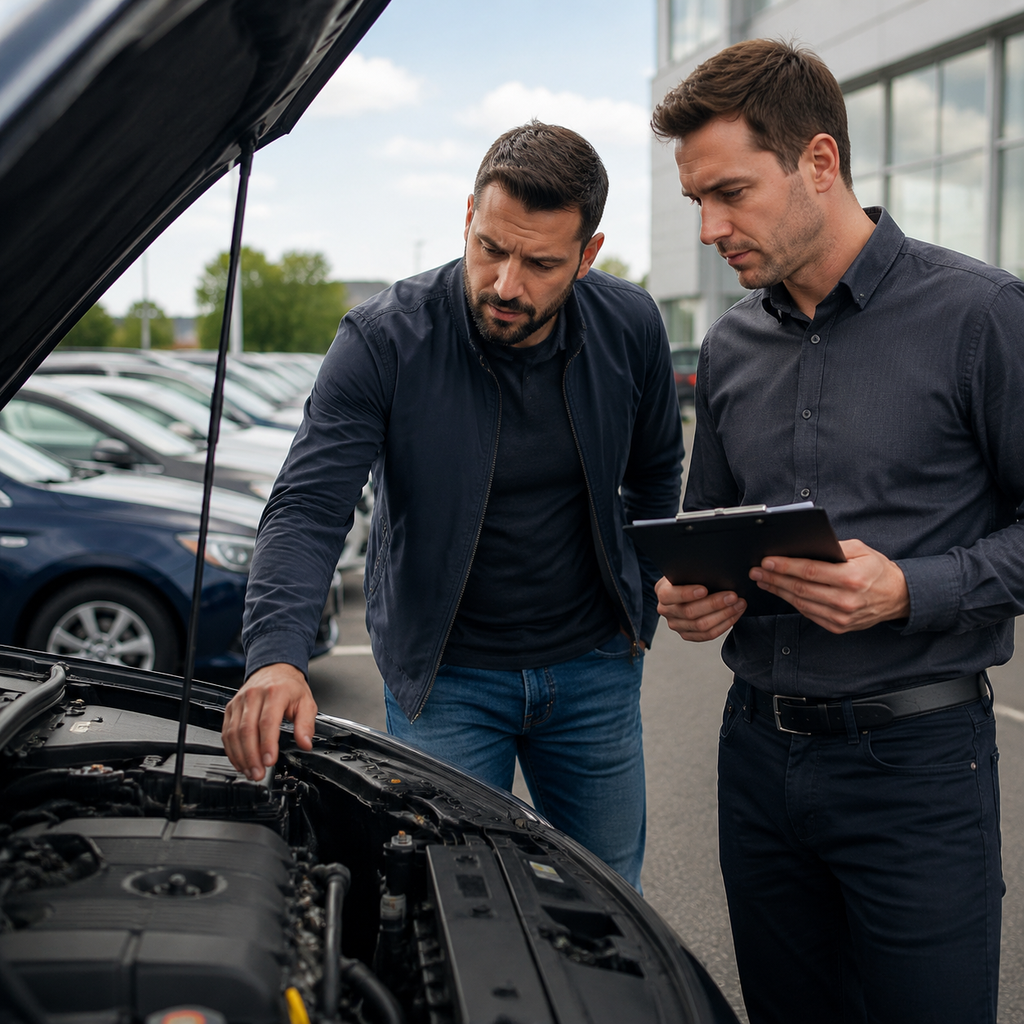
Some of the most expensive used car buying mistakes happen before the inspection because buyers choose vehicles that do not fit their actual needs. A sporty coupe may look appealing but become frustrating when regularly carrying children or luggage. A large SUV may offer useful space yet create higher fuel, tire, insurance, and maintenance costs than expected.
A low purchase price can also distract from poor reliability, limited parts availability, or expensive scheduled service. Before browsing listings, define the vehicle’s real job and consider:
- Typical number of passengers
- City, highway, rural, or mixed driving
- Annual mileage
- Parking and garage dimensions
- Cargo, towing, or child-seat requirements
- Winter weather and road conditions
- Fuel and charging availability
- Expected length of ownership
- Insurance, taxes, registration, and maintenance costs
Set two budgets rather than one. The first is the maximum purchase price. The second is the maximum monthly or annual ownership cost. Include fuel or electricity, insurance, routine servicing, tires, taxes, parking, and a repair reserve. Focusing only on the advertised price is among the most common used car buying mistakes because a vehicle that fits the purchase budget may still be unaffordable to operate.
Research the Exact Model and Powertrain
Failing to research the precise model year and configuration is another of the preventable used car buying mistakes. Reliability and maintenance requirements can vary significantly by engine, transmission, battery type, trim level, drivetrain, and year, even when the model name remains unchanged.
More EV News
Look for recurring issues associated with the exact configuration under consideration. Useful areas to investigate include:
- Engine oil consumption or coolant loss
- Automatic transmission behavior
- Diesel emissions-system problems
- Hybrid battery condition
- Electric-vehicle battery health and charging performance
- Timing-belt or timing-chain service requirements
- Rust-prone areas
- Suspension and steering wear
- Infotainment and electrical faults
- Parts prices and local service availability
Separate routine wear from design-related problems. Brake pads, tires, batteries, and suspension components eventually need replacement on most vehicles. A repeated engine, transmission, or high-voltage battery fault can represent a much larger financial risk. Researching car brand reliability and common model problems can help you identify patterns before arranging a viewing.
Ignoring recall information is also one of the avoidable used car buying mistakes. Check for open recalls using the VIN through an official service, such as the National Highway Traffic Safety Administration recall lookup for vehicles in the United States. A recall does not automatically make a car a bad purchase, but you should confirm whether the required work has been completed.
Treat the Advertisement as a Lead, Not Evidence
Treating a seller’s description as proof is one of the easiest used car buying mistakes to prevent. A listing helps you decide whether a vehicle deserves investigation, but terms such as “excellent,” “fully loaded,” “one owner,” or “recently serviced” must be verified.
Ask the seller to provide specific information:
- What maintenance was completed, and when?
- Are invoices or digital service records available?
- Has the vehicle been involved in a collision?
- Has it been repainted or had body panels replaced?
- Are there warning lights or known mechanical faults?
- How many keys are included?
- Do all accessories work?
- Is there outstanding finance or a lien?
- Why is the vehicle being sold?
Save a copy of the listing. It can help you compare the advertised mileage, equipment, condition, and promises with what you find during the viewing.
Overlooking clues in listing photos can lead to further used car buying mistakes. Mismatched paint, uneven panel gaps, missing badges, an unusually clean engine compartment, worn driver controls, or tires from several manufacturers may justify closer inspection. None proves that the car is unsuitable, but each raises a question the seller should answer.
Verify the Car’s Identity, History, and Ownership
Relying on a vehicle history report alone is one of the more serious used car buying mistakes. Damage may never have been reported, maintenance records may be incomplete, and database errors can occur. Use history information as one layer of verification rather than a complete guarantee.
Match the VIN Everywhere
Confirm that the VIN on the dashboard, body label, registration documents, history report, and seller’s paperwork is identical. Look for damaged labels, altered characters, unusual fasteners, or signs that identification plates have been disturbed.
Verify that the seller’s identity and authority to sell the vehicle are clear. If the registered owner is absent or the seller claims to be acting for someone else, request proper documentation before paying anything.
Review Mileage as Part of the Whole Story
Low mileage is not automatically better. A lightly used car may have spent long periods sitting outdoors, making only short trips, or receiving little maintenance. Conversely, a higher-mileage highway car with comprehensive records may be in better condition.
Compare the odometer with:
- Service invoices
- Inspection or roadworthiness records
- Vehicle history entries
- Tire and brake replacement dates
- Wear on pedals, seats, steering wheel, and switches
An inconsistency does not always indicate fraud, but it must be explained before proceeding.
Check Financial and Legal Status
Skipping lien, theft, salvage, or transfer checks ranks among the costliest used car buying mistakes. Depending on the local market, verify the vehicle’s legal and financial status through official or reputable services appropriate to its country of registration.
Do not accept a seller’s verbal assurance that finance will be settled after the sale. Ownership and payment arrangements should be documented and completed through a secure, verifiable process.
Inspect the Vehicle in Daylight and Dry Conditions
Inspecting in poor light or rain is one of the practical used car buying mistakes that can conceal scratches, paint differences, fluid leaks, tire wear, and body repairs. Arrange the first serious inspection during daylight, preferably when the vehicle is dry and parked on level ground.
Ask the seller not to warm the engine beforehand. A cold start can reveal hard starting, battery weakness, smoke, rattles, and unstable idle that may be less obvious once the engine is warm.
Examine the Exterior
Walk around the car slowly rather than viewing it from one position. Check for:
- Uneven gaps around doors, hood, and trunk
- Paint overspray on seals or trim
- Differences in color or surface texture
- Cracks or chips in glass and lights
- Corrosion around wheel arches, sills, doors, and the underbody
- Dents or damage beneath bumpers
- Water or condensation inside lamps
- Uneven ride height
- Signs of poor-quality structural repair
Repainted panels are not necessarily a reason to reject a car. Cosmetic repairs can be acceptable. The important questions are why the work was needed, whether structural areas were affected, and whether the repair was performed correctly.
Inspect the Tires
Tires reveal information about maintenance and suspension condition. Check tread across the full width of each tire, not only the visible outer edge. Uneven wear may suggest incorrect pressure, poor alignment, worn suspension parts, or previous damage.
Check the tire age code, sidewalls, cracks, bulges, repairs, and whether all four tires are suitable for the vehicle and season. Cars with all-wheel drive can be particularly sensitive to large differences in tire size or tread depth. Replacing four tires immediately can materially change whether the advertised price represents good value.
Look Under the Hood
With the engine cold, inspect fluid levels and visible components without removing pressurized cooling-system caps. Look for:
- Oil or coolant leaks
- Damaged wiring
- Cracked hoses
- Corroded battery terminals
- Strong fuel or coolant odors
- Milky residue under the oil cap
- Very low or unusually fresh fluids without supporting records
- Loose or improvised repairs
Assuming a spotless engine bay proves good maintenance is one of the misleading used car buying mistakes. Recent cleaning can be routine preparation, but it can also make active leaks harder to see. Recheck the engine compartment after the test drive.
Do Not Skip the Cabin and Electronics
Ignoring cabin wear and electrical equipment creates used car buying mistakes that often become apparent only after purchase. Interior wear can help confirm whether the mileage and ownership story are plausible, so inspect seat bolsters, pedals, steering-wheel surfaces, carpets, switches, headlining, and luggage areas.
Test every feature you may depend on:
- Air conditioning and heating
- Windows, locks, mirrors, and seat controls
- Exterior and interior lights
- Wipers and washers
- Infotainment, speakers, and connectivity
- Parking sensors and cameras
- Cruise control
- Heated or ventilated equipment
- Driver-assistance systems
- Charging ports and power outlets
- Convertible roof or sunroof, where fitted
Turn the ignition on before starting the engine and observe the instrument panel. Warning lights should illuminate during the system check and then turn off as designed. Failing to notice a warning lamp that never appears is one of the less obvious used car buying mistakes, because a disabled indicator can hide a fault.
Smell the interior and inspect beneath floor mats and inside the spare-wheel well. Damp carpets, staining, corrosion, or a persistent musty odor may indicate water leaks or previous flooding.
Take a Meaningful Test Drive
Accepting a short loop around the block is among the most common used car buying mistakes. The test route should include low-speed maneuvering, rough pavement, braking, turns, and higher-speed driving where legal and safe.
Before moving, adjust the seat and mirrors and assess visibility. Make sure the driving position suits you. Poor comfort, limited rearward visibility, or awkward controls may become more frustrating over time.
During the drive, evaluate:
- Cold and warm starting
- Idle quality
- Acceleration and power delivery
- Manual or automatic gear changes
- Clutch engagement
- Steering response and straight-line tracking
- Brake feel and stopping stability
- Suspension noise over bumps
- Wheel-bearing or tire noise
- Vibration through the steering wheel or seat
- Engine temperature
- Warning messages
- Exhaust smoke or unusual odors
Drive briefly without the audio system so mechanical sounds are easier to hear. A seller who refuses a reasonable test drive, even after identity and insurance concerns are addressed, creates a risk that may justify walking away.
Failing to recheck the car after the drive can compound earlier used car buying mistakes. Let the engine idle, look underneath for fresh drips, and check fluid odors and warning lights again. Some faults become apparent only after the vehicle reaches operating temperature.
Arrange an Independent Pre-Purchase Inspection
Skipping professional assessment is one of the highest-risk used car buying mistakes. Choose an independent mechanic or specialist who works for you, not someone selected solely by the seller.
The inspection should match the vehicle. A conventional petrol or diesel car needs mechanical, structural, braking, suspension, and diagnostic checks. A hybrid or electric vehicle may also require evaluation of high-voltage system faults, battery health information, charging equipment, thermal management, and manufacturer-specific service needs.
Ask the technician to distinguish between:
- Immediate safety or legal concerns
- Repairs likely to be needed soon
- Normal wear for the age and mileage
- Evidence of accident or corrosion damage
- Diagnostic trouble codes
- Maintenance that is overdue or undocumented
- Cosmetic issues
A diagnostic scan is useful but cannot prove that the whole car is healthy. Recently cleared codes may not return immediately, and some mechanical defects do not generate electronic faults.
Continuing after a seller refuses an independent inspection is among the used car buying mistakes most likely to produce a major repair bill. The cost and inconvenience of an inspection are small compared with repairing an engine, transmission, structural defect, or high-voltage battery.
Evaluate Safety Features Without Assuming They Are Perfect
Assuming every listed safety feature works correctly can lead to dangerous used car buying mistakes. Confirm that airbags, anti-lock braking, electronic stability control, cameras, sensors, and driver-assistance functions are present and free from warning messages.
Replacement windscreens, bumper repairs, wheel-alignment work, or collision damage may affect systems that rely on cameras and radar. Ask whether calibration was performed where required.
Think about the roads you actually use. Urban buyers may prioritize pedestrian awareness, parking visibility, and low-speed collision support. Families may focus on rear-seat protection, child-seat compatibility, and reliable emergency braking. Rural drivers may place greater value on lighting, wildlife awareness, and visibility beyond street-lit areas.
Buying aftermarket technology without understanding its limits can add another item to the list of used car buying mistakes. For example, Robofinity InsightDrive is a vehicle thermal imaging night vision system designed to support awareness of pedestrians, animals, vehicles, and obstacles in low-light conditions. Such technology is supplementary and does not replace functioning headlights, mirrors, safe speed, adequate braking distance, traffic-law compliance, or attentive driving.
Calculate the Real Cost Before Negotiating
Looking only at the asking price is one of the most common financial used car buying mistakes. The better question is: What will this vehicle cost to buy and make ready for reliable use?
Build a first-year estimate that includes:
- Agreed purchase price
- Sales tax or value-added tax where applicable
- Registration and title or transfer fees
- Insurance
- Immediate maintenance
- Tires, brakes, or battery replacement
- Timing-belt or major scheduled service
- Diagnostic or inspection fees
- Finance interest and lender charges
- Fuel or electricity
- Parking, tolls, or emissions-zone costs where relevant
A cheaper vehicle that immediately needs tires, brakes, suspension work, and overdue servicing can cost more than a better-maintained example with a higher asking price.
Request an insurance quote before committing. Leaving insurance and recurring expenses out of the calculation creates used car buying mistakes that can make an otherwise suitable vehicle unaffordable. Premiums may depend on engine output, theft risk, repair complexity, driver profile, location, and coverage choices.
Negotiate From Evidence, Not Emotion
Negotiating from excitement instead of evidence encourages used car buying mistakes. Use specific, documented issues such as comparable market listings, worn tires, missing service history, an upcoming major service, body damage, or findings from the independent inspection.
Keep safety defects separate from cosmetic preferences. A scratched bumper may justify a modest adjustment. Structural damage, severe corrosion, overheating, transmission problems, or unresolved safety-system warnings may justify rejecting the vehicle entirely.
Set a walk-away figure before negotiations begin. This prevents excitement, time already invested, or pressure from the seller from pushing the purchase beyond your budget.
Responding to urgency claims with an immediate deposit is one of the pressure-driven used car buying mistakes. Be cautious when told another buyer is waiting, the price is valid only today, or payment is required before checks are complete. Another similar vehicle will usually appear, while recovering money after a rushed transaction can be difficult.
Read the Finance Agreement and Sales Contract
Judging affordability only by the monthly payment is one of the classic used car buying mistakes. A longer loan can reduce the monthly amount while increasing total interest and extending the period during which you may owe more than the car is worth.
Review:
- Vehicle cash price
- Deposit or down payment
- Amount financed
- Interest rate or annual percentage rate
- Loan term
- Total repayment amount
- Origination and administrative fees
- Optional products
- Early repayment conditions
- Late-payment consequences
- Any final balloon payment
Confirm that optional warranties, service plans, paint protection, insurance products, and tracking devices have not been added without clear agreement.
Overestimating warranty protection can turn existing defects into expensive used car buying mistakes. Read exclusions carefully because coverage may be limited by component, claim amount, vehicle age, mileage, servicing conditions, or approved repair facilities. A warranty can have value, but it should not justify buying a car with obvious problems.
The final sales document should correctly state the VIN, mileage, price, included equipment, deposit, trade-in terms, promised repairs, warranty status, and agreed conditions. Put verbal promises in writing before paying.
Recognize When to Walk Away
Refusing to abandon a questionable deal because you have already invested time is one of the emotional used car buying mistakes. Walking away is not a failed purchase; it is often the decision that protects your budget.
Strong warning signs include:
- VIN or ownership inconsistencies
- Pressure to pay before verification
- Refusal of a meaningful test drive
- Refusal of an independent inspection
- Major gaps between the listing and actual condition
- Unexplained warning lights
- Signs of flood, fire, or serious structural damage
- Suspicious mileage inconsistencies
- Missing title or registration documents
- Payment requested through an unusual or untraceable method
- A price far below comparable vehicles without a credible explanation
One minor concern may have an innocent explanation. Several unrelated inconsistencies usually indicate that you should pause and investigate further. Ignoring a pattern of warning signs is one of the used car buying mistakes no discount can reliably offset.
A Practical Used-Car Buying Checklist
A written sequence helps prevent used car buying mistakes by keeping the decision objective:
- Define the required size, use case, and ownership budget.
- Research the exact model year, engine, transmission, and trim.
- Compare several listings rather than committing to the first attractive car.
- Ask for the VIN, service records, ownership details, and known faults.
- Check vehicle history, recalls, theft status, and outstanding finance where applicable.
- Inspect the car cold, in daylight, and in dry conditions.
- Test all cabin equipment and safety systems.
- Drive the vehicle on a varied route.
- Arrange an independent pre-purchase inspection.
- Calculate immediate repairs and total first-year cost.
- Review financing and warranty terms line by line.
- Confirm every promise in writing before payment.
This process takes longer than buying on appearance and instinct, but it gives each decision a factual basis and prevents several related used car buying mistakes from affecting the same purchase.
Frequently Asked Questions
What is the biggest mistake when buying a used car?
The biggest of the common used car buying mistakes is committing before completing independent checks. A clean appearance, low mileage, history report, or dealer warranty should not replace document verification, a meaningful test drive, and a professional inspection.
Is a vehicle history report enough?
No. Treating it as a complete guarantee is one of the recurring used car buying mistakes. A report can reveal recorded mileage, title status, ownership, or reported damage, but unreported incidents and maintenance problems may not appear. Compare it with the physical inspection, service records, and official documentation.
Should I buy a used car without service records?
Missing records increase uncertainty but do not automatically make the car unsuitable. Assuming undocumented maintenance was completed is one of the avoidable used car buying mistakes. The price should reflect the uncertainty, and an independent inspection becomes especially important.
How long should a used-car test drive be?
It should be long enough to evaluate the vehicle from a cold start through normal operating temperature and across relevant road conditions. Avoid the used car buying mistakes associated with rushed test drives by including parking maneuvers, braking, turns, uneven surfaces, and higher-speed driving where lawful and safe.
Is low mileage always better?
No. Assuming low mileage guarantees good condition can create used car buying mistakes. Maintenance, storage, driving pattern, and age matter alongside mileage. Very low annual mileage can still involve short-trip wear, aging fluids, old tires, corrosion, or long periods of inactivity.
Can I negotiate after a pre-purchase inspection?
Yes. An inspection may support a reasonable price adjustment based on required maintenance or repairs. However, negotiating instead of rejecting a vehicle with serious structural, safety, engine, transmission, or high-voltage battery problems can turn known defects into deliberate used car buying mistakes.
Make the Purchase a Process, Not a Gamble
A sound decision comes from combining several imperfect sources of information. This approach reduces used car buying mistakes because research reveals known model risks, documents establish identity and ownership, a careful viewing exposes condition issues, and a proper test drive shows how the vehicle behaves. An independent inspection adds mechanical judgment, while a complete cost estimate reveals whether the deal truly fits your budget.
Keep written notes, compare more than one vehicle, and remain willing to leave when important questions are unanswered. Avoiding used car buying mistakes is not merely about paying a low price; it is about buying a suitable car whose condition, paperwork, safety, financing, and ongoing costs you understand before taking ownership.