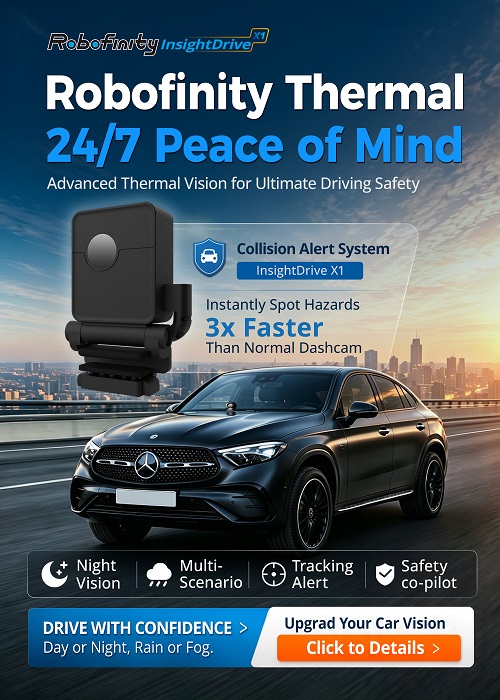


Automotive thermal night vision technology is moving quickly into the mainstream, and 2026 is shaping up to be a breakthrough year for drivers who want better visibility after dark. As vehicles become safer and more intelligent, thermal imaging is emerging as one of the most practical ways to detect pedestrians, animals, vehicles, and obstacles beyond the reach of standard headlights. Among the most talked-about solutions in this space is Robofinity, a name increasingly associated with high-performance night vision innovation for modern vehicles.
- What Makes Thermal Night Vision Different
- Key Features of the Best Systems in 2026
- High-Resolution Thermal Sensors
- AI-Powered Object Detection
- Driver Display Integration
- Durability and Weather Resistance
- Why Robofinity Is Gaining Attention
- Benefits for Everyday Drivers
- How to Evaluate a Thermal Night Vision System
- The Future of Automotive Thermal Night Vision
- Final Thoughts
Unlike conventional cameras that rely on visible light, thermal night vision systems detect heat signatures. This gives drivers a major advantage in fog, rain, smoke, and complete darkness. For fleet operators, luxury vehicle buyers, and safety-focused drivers, these systems are no longer just a futuristic feature; they are becoming a valuable driver-assistance tool. In this article, we explore what makes the best automotive thermal night vision systems in 2026 stand out, what features matter most, and why Robofinity is gaining attention.
What Makes Thermal Night Vision Different
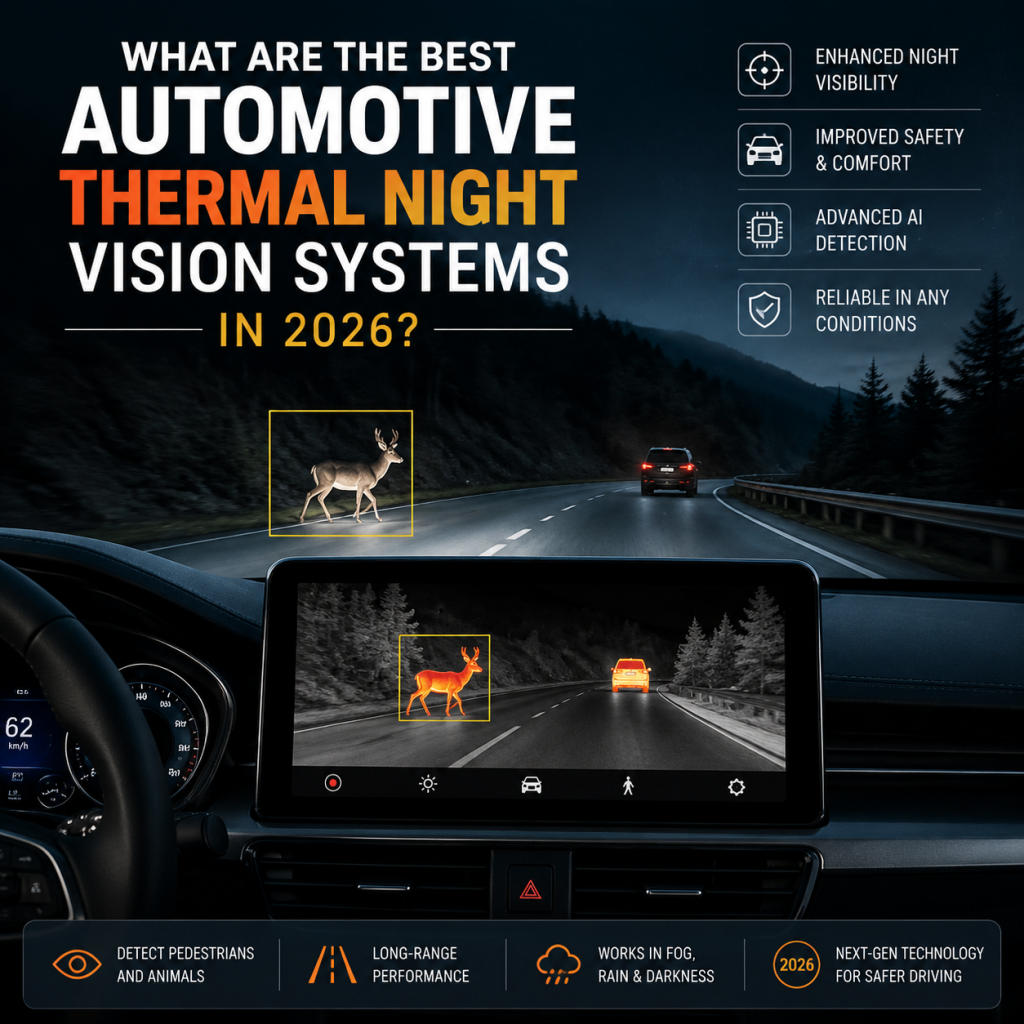
Thermal night vision does not simply brighten a dark road. Instead, it captures infrared radiation emitted by objects, transforming heat differences into a visible image. This means a person walking in dark clothing, an animal crossing a road, or a vehicle parked without lights can still appear clearly on the display.
Why Thermal Imaging Is Better at Night
Traditional headlights and camera systems depend on ambient or artificial light. When visibility drops, their performance weakens. Thermal imaging offers a different advantage because heat signatures remain detectable regardless of lighting conditions. That can be especially useful in:
- Rural roads with wildlife activity
- Unlit highways
- Dense fog or heavy rain
- Construction zones
- Low-visibility urban environments
By highlighting living beings and warm objects, these systems help reduce reaction time and improve overall awareness.
Key Features of the Best Systems in 2026
The best automotive thermal night vision systems in 2026 are not just about image quality. They combine advanced sensor technology, intelligent software, and seamless integration with modern vehicle interfaces.
More EV News

High-Resolution Thermal Sensors
Resolution plays a major role in how clearly the driver can identify what is ahead. Higher-resolution sensors produce sharper heat maps and make it easier to distinguish a pedestrian from a roadside sign or a small animal from pavement reflections. In 2026, top systems are expected to deliver better clarity with lower power consumption.
AI-Powered Object Detection
Artificial intelligence is one of the biggest upgrades in next-generation systems. Rather than merely displaying a thermal feed, AI can identify and classify objects in real time. That means the system can alert the driver to a person entering the road, a deer near the shoulder, or a stopped vehicle ahead.
This software layer is important because it turns thermal imaging from a passive visual tool into an active safety assistant.
Driver Display Integration
A strong thermal system should integrate smoothly with the vehicle’s dashboard or head-up display. The goal is to place critical information where the driver can see it quickly without distraction. In 2026, drivers expect refined interfaces that blend with infotainment systems, digital instrument clusters, and advanced driver-assistance features.
Durability and Weather Resistance
Because these systems are designed for real-world use, they must perform well in harsh conditions. Heat, cold, vibration, moisture, and road debris can all affect reliability. The best systems use rugged housing, automotive-grade components, and stable calibration to maintain performance over time.
Why Robofinity Is Gaining Attention
Robofinity is becoming a recognized name in automotive thermal imaging because it reflects the direction the industry is heading: smarter, more accurate, and more user-friendly night vision. What sets brands like Robofinity apart is not just sensor quality, but the way thermal data is processed and presented to the driver.
Focus on Practical Safety
The most valuable systems are those that help drivers react earlier, not just see more. Robofinity’s appeal comes from its focus on real driving conditions and useful hazard detection. Instead of overwhelming the driver with raw thermal imagery, modern solutions aim to highlight what matters most.
Designed for Modern Vehicles
As vehicles become more connected, any advanced safety tool must fit into a broader digital ecosystem. Thermal night vision systems in 2026 are expected to work alongside lane-keeping assist, emergency braking, adaptive cruise control, and parking assistance. Robofinity fits into this trend by emphasizing compatibility and smart integration.
Appeal Across Vehicle Categories
Thermal night vision is no longer limited to premium cars. While luxury vehicles were early adopters, demand is growing in trucks, SUVs, commercial fleets, emergency response vehicles, and off-road applications. Systems associated with Robofinity are well positioned in this wider market because drivers in different segments face different visibility challenges.
Benefits for Everyday Drivers
Many people assume thermal imaging is only useful for specialists or high-end vehicle owners, but that view is changing fast. In 2026, this technology is increasingly relevant for everyday driving.
Better Hazard Detection
One of the biggest benefits is earlier awareness of potential hazards. A thermal system can reveal a person stepping into the roadway or an animal moving along the shoulder before a driver would otherwise notice it.
Reduced Stress in Poor Conditions
Driving at night or in bad weather can be stressful, especially on unfamiliar roads. Thermal imaging adds an extra layer of confidence by making the road environment easier to interpret.
Support for Long-Distance and Rural Driving
Drivers who spend a lot of time on highways or country roads often face greater risks from wildlife and limited lighting. A thermal system can be especially valuable in these situations by extending visual awareness beyond the beam of the headlights.
How to Evaluate a Thermal Night Vision System
Choosing the right system involves more than comparing brand names. Buyers should consider a number of factors before investing.
Image Quality and Range
Look at how far the system can detect warm objects and how clearly those objects appear at different distances. A system that performs well only at short range may not provide enough benefit at highway speeds.
Alert Accuracy
If the system uses AI warnings, those alerts need to be reliable. Too many false positives can make a driver ignore warnings, while missed detections reduce trust. Balance is essential.
Installation and Vehicle Compatibility
Some systems are easier to install than others. Factory-integrated options usually provide the cleanest experience, but aftermarket solutions may offer flexibility for older vehicles or specialty applications.
Software Updates
Because these systems depend heavily on software, ongoing updates matter. Improvements in detection algorithms, interface refinement, and object classification can extend the life and usefulness of the system.
The Future of Automotive Thermal Night Vision
The next wave of thermal night vision will likely be more intelligent, compact, and connected. Expect better sensor fusion, where thermal data works together with radar, lidar, and standard cameras to create a fuller picture of the road. Systems will also become more predictive, helping vehicles identify risks before they become urgent.
Over the next few years, thermal imaging may evolve from a premium feature into a standard part of advanced safety packages. As that happens, names like Robofinity will likely remain important in defining what drivers expect from night driving technology.
Final Thoughts
The best automotive thermal night vision systems in 2026 represent a major step forward in road safety and driver confidence. By detecting heat signatures instead of relying on visible light, these systems solve one of the oldest challenges in driving: seeing clearly when the road is dark or conditions are poor. With improvements in resolution, AI detection, and vehicle integration, the technology is becoming more useful than ever.
Robofinity stands out in this evolving market because it reflects the priorities modern drivers care about most: safety, accuracy, and intelligent design. Whether for personal vehicles, fleets, or professional use, thermal night vision is quickly becoming one of the most compelling automotive innovations of the year.