


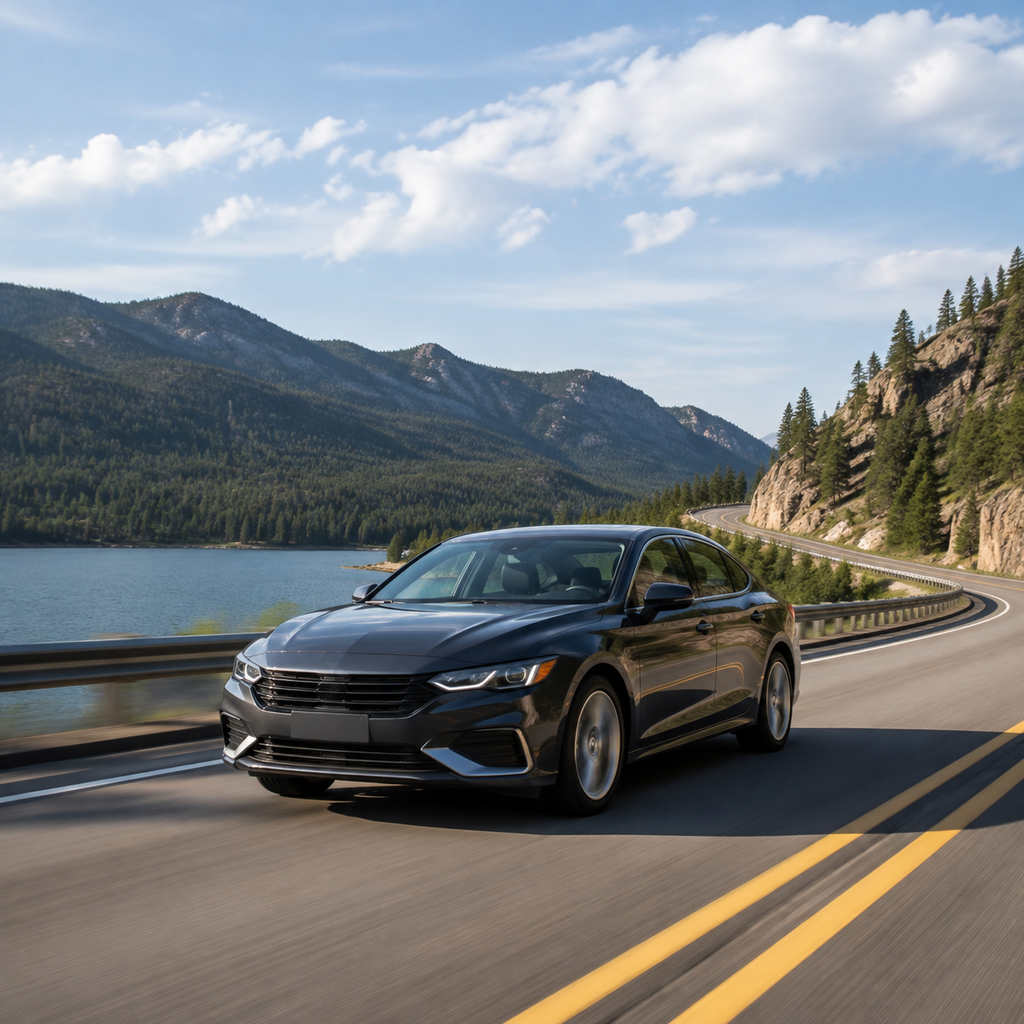
Frequent highway travel changes what “the right car” means. The best cars for highway driving are stable at speed, quiet over coarse pavement, comfortable for several hours, efficient on long journeys, and equipped with safety technology that reduces workload without distracting the driver.
- Table of Contents
- How to Choose the best cars for highway driving
- The Best Vehicle Types for Regular Highway Use
- Midsize Sedans: The Strongest All-Around Choice
- Compact Sedans and Hatchbacks: Efficient and Affordable
- Wagons and Practical Hatchbacks: Space Without Full SUV Costs
- Midsize Crossovers: Better Access and Family Versatility
- Large Sedans and Premium Touring Cars: Maximum Refinement
- Minivans and Large People Carriers: Best for Passenger-Focused Travel
- Choosing the Right Powertrain
- Comfort Features That Matter After Two Hours
- Highway Safety and Driver-Assistance Technology
- A Practical Highway-Car Buying Framework
- Step 1: Define the Route
- Step 2: Define the Load
- Step 3: Set Ownership Priorities
- Step 4: Calculate Realistic Costs
- Step 5: Conduct a Proper Test Drive
- Features That Are Often Overvalued
- Maintenance for High-Mileage Highway Cars
- Common Highway-Driving Scenarios
- The Daily Long-Distance Commuter
- The Family Road-Trip Vehicle
- The Rural Night Driver
- The Cross-Border European Driver
- The North American Interstate Traveler
- Frequently Asked Questions
- Is a sedan or SUV better for frequent highway driving?
- Is a hybrid good for mostly highway mileage?
- Are electric cars suitable for long highway commutes?
- What is the most important comfort feature for long trips?
- Do I need all-wheel drive for highway travel?
- How often should a high-mileage highway car be serviced?
- Conclusion
This guide explains how to identify the best cars for highway driving across motorway, interstate, autobahn, and rural highway use. It provides a practical framework for comparing vehicle types, powertrains, comfort, safety, reliability, and ownership costs without relying on a single ranking that may not fit your route, climate, budget, or passenger needs.
Table of Contents
How to Choose the best cars for highway driving
A capable highway car should perform well as a complete system. When comparing the best cars for highway driving, engine output matters, but seat comfort, gearing, aerodynamics, tires, suspension, driver-assistance technology, and cabin refinement can matter just as much.
The most important qualities are:
- Comfortable and supportive front seats
- Low wind, road, and powertrain noise
- Predictable handling and straight-line stability
- Adequate passing power at highway speeds
- Good real-world fuel economy or electric range
- Effective climate control
- Sensible driver-assistance features
- Strong braking performance and appropriate tires
- Enough cargo capacity for regular passengers and luggage
- Reasonable maintenance, insurance, and depreciation costs
The ideal balance depends on how the car will be used. The best cars for highway driving for a solo commuter traveling 100 miles each day may differ from those suited to a family crossing several countries or a sales representative carrying equipment between cities.
The Best Vehicle Types for Regular Highway Use
No single model is best for every driver. Finding the best cars for highway driving becomes more manageable when you begin with the vehicle category that matches your normal passenger, cargo, and route requirements.
Midsize Sedans: The Strongest All-Around Choice
Midsize sedans are frequently among the best cars for highway driving because they combine a relatively low frontal area with stable, predictable behavior at speed. Their aerodynamic shape can improve efficiency and reduce wind noise compared with similarly sized SUVs.
More EV News

Many offer enough rear-seat and trunk space for a small family while remaining easier and less expensive to run than a large crossover. Longer wheelbases can improve ride quality, especially over expansion joints and uneven pavement.
A midsize sedan is particularly suitable for:
- Long-distance commuters
- Business travelers
- Couples and small families
- Drivers seeking fuel efficiency without choosing a very small car
- Buyers who rarely need SUV ground clearance or a tall cargo area
The main trade-off is versatility. A trunk is less accommodating than a hatchback or SUV cargo area when carrying tall, bulky objects. Rear headroom can also be limited in models with sharply sloping rooflines.
Compact Sedans and Hatchbacks: Efficient and Affordable
Compact sedans and hatchbacks can rank among the best cars for highway driving when they have supportive seats, sensible gearing, stable handling, and good sound insulation. They usually cost less to purchase, use less fuel, and are easier to park at the destination.
Refinement varies significantly within this category. Some economy-focused models transmit more tire noise into the cabin or feel busy in strong crosswinds. Short seat cushions and limited adjustment may also become uncomfortable after an hour or two.
During a test drive, pay attention to engine speed at cruising velocity, wind noise around the mirrors, steering corrections in crosswinds, and the suspension’s response to broken pavement. Do not select a compact based on fuel-economy figures alone.
Wagons and Practical Hatchbacks: Space Without Full SUV Costs
For drivers who need flexible cargo capacity, wagons can be some of the best cars for highway driving. They combine car-like road manners with useful space for samples, tools, sports equipment, strollers, or holiday luggage without the height and weight of a full-size SUV.
Compared with similarly sized SUVs, wagons often provide:
- Lower aerodynamic drag
- Easier loading height
- More settled handling
- Better highway efficiency
- Less body movement through curves
Availability differs between the United States and Europe, but practical hatchbacks can fill a similar role where traditional wagons are limited. The trade-off is that an open cargo area may allow more road noise into the cabin than a separate sedan trunk.
Midsize Crossovers: Better Access and Family Versatility
Midsize crossovers may be the best cars for highway driving for families that prioritize easy entry, a raised seating position, flexible cargo space, and room for children or older passengers. They may also offer all-wheel drive for routes affected by snow, although suitable winter tires remain critical.
The disadvantage is that height and weight can increase energy consumption. A taller body may respond more noticeably to crosswinds, and large wheels can make the ride harsher while raising tire replacement costs.
A crossover makes sense when its utility will be used regularly. Buying one solely for a commanding seating position may add long-term expense without improving the core highway experience.
Large Sedans and Premium Touring Cars: Maximum Refinement
Large sedans and premium touring models can be the best cars for highway driving when maximum refinement is the priority. They often provide quiet cabins, long seat bases, strong passing performance, and a composed high-speed ride.
Greater refinement usually comes with higher costs. Complex suspension systems, larger tires, premium fuel requirements, and expensive replacement parts can increase the total cost of ownership. Used examples may look attractively priced, but deferred maintenance can erase the apparent saving.
These cars suit buyers who place a high value on fatigue reduction and can budget for maintenance based on the vehicle’s original market position, not merely its current purchase price.
Minivans and Large People Carriers: Best for Passenger-Focused Travel
For regular trips with several passengers, minivans and large people carriers can be the best cars for highway driving. Sliding doors, accessible rear seats, flexible storage, and a long wheelbase are particularly valuable on family journeys.
The larger exterior and higher consumption may be unnecessary for one-person commuting, but few categories match this one for transporting people and luggage comfortably. Check payload limits when carrying a full cabin and roof-mounted equipment; passenger space does not automatically mean unlimited carrying capacity.
Choosing the Right Powertrain
Powertrain choice can determine which vehicles are the best cars for highway driving on your route. Consider journey length, typical speed, charging access, fuel prices, climate, and expected annual mileage instead of choosing according to current fashion.
Gasoline Engines
Gasoline models remain among the best cars for highway driving for moderate annual mileage, irregular long trips, and drivers without dependable charging access. Refueling is fast, infrastructure is widespread, and efficient engines can deliver reasonable cruising economy.
Look beyond peak horsepower. Highway performance depends on how readily the car accelerates from cruising speed for merging and passing. A transmission that constantly hunts between gears may become irritating even if the vehicle is technically powerful enough.
Diesel Engines
For sustained high-mileage use, some diesel models remain among the best cars for highway driving because of their efficient steady-speed operation and strong low-speed torque. Diesel is generally better matched to long journeys than repeated short urban trips.
Ownership considerations include emissions-control equipment and regional restrictions. Diesel particulate filters and related systems operate most effectively when the vehicle regularly reaches appropriate operating conditions. Buyers should check local rules, fuel costs, maintenance requirements, and future access limitations before deciding.
Conventional Hybrids
Conventional hybrids can be the best cars for highway driving when a journey includes congested approaches, variable speed limits, and city travel at either end. On an uninterrupted high-speed route, their advantage over an efficient non-hybrid may be smaller because there are fewer opportunities for regenerative braking and low-speed electric operation.
Hybrids remain attractive for mixed-use drivers who want lower consumption without plugging in. Confirm that the seat, cargo space, and highway noise levels suit the intended use, as those factors may matter more than a small difference in rated economy.
Plug-In Hybrids
Plug-in hybrids are most likely to be the best cars for highway driving when they are charged regularly and a meaningful portion of routine travel falls within their useful electric range. On long journeys after the charge is depleted, the added battery mass may reduce the benefit.
Before purchasing, estimate how many miles or kilometers would genuinely be driven electrically. A plug-in model used without routine charging is unlikely to provide its intended value.
Battery-Electric Vehicles
Electric models can be some of the best cars for highway driving when their realistic range and charging performance fit the route. Immediate torque simplifies merging, while smooth, quiet operation can reduce fatigue.
For regular long-distance travel, assess:
- Realistic range at sustained highway speeds
- Winter range in the local climate
- Charging speed over repeated stops, not only a peak figure
- Charger reliability and availability along the route
- Charging options at home, work, and frequent destinations
- Range when carrying passengers, luggage, or roof-mounted equipment
The largest advertised battery range is not automatically the best solution. An efficient EV with a dependable charging curve and compatible charging network may be easier to tour in than a heavier model with a larger battery but slower journey recovery.
Comfort Features That Matter After Two Hours
The best cars for highway driving remain comfortable after several hours, not merely during a short dealership demonstration. Highway buyers should give ergonomics, noise, suspension, and climate control more attention than cosmetic trim.
Seat Design and Driving Position
Supportive seats help distinguish the best cars for highway driving from vehicles that become tiring over distance. A good seat supports the pelvis, lower back, and thighs without creating pressure points, while adjustments for height, backrest angle, steering-wheel reach, and lumbar support accommodate different drivers.
Seat material alone does not determine comfort. A firm, well-shaped cloth seat can be better over four hours than soft leather with poor support.
Ride Quality and Wheel Size
Appropriate suspension and wheel sizing are common strengths of the best cars for highway driving. Large wheels may improve appearance and steering response, but their lower-profile tires can make sharp impacts more noticeable and increase replacement costs.
Suspension should control body motion without sending every surface imperfection into the cabin. Test the exact wheel and suspension configuration being considered because sport packages can substantially change ride quality.
Cabin Noise
Low cabin noise is another quality shared by many of the best cars for highway driving. Listen separately for tire roar, wind noise, engine drone, and suspension impacts, and test the vehicle on coarse pavement as well as smooth asphalt.
Tire choice can alter cabin noise significantly. Replacing worn or aggressive tires with a suitable touring design may improve refinement, but tire selection must also account for wet grip, temperature range, load rating, and seasonal needs.
Climate and Convenience
Effective climate control and intuitive controls help make the best cars for highway driving comfortable and easy to operate over long distances. Heated seats and a heated steering wheel can improve winter comfort, while ventilated seats may help in hot climates.
Physical controls for frequently used functions can reduce distraction. Touchscreen size is less important than whether climate, audio, and driver-assistance settings can be adjusted with minimal time looking away from the road.
Highway Safety and Driver-Assistance Technology
The best cars for highway driving use safety systems to support attentive driving rather than encourage dependence. Useful features include adaptive cruise control, blind-spot monitoring, lane-departure warning, lane-centering assistance, forward collision warning, and automatic emergency braking.
Adaptive cruise control can reduce repeated speed adjustments in flowing traffic, but the driver must remain ready to brake. Lane-centering performance varies with road markings, weather, construction zones, and system calibration. The National Highway Traffic Safety Administration’s driver-assistance guidance explains the capabilities and limitations of common systems.
Good headlights are essential when evaluating the best cars for highway driving, particularly for unlit roads and winter commuting. Automatic high beams can help, but clean glass, correctly adjusted seating, appropriate speed, and sensible following distance remain fundamental.
Drivers who routinely travel after dark on rural roads may also benefit from learning how thermal night vision technology supports night driving. Thermal imaging may help reveal pedestrians, animals, vehicles, or obstacles, but it remains an aid and does not replace headlights, safe speed, adequate braking distance, mirrors, or continuous driver attention.
A Practical Highway-Car Buying Framework
Instead of choosing from a generic top-ten list, compare the best cars for highway driving against your actual weekly use. Score each candidate for comfort, energy use, safety, space, service access, depreciation, and route suitability.
Step 1: Define the Route
Your route determines which options are likely to be the best cars for highway driving. Record the normal journey length, typical speed, congestion, weather, road quality, elevation changes, fuel or charging availability, and how often the trip occurs after dark.
A 60-mile commute on a busy, well-lit interstate calls for a different setup from a 200-mile route through unlit rural areas.
Step 2: Define the Load
Passenger and cargo requirements can quickly narrow the best cars for highway driving to the categories that genuinely fit. Estimate the usual number of occupants, test realistic luggage dimensions, and install any required child seats before buying.
Occasional needs should not necessarily dictate the entire purchase. Renting a larger vehicle for one annual trip may cost less than driving an oversized car every day.
Step 3: Set Ownership Priorities
A written ranking makes it easier to compare the best cars for highway driving without being distracted by impressive but unnecessary options. Rank these factors before visiting dealerships:
- Seat and ride comfort
- Fuel or energy cost
- Reliability and service access
- Safety and visibility
- Cargo and passenger space
- Purchase price and depreciation
- Performance
- Towing or all-weather capability
Step 4: Calculate Realistic Costs
The best cars for highway driving should remain affordable across the full ownership period, not just at purchase. Estimate fuel or electricity use with figures that reflect highway speeds and local weather, then add insurance, servicing, tires, taxes, tolls, and depreciation.
Highway mileage can wear tires quickly, especially on heavy vehicles or models with aggressive alignment and large wheels. Check replacement prices for the exact tire size before committing.
Step 5: Conduct a Proper Test Drive
Test the best cars for highway driving on part of the route they will regularly face, where practical and permitted. Reach normal highway speed and assess:
- Seat pressure points after sustained driving
- Steering stability and correction effort
- Passing response
- Transmission behavior
- Wind and tire noise
- Ride over expansion joints
- Visibility during lane changes
- Driver-assistance smoothness
- Control usability without prolonged glances
Test a used car for vibration under acceleration and braking, uneven tire noise, pulling, warning lights, and inconsistent driver-assistance behavior. A qualified pre-purchase inspection remains valuable.
Features That Are Often Overvalued
Some popular options are less useful for high-mileage travel than they initially appear.
Excessively Large Wheels
They may sharpen styling but can reduce ride comfort, increase road noise, and raise replacement costs. Moderate wheel sizes are usually better suited to long-distance travel.
Maximum Engine Output
Strong acceleration is useful, but very high performance can bring increased fuel consumption, expensive brakes, specialized tires, and firmer suspension. Flexible midrange response is more relevant than a dramatic acceleration figure.
All-Wheel Drive in Every Climate
All-wheel drive can improve traction when accelerating on slippery surfaces, but it does not shorten braking distances. It also adds weight and mechanical complexity. Drivers in snowy regions should prioritize appropriate seasonal tires and sound winter-driving technique.
A Long Equipment List
A panoramic roof, elaborate ambient lighting, or an oversized display may make a showroom impression. For highway ownership, supportive seats, quiet tires, good headlights, clear controls, and effective climate control deliver value on every journey.
Maintenance for High-Mileage Highway Cars
Even the best cars for highway driving require consistent maintenance. Steady highway operation can be mechanically easier than frequent short trips, but high annual mileage compresses the service calendar and causes mileage-based intervals to arrive quickly.
Check the owner’s manual and maintain:
- Engine oil and filters
- Tire pressure, tread depth, and alignment
- Brake condition and brake fluid
- Coolant and other specified fluids
- Wiper blades and washer fluid
- Exterior lighting
- Battery health
- Cabin air filter
- ADAS cameras, radar areas, and sensors
Long highway journeys also justify routine checks for windshield damage and tire punctures. Small chips can spread, while gradual pressure loss may go unnoticed without regular inspection.
Keep safety sensors and camera zones clean, but follow the manufacturer’s instructions. Windshield replacement, collision repair, suspension work, or wheel-alignment changes may require driver-assistance system inspection or calibration by a qualified facility.
Common Highway-Driving Scenarios
The best cars for highway driving vary according to the occupants, route, climate, cargo, and available infrastructure. These common scenarios illustrate how priorities can change.
The Daily Long-Distance Commuter
A compact or midsize sedan, efficient hybrid, or appropriately ranged EV may offer the strongest balance. Prioritize seating, noise control, adaptive cruise behavior, and energy cost. Avoid paying for cargo volume that will rarely be used.
The Family Road-Trip Vehicle
A midsize crossover, wagon, or minivan may be more suitable. Evaluate second-row comfort, ventilation, luggage capacity with every seat occupied, and ease of entering and exiting during frequent stops.
The Rural Night Driver
Prioritize headlight performance, windshield condition, tire quality, braking confidence, and technology that improves hazard awareness. Remember that animals may enter the road unpredictably, so visibility aids cannot compensate for excessive speed.
The Cross-Border European Driver
Efficiency at sustained speed, comfortable seats, navigation, emissions-zone compatibility, and compact exterior dimensions can all matter. Verify regional requirements and carry mandated safety equipment where applicable.
The North American Interstate Traveler
Long fuel or charging gaps, large temperature swings, high-speed traffic, and long distances between services should influence the decision. Range, climate control, tire condition, and roadside planning deserve as much attention as cabin space.
Frequently Asked Questions
Is a sedan or SUV better for frequent highway driving?
Sedans are often among the best cars for highway driving because they can be quieter, more efficient, and more stable for the money. An SUV or crossover may be better when easy access, ground clearance, flexible cargo space, or three-row seating is regularly needed.
Is a hybrid good for mostly highway mileage?
Yes, but its efficiency advantage may be smaller on uninterrupted high-speed trips than in mixed or urban driving. A hybrid is particularly useful when the route includes congestion, variable speeds, and city travel at both ends.
Are electric cars suitable for long highway commutes?
They can be, provided the car has enough realistic range for the route and dependable charging is available. Account for sustained speed, cold weather, cabin heating, passenger load, and battery aging rather than relying only on advertised range.
What is the most important comfort feature for long trips?
A supportive, adjustable driving seat is usually more important than luxury trim. Low cabin noise, compliant suspension, effective climate control, and a natural steering-wheel position also have a major effect on fatigue.
Do I need all-wheel drive for highway travel?
Not necessarily. It can help with acceleration in snow or on slippery surfaces, but proper seasonal tires are more important for braking and cornering grip. In mild climates, front- or rear-wheel drive may be more efficient and less complex.
How often should a high-mileage highway car be serviced?
Follow the distance and time intervals in the owner’s manual, using the schedule appropriate to the operating conditions. Frequent drivers reach mileage-based intervals sooner and should also inspect tires, fluids, lights, wipers, and glass between scheduled services.
Conclusion
Choosing the best cars for highway driving is less about finding the largest vehicle or the longest feature list and more about reducing effort over thousands of miles. A quiet midsize sedan is the most balanced answer for many drivers, while a compact can lower costs, a wagon adds practical space, a crossover improves access, and an EV can deliver smooth travel when charging fits the route.
Build a shortlist around the journey you actually make, calculate complete ownership costs, and test each vehicle at normal cruising speed. Give extra weight to seat comfort, refinement, tires, visibility, and intuitive safety systems. Those qualities may seem ordinary in a showroom, but they continue to matter after several hours on the road.