

Night Vision for Car Driving is one of the most practical safety upgrades a driver can invest in, especially if you frequently travel after dark, in poor weather, or on roads with limited lighting. Darkness reduces reaction time, hides hazards, and makes it harder to judge distances, which is why many drivers feel less confident once the sun goes down. A good night vision system can help fill in those visual gaps by improving what you can see beyond the reach of your headlights and giving you more time to respond to animals, pedestrians, vehicles, and debris.
- Why Night Driving Is So Challenging
- What Night Vision for Car Driving Actually Does
- Key Benefits of Night Vision for Car Driving
- 1. Earlier hazard detection
- 2. Better awareness in dark or rural areas
- 3. Reduced reliance on high beams
- 4. Improved reaction time
- 5. Greater comfort and less fatigue
- Features to Look for in a Night Vision System
- Image quality and display clarity
- Detection range
- Thermal vs. infrared technology
- Integration with your vehicle
- Alerts and driver assistance
- Best Situations for Using Night Vision for Car Driving
- Night Vision vs. Standard Headlights
- Who Should Consider This Upgrade?
- Installation and Maintenance Considerations
- Is It Worth the Investment?
- Final Thoughts
- Why Night Driving Is So Challenging
- What Night Vision for Car Driving Actually Does
- Key Benefits of Night Vision for Car Driving
- Features to Look for in a Night Vision System
- Best Situations for Using Night Vision for Car Driving
- Night Vision vs. Standard Headlights
- Who Should Consider This Upgrade?
- Installation and Maintenance Considerations
- Is It Worth the Investment?
- Final Thoughts
Why Night Driving Is So Challenging
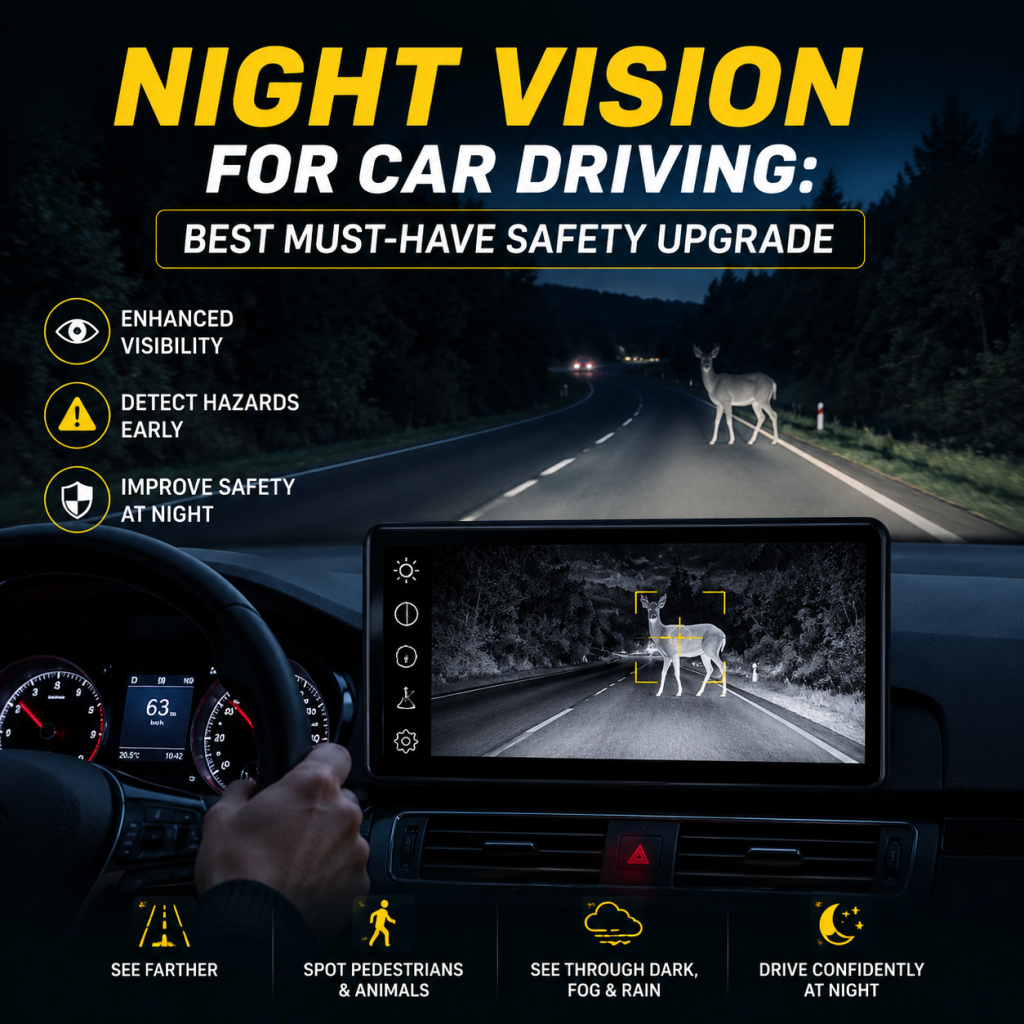
Driving at night is more demanding than many people realize. The human eye is simply less effective in low light, and vision becomes more dependent on contrast than detail. This means objects without reflective surfaces can blend into the background until they are dangerously close.
There are several common reasons nighttime driving feels harder:
- Reduced visibility due to darkness
- Headlight glare from oncoming traffic
- Eye fatigue after long hours on the road
- Poor road lighting in rural or suburban areas
- Weather conditions such as fog, rain, or mist
- Difficulty spotting pedestrians, cyclists, and animals
Even experienced drivers can struggle in these conditions. That is why a night vision upgrade is not just a luxury feature; for many drivers, it is a meaningful improvement in safety and confidence. For practical guidance on staying alert after dark, see night driving safety best practices.
Night driving also brings a different kind of mental load. You often spend more time scanning the road edge, watching for movement, and managing glare from other vehicles. As a result, small mistakes become more likely when your attention is split. Night Vision for Car Driving helps reduce that strain by making the environment easier to read.
Weather can make the challenge even greater. Rain reflects lights, fog softens contrast, and wet pavement can hide lane edges. In those moments, Night Vision for Car Driving can give you a clearer sense of what is ahead when your normal view feels limited.
That extra awareness matters most when a hazard appears without warning. A child near the curb, a deer at the shoulder, or a broken-down vehicle in a dark lane can all be difficult to detect quickly. With better visibility, you may have more time to slow down and avoid a serious problem.
What Night Vision for Car Driving Actually Does
Night Vision for Car Driving refers to technology designed to help drivers see better in low-light situations. Depending on the system, it may use thermal imaging, infrared cameras, or enhanced low-light sensors to detect objects that are difficult to see with standard headlights alone.
Most systems work by identifying heat signatures or improving image clarity in darkness. Thermal systems are especially effective for spotting people, animals, and vehicles at a distance. Infrared-based systems may offer clearer road detail and can be integrated with the vehicle’s display screen or dashboard. If you want a deeper look at thermal technology, this National Highway Traffic Safety Administration safety resource is a helpful starting point.
The main goal is simple: help the driver detect hazards sooner. A few extra seconds of warning can make a major difference when you are moving at highway speed or navigating unfamiliar roads.
In everyday use, the system works as a second set of eyes. It does not replace the driver, but it can highlight what headlights may miss. That can be especially useful on dark roads where road signs, animals, and pedestrians are easy to overlook.
Some systems provide a simple display with highlighted shapes or outlines. Others show a more detailed live image. In either case, the purpose stays the same: improve awareness without adding unnecessary distraction.
For many buyers, Night Vision for Car Driving becomes appealing because it supports safer decisions before danger gets close. Instead of reacting late, you can prepare earlier. That advantage is especially valuable when driving conditions change quickly.
Key Benefits of Night Vision for Car Driving
A quality night vision system offers several important safety and convenience benefits.
1. Earlier hazard detection
The biggest advantage is the ability to identify potential dangers before your headlights reach them. This is especially valuable for spotting deer, stray animals, pedestrians wearing dark clothing, or stalled vehicles.
2. Better awareness in dark or rural areas
If you regularly drive on poorly lit roads, night vision can dramatically improve your sense of confidence. It helps compensate for the lack of street lighting and makes rural night driving far less stressful.
3. Reduced reliance on high beams
High beams can improve visibility, but they are not always appropriate because of glare and legal restrictions. A night vision system gives you another layer of visibility without blinding other drivers.
4. Improved reaction time
When you can see hazards earlier, you have more time to brake, steer, or slow down. That extra time may help prevent collisions or reduce their severity.
5. Greater comfort and less fatigue
Night driving often forces drivers to stare harder at the road, which can contribute to fatigue. Better visibility can make driving feel less mentally draining, especially on long trips.
Many drivers also compare this upgrade with car thermal imaging camera options because they can add similar low-light awareness in a more affordable package.
Another important benefit is consistency. Headlights can be affected by fog, glare, or road reflections, but a thermal or infrared system can still reveal useful details. That makes Night Vision for Car Driving valuable in situations where lighting alone is not enough.
Drivers often notice that stress levels drop once they trust the system. When the road feels easier to interpret, you spend less energy guessing what may be ahead. That calmer driving experience can make a real difference on longer night trips.
There is also a practical comfort factor. If you commute late, make frequent evening deliveries, or drive family members after dark, any tool that improves awareness can be worth serious consideration. Night Vision for Car Driving adds that layer of support without changing the way you normally drive.
Features to Look for in a Night Vision System
Not all systems are created equal. If you are considering an upgrade, there are a few features worth paying close attention to.
Image quality and display clarity
A night vision system should provide clear, easy-to-interpret visuals. A fuzzy or laggy image can be more distracting than helpful. Look for systems with high-resolution displays and good contrast.
Detection range
Longer detection range generally means more warning time. Some systems can identify objects hundreds of feet ahead, which is especially useful at highway speeds.
Thermal vs. infrared technology
Thermal imaging is excellent for detecting warm bodies like people and animals, while infrared systems often provide sharper general scene detail. The best choice depends on your driving environment and priorities.
Integration with your vehicle
Some systems are built into newer cars, while others are aftermarket units. Choose one that integrates cleanly with your dashboard, infotainment screen, or mirror display so it is easy to use without taking your attention off the road.
Alerts and driver assistance
Advanced systems may provide audible or visual alerts when a hazard is detected. This can be especially useful if you want an added warning beyond simply looking at the screen.
Also consider how the system behaves in real traffic. A good unit should be useful without creating constant noise or visual clutter. The best designs keep important warnings clear and keep everything else out of the way.
Ease of use matters too. If a system is complicated, drivers may ignore it when they need it most. Night Vision for Car Driving should feel intuitive from the first use, with controls that are simple enough to manage during normal driving.
Durability is another factor. Exterior sensors and cameras should handle rain, vibration, heat, and road grime. A system built for everyday driving will usually deliver better long-term value than one that only performs well in ideal conditions.
Best Situations for Using Night Vision for Car Driving
Night vision technology is most helpful in situations where visibility is naturally limited or where hazards are unpredictable.
These include:
- Rural roads with wildlife crossings
- Long-distance highway driving at night
- Areas with poor street lighting
- Foggy or misty conditions
- Rainy evenings when glare is high
- Unfamiliar roads with limited signage
- Neighborhoods where pedestrians or cyclists may be difficult to spot
Drivers who spend a lot of time on these roads often notice the greatest benefit from a night vision upgrade. In fact, many of the same situations also call for far infrared automotive night vision because it can improve detection in tough weather and low-light conditions.
Highway travel deserves special attention. At higher speeds, the time between spotting a hazard and reaching it gets very short. Night Vision for Car Driving can extend that warning window and help you respond in time.
It can also help in urban settings. City streets may seem well lit, but parked cars, dark clothing, and shadowed intersections still create risks. A strong night vision system adds confidence when regular street lighting is inconsistent.
Parking lots and side streets are another overlooked use case. Movement near cars, curbs, and sidewalks can be hard to notice at night. Better visibility in these settings can reduce close calls during routine driving.
Night Vision vs. Standard Headlights
Standard headlights are essential, but they only illuminate a limited area in front of your vehicle. They are designed to help you see the road, not necessarily to warn you about distant hazards in time.
Night vision systems complement headlights by extending awareness beyond the bright beam pattern. Instead of waiting for an object to enter your headlight range, you may be able to detect it much earlier.
That said, night vision is not a substitute for safe driving habits. It should be used as a support tool, not as permission to drive faster or pay less attention. The most effective approach combines night vision with defensive driving, proper speed, and alertness.
Headlights still do the important job of illuminating the lane and road markings. Night vision adds context. Together, they create a more complete picture of the road ahead.
This is why many drivers view Night Vision for Car Driving as a complement rather than a replacement. It improves what the headlights cannot fully reveal, especially in conditions where contrast is poor.
When you combine both tools, you get a more balanced driving setup. The headlights light the path, while the camera or sensor helps you scan farther out. That combination can make night driving feel noticeably safer and less tiring.
Who Should Consider This Upgrade?
Night vision is especially worthwhile for:
- Commuters who drive home after dark
- Parents who often transport family at night
- Older drivers who want more visual support
- Rural drivers with frequent wildlife encounters
- Rideshare and delivery drivers
- Long-haul drivers and road travelers
- Anyone who feels uneasy during nighttime travel
If night driving is a regular part of your routine, the added awareness can be well worth the investment. For drivers comparing upgrade paths, aftermarket thermal night vision can be a strong option when factory systems are not available.
Frequent travelers often benefit the most because they face changing roads, weather, and traffic patterns. Night Vision for Car Driving can make unfamiliar routes feel less stressful and more predictable.
It is also helpful for people who drive in areas with heavy wildlife activity. Deer and other animals often move unpredictably, especially around dawn and dusk. Better detection gives you a better chance of slowing down early.
Even drivers who are generally confident at night may appreciate the added support. Confidence is useful, but confidence paired with better information is even better. That is where a modern night vision system can really shine.
Installation and Maintenance Considerations
If you choose an aftermarket system, professional installation is often the best option. Proper mounting, wiring, and calibration are important for accurate performance and minimal distraction. A poorly installed unit may produce unclear images or place the display in an inconvenient location.
Maintenance is usually straightforward, but the camera lens or sensor should be kept clean. Dust, rain, and road grime can reduce performance, especially in bad weather. Check the system regularly and confirm that the display remains bright, readable, and aligned correctly.
Software updates may also be available for some advanced systems. Keeping the unit updated can improve performance and compatibility over time.
You should also think about where the display will sit in your line of sight. The best setup keeps your eyes close to the road and avoids unnecessary head movement. That small detail can make Night Vision for Car Driving much easier to use every day.
If your vehicle already has advanced driver assistance features, look for a system that works well alongside them. The goal is to support your attention, not compete with other alerts or screens. A clean, well-integrated setup usually leads to better long-term satisfaction.
As with any vehicle technology, regular checks help preserve performance. Before a long trip, it makes sense to confirm that the lens is clean, the image is clear, and the alerts are functioning properly. A few minutes of care can protect the value of the upgrade.
Is It Worth the Investment?
For many drivers, the answer is yes. Night Vision for car driving can improve situational awareness, reduce stress, and help prevent costly or dangerous accidents. While it will not eliminate every risk, it gives drivers a valuable edge when visibility is poor.
The real value becomes clear in the moments that matter most: spotting a pedestrian before crossing the road, noticing an animal near the shoulder, or seeing a stopped vehicle sooner on a dark highway. Those extra seconds can make all the difference.
If you want to compare the broader category of options, the most relevant overview is automotive thermal night vision systems, which shows how different setups can improve low-light awareness.
Cost is always part of the decision. However, the price should be weighed against the safety gains and the comfort of driving with more confidence. If you drive often at night, the benefit can be easier to justify than it first appears.
For some households, the upgrade also helps with shared vehicles. One driver may commute in the dark, while another may only occasionally travel after sunset. In both cases, Night Vision for Car Driving can deliver meaningful peace of mind.
Over time, that peace of mind matters. A safer-feeling drive often means less fatigue and more focus. That can make the whole trip easier, whether it is a short errand or a long highway journey.
Final Thoughts
Night vision technology has become one of the most useful safety upgrades for modern drivers. By improving visibility in the hardest conditions, it helps reduce guesswork and supports better decision-making behind the wheel. If you frequently drive after dark, investing in Night Vision for car driving can be a smart and practical step toward safer, more confident travel.
For many drivers, the best results come from combining this technology with good habits, careful speed control, and a clean windshield. That combination makes night vision for car driving even more effective when the road becomes difficult to read.
In the end, the goal is not to turn night into day. Instead, it is to give you better information when the road is hardest to judge. With the right system, Night Vision for Car Driving can add a real layer of protection every time you head out after dark.