

How can you prevent traffic accidents on the road? That’s the million-dollar question.
- Your Mindset is Key to Prevent Traffic Accidents
- Why Speed Management Helps You Avoid Crashes
- The Dangers of Drowsy and Impaired Driving
- How Defensive Driving Prevents Traffic Accidents
- Maintain Your Car to Stay Safe on the Road
- Adjusting Your Driving for Bad Weather Conditions
- Navigating Intersections and City Driving Safely
- Using Technology to Help Prevent Traffic Accidents
- Sharing the Road with Motorcycles, Bikes, and Pedestrians
- Be Prepared: What to Do in an Emergency
- Conclusion: Your Commitment to Safe Driving
- Seeing the Unseeable: How Thermal Vision Adds Safety
Let’s be honest. Driving can be stressful. But getting into a crash? That’s a nightmare we all want to avoid. The good news? Most crashes are not “accidents” in the true sense. They are predictable and, more importantly, preventable. Learning how to prevent traffic accidents is the single best thing you can do for your safety, your passengers’ safety, and everyone else on the asphalt. This guide isn’t about complicated rules. It’s about simple, smart habits that work. We’ll talk about what you can do as a driver, how to keep your car safe, and how to handle tricky situations. Our goal is simple: to give you the know-how you need to drive with confidence and get home safely every single time. Buckle up, and let’s get started on learning how to prevent traffic accidents.
Your Mindset is Key to Prevent Traffic Accidents
Your mindset behind the wheel is everything. To truly prevent traffic accidents, you need to be in the game. That means being focused, alert, and in control. Driving is a skill that requires your full attention. Too many drivers treat their car like a living room. It’s not. Distractions are a huge problem. A quick text, changing the playlist, or a heated chat with a passenger can steal your eyes from the road for critical seconds. Those seconds are often the difference between a close call and a call to 911. Make a promise to yourself: when you drive, you drive. Put the phone away—out of sight, out of mind. Set your GPS and music before you put the car in drive. Staying focused is your first and best defense to prevent traffic accidents.
Why Speed Management Helps You Avoid Crashes
Speed is not just a number on a sign. It’s a major factor in whether you can prevent traffic accidents. Driving too fast for conditions is a recipe for trouble. It gives you less time to react. It makes your stopping distance much, much longer. And if a crash does happen, higher speed means more force, which means more serious injuries. The speed limit is the maximum allowed in ideal conditions. If it’s raining, foggy, or dark, you need to go slower. If traffic is heavy, go with the flow, not against it. Remember, arriving late is better than not arriving at all. Managing your speed is a powerful, simple way to prevent traffic accidents.

The Dangers of Drowsy and Impaired Driving
Let’s talk about two big dangers: tiredness and impairment. Driving drowsy is just as dangerous as driving drunk. Your reaction time slows way down. Your judgment gets fuzzy. You might even fall asleep for a few seconds—that’s all it takes. If you feel your eyes getting heavy, your head bobbing, or you’re yawning constantly, it’s time to stop. Find a rest area, take a 20-minute nap, or switch drivers. Never push through deep fatigue. It’s a deadly gamble. Then there’s alcohol and drugs. This one is non-negotiable. If you’ve been drinking or are under the influence of any substance that affects your mind, do not drive. Period. Call a ride-share, a taxi, or a friend. Making the smart choice before you start the engine is how you prevent traffic accidents caused by impairment.
How Defensive Driving Prevents Traffic Accidents
Become a defensive driver. This is a golden skill. Defensive driving means you’re always watching out for the other guy. You expect the unexpected. You leave yourself an “out.” How do you do this? First, keep your eyes moving. Don’t just stare at the car in front of you. Scan ahead, check your mirrors every 5-8 seconds, and watch the sides of the road. Second, keep a safe following distance. The old “two-second rule” is a good minimum. In bad weather, make it four or five seconds. This space is your cushion if something goes wrong. Third, always signal your intentions. Let people know what you’re planning to do. This proactive, aware style of driving is a superstar method to prevent traffic accidents.
Maintain Your Car to Stay Safe on the Road
Your car is your partner in safety. A poorly maintained car can fail you when you need it most. Regular check-ups are not just about saving money on gas; they’re about saving lives. Your tires are where the rubber meets the road—literally. Bald tires are extremely dangerous, especially in wet weather. Check the tread and air pressure monthly. Your brakes are your most important safety system. Listen for squealing or grinding and get them checked immediately. Lights are how you see and are seen. Make sure all your headlights, brake lights, and turn signals work perfectly. A simple monthly walk-around check can help you spot issues and is a key part of your plan to prevent traffic accidents.

Adjusting Your Driving for Bad Weather Conditions
Weather throws curveballs. Rain, snow, fog, and ice make driving much harder. To prevent traffic accidents in bad weather, you must adjust. Slow down. This is the most important thing. Turn on your headlights—not just your daytime running lights—so others can see you. In heavy rain, beware of hydroplaning. If the steering feels light, ease off the gas and drive straight until you regain grip. In fog, use low beams. High beams will just glare back at you. On ice, everything needs to be gentle: gentle steering, gentle braking, gentle acceleration. If the weather is truly terrible, ask yourself: is this trip absolutely necessary? Sometimes, the best way to prevent traffic accidents is to simply wait it out.
Navigating Intersections and City Driving Safely
Intersections and city driving are hotspots for fender-benders. Stay extra alert here. Always look left, right, and left again before entering an intersection. Even if you have a green light, check for red-light runners. Watch for pedestrians and cyclists. They can be hard to see. Make eye contact if you can. When you’re turning, use your signal well in advance. Check your blind spot every single time. In heavy traffic, avoid “lane hopping.” It’s risky and usually doesn’t save much time. Patience and predictability are your best tools to prevent traffic accidents in busy areas.

Using Technology to Help Prevent Traffic Accidents
Technology can be a great helper, but it’s not a replacement for a good driver. Modern safety features are amazing. Anti-lock brakes (ABS) help you steer during hard braking. Traction control helps prevent wheel spin. Electronic stability control can help correct a skid. Many new cars have automatic emergency braking (AEB), lane departure warnings, and blind-spot monitors. These are fantastic tools that can help you prevent traffic accidents. But you need to understand what they do and their limits. Don’t rely on them to do the driving for you. They are your co-pilot, not the pilot. Always keep your hands on the wheel and your mind on the road.
Sharing the Road with Motorcycles, Bikes, and Pedestrians
What about other people on the road? Motorcyclists, bicyclists, and pedestrians are vulnerable. They don’t have a metal frame protecting them. To prevent traffic accidents involving them, you must be their eyes and ears. Give motorcycles extra space. They can stop faster than you might think. Look for bicycles before you open your car door or make a turn. At crosswalks, always stop for pedestrians. It’s the law, and it’s the right thing to do. Sharing the road safely with everyone is a critical part of preventing crashes.
Be Prepared: What to Do in an Emergency
Finally, let’s talk about being prepared for the worst. Even if you do everything right, someone else might make a mistake. Having an emergency kit in your trunk is a smart idea. Include things like a first-aid kit, a flashlight, reflective warning triangles, and a blanket. Knowing basic first aid can make a big difference while waiting for help. If you are in a minor crash, move to a safe place, exchange information, and call the police if needed. Being prepared helps you manage a bad situation and keeps it from getting worse.
Conclusion: Your Commitment to Safe Driving
Driving safely is a continuous learning process. It’s about building good habits and sticking to them every day. By staying focused, driving at a safe speed, keeping your car in shape, and watching out for others, you hold the power to dramatically reduce your risk. You have the power to prevent traffic accidents. It starts with your decision, right now, to be a safer driver. Let’s all do our part to make the roads safer for everyone.
Seeing the Unseeable: How Thermal Vision Adds Safety
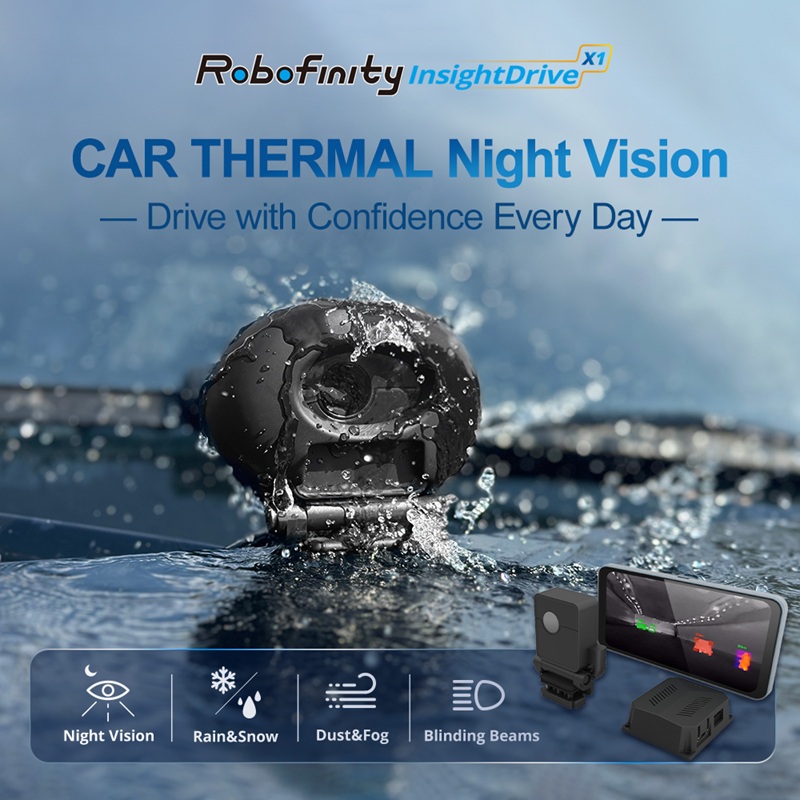
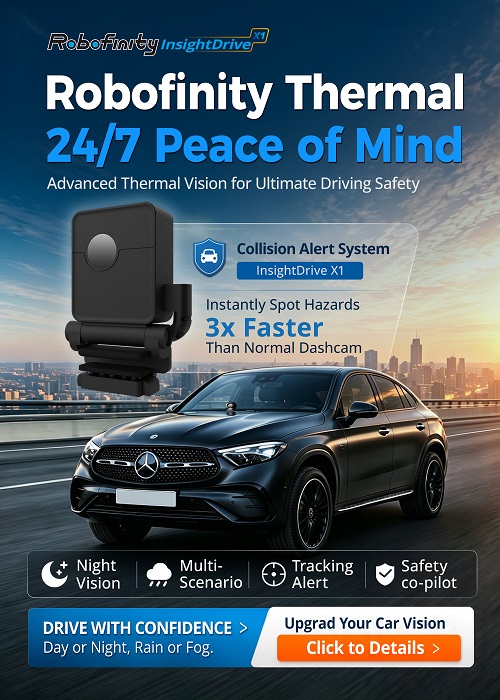
Speaking of seeing better to drive safer, especially when our own eyes can’t see far enough, new technology is stepping in. For those who often drive at night, in heavy rain, or in foggy areas, a tool like the Robofinity Car Thermal Night Vision can be a game-changer. Think of it as giving your car superhero vision. Unlike regular cameras or headlights, this device uses thermal imaging to see heat signatures. What does that mean for you? It can spot a person, an animal, or a stalled car on a dark road from up to 200 meters away—far beyond what your headlights can illuminate. Its AI system can even identify what it’s seeing and give you an early alert before a potential collision. Because it sees heat, it can “see” straight through rain, snow, and fog, and it works in total darkness. The installation is designed to be simple and quick for most vehicles. By giving you that critical extra warning time in the toughest conditions, it adds one more robust layer to your strategy to prevent traffic accidents and keep your journeys safe.