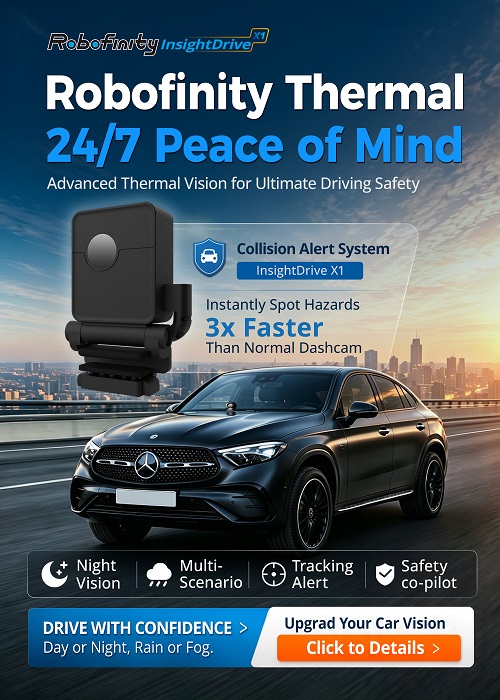


FLIR Thermal Camera Automotive: Best Must-Have ADAS Upgrade
FLIR thermal camera automotive technology is quickly becoming one of the most valuable additions to modern driver-assistance systems. As roads grow busier and nighttime driving remains a major safety challenge, more drivers, fleet operators, and automotive innovators are looking for tools that improve visibility beyond what headlights and standard cameras can offer. Thermal imaging stands out because it helps detect heat signatures from people, animals, and vehicles even in darkness, fog, rain, or glare-heavy conditions.
- Why FLIR thermal camera automotive systems matter for road safety
- How thermal imaging works in automotive ADAS
- FLIR thermal camera automotive as a premium ADAS upgrade
- Key benefits of thermal imaging in vehicles
- Improved night visibility
- Earlier hazard detection
- Better performance in challenging weather
- Enhanced pedestrian safety
- Stronger ADAS decision-making
- What to consider before choosing a thermal camera upgrade
- The future of FLIR thermal camera automotive technology
- Final thoughts
Advanced Driver Assistance Systems, or ADAS, already include features like lane departure warnings, adaptive cruise control, blind-spot monitoring, and automatic emergency braking. While these systems have significantly improved road safety, they still depend heavily on visible-light cameras, radar, and lidar. Each sensor has strengths, but thermal imaging fills a critical gap: it sees what the human eye and ordinary cameras often miss in low-visibility situations.
Why FLIR thermal camera automotive systems matter for road safety
Driving at night is statistically more dangerous than driving during the day. Reduced visibility gives drivers less time to react to hazards, especially pedestrians, cyclists, wildlife, or stalled vehicles on dark roads. Standard headlights only illuminate a limited distance ahead, and visible-light cameras can struggle in complete darkness or with intense light contrast.
This is where FLIR thermal camera automotive systems become especially useful. Instead of relying on reflected light, thermal cameras detect infrared radiation emitted by warm objects. That means a pedestrian crossing the road, a deer near the shoulder, or a vehicle engine running ahead may be visible to the system long before the hazard becomes obvious to the driver.
The biggest safety advantage is earlier detection. More reaction time can mean the difference between a near miss and a serious collision. For ADAS platforms, that extra layer of environmental awareness improves both warnings and automated intervention.
How thermal imaging works in automotive ADAS
Thermal imaging sensors translate heat signatures into an image that software can analyze in real time. In a vehicle, the thermal camera is usually mounted near the grille, behind the windshield, or integrated into the front fascia. The sensor scans the road ahead and identifies temperature differences between objects and their surroundings.
When paired with ADAS software, thermal data can support several functions:
More EV News
– Pedestrian and cyclist detection
– Animal detection on rural roads
– Forward collision warning
– Enhanced night vision display
– Better object recognition in fog or low-light conditions
– Support for automatic emergency braking systems
Unlike conventional cameras, thermal systems are less affected by shadows or oncoming headlight glare. This makes them especially valuable in difficult driving environments where standard vision-based systems may become less reliable.
FLIR thermal camera automotive as a premium ADAS upgrade
For drivers who already value safety technology, adding thermal imaging feels like a logical next step. Many premium vehicles have introduced night vision systems in past years, but adoption has not yet become universal. As ADAS continues to evolve, thermal sensing is increasingly viewed not as a luxury, but as a practical performance and safety enhancement.
A FLIR thermal camera automotive upgrade can be particularly appealing for:
– People who frequently drive at night
– Rural drivers who face wildlife crossing risks
– Fleet vehicles operating in all weather
– Security and emergency response vehicles
– Commercial transport operators focused on accident reduction
– Drivers in regions with heavy fog, snow, or poor lighting
The ability to “see” beyond the limits of headlights gives drivers a greater sense of confidence. For businesses, it can also reduce operational risk, help protect assets, and potentially lower accident-related costs.
Key benefits of thermal imaging in vehicles
Thermal cameras add value because they complement, rather than replace, existing ADAS sensors. The best automotive safety systems rely on sensor fusion, combining data from radar, lidar, visible-light cameras, and infrared sensors for a more complete picture of the environment.
Here are some of the most important benefits:
Improved night visibility
Thermal cameras excel in low-light and no-light conditions, making them ideal for nighttime travel.
Earlier hazard detection
People, animals, and vehicles can often be recognized sooner than with headlights alone.
Better performance in challenging weather
While no sensor is perfect, thermal systems can provide useful detection in rain, fog, smoke, and glare where normal cameras struggle.
Enhanced pedestrian safety
Pedestrians are among the hardest hazards to spot at night, especially if they wear dark clothing. Thermal imaging helps them stand out.
Stronger ADAS decision-making
When combined with AI and object recognition software, thermal input improves system awareness and response quality.
What to consider before choosing a thermal camera upgrade
Not all automotive thermal solutions are the same. If you are considering this technology, it is worth evaluating several factors before making a decision.
First, compatibility matters. A thermal camera should integrate properly with the vehicle’s existing electronics and ADAS architecture. Second, image resolution and detection range affect how useful the system will be in real-world conditions. Higher-quality sensors typically provide better object recognition at longer distances.
Third, software is just as important as hardware. The real power of thermal imaging comes from intelligent analysis. Look for systems that offer accurate classification of pedestrians, animals, and vehicles, along with timely alerts that do not overwhelm the driver.
It is also wise to consider durability. Automotive sensors must withstand vibration, temperature extremes, road debris, moisture, and constant outdoor exposure. Reliability is essential if the system is to perform when it is needed most.
The future of FLIR thermal camera automotive technology
As cars become smarter and more automated, sensor diversity will become even more important. Autonomous and semi-autonomous systems need multiple ways to understand the environment. Thermal imaging is well positioned to play a larger role because it adds a type of perception that conventional optical systems cannot fully duplicate.
Manufacturers are also working to make thermal systems more affordable, compact, and intelligent. As costs come down and software improves, thermal cameras may become increasingly common not only in luxury vehicles, but also in mainstream safety packages.
In the years ahead, we can expect deeper integration between thermal sensors and AI-based ADAS features. That means better threat recognition, faster automated responses, and more reliable performance in the exact situations where drivers need assistance most.
Final thoughts
Thermal imaging has moved far beyond niche use cases and is becoming a serious automotive safety tool. For drivers who want stronger nighttime awareness and better hazard detection, this technology offers a compelling upgrade path. It strengthens ADAS by adding visibility where conventional systems often fall short, especially in darkness and difficult weather.
Whether for personal vehicles, commercial fleets, or specialized transport, thermal imaging represents a smart investment in safer driving. As ADAS continues to advance, thermal sensing is likely to become one of the most important features for anyone serious about road safety and future-ready vehicle technology.