

Truck Night Vision Systems are gaining attention because many trucks spend their nights where visibility drops fast—rural roads, job sites, long-distance routes, and areas with wildlife or pedestrian traffic. If you drive a pickup, tow, or manage fleet schedules after dark, a night vision system can add a meaningful layer of awareness beyond headlights alone.
- Why trucks benefit more than many other vehicles
- They are often driven where lighting is poor
- Trucks usually have bigger blind spots
- Trucks are often work vehicles, not just personal transport
- How night vision systems help in practical truck driving
- They can improve early hazard detection
- They are useful when headlights are not enough
- They can reduce stress on long night drives
- Why trucks and thermal imaging fit naturally together
- Where trucks are especially strong candidates
- Rural and regional driving
- Towing and hauling
- Fleet and commercial use
- Off-road access and worksite transitions
- What truck buyers should evaluate before adding night vision
- Consider the driving environment first
- Look at integration and driver workload
- Think about maintenance and real-world use
- Remember that the driver still makes the decision
- A practical example of where the technology helps
- Where Robofinity fits into the conversation
- Limitations truck owners should keep in mind
- They do not replace basic visibility tools
- They are not equally helpful in every scenario
- Clean mounting and upkeep matter
- FAQ
- Are trucks better suited for night vision systems than cars?
- Do night vision systems help with animals on the road?
- Can a truck’s high driving position replace night vision?
- Is night vision useful for towing?
- Does night vision work in bad weather?
- What kind of truck driver benefits most from night vision?
- Conclusion
- Why trucks benefit more than many other vehicles
- How night vision systems help in practical truck driving
- Why trucks and thermal imaging fit naturally together
- Where trucks are especially strong candidates
- What truck buyers should evaluate before adding night vision
- A practical example of where the technology helps
- Where Robofinity fits into the conversation
- Limitations truck owners should keep in mind
- FAQ
- Conclusion
Why trucks benefit more than many other vehicles
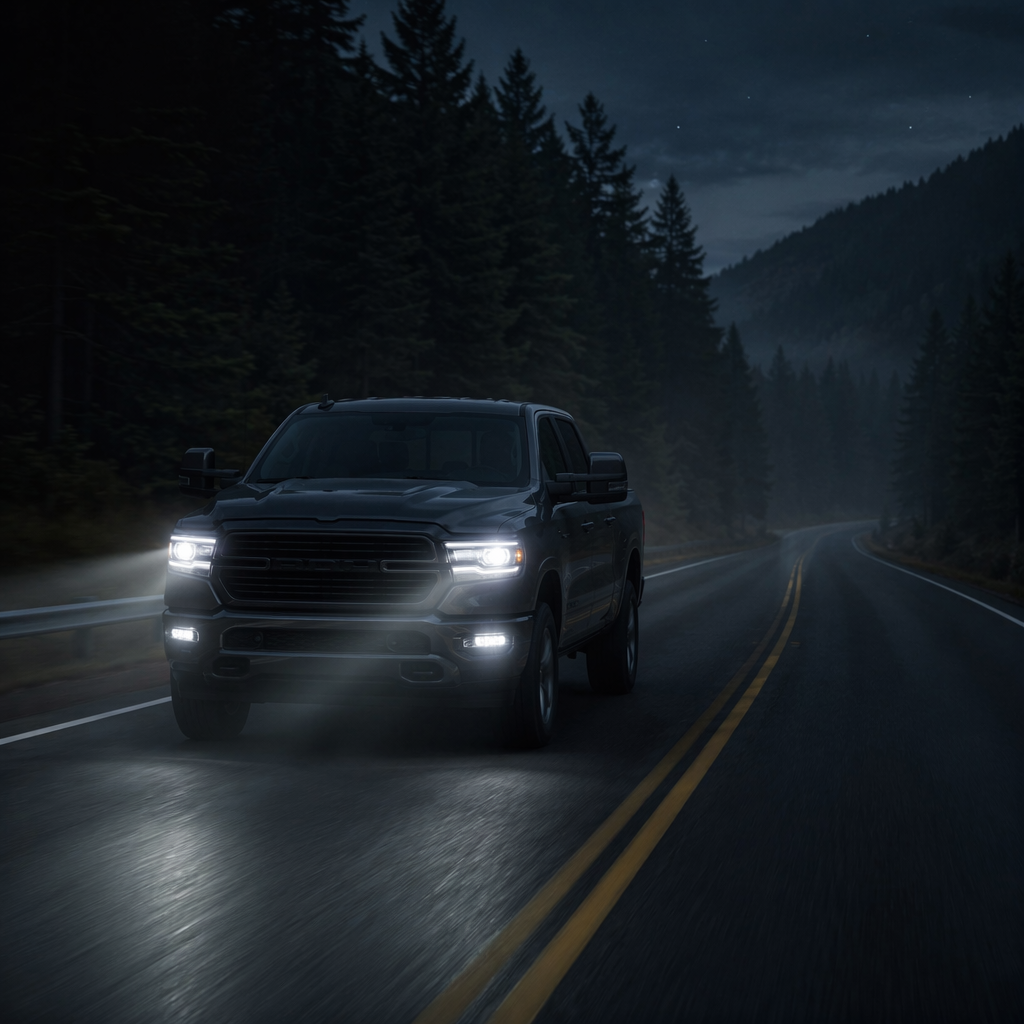
Trucks are not all used the same way, but they share a few traits that make low-light driving more demanding.
They are often driven where lighting is poor
A lot of trucks spend time on roads that are not well lit. This includes rural two-lane highways, farm access roads, construction zones, industrial areas, and back roads outside city centers. In those environments, hazards can appear suddenly and at the edge of headlight reach.
Night vision systems are useful here because they are designed to help the driver notice heat signatures and other objects that may not stand out clearly in headlights alone. That matters when a pedestrian is walking near the shoulder, an animal steps into the lane, or a stopped vehicle blends into a dark background.
Trucks usually have bigger blind spots
Truck size brings advantages, but it also creates visibility challenges. A taller hood, wider body, towing mirrors, trailer attachments, and cargo all complicate the driver’s view. Even if the seating position is elevated, there are still close-in zones around the front corners and along the sides where smaller hazards can disappear from sight.
Night vision does not solve blind spots in the same way a mirror or camera system might, but it can help extend the driver’s awareness farther ahead. That is useful because many nighttime hazards are not in the direct headlight beam long enough for a driver to react comfortably.

Trucks are often work vehicles, not just personal transport
Pickup trucks, fleet trucks, utility vehicles, and commercial trucks often run longer hours than the average family car. They may be used before sunrise, after dark, or on rotating schedules that include fatigue-prone driving times. A driver who is already managing routes, cargo, deadlines, or worksite access has less margin for a surprise hazard.
A night vision system can support the driver by making it easier to spot movement or heat signatures early. That does not eliminate fatigue, but it can help reduce the number of situations where the driver is forced to react at the last second.
How night vision systems help in practical truck driving
Night vision systems are often discussed in broad terms, but the real value comes from a few practical use cases.
They can improve early hazard detection
One of the biggest benefits is earlier awareness. At night, headlights illuminate only part of the road ahead, and some hazards are hard to see until they are close. Thermal imaging systems can help reveal living beings and some other objects before they are obvious to the naked eye.
For truck drivers, that can matter in several common situations:
- A deer steps near the shoulder on an unlit highway
- A pedestrian is walking in dark clothing on a rural road
- A worker is near a parked utility truck or roadside repair area
- A vehicle is stopped partially off the lane in low contrast conditions
The value is not that the system solves every problem. It is that it can give the driver a few extra seconds of awareness, which is often the difference between a controlled response and a panic response.
They are useful when headlights are not enough
Headlights are essential, but they have limits. Low beams trade distance for courtesy, high beams can create glare and are not always appropriate, and even strong lighting can struggle in rain, fog, snow, or glare from wet pavement.
Truck drivers often run into these conditions on long routes and work schedules. Night vision can help fill in the gap by showing shapes or heat signatures that are harder to distinguish in poor visibility. It is especially useful when the road environment is cluttered, dark, or visually noisy.
They can reduce stress on long night drives
Long nighttime drives can be mentally draining. The driver has to keep scanning for lane markers, oncoming traffic, animals, pedestrians, and roadside hazards while also watching mirrors and managing fatigue. A well-integrated night vision system does not remove that workload, but it can make the drive feel less uncertain.
That reduction in uncertainty matters for trucks because the consequences of a late reaction can be more serious due to mass, stopping distance, and trailer length. The more a system can support road awareness without distracting the driver, the more useful it becomes.
Why trucks and thermal imaging fit naturally together
Many modern night vision systems rely on thermal imaging rather than visible-light enhancement alone. That matters because thermal imaging is not just “seeing better in the dark.” It is a different way of detecting presence, especially when contrast is poor.
Thermal imaging is good at highlighting living objects
Pedestrians and animals often stand out more clearly in thermal imaging than they do in ordinary night-time camera views. That is one reason trucks, especially those used in suburban-rural transition areas, can benefit from this technology. A large vehicle on a dark road has fewer seconds to spare once a hazard is detected.
For truck drivers who regularly pass through areas with wildlife crossings or roadside foot traffic, that extra visibility can be practical rather than theoretical.
It can help in visually difficult weather
Rain, fog, snow, and glare can make night driving worse. A truck already has a lot to manage in those conditions, especially if it is hauling cargo or towing. Thermal imaging is not magic, and it will not see through every weather problem, but it can still add useful context when the human eye is struggling with contrast.
That makes the technology particularly relevant for trucks that operate across regions and seasons, where the weather can change quickly and the roads may not always be well maintained.
Where trucks are especially strong candidates
Not every truck owner needs night vision, but certain use cases make the case stronger.
Rural and regional driving
Drivers who spend a lot of time outside cities often face the highest nighttime risk from unexpected road users, especially animals and pedestrians. In these settings, the road may be dark for miles at a time, and the shoulder may have very little separation from the travel lane.
A truck used for farm work, regional supply runs, or country commuting is a strong candidate because the system may be used regularly rather than occasionally.
Towing and hauling
Towing adds another layer of complexity. The vehicle handles differently, braking distances increase, and driver attention is divided between the road, the trailer, mirrors, and load behavior. Night visibility problems are harder to manage when the vehicle is already less forgiving.
A night vision system does not replace towing discipline, but it can support safer awareness of the road ahead, especially when the driver is monitoring a long trailer that limits maneuverability.
Fleet and commercial use
Fleet trucks and service vehicles often operate on schedules that do not stop at sunset. Night driving is part of the job, not an exception. These vehicles also tend to accumulate many repetitive miles, so even a small improvement in awareness can matter over time.
For commercial operators, truck night vision systems are worth considering when routes include low-light areas, roadside stops, or environments where pedestrians and animals are a realistic concern.
Off-road access and worksite transitions
Some trucks spend part of the day on paved roads and part on unlit access roads, yards, or active worksites. That transition from bright to dark or from open road to cluttered work area can create sudden visibility changes. A driver may be able to see well one moment and have very little contrast the next.
In those use cases, night vision can be a useful supplement because it helps the driver maintain awareness when ambient lighting changes quickly.
What truck buyers should evaluate before adding night vision
If you are deciding whether a truck is a good candidate for a night vision system, the right question is not just “does it work?” The better question is “does it fit the way this truck is actually used?”
Consider the driving environment first
A truck that spends most of its life in bright urban traffic probably has a different need than one that runs rural routes after dark. Ask where the truck is driven most often:
- Well-lit city streets
- Poorly lit suburban roads
- Rural highways
- Farms, worksites, and industrial access roads
- Mountain roads or areas with wildlife crossings
The more often the truck sees dark, low-contrast environments, the more value a night vision system is likely to provide.
Look at integration and driver workload
Some systems are easier to use than others. The best setup is one that presents information clearly without adding distraction. For a truck, that matters because the driver may already be managing mirrors, trailer position, or work navigation.
A good system should fit naturally into the driving process. If it requires too much attention to interpret, its usefulness drops.
Think about maintenance and real-world use
Any vehicle technology that adds sensors or cameras also adds maintenance responsibility. Dirt, road spray, ice, and debris can affect performance. Trucks are especially exposed because they are more likely to be used in harsh conditions and on unclean roads.
Before treating night vision as a permanent fix, consider how often the vehicle will need cleaning, whether the camera view could be blocked by accessories, and how the system behaves in bad weather.
Remember that the driver still makes the decision
This is the part people sometimes overlook. Night vision can improve awareness, but it does not decide whether to slow down, change lanes, or stop. The driver remains responsible for using headlights appropriately, keeping speed reasonable, and leaving enough room to react.
That makes the technology a support layer, not a shortcut.
A practical example of where the technology helps
Imagine a pickup truck on a dark two-lane road outside a town. The driver is heading home after work. There are no streetlights, the shoulders are narrow, and the pavement is damp from recent rain. A deer steps near the edge of the road, but not fully into the beam of the headlights yet.
In that situation, a night vision system may give the driver earlier notice than headlights alone. That earlier notice can make it easier to reduce speed smoothly rather than reacting hard at the last second. The same logic applies to pedestrians in dark clothing, roadside workers, or a stopped vehicle ahead with limited lighting.
This is the kind of use case where trucks stand out. Their routes, body size, and operating conditions often create the exact environment where early awareness matters most.
Where Robofinity fits into the conversation
Advanced safety is not limited to factory-installed features. Drivers who spend time on rural roads, dark highways, or other poor-visibility routes may also look at aftermarket options such as Robofinity InsightDrive, a vehicle thermal imaging night vision system designed to support awareness of pedestrians, animals, vehicles, and obstacles in low-light conditions.
If you want to narrow your choices by use case and conditions, you may also find it helpful to review Car Night Vision Systems in Rain: What Drivers Should Know.
Limitations truck owners should keep in mind
Night vision systems can be useful, but they have limits. A realistic view of those limits helps drivers use the technology responsibly.
They do not replace basic visibility tools
Headlights, mirrors, turn signals, lane discipline, and safe following distance still matter. A night vision system is a supplement, not a substitute. If the driver becomes overconfident and starts relying on the system too much, the benefit can shrink quickly.
They are not equally helpful in every scenario
A thermal imaging system may be less valuable in bright daylight or in certain cluttered visual environments. It also may not be the right solution for every truck owner. Someone who mostly drives short, well-lit urban trips may not see the same return as a driver who regularly covers rural miles after dark.
Clean mounting and upkeep matter
Truck use can be hard on exterior equipment. Mud, salt, vibration, and weather exposure can all affect performance. That means the best results often come from a system that is installed carefully and maintained with the same attention a truck owner gives to mirrors, lights, and tires.
For additional context on safe night driving fundamentals, see the U.S. National Highway Traffic Safety Administration’s guidance on night driving safety.
FAQ
Are trucks better suited for night vision systems than cars?
Often, yes. Trucks are more likely to be used on dark roads, rural routes, worksites, and long trips, where visibility problems are more common. Their size and blind spots also make early hazard awareness more valuable.
Do night vision systems help with animals on the road?
They can. Thermal imaging is especially useful for spotting animals because body heat may stand out better than in normal night driving conditions. That said, drivers still need to slow down and stay alert in wildlife areas.
Can a truck’s high driving position replace night vision?
No. A higher seating position helps with general visibility, but it does not solve darkness, glare, fog, or low-contrast hazards near the road. Night vision adds a different type of awareness.
Is night vision useful for towing?
Yes, especially on dark highways and rural roads. Towing already increases the difficulty of night driving, so extra awareness ahead of the truck can be helpful. It should still be combined with proper mirror use and careful speed control.
Does night vision work in bad weather?
It can help in some poor-visibility conditions, but it is not a cure-all. Rain, fog, snow, and spray can still reduce effectiveness. Drivers should treat it as one tool among several, not as a reason to drive normally in difficult weather.
What kind of truck driver benefits most from night vision?
Drivers who frequently travel at night, use rural roads, haul or tow loads, work on unlit job sites, or operate in areas with pedestrians and wildlife are usually the strongest candidates.
Conclusion
Truck Night Vision Systems are a strong fit because truck routes often make visibility more difficult than average. Bigger blind spots, rural roads, towing demands, worksite use, and long night drives all increase the value of earlier hazard detection. A well-chosen system can support road awareness in ways that headlights alone cannot.
The key is to view the technology realistically. It can help drivers notice pedestrians, animals, vehicles, and obstacles sooner in low-light conditions, but it does not replace safe speed, attention, or basic driving judgment. For truck owners who routinely deal with darkness, glare, and poor-visibility roads, that extra layer of awareness can be a sensible safety upgrade.