


Durable SUVs in 2026 are about more than horsepower, styling, or the latest technology. For many drivers, the real value of an SUV comes from how well it holds up after years of commuting, road trips, weather exposure, and daily family use. If you want a vehicle that can last 10+ years without major repairs, the best options usually come from brands with proven reliability, conservative engineering, strong build quality, and easy access to parts and service.
- What Makes an SUV Durable?
- Proven powertrains
- Conservative engineering
- Strong maintenance history
- Quality materials and assembly
- Real durability is also comfort durability
- The Most Durable SUVs to Consider in 2026
- Toyota Land Cruiser
- Toyota 4Runner
- Lexus GX
- Honda Pilot
- Subaru Forester
- Toyota Highlander
- Lexus RX
- Other durable SUV types to consider (depending on your needs)
- Why Some SUVs Last Longer Than Others
- Fewer complex electronics
- Proven platform design
- Strong service networks
- How driving habits affect 10+ year outcomes
- Where failures usually show up as mileage climbs
- How to Maximize SUV Longevity
- Follow the maintenance schedule
- Use the right fluids and quality parts
- Choose the right trim
- Watch tires, suspension, and fluids
- Minimize heat and overheating risk
- Don’t ignore warning signs
- Buy with resale and repair history in mind
- Consider the real cost of ownership
- Inspect used models carefully
- Keep it stocked for the real world
- Final Thoughts
Durability matters even more in today’s market because SUVs are expected to do everything: carry passengers, haul gear, handle rough roads, and still remain comfortable and efficient. While no vehicle is completely trouble-free, some models have earned a long-standing reputation for reliability and low ownership stress. In 2026, the most dependable choices continue to be those with track records built over many model years, not just the newest technology or flashiest interiors.
Table of Contents
What Makes an SUV Durable?
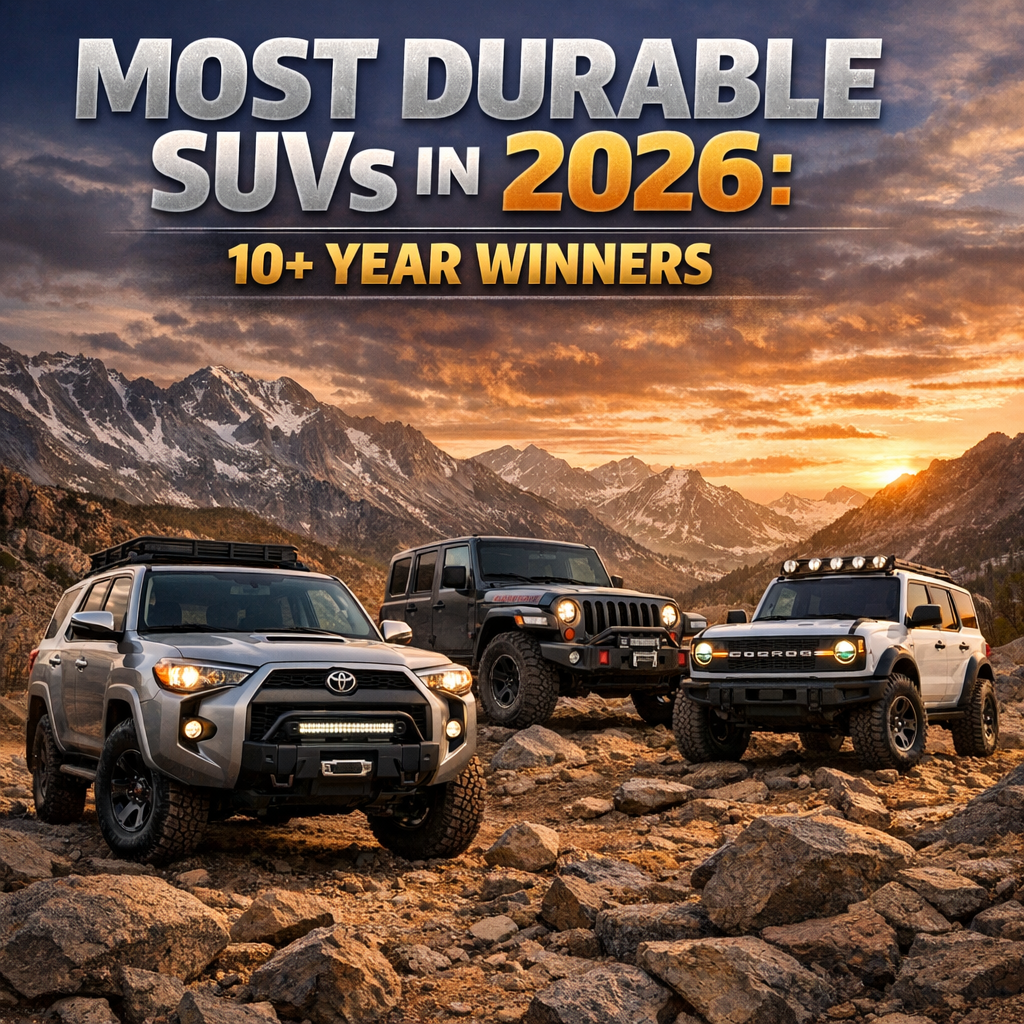
A durable SUV is not simply one that survives high mileage. It is a vehicle that continues to function smoothly with fewer expensive repairs, less frequent breakdowns, and strong long-term consistency—especially when you drive in real-world conditions.
Proven powertrains
Engines and transmissions that have been refined over several years tend to be more dependable than all-new systems. Manufacturers that avoid overly complicated setups often produce vehicles that age better. That is one reason durable SUVs often rely on long-tested drivetrains rather than experimental hardware.
Conservative engineering
The most durable SUVs usually avoid pushing every component to its limit. That means less strain on the drivetrain, simpler suspension systems, and fewer failure-prone electronics. When a vehicle is tuned for long service life instead of maximum output, it often becomes a better long-term ownership choice.
Strong maintenance history
Even the best SUV needs regular service. Oil changes, fluid replacements, brake work, and tire rotations play a major role in whether a vehicle reaches 150,000 miles or more without major repairs. Owners who stay on schedule usually get much better results from durable SUVs than owners who postpone routine care.

Quality materials and assembly
Interior wear, rattles, electrical issues, and suspension problems can all shorten an SUV’s useful life. Well-built models tend to hold together better over time, and they often feel tighter and more consistent as the mileage climbs. If you plan to keep a vehicle for years, build quality matters as much as initial features.
Real durability is also comfort durability
Many owners focus only on mechanical failures, but long-term ownership includes day-to-day comfort—wind noise, fit and finish, and how the vehicle holds up to repeated heat/cold cycles. Durable SUVs usually keep these “small problems” from becoming big headaches, which is why they feel easier to live with after the new-car novelty wears off.
The Most Durable SUVs to Consider in 2026
While durability can vary by trim, engine, and maintenance habits, certain SUV nameplates continue to stand out for longevity and repair resistance. If you want a practical shortlist, this is where the conversation about durable SUVs usually begins.
Toyota Land Cruiser
The Toyota Land Cruiser has long been one of the most respected names in long-term reliability. It is known for rugged construction, strong drivetrain design, and its ability to handle demanding conditions for many years.
In 2026, the Land Cruiser remains a top choice for buyers who want serious durability. Its off-road capability is impressive, but its real strength is how well it is engineered for long-term use. Many owners value the fact that it is built to endure harsh climates, rough roads, and heavy loads while maintaining a reputation for reliability.
For shoppers comparing long-term dependability with safety gear and visibility technology, Car Thermal Night Vision Camera for Safe Driving 2025 is a useful related read.
Toyota 4Runner
The Toyota 4Runner continues to be one of the most durable midsize SUVs on the market. Its body-on-frame construction, proven V6 powertrain, and straightforward mechanical design make it a favorite among drivers who prioritize longevity over luxury.
Although the 4Runner may not offer the smoothest ride or the newest technology compared with some rivals, that simplicity is part of its appeal. Fewer complicated systems often mean fewer repair headaches later. For owners who keep up with maintenance, the 4Runner can be one of the best bets for 10-plus years of dependable service.
For a deeper look at how long a model can realistically stay on the road, see Car Reliability: Do Reliable Cars Last Longer?.
Lexus GX
The Lexus GX combines Toyota-level durability with a more premium interior. It appeals to buyers who want long-term dependability without giving up comfort. Like the 4Runner, it uses a body-on-frame design and has a strong reputation for lasting a long time with relatively few major issues.
The GX is especially attractive for families or travelers who want an upscale SUV that can handle both everyday driving and occasional tough terrain. Its reliability history is one of the strongest in the luxury SUV category.
Honda Pilot
The Honda Pilot has built a solid reputation as a family SUV that can stay reliable well past 100,000 miles. Its comfortable ride, practical interior, and dependable V6 powertrain make it a smart choice for long-term ownership.
Honda has refined the Pilot over multiple generations, focusing on usability and durability rather than overcomplicated features. For drivers who want a spacious SUV that is more likely than average to age gracefully, the Pilot remains a strong contender among the most durable SUVs to consider in 2026.
Subaru Forester
The Subaru Forester is another model known for practicality and long service life. Its standard all-wheel drive, efficient size, and straightforward design make it especially popular in regions with harsh weather.
The Forester’s strength lies in consistency. It is not the most powerful SUV, but it is engineered for everyday dependability. With proper maintenance, many Foresters can deliver years of trouble-free use, making it a smart option for buyers who value long-term reliability over performance.
Toyota Highlander
The Toyota Highlander remains one of the most balanced three-row SUVs in terms of reliability, comfort, and resale value. Its reputation for durability is one of the reasons it is so popular among families.
The Highlander typically offers smooth operation, a practical layout, and a history of low repair frequency. It is often viewed as one of the safest choices for drivers who want an SUV that will stay dependable through years of school runs, errands, and vacations.
Lexus RX
For shoppers looking for a luxury SUV with a long lifespan, the Lexus RX stands out. It has long been associated with excellent reliability, comfortable driving dynamics, and strong resale value.
The RX is less rugged than body-on-frame SUVs, but it compensates with proven hybrid and gas powertrains, high-quality materials, and generally low ownership stress. It is one of the best choices for drivers who want premium comfort and lasting dependability in the same package.
If you are also comparing long-term dependability across brands, it can help to review Car Brand Reliability: What Car Brand Has the Least Problems?.
Other durable SUV types to consider (depending on your needs)
Not every durable pick fits the same lifestyle. If you plan to tow, drive in heavy snow, travel long distances, or keep the vehicle for a decade-plus, the “best match” may vary. The right durable SUV for you depends on how you use it:
- For towing and rugged use: look for SUVs with a proven track record, strong cooling capability, and a drivetrain that’s designed for long-term stress.
- For snowy or rainy regions: prioritize stable all-wheel-drive systems and consistent traction in winter conditions.
- For daily commuting and errands: choose a model with predictable maintenance needs, good fuel economy, and comfort that stays tight over time.
- For families who keep cars a long time: focus on interior durability, safe access to parts, and a reliability history that supports frequent use.
These categories help you translate “durable on paper” into durable in your garage.
Why Some SUVs Last Longer Than Others
Durability is often tied to simplicity. Vehicles with fewer moving parts, less aggressive tuning, and more established components generally experience fewer problems over time. That is why durable SUVs often share a similar formula, even when they come from different brands.
Fewer complex electronics
Modern SUVs are packed with technology, but more screens, sensors, and driver-assistance systems can create more opportunities for failures. Some of the most durable models strike a balance between modern features and mechanical simplicity.
Proven platform design
SUVs built on long-running platforms often benefit from years of fixes and improvements. That means many of the early issues have already been solved before a buyer takes delivery.
Strong service networks
Brands with widespread dealer and parts support make long-term ownership easier. If replacement parts are available and repairs are straightforward, an SUV is more likely to remain on the road for a decade or more.
When you want owner-focused reliability context, the Consumer Reports cars section is a useful reference for long-term ownership insights.
How driving habits affect 10+ year outcomes
Even the most durable SUV can develop problems sooner if it’s driven harshly every day. Short trips with cold starts, neglected oil changes, and driving with worn tires and brakes all accelerate wear. Conversely, consistent service, sensible driving, and preventive maintenance can extend any SUV’s lifespan.
It’s also common for durability to vary between owners. Two vehicles with the same model can age differently depending on where they drive, how they’re maintained, and whether problems are addressed early. That is why durable SUVs reward careful ownership as much as careful engineering.
Where failures usually show up as mileage climbs
Most high-mileage SUVs don’t fail all at once. Instead, owners often notice creeping issues such as:
- wear in suspension components (bushings, links, mounts)
- brake system work as rotors and pads age
- cooling system components needing replacement
- leaks or deterioration from weather exposure
- normal electrical wear over time (sensors, switches)
The “durable” difference is that these repairs stay predictable and manageable rather than turning into repeated major breakdowns. That is what separates durable SUVs from vehicles that become expensive to own too early.
How to Maximize SUV Longevity
Even the most reliable SUV can become expensive if neglected. Long-lasting ownership depends on good habits, and that is especially true with durable SUVs that are expected to deliver many years of service.
Follow the maintenance schedule
Routine oil changes, transmission service, coolant checks, and brake inspections should never be skipped. Staying ahead of maintenance is one of the best ways to avoid major repairs.
Use the right fluids and quality parts
Some longevity comes down to details. Using the correct oil specification, maintaining proper coolant concentration, and choosing good replacement parts for wear items can protect systems that are sensitive to poor lubrication or incorrect service intervals.
Choose the right trim
Sometimes higher trims include more complicated equipment that can increase repair risk over time. If your priority is durability, a mid-level trim with proven features may be a better choice than a heavily loaded version.
Watch tires, suspension, and fluids
Aging SUVs often suffer from worn suspension components, uneven tire wear, and old fluids. Addressing these issues early helps prevent bigger problems later—especially alignment-related tire damage and suspension wear that strains steering and drivetrain components.
Minimize heat and overheating risk
Durability doesn’t just mean “no failures.” It also means managing the conditions that lead to expensive wear. Keeping an eye on warning lights, ensuring proper airflow to the radiator, and maintaining clean cooling system parts helps avoid overheating and premature component degradation.
Don’t ignore warning signs
Small changes often show up before major issues. Unusual noises, vibration, shifting behavior, or warning messages should be treated as actionable signals. Waiting too long can turn a simple fix into a system-level repair.
Buy with resale and repair history in mind
A model with a strong reliability reputation and easy part availability is usually a smarter long-term choice than one that looks impressive on paper but has a history of costly repairs. Resale value isn’t only about demand—it often reflects durability signals from the real market.
Consider the real cost of ownership
When comparing durable SUVs, remember that the cheapest purchase price is not always the lowest-cost ownership experience. Insurance, fuel, maintenance, and repair frequency all matter over a 10-year period. A slightly higher-priced vehicle with lower repair risk may be the better long-term deal.
Inspect used models carefully
If you are shopping pre-owned, review service records, look for consistent oil changes, and check for signs of deferred maintenance. A well-kept SUV can outlast a newer one that has been neglected.
It also helps to check for rust in critical areas, review tire wear patterns for alignment clues, and ensure the suspension feels tight on test drives. These checks reduce the odds of “surprise” problems after purchase.
Keep it stocked for the real world
Owners who plan to drive their durable SUV for 10+ years often treat basic protection as part of maintenance—seasonal tire choices, windshield wiper and washer fluid upkeep, and keeping the cabin filters clean. These details help reduce strain on systems and improve comfort across changing seasons.
For drivers who want to pair long-term dependability with practical everyday use, durable SUVs are often the best compromise between comfort and ownership peace of mind.
Final Thoughts
The most durable SUVs in 2026 are the ones built with proven engineering, practical design, and a track record of lasting well beyond 10 years. Toyota, Lexus, Honda, Subaru, and a few others continue to dominate this conversation because they focus on long-term dependability rather than short-term excitement.
If your goal is to own an SUV that stays out of the repair shop and keeps serving your family year after year, look closely at models like the Toyota Land Cruiser, Toyota 4Runner, Lexus GX, Honda Pilot, Subaru Forester, Toyota Highlander, and Lexus RX. These vehicles are not just popular—they are respected for holding up under real-world use.
In the end, durability is not about luck. It is about choosing a well-designed SUV, maintaining it properly, and selecting a model with a genuine reputation for longevity. For drivers planning ahead in 2026, that approach can make all the difference when evaluating durable SUVs. If you are narrowing your shortlist, keep the focus on durable SUVs with proven service histories, not just the newest features.