


In 2026, choosing between a sedan and an SUV is less about what’s popular and more about what fits your day-to-day life. If you’re trying to understand sedan vs SUV, the right answer depends on your commute, passenger needs, budget, parking situation, and the type of roads you drive most often.
- Why This Decision Still Matters in 2026
- The Case for Sedans
- Better Fuel Efficiency
- Easier to Drive and Park
- Comfortable for Daily Use
- Lower Running Costs Over Time
- The Case for SUVs
- More Cargo and Passenger Versatility
- Higher Driving Position
- Better for Rough Roads and Bad Weather
- Flexible for Family Life
- Important Trade-Offs to Consider
- Size Can Work For or Against You
- Ownership Costs Differ
- Safety Is Strong on Both Sides
- Passenger Comfort Depends on the Model
- How to Choose Based on Your Lifestyle
- What’s Changing in 2026
- Final Thoughts
Table of Contents
Why This Decision Still Matters in 2026
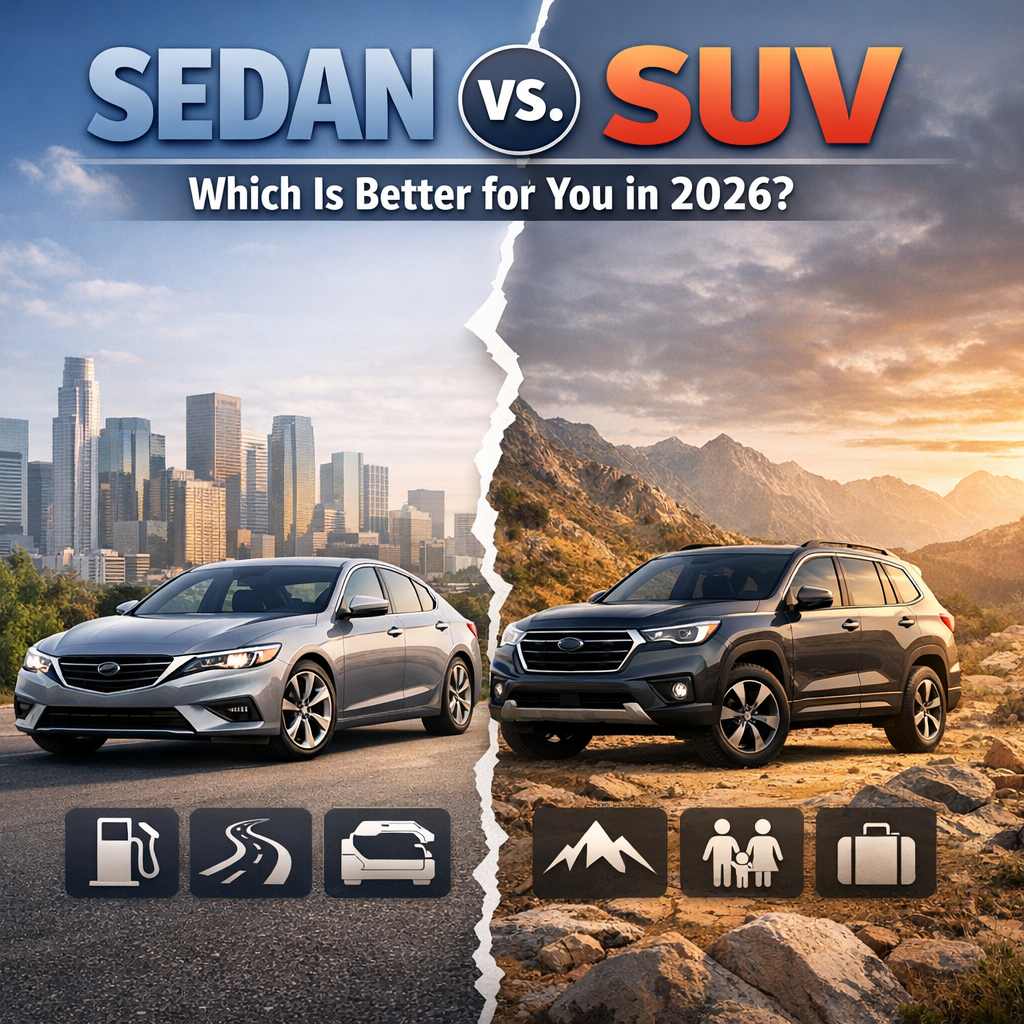
Car buyers today have more options than ever, but that also makes decisions more complex. Sedans aren’t automatically the default for commuters, and SUVs aren’t automatically the best solution for families. In 2026, automakers have narrowed the gap on safety, technology, and comfort, so the sedan vs SUV choice should reflect your real priorities instead of assumptions.
Fuel prices, insurance costs, urban parking challenges, and the rise of electric and hybrid powertrains all affect the value of each option. In other words, the best vehicle isn’t simply the bigger or more popular one. It’s the one that makes the most sense for your lifestyle.
That’s why a good sedan vs SUV comparison starts with how you drive, where you park, and what you carry most days. If your needs are mostly straightforward, a sedan can be a smart, low-stress choice. If your routine changes often, an SUV may give you more flexibility without requiring a major sacrifice in comfort.
The Case for Sedans
Sedans remain a smart option for drivers who want a balanced mix of efficiency, comfort, and easy handling. They’re sometimes overlooked in a market crowded with crossovers, but they still offer practical advantages that matter for many households.
Better Fuel Efficiency
One of the strongest arguments for sedans is fuel economy. Because sedans are typically lighter and more aerodynamic than SUVs, they often consume less fuel. In 2026, that advantage is relevant whether you’re considering a gas-powered model, a hybrid, or an electric sedan with extended range.
For commuters, delivery drivers, and anyone spending lots of time on the highway, lower fuel consumption can translate into noticeable savings over time. When the sedan vs SUV decision is driven by everyday commuting, this difference can become a major factor.
Easier to Drive and Park
Sedans are generally easier to maneuver in tight spaces. If you live in a city, park in a crowded garage, or regularly navigate narrow streets, a sedan can be far less stressful than a larger SUV. Their lower ride height also makes entry and exit simpler for many drivers and passengers.
That ease of use matters more than many shoppers expect. In a busy workweek, a sedan can save time and reduce frustration, especially when parking is limited or your route includes stop-and-go traffic.
Comfortable for Daily Use
Modern sedans often deliver a refined ride with less body roll and a more planted feel on the road. That makes them appealing for drivers who prioritize comfort on everyday trips. Many midsize and luxury sedans also offer surprisingly spacious rear seats and generous trunk space—enough for couples, small families, or business use.
If you’re still comparing options, it helps to look at broader ownership factors like durability and long-term value. For example, our guide on car reliability explains why dependable vehicles can reduce costs over the years.
For some buyers, the calm road feel is the biggest advantage in the sedan vs SUV debate. A sedan can feel more predictable in corners, more efficient on long drives, and more relaxed for daily commuting.
Lower Running Costs Over Time
Sedans often come with lower purchase prices than similarly equipped SUVs, and that can continue to pay off long after the sale. Smaller tires, less weight, and better fuel economy may help reduce routine expenses. Depending on the model, some sedans also have lower insurance premiums and more affordable maintenance.
That doesn’t mean every sedan is cheap to own, but it does mean the body style often gives you a better chance of keeping monthly and yearly costs under control. If budget matters, this is one of the clearest reasons a sedan may make more sense.
The Case for SUVs
SUVs have become the preferred choice for many households, and it’s easy to see why. They combine a higher seating position with flexible cargo space and a confident driving feel. If you’re weighing sedan vs SUV, it’s important to recognize that SUVs often win on versatility.
More Cargo and Passenger Versatility
If you regularly transport sports gear, groceries, luggage, strollers, pets, or bulky items, an SUV offers clear benefits. Folding rear seats and a larger cargo area make it easier to adapt the interior to your needs. This flexibility is especially valuable for active families and drivers who travel with extra equipment.
That flexibility is one reason many shoppers choose an SUV even when they don’t need the largest possible vehicle. In the sedan vs SUV conversation, cargo room and usable interior space often matter more than raw size.
Higher Driving Position
Many drivers like the elevated seating position in an SUV. It improves outward visibility and can make traffic feel less intimidating. For some people, that additional height provides a stronger sense of control, especially during busy commutes.
It can also make it easier to spot lane changes, road hazards, and traffic flow ahead. If visibility is a top concern, an SUV may feel more reassuring from the first test drive.
Better for Rough Roads and Bad Weather
While not every SUV is built for serious off-roading, many handle uneven pavement, snowy conditions, and occasional rough terrain better than a typical sedan. If you live where winters are severe or roads aren’t well maintained, an SUV with all-wheel drive can provide extra confidence.
For broader perspective on ownership and safety research, Consumer Reports publishes ongoing guidance at Consumer Reports Cars.
That does not mean every SUV is the safest or most capable option. But for drivers who regularly deal with poor weather or mixed road conditions, the added ground clearance can make everyday travel easier.
Flexible for Family Life
Families often appreciate how easily SUVs handle changing schedules. One day you may be hauling groceries, the next day you may be carrying a stroller, sports bags, and a child seat. That adaptability is hard to match in many sedans.
If your household is growing or your routine shifts between errands, school runs, and weekend trips, the extra space can be worth the added size. In a practical sense, that is why the sedan vs SUV choice often tips toward SUVs for busy families.
Important Trade-Offs to Consider
Before deciding, it helps to look beyond the obvious advantages and evaluate the trade-offs each body style brings. A strong sedan vs SUV decision comes from matching those trade-offs to your everyday reality.
Size Can Work For or Against You
An SUV’s larger footprint is useful for hauling people and gear, but it can be inconvenient in urban environments. Bigger vehicles are harder to park, may feel awkward in tight driveways, and often require more careful maneuvering.
Sedans, on the other hand, are easier to live with in compact spaces, but you may feel limited if your routine involves frequent passengers and large items. If you’re unsure which body style fits your lifestyle, think about the spaces you use most often rather than the trips you only take once in a while.
Ownership Costs Differ
SUVs often cost more to buy, insure, fuel, and maintain. Even compact SUVs can come with higher price tags than similar sedans. Tire replacement, brake wear, and fuel expenses may also run higher depending on the model and driving conditions.
Many sedans win on affordability, especially if you want a dependable daily driver with lower long-term running costs. When people compare sedan vs SUV options with a strict budget in mind, these ownership costs can quickly become decisive.
Safety Is Strong on Both Sides
A common misconception is that SUVs are always safer than sedans. In reality, both categories can be equipped with advanced driver-assistance systems, strong crash structures, and excellent safety ratings. Safety depends more on the specific model, trim level, and technology package than the body style alone.
If safety is high on your list, compare real test results and available features instead of relying on general assumptions. For more background on vehicle safety ratings and crash testing, the National Highway Traffic Safety Administration is a useful reference.
Passenger Comfort Depends on the Model
Not all sedans are cramped, and not all SUVs feel spacious once you sit inside. Rear-seat legroom, seat height, cargo shape, and cabin layout can vary a lot from one model to another. That means the same body style can feel excellent in one vehicle and frustrating in another.
It is worth test-driving multiple options back to back. In the end, the most useful sedan vs SUV comparison is the one based on real seating comfort, visibility, and loading convenience—not just on exterior dimensions.
How to Choose Based on Your Lifestyle
The best way to settle the sedan vs SUV question is to match the vehicle to your actual needs—what you do most days—rather than what you imagine you’ll do occasionally.
Start with daily use. If most trips involve commuting, school drop-offs, and solo errands, the lower running costs of a sedan may feel more rewarding. If your week includes carpools, road trips, sports equipment, or frequent shopping hauls, the flexibility of an SUV may matter more.
Also think about where you live. A driver in a dense city with limited parking may appreciate a sedan’s smaller footprint. A driver in a suburban or rural area may prefer the extra ride height and cargo flexibility of an SUV. The best answer in the sedan vs SUV debate is often the one that fits your environment as much as your schedule.
Choose a Sedan If You:
- Commute long distances and want better fuel economy
- Live in a city or dense suburb with limited parking
- Prefer a smoother, more car-like driving experience
- Do not need a large cargo area
- Want lower ownership costs
Choose an SUV If You:
- Need more cargo room or passenger flexibility
- Drive in snow, rain, or on rougher roads regularly
- Like a higher seating position
- Have children, pets, or outdoor gear to transport often
- Value versatility over maximum efficiency
Make the Choice with a Real-Life Test
Instead of relying only on spec sheets, spend time imagining a normal week with each vehicle. Picture school pickup, grocery runs, weekend errands, and highway commuting. Then ask which body style makes those routines easier, cheaper, and less stressful.
That approach keeps the sedan vs SUV decision grounded in real-world use. It also helps you avoid paying for features or space you will rarely use.
What’s Changing in 2026
Vehicle design in 2026 is more diverse than ever. Many automakers offer hybrid versions of both sedans and SUVs, and some electric models blur the line between the categories. That means the traditional advantages of either body style are not as absolute as they once were.
In many cases, a hybrid sedan can deliver efficiency that rivals smaller gas vehicles, while a smaller crossover SUV can offer practical interior space without feeling as bulky as a full-size SUV.
Because of that, the smartest buyers treat sedan vs SUV as a framework—not a rule. Compare specific models using real specs. Look at cargo volume, rear-seat room, fuel economy, safety features, and predicted maintenance costs before you commit. If reliability is a major factor, check car brand reliability to compare brands with fewer problems.
It also helps to pay attention to powertrain choices. Some electric SUVs now deliver strong acceleration and lower operating costs, while some hybrids preserve the easy handling and efficiency that sedan buyers want. That shift makes the sedan vs SUV question more nuanced than it used to be.
In practice, 2026 gives shoppers more middle-ground choices than before. Compact crossovers, efficient midsize sedans, and hybrid variants on both sides mean you can often find a model that balances space and efficiency better than older generations of vehicles.
Final Thoughts
There is no universal winner for sedan vs SUV in 2026. Sedans are often the better fit for drivers who value efficiency, comfort, and easy handling. SUVs are often the better fit for drivers who need flexibility, more space, and a commanding view of the road.
Ultimately, your best choice comes down to how you drive, where you live, and what you carry most often. If your routine is simple and cost-conscious, a sedan usually makes more sense. If your life is active, family-heavy, or frequently changing, an SUV often feels more tailored.
Keep your sedan vs SUV comparison grounded in your real needs, and you’ll be far more likely to enjoy your vehicle for years to come.
For another angle on long-term ownership, you may also find this take on older vehicles useful: Older Car Reliability: Are Older Cars More Reliable?