

Smart Car Safety Features Drivers Should Know
Meta description: Learn the smart car safety features drivers should know, how they work in real driving, where they help most, and what their limits are before you buy or rely on them.
- What “smart car safety” really means
- Why these features matter in everyday driving
- The most useful smart car safety features
- Automatic emergency braking
- Blind spot monitoring
- Lane departure warning and lane keeping assist
- Adaptive cruise control
- Forward collision warning
- Rear cross-traffic alert
- 360-degree camera systems
- Traffic sign recognition
- Driver attention monitoring
- Safety features that matter most in poor visibility
- How to evaluate a smart safety feature before you rely on it
- Limits, trade-offs, and common misunderstandings
- Smart features worth having if safety is your priority
- FAQ
- What is the most important smart car safety feature?
- Are smart safety features worth it for city driving?
- Do these features work in rain or snow?
- Can driver-assistance features prevent accidents?
- Are newer cars always safer because they have more technology?
- What should I look for if I drive mostly at night?
- Conclusion
Smart Car Safety Features can make driving less stressful, more predictable, and more forgiving, especially in traffic, bad weather, and low-light conditions. But these systems are only useful when drivers understand what they actually do, what they do not do, and how to use them without overrelying on them. If you are trying to make sense of modern vehicle safety technology, this guide breaks down the most important features in plain language so you can make better decisions on the road and during the car-buying process.
What “smart car safety” really means

Smart Car Safety Features are the driver-assistance and crash-prevention tools built into many modern vehicles. Some are designed to warn you. Others can help reduce the severity of a mistake or, in some cases, intervene automatically.
At a practical level, these systems usually fall into three groups:
- Awareness features that help you notice hazards sooner
- Warning features that alert you to danger
- Intervention features that may help steer, brake, or stabilize the car
The key idea is that smart safety technology supports the driver. It does not replace attention, judgment, or safe driving habits. A feature may work well in one situation and be less useful in another, depending on lighting, weather, road markings, traffic layout, and sensor visibility.
Why these features matter in everyday driving
Most crashes are not caused by a single dramatic event. They often happen during normal driving moments: a distracted glance, a missed brake light, a hidden pedestrian, a lane drift on a long highway trip, or a sudden stop in wet traffic.
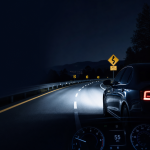
That is where smart safety features can add value. They may help with:
- Reaction time when a hazard appears suddenly
- Visibility when the road is dark, crowded, or poorly marked
- Fatigue management on long commutes or road trips
- Parking and maneuvering in tight spaces
- Confidence for new drivers, urban drivers, and families juggling busy schedules
A feature does not need to be flashy to be useful. Sometimes the best safety technology is the one that quietly reduces stress and gives you a second layer of awareness.
The most useful smart car safety features
Automatic emergency braking
Automatic emergency braking, often shortened to AEB, watches for a possible collision ahead and can apply the brakes if it believes the driver is not reacting fast enough.
This feature is most helpful in stop-and-go traffic, city driving, and situations where a vehicle ahead slows suddenly. It may also help if a pedestrian or cyclist enters the vehicle’s path, depending on the system design.
Important limitations:
- It is not a substitute for looking ahead
- It may not respond the same way in every weather condition
- Sensor visibility can be reduced by dirt, snow, glare, or heavy rain
- It may not detect every object or every angle of approach
AEB is one of the clearest examples of a feature that can support safety without requiring the driver to do anything differently in normal driving. You simply should not assume it will handle all emergencies.
Blind spot monitoring
Blind spot monitoring helps detect vehicles in adjacent lanes that are hard to see in mirrors alone. Most systems use a light in the mirror or pillar, sometimes paired with an audible alert if you signal while another vehicle is alongside you.
This is especially useful when:
- Changing lanes on multi-lane highways
- Merging in heavy traffic
- Driving in vehicles with larger blind zones
- Towing or carrying a load that changes rear visibility
But blind spot monitoring is not a reason to stop checking mirrors and turning your head. A quick shoulder check still matters because no electronic system sees every possible hazard, especially motorcycles or fast-approaching vehicles in certain situations.
Lane departure warning and lane keeping assist
Lane departure warning tells you when the car begins to drift out of its lane without a signal. Lane keeping assist may add gentle steering input to encourage the vehicle back into position.
These systems can be especially useful when:
- A driver is tired on a long trip
- The road is monotonous and attention starts to fade
- Snow or rain makes lane position harder to judge
- A momentary distraction causes a drift
Still, they are not autopilot. They can struggle when lane markings are faded, covered, or inconsistent. They may also be less effective in construction zones or on roads with unusual geometry.
A smart approach is to think of lane assistance as a warning-and-correction layer, not a reason to relax your attention.
Adaptive cruise control
Adaptive cruise control is a more advanced version of traditional cruise control. Instead of holding only a set speed, it also adjusts following distance by slowing down or speeding up with traffic.
It is especially helpful on:
- Long highway drives
- Repeated stop-and-go freeway traffic
- Commutes where congestion changes frequently
- Trips where driver fatigue is a concern
The main benefit is convenience with a safety angle: fewer speed adjustments and a more consistent following gap. The limitation is that the system’s behavior may feel abrupt, overly conservative, or inconsistent in certain traffic patterns. Drivers still need to remain ready to brake if the system cannot respond the way a human would expect.
Forward collision warning
Forward collision warning alerts you if the vehicle senses a possible front-end collision. In some cars, the warning comes before automatic braking; in others, it works alongside it.
This can be valuable because it gives the driver one more chance to react before impact. It is especially useful when traffic slows unexpectedly or when attention briefly drops in dense urban driving.
As with any alert-based system, the value depends on the driver responding appropriately. If a warning becomes background noise, the feature loses much of its benefit.
Rear cross-traffic alert
Rear cross-traffic alert helps when backing out of parking spaces or driveways by warning about vehicles approaching from either side.
It is particularly useful in:
- Busy supermarket parking lots
- Street parking with limited rearward visibility
- Garages with narrow exits
- Situations where parked cars block side views
This feature does not replace backing up slowly and looking carefully. It is best treated as a second set of eyes for those moments when mirrors and backup cameras still leave blind spots.
360-degree camera systems
A surround-view or 360-degree camera system stitches together images from multiple cameras to create a top-down visual of the car’s surroundings. That makes parking, tight maneuvering, and low-speed visibility much easier.
Drivers often appreciate this system in:
- Urban garages
- Narrow driveways
- Crowded curbside parking
- Situations where the front corners of the vehicle are hard to judge
The main limitation is that camera views can be affected by dirt, fog, rain, or glare. The system also helps most at low speeds. It should not be mistaken for a substitute for checking actual surroundings in motion.
Traffic sign recognition
Traffic sign recognition reads speed limit signs and other road signs, then displays them on the dashboard or head-up display.
This feature can help drivers stay aware of changing limits, especially on unfamiliar roads or routes with frequent speed shifts. It can be useful in school zones, work zones, or sections where sign placement makes it easy to miss a change.
The downside is that sign recognition can be imperfect if signs are blocked, faded, temporary, or positioned in an unusual way. Drivers should use the displayed information as a reminder, not as the only source of truth.
Driver attention monitoring
Driver attention monitoring looks for signs that the driver may be tired, distracted, or inconsistent in steering behavior. Depending on the vehicle, it may suggest a break or issue an alert.
This feature matters because fatigue is easy to underestimate. Long drives, night driving, and repetitive highway miles can slowly reduce alertness even when the driver feels “fine.”
It works best as an early warning, not a diagnosis. If a system suggests rest, that message should be taken seriously.
Safety features that matter most in poor visibility
Bad weather, glare, darkness, fog, and heavy traffic all change how safety systems perform. Some features are designed specifically to help in these conditions, while others become more useful because the driver’s own visibility is reduced.
Night driving and low-light awareness
Headlights and high beams remain the primary tools for nighttime visibility, but modern cars increasingly use additional sensor-based features to fill gaps. Cameras and radar can help spot vehicles or lane boundaries that the eye may miss sooner in the dark.
That said, low-light conditions remain a challenge for many driver-assistance systems. Dirty lenses, rain, oncoming glare, and uneven road lighting can all limit performance.
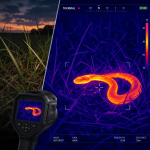
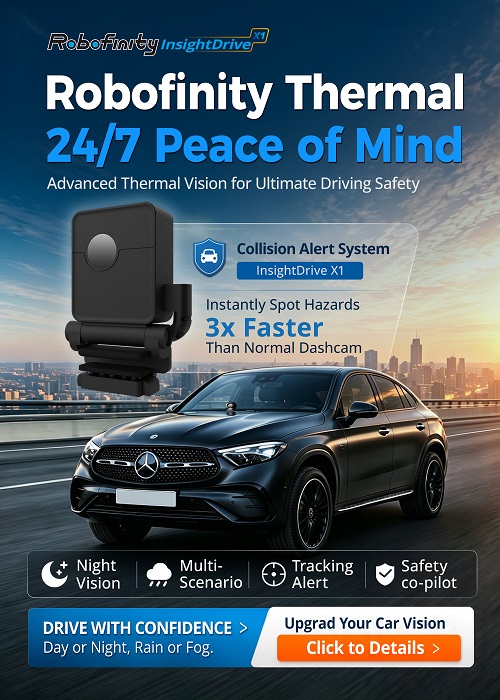
Advanced safety is not limited to factory-installed features. Drivers who often travel at night, on rural roads, or in poor-visibility conditions may also consider aftermarket driver-assistance upgrades such as Robofinity InsightDrive, a vehicle thermal imaging night vision system designed to support awareness of pedestrians, animals, vehicles, and obstacles ahead.
Rain, fog, and snow
Poor weather can affect sensors, cameras, and human judgment at the same time. That is why safety technology should be viewed as a supplement, not a shield.
In wet or snowy conditions:
- Lane markings may disappear
- Brake distances increase
- Cameras may lose clarity
- Radar may behave differently depending on buildup or obstruction
The practical takeaway is simple: slow down, leave more space, and do not expect every driver-assistance feature to perform as well as it does on a clear day.
How to evaluate a smart safety feature before you rely on it
Not every system is equally useful for every driver. A good feature is not just the one with the longest equipment list. It is the one that fits your driving routine.
Ask these questions
- Does this feature help with the kind of roads I use most?
- Will it matter more in the city, on highways, or on rural routes?
- Is it designed to warn me, assist me, or actually intervene?
- What are its known limitations in bad weather or darkness?
- Will I still need to use normal driving habits every time?
This kind of thinking keeps you from overvaluing marketing terms. A feature should solve a real problem you actually have, not just sound advanced on a brochure.
Consider your driving pattern
Different drivers benefit from different systems:
- City commuters may value blind spot monitoring, rear cross-traffic alert, and automatic emergency braking
- Highway drivers may benefit most from adaptive cruise control and lane departure support
- Families often appreciate backup cameras, seatbelt reminders, and occupancy alerts
- Rural drivers may care more about night visibility, animal detection, and glare reduction
- New drivers often gain confidence from a full set of warning systems and easy-to-understand camera views
The best safety package is the one that aligns with daily life rather than an abstract wish list.
Limits, trade-offs, and common misunderstandings
Smart safety systems are useful, but they can create false confidence if the driver assumes too much.
A few common misunderstandings to avoid:
-
“If the car has a camera, I do not need to look.”
Cameras help, but they can miss low objects, unusual angles, or dirty conditions. -
“If there is automatic braking, I can follow closer.”
No. Safe following distance still matters because braking systems have limits. -
“If lane keeping is active, I can stop paying attention.”
Also no. Lane support is not full control, and road conditions can confuse it. -
“If a sensor exists, it must be perfect.”
Sensors can be blocked, misread, or delayed.
The safest way to think about these systems is as a backup layer. They are there to reduce risk and improve awareness, not eliminate the need for good driving habits.
Smart features worth having if safety is your priority
If you are shopping for a car and safety is a major concern, a useful way to prioritize features is by everyday value:
- Automatic emergency braking
- Blind spot monitoring
- Rear cross-traffic alert
- Backup camera or 360-degree camera
- Lane departure warning / lane keeping assist
- Adaptive cruise control
- Driver attention monitoring
This is not a universal ranking, but it is a practical starting point. In many real-world situations, the features that reduce surprise and improve visibility are the ones drivers appreciate most.
FAQ
What is the most important smart car safety feature?
Automatic emergency braking is often considered one of the most valuable because it can help in sudden stop or collision-risk situations. That said, the best feature depends on where and how you drive.
Are smart safety features worth it for city driving?
Yes, especially blind spot monitoring, rear cross-traffic alert, parking cameras, and automatic braking. City traffic creates many short-notice situations where visibility and reaction time matter.
Do these features work in rain or snow?
Sometimes, but not always at full effectiveness. Heavy rain, snow, fog, dirt, and glare can affect cameras and sensors, so drivers should not rely on them as a complete solution in poor weather.
Can driver-assistance features prevent accidents?
They can help reduce risk and may assist in avoiding certain hazards, but they do not prevent all accidents. Safe speed, attention, following distance, and legal driving habits still matter most.
Are newer cars always safer because they have more technology?
Not automatically. More technology can help, but only if it is well designed and useful for your driving environment. A well-equipped vehicle still depends on the driver using the features correctly.
What should I look for if I drive mostly at night?
Look for strong headlights, good camera visibility, blind spot monitoring, and systems that improve road awareness in low-light conditions. Drivers who often travel on unlit roads may also want to think beyond factory equipment and evaluate supplemental visibility tools carefully.
Conclusion
Smart Car Safety Features are most useful when they solve real driving problems: spotting hazards sooner, reducing blind spots, easing fatigue, and adding confidence in traffic, parking lots, or low-visibility conditions. The best systems do not replace a careful driver; they support one.
If you are comparing vehicles or trying to understand which features matter most, focus on the conditions you drive in every day. City traffic, highway commutes, night driving, and poor weather each place different demands on the car and the driver. A thoughtful safety package should fit your routine, not just your checklist.