

Driving on highways at night can feel simple at first and still become risky very quickly. Traffic patterns change, visibility drops, fatigue builds, and small mistakes are harder to correct at higher speeds. If you want better night highway safety, the best approach is not a single trick but a set of habits that reduce risk before you leave, while you are on the road, and when conditions change unexpectedly.
- Why Night Highway Driving Is Different
- Prepare Before You Get on the Highway
- Drive in a Way That Leaves More Margin
- Slow down enough to see and react
- Increase following distance
- Use high beams correctly
- Scan farther ahead than your headlights
- Pay Attention to the Hazards That Show Up Most Often
- Glare from headlights and reflective surfaces
- Fatigue and micro-distractions
- Wildlife and road-edge movement
- Disabled vehicles and debris
- Keep Your Vehicle Ready for Night and Bad Weather
- Tires and brakes matter more than drivers expect
- Windshield, wipers, and washer fluid
- Mirrors and blind spot checks
- When Extra Driver-Attention Technology Helps
- Handling Special Situations on Night Highways
- A Practical Night-Driving Routine
- FAQ
- What is the most important safety tip for driving on highways at night?
- Should I use high beams on highways at night?
- Why does night driving feel more tiring than daytime driving?
- How can I reduce glare from other headlights?
- Are driver-assistance systems enough to make night highway driving safe?
- What should I do if I feel too tired to continue?
- Conclusion
Table of Contents
- Why Night Highway Driving Is Different
- Prepare Before You Get on the Highway
- Drive in a Way That Leaves More Margin
- Pay Attention to the Hazards That Show Up Most Often
- Keep Your Vehicle Ready for Night and Bad Weather
- When Extra Driver-Attention Technology Helps
- Handling Special Situations on Night Highways
- A Practical Night-Driving Routine
- FAQ
- Conclusion
Why Night Highway Driving Is Different
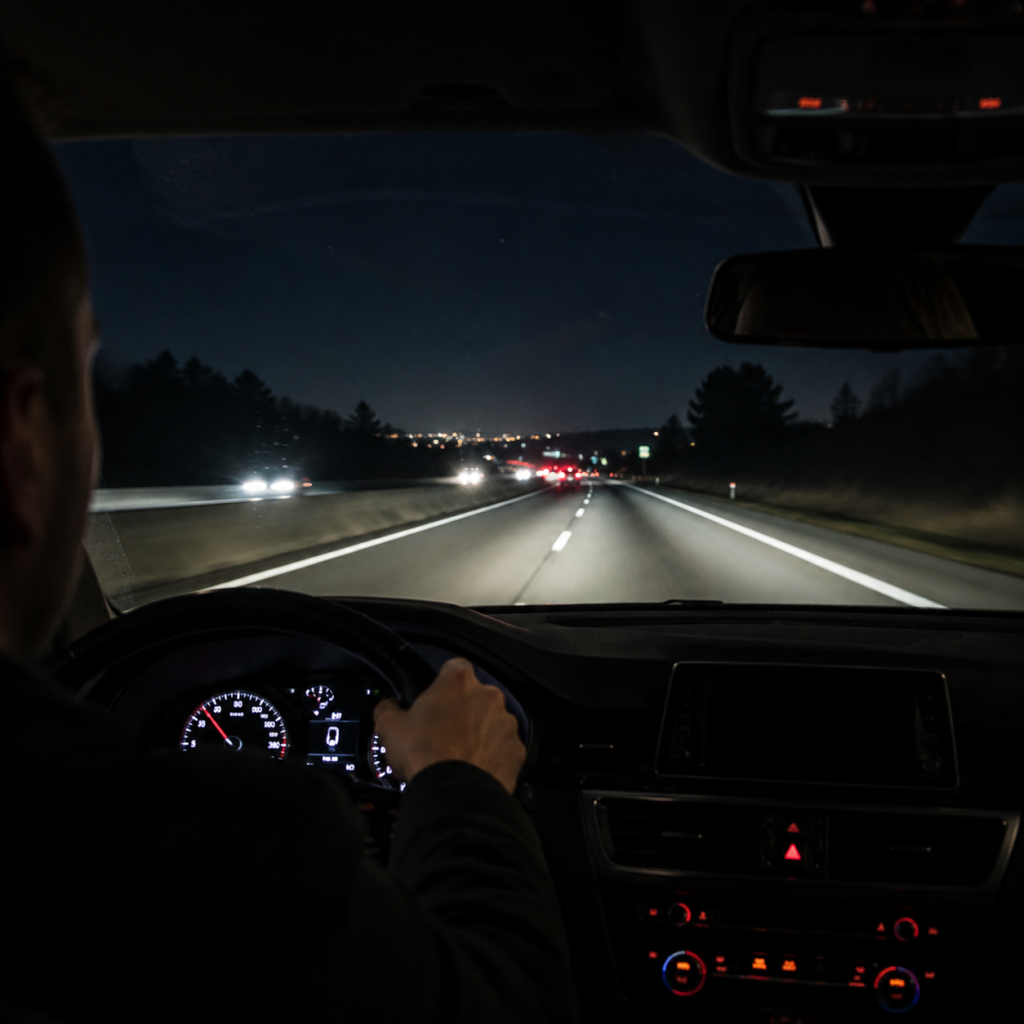
Highways are built for speed and efficiency, but that also means mistakes happen faster. At night, your eyes have less visual information to work with, so hazards may appear later than they do during the day. A disabled vehicle on the shoulder, an animal crossing, debris in a lane, or a driver drifting between lanes can all become harder to spot in time.
The challenge is not only darkness. Headlight glare, wet pavement reflections, fog, tiredness, and reduced depth perception all affect how well you judge distance and speed. That is why night highway safety depends on more than simply turning on the headlights. It depends on keeping your vehicle ready, your attention disciplined, and your driving style conservative enough to leave room for error.
For a deeper look at how darkness changes what drivers can see, read Night Driving Visibility: Why Night Driving Is More Dangerous and How Drivers Can Improve Visibility.
Prepare Before You Get on the Highway
A safer night drive begins before the engine starts. A few minutes of preparation can prevent problems that are much harder to manage at 70 mph in the dark. Good night highway safety starts with simple checks that make your vehicle easier to see and easier to control.
Check your lighting
Make sure all exterior lights work properly: low beams, high beams, tail lights, brake lights, turn signals, and hazard lights. A burned-out bulb is more than a maintenance issue at night; it reduces how well other drivers see you and can make your own lane changes less predictable.
More EV News

Also clean the lenses. Headlight covers collect grime, salt, and road film quickly, and even a thin layer can reduce useful light output. If your headlights are cloudy or yellowed, restoring them may improve visibility more than simply using brighter bulbs. For drivers looking at practical upgrade options, Car Thermal Imaging Camera: Must-Have Affordable Night Driving Safety explains how added visibility tools can support safer travel.
Set the cabin up to reduce glare
Night driving is easier when the interior is not competing with the road. Dim the dashboard to a comfortable level. Reduce screen brightness on the infotainment system and phone. Keep reflective objects off the dashboard, since they can bounce light into the windshield.
If your rearview mirror has a night setting, use it. That small change can reduce the strain caused by following traffic with bright headlights.
Give yourself enough rest
Fatigue is one of the most overlooked dangers on nighttime highways. If you feel heavy-eyed, unfocused, or slow to react, do not treat it as something to push through. Night driving is not the time to test endurance. It is better to rest, switch drivers, or delay the trip than to keep going while attention is slipping.
A useful rule is to plan the drive so you are not fighting your body clock for long stretches. Late-night highway trips are much harder after a full workday, a long meal, or several hours of concentration. Strong night highway safety habits begin with honesty about fatigue before you ever merge into traffic.
Drive in a Way That Leaves More Margin
Once you are on the highway, the goal is to build space around the vehicle so you have time to respond. At night, that space becomes even more important. Defensive habits are the backbone of night highway safety because they give you extra time to notice what others miss.
Slow down enough to see and react
Many drivers keep the same speed they would use in daylight and assume the headlights will do the rest. That is not always realistic. Your headlights only illuminate a limited area ahead, and on dark rural highways, the scene outside that beam can change suddenly.
You do not have to drive far below the limit to be safer, but you should be honest about what you can actually see. If visibility is reduced by rain, fog, glare, or darkness alone, reduce speed enough to keep your stopping distance within the range of your vision. That is one of the simplest ways to support night highway safety without creating unnecessary risk for traffic behind you.
Increase following distance
A larger following gap is one of the most effective safety habits at night. It gives you more time if the car ahead brakes suddenly, swerves around debris, or reveals an obstacle you could not see earlier. Tailgating is especially risky after dark because you lose the extra time needed to read the road ahead.
A simple approach is to leave at least a few seconds of space under normal conditions and more in poor visibility. If traffic forces you closer than you want, do not solve the problem by speeding up and braking repeatedly. Hold a steady pace and wait for a safer opening. This is a core part of night highway safety because space is time when visibility is limited.
Use high beams correctly
High beams can be useful on empty, dark highways because they extend your forward visibility. Use them when there is no oncoming traffic and no vehicle directly ahead that you could blind with extra light.
Switch back to low beams promptly when another vehicle approaches or when you begin to follow traffic. The point is not to maximize brightness at all times; it is to maintain visibility without creating glare for others. Proper beam use is a basic night highway safety habit that protects both you and the drivers around you.
Scan farther ahead than your headlights
Good night drivers do not stare only at the illuminated patch directly in front of the car. They scan for taillights, reflective signs, lane markings, movement near the shoulder, and changes in the road surface. This wider scan helps you catch hazards earlier and prevents tunnel vision.
It also helps to look where you want the car to go. If a tire tread, tire retread, or another object appears in your lane, a quick but calm correction is easier when your eyes are already reading the whole scene. That wider awareness is part of consistent night highway safety.
Pay Attention to the Hazards That Show Up Most Often
Nighttime highway problems tend to repeat themselves. Knowing the common ones helps you spot them earlier and make better decisions. The most reliable night highway safety strategy is often simply knowing what to expect.
Glare from headlights and reflective surfaces
Bright headlights from oncoming traffic or larger vehicles can temporarily reduce your ability to see lane edges and roadside details. Wet pavement, road signs, and reflective barriers can intensify the effect.
When glare hits, avoid staring into the light source. Keep your focus on the right side of your lane, where lane markings or road edge cues can help you stay oriented. If your windshield is dirty inside or out, glare gets worse, so keeping glass clean matters more than many drivers realize. Clear glass is a simple but important support for night highway safety.
Fatigue and micro-distractions
Night driving exposes even brief lapses in attention. A glance at the navigation display, a loose object on the seat, or a quick conversation can be enough to miss a developing hazard.
If your eyes feel tired, blink more intentionally, check your posture, and pull over if needed. Coffee is not a substitute for alertness. It may mask fatigue for a short time, but it does not restore judgment or reaction time. When attention starts to drift, night highway safety depends on stopping before the problem gets worse.
Wildlife and road-edge movement
On dark highways near open fields, wooded areas, or rural exits, animals can appear suddenly and enter the road with little warning. They may not always be visible in the center of the lane first; often the clue is movement at the edge of the beam or a reflection in the distance.
When driving in these areas, reduce speed enough to make a sudden stop more manageable. Be especially careful near curves, overpasses, and stretches with limited shoulder visibility. Drivers who travel these routes often should treat wildlife as a routine part of night highway safety, not a rare event.
Disabled vehicles and debris
A stalled car, lost cargo, or road debris can be hard to notice until the last moment at night. Watch for unusual light patterns, stopped vehicles on the shoulder, hazard flashers, or a line of traffic reacting to something ahead.
If you spot debris early, do not make a sharp, late swerve. Check mirrors, signal if needed, and make smooth lane changes. Sudden maneuvers are often more dangerous than the object itself, especially when night highway safety already depends on limited visibility and fast decisions.
Keep Your Vehicle Ready for Night and Bad Weather
Highway safety at night is easier when the vehicle itself is performing properly. Preventive care supports night highway safety by making your car easier to control, easier to see, and less likely to surprise you in poor conditions.
Tires and brakes matter more than drivers expect
Good tires help with predictable steering and braking, especially when the pavement is wet or cool. Check tread depth, tire pressure, and visible wear. Uneven wear can affect handling and braking response.
Brakes should feel consistent, not soft, noisy, or delayed. If stopping distance feels longer than it should, that is a maintenance issue, not something to adapt around indefinitely. Night conditions can hide problems longer, which is why maintenance matters so much for night highway safety.
Windshield, wipers, and washer fluid
A clean windshield reduces glare and makes lane markings easier to see. Replace wiper blades that streak, chatter, or leave misses in the swept area. Keep washer fluid topped up because bugs, road spray, and winter grime often show up at the worst times on long night drives.
For broader vehicle-based visibility strategies, the article on Car Thermal Night Vision System: Is It Really Useful? (2026 Guide) explains how thermal sensing can complement standard lighting in low-visibility situations.
Mirrors and blind spot checks
Mirrors are still essential at night, but they work best when adjusted correctly. Set them so they cover more road and less of your own vehicle. Continue checking mirrors before lane changes, because rear lighting alone does not tell the full story.
Regular mirror checks support night highway safety by making it easier to judge faster traffic, merging vehicles, and approaching headlights before you move.
When Extra Driver-Attention Technology Helps
Factory safety systems and aftermarket upgrades can add a useful layer of awareness, especially on long or poorly lit highway routes. The key is to treat them as support, not as a replacement for judgment. Good technology can strengthen night highway safety, but only when it is paired with disciplined driving habits.
Advanced safety is not limited to built-in features. Drivers who often travel at night, on rural roads, or in poor-visibility conditions may also consider aftermarket driver-assistance upgrades designed to support awareness of pedestrians, animals, vehicles, and obstacles ahead.
That kind of technology can be helpful because it is aimed at the limits of human vision in darkness and poor visibility. Even so, it should be viewed as an awareness aid. It does not replace headlights, lane discipline, braking distance, traffic laws, or the need to stay attentive. The best results come when technology reinforces night highway safety rather than replacing it.
Handling Special Situations on Night Highways
Some situations deserve a more specific response because they create risk faster than normal traffic flow. Knowing how to respond is an important part of practical night highway safety.
Heavy rain at night
Rain reduces contrast, creates reflections, and can make lane markings harder to read. If spray from other vehicles is limiting your visibility, slow down and increase following distance. Keep your windshield clear and avoid sudden lane changes unless they are clearly necessary.
Fog or mist
Fog is especially difficult because it reflects light back toward the driver. High beams can make the problem worse in fog, so use low beams and reduce speed. If visibility becomes too limited to drive comfortably, find a safe place to exit and wait. For more focused advice, see Night Driving Safety in Fog: Key Tips.
Construction zones
Night construction can be confusing because lanes may shift, signs may be temporary, and cones can be harder to see. Follow posted guidance carefully and avoid changing lanes late. Do not assume the same lane layout continues for long stretches. In these areas, night highway safety depends on patience and early lane planning.
Multi-lane traffic with mixed speeds
At night, speed differences between vehicles can be deceptive. Some cars appear farther away than they are, and others close the gap quickly. Use mirrors early, signal clearly, and make lane changes only when you can complete them smoothly.
A Practical Night-Driving Routine
It helps to use the same routine every time you drive at night on the highway. Consistency reduces mistakes and turns night highway safety into a habit rather than a guess.
Before departure:
- Confirm headlights, brake lights, and turn signals work
- Clean glass and mirrors
- Reduce dashboard and screen brightness
- Check tire condition and fluid levels
- Make sure you are rested enough to drive
On the road:
- Keep a larger following distance
- Scan beyond the immediate beam of the headlights
- Use high beams only when appropriate
- Reduce speed when visibility drops
- Watch for glare, fatigue, and lane drift
If conditions worsen:
- Slow down early, not late
- Look for exits, rest areas, or safe pull-offs
- Avoid forcing a long stretch through fatigue or weather
- Treat comfort and control as part of safety, not as extras
FAQ
What is the most important safety tip for driving on highways at night?
The most important habit is to leave more time and space than you would in daylight. That means a larger following distance, moderated speed, and active scanning for hazards that are harder to see in the dark. Those steps are the foundation of night highway safety.
Should I use high beams on highways at night?
Yes, when traffic conditions allow it. High beams can improve visibility on empty, dark roads, but they should be switched off when oncoming vehicles or cars ahead could be affected by the glare.
Why does night driving feel more tiring than daytime driving?
Your eyes have less visual information, and your brain has to work harder to interpret the road. Long periods of steady attention also make fatigue more noticeable, especially after a full day of activity.
How can I reduce glare from other headlights?
Keep your windshield clean, dim interior lighting, and avoid staring directly at the light source. If your mirrors have night settings, use them. Dirty glass and bright dashboards make glare worse.
Are driver-assistance systems enough to make night highway driving safe?
No. They can help with awareness, but they do not replace safe driving habits, proper lighting, road scanning, or attention. The best results come from combining technology with disciplined driving.
What should I do if I feel too tired to continue?
Pull over at a safe location and rest, switch drivers if possible, or stop for the night. Fatigue is not something to manage by trying harder; it is a warning sign that your attention is no longer reliable.
Conclusion
Safer night highway driving comes down to one idea: give yourself more margin. More visibility, more following distance, more rest, and more attention to how conditions are changing around you. If you maintain your vehicle, keep glare under control, drive a little more conservatively, and respond early to fatigue or poor weather, you reduce the chance that a small hazard becomes a serious one.
For drivers who regularly cover dark rural or highway miles, it is worth thinking beyond routine maintenance and basic lighting. Learning about vehicle safety upgrades can help you decide whether an awareness tool fits your needs and your driving conditions. For official guidance on nighttime road safety, the National Highway Traffic Safety Administration road safety resources are a useful reference.
In practice, night highway safety is not about driving tense or overly cautious. It is about staying aware, keeping your vehicle ready, and making decisions early enough that you never have to rely on luck.