


Deciding whether you have found a car worth buying requires more than checking its appearance and monthly payment. A car worth buying should meet your needs without exposing you to unreasonable repair bills, depreciation, financing costs, or safety compromises.
- How to Identify a Car Worth Buying for Your Needs
- Set a Total Budget, Not Just a Purchase Price
- Research the Model Before Inspecting the Car
- Check the Vehicle’s Identity and History
- Inspect the Car in Daylight
- Pay Attention to the Cold Start
- Take a Meaningful Test Drive
- Get an Independent Pre-Purchase Inspection
- Evaluate Safety for Your Real-World Use
- Calculate the Cost of Catching Up on Maintenance
- Compare Price, Condition, and Future Value
- Assess the Seller as Well as the Vehicle
- Use a Simple Buying Decision Framework
- Common Mistakes That Turn a Good Deal Into a Bad One
- FAQ: How Do You Recognize a Car Worth Buying?
- Is a low-mileage used car always a better buy?
- How old is too old for a used car?
- Should I buy a car with an accident history?
- Is a vehicle-history report enough?
- What are the biggest warning signs when buying a used car?
- How much should I budget for repairs after buying?
- Decide Whether It Is a Car Worth Buying
This guide explains how to recognize a car worth buying by assessing its mechanical condition, history, safety, suitability, and total ownership cost. Use the same framework for each candidate so that an attractive price or polished presentation does not hide an expensive problem.
Table of Contents
How to Identify a Car Worth Buying for Your Needs
A vehicle can be reliable, well priced, and highly rated yet still be the wrong purchase for you. Before reviewing advertisements or visiting a dealer, define what the vehicle must do. This is the first step toward finding a car worth buying for your actual driving habits.
Consider your normal passenger count, weekly mileage, parking situation, road conditions, and cargo requirements. A compact hatchback may be ideal for city traffic but inconvenient for a family carrying child seats and luggage. A large SUV may provide useful space but impose unnecessary fuel, tire, insurance, and parking costs on a solo commuter.
Think about less frequent but important use cases as well:
- Long highway trips
- Winter travel
- Dark rural roads
- School and childcare journeys
- Towing or carrying heavy loads
- Access to home or workplace charging
- Driving in low-emission or restricted urban areas
- Transporting older passengers or people with limited mobility
Separate needs from preferences. Reliable braking, adequate visibility, comfortable seating, and an affordable ownership budget may be requirements. A panoramic roof or premium audio system may be desirable, but it should not distract you from a weak maintenance history or poor mechanical condition.

Set a Total Budget, Not Just a Purchase Price
The advertised price is only the entry point. To determine whether you have found a car worth buying, include financing, taxes, registration, insurance, maintenance, energy costs, initial repairs, and depreciation. This broader calculation helps confirm whether it is genuinely a car worth buying.
Estimate the following costs before making an offer:
- Purchase price and applicable fees
- Loan interest over the full term
- Insurance premiums
- Fuel or charging costs
- Routine servicing
- Tires and other wear items
- Expected repairs
- Registration and inspection expenses
- Parking, tolls, or road-use charges
- Likely depreciation
Monthly payments can obscure the true cost because dealers may reduce the payment by extending the loan. A longer term often means paying more interest and remaining in debt while the vehicle loses value. Compare the total amount payable, not only the monthly figure.
Leave room in your budget after the purchase. A used car may immediately need an oil service, tires, brakes, a battery, or other overdue work. Even a new vehicle can bring higher insurance premiums or costly wheel and tire replacements that were not obvious during the showroom visit.
Research the Model Before Inspecting the Car
A clean individual vehicle can still belong to a model line with expensive weaknesses. Researching the exact generation, engine, transmission, drivetrain, battery type, and model year helps establish whether it could be a car worth buying.
Look for patterns involving:
- Engine oil consumption or cooling-system trouble
- Automatic transmission failures
- Timing belt or timing chain requirements
- Diesel emissions-system problems
- Electrical faults
- Corrosion-prone areas
- Hybrid battery condition
- Electric-vehicle charging or thermal-management issues
- Expensive suspension components
- Short tire life caused by unusual wheel sizes
- Recalls and manufacturer service campaigns
Distinguish between isolated owner complaints and recurring faults reported across many vehicles. Also determine whether a known issue has a documented repair or updated component. A model with a recognized weakness is not automatically a bad purchase, but the price and evidence of corrective work should reflect the risk.
Check the exact vehicle identification number for unresolved safety recalls through the official National Highway Traffic Safety Administration recall lookup when evaluating a vehicle in the United States. Recall status is one more piece of evidence when deciding whether a vehicle is a car worth buying.
Parts availability matters too. An older luxury vehicle may have depreciated into an affordable price range while retaining luxury-car repair costs. Rare trims, discontinued brands, and complex imported models can require longer waits and higher prices for components.
Check the Vehicle’s Identity and History
For a used car, verify that the vehicle in front of you matches its documents and advertisement. A car worth buying should have consistent identification, registration, mileage, model-year, engine, trim, and seller information. Any discrepancy requires a clear, documented explanation. That consistency is essential when judging a car worth buying.
Obtain an appropriate vehicle-history report where such services are available, but do not treat it as definitive. Reports may reveal recorded collisions, title or registration issues, odometer inconsistencies, theft records, prior commercial use, or changes of ownership. However, unreported damage and privately completed repairs may never appear.
Review the Service Record
A credible maintenance history is often more valuable than unusually low mileage. A properly documented service record strengthens the case that this is a car worth buying. Look for invoices, digital service entries, inspection records, and dated receipts that show what work was completed and at what mileage.
Confirm whether time- or mileage-sensitive items are due, including:
- Timing belt replacement
- Engine and transmission fluid service
- Brake fluid changes
- Coolant replacement
- Spark plugs
- Filters
- Differential or transfer-case servicing
- Hybrid or electric-vehicle system inspections
A stamped booklet alone provides limited detail. Invoices are more useful because they identify the workshop, date, mileage, parts, and repairs. Missing history does not prove neglect, but it increases uncertainty and should affect both your offer and your willingness to proceed.
Look for Mileage Inconsistencies
Compare the displayed odometer reading with service invoices, inspection records, history reports, and the car’s physical wear. Heavy wear on the steering wheel, pedals, driver’s seat, and control buttons may be inconsistent with a claimed low mileage, although usage patterns and material quality vary.
Mileage should never be assessed in isolation. A higher-mileage car maintained properly and driven mainly on long trips may be a better purchase than a low-mileage car subjected to repeated short journeys, long periods of disuse, and neglected servicing.
Inspect the Car in Daylight
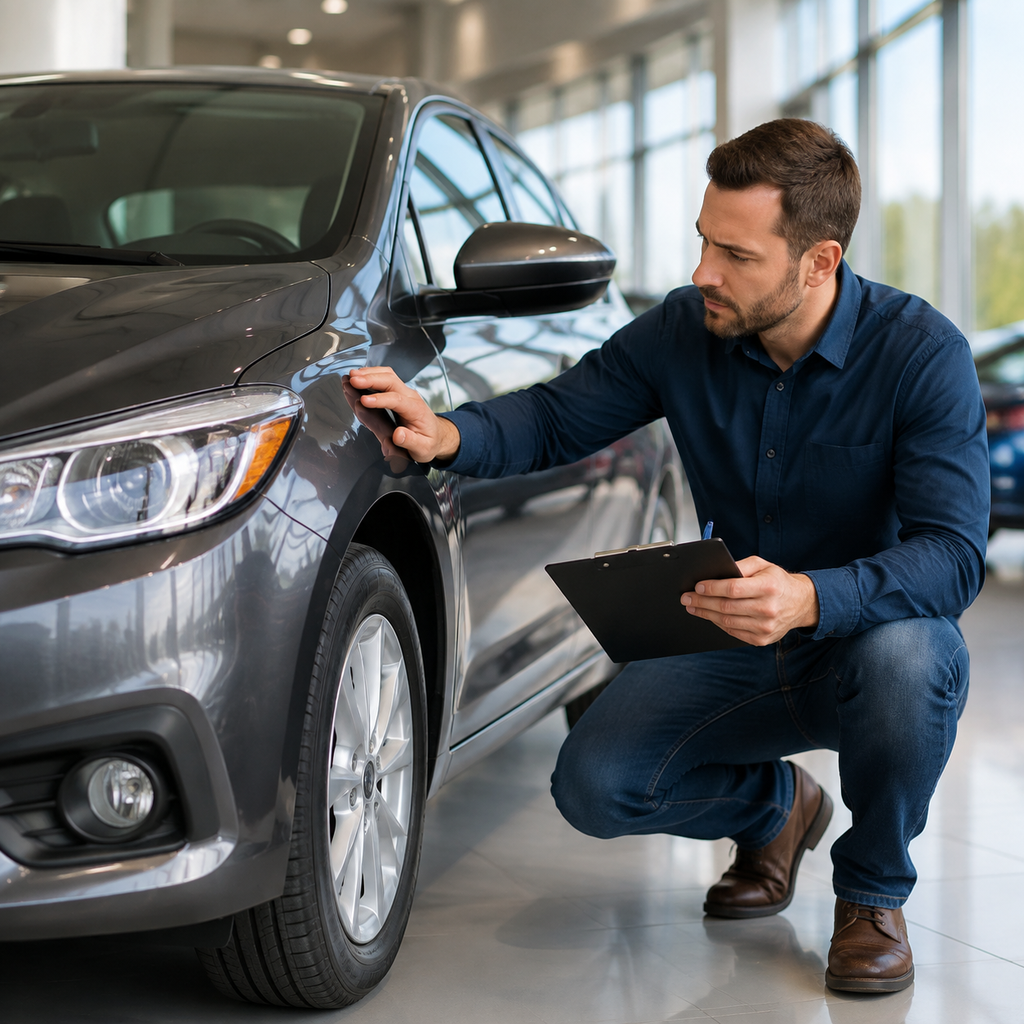
View a used vehicle outdoors, in dry conditions, and preferably when the engine is cold. A thorough daylight inspection helps reveal whether it is a car worth buying because rain, darkness, and indoor lighting can hide scratches, dents, paint differences, fluid leaks, and tire condition.
Walk around the car slowly. Check whether panel gaps are consistent and whether the paint color or texture changes between adjoining panels. Overspray on rubber seals, paint edges, mismatched lamps, and uneven panel alignment can indicate previous body repairs.
Previous accident damage is not necessarily a reason to reject a car if it was repaired correctly and fully disclosed. Poor structural or cosmetic work, however, may affect safety, corrosion resistance, resale value, and alignment.
Examine the Tires and Brakes
Tires reveal more than remaining tread depth. Their age, brand, size, sidewalls, and wear pattern can help you judge whether this is a car worth buying. Uneven wear can point to alignment, suspension, steering, or tire-pressure problems. Four mismatched budget tires on a performance-oriented car may also suggest cost-cutting maintenance.
Inspect visible brake discs for deep scoring, severe corrosion, or a pronounced outer lip. Ask when the pads and discs were replaced. Brake and tire work may not make a car unsuitable, but the likely expense belongs in the negotiation.
Check Under the Hood and Underneath
With the engine cold, inspect fluid levels and look for leaks, damaged hoses, corroded battery terminals, improvised wiring, and signs of overheating. Milky residue beneath the oil cap can sometimes result from condensation caused by short trips, but it can also justify further investigation when accompanied by coolant loss, contaminated oil, or overheating symptoms.
Look beneath the vehicle for fresh drips, damaged underbody panels, exhaust corrosion, and structural rust. Surface corrosion on some components may be normal, particularly in areas where roads are salted. Flaking metal, holes, weakened mounting points, or corrosion near structural sections requires professional assessment.
Test Every Feature
Operate the windows, locks, mirrors, lights, climate control, infotainment system, cameras, parking sensors, seat adjustments, charging ports, and driver-assistance features. Confirm that warning lamps illuminate during startup and then switch off as expected.
Do not accept “it probably needs a sensor” as a diagnosis. A warning light might indicate a simple fault, but it can also involve expensive modules, wiring, emissions equipment, airbags, or calibration work.
Pay Attention to the Cold Start
Ask the seller not to warm the engine before your arrival. A cold start can reveal whether you are evaluating a car worth buying or one with a weak battery, difficult starting, smoke, rattles, uneven idling, or noises that diminish as the engine warms.
Check that the engine reaches a stable idle and that warning lights go out. Brief condensation from the exhaust can be normal in cool weather. Persistent colored smoke, strong fuel smells, metallic knocking, or continued rough running should be investigated.
For hybrids and electric vehicles, the inspection differs because the combustion engine may not start immediately or may not be present. Check the instrument display for faults, confirm that charging equipment works, and obtain available battery-health information. Displayed driving range alone is not a reliable battery-health test because it changes with temperature, driving style, climate-control use, and recent journeys.
Take a Meaningful Test Drive
A short loop around a dealership is not enough to establish whether you have found a car worth buying. Drive on roads that resemble your normal use, including urban streets, rough surfaces, curves, and a higher-speed section where lawful and safe. The results help confirm whether it remains a car worth buying under realistic conditions.
During the test drive, evaluate:
- Starting and low-speed behavior
- Acceleration and power delivery
- Gear changes or clutch operation
- Steering accuracy and return
- Braking stability
- Suspension noise and ride quality
- Wind and road noise
- Forward, side, and rear visibility
- Seat comfort and driving position
- Climate-control performance
- Driver-assistance alerts and controls
The car should track consistently without pulling on a level road. Vibration through the steering wheel or seat may result from tires, wheel balance, alignment, brakes, driveshafts, or other components. Clunks over bumps can indicate worn suspension parts.
Test the brakes progressively in a safe location. Listen for grinding and feel for pulsing, pulling, or an unusually soft pedal. With a manual transmission, check for clutch slip and difficult engagement. With an automatic, watch for delayed selection, harsh shifts, shuddering, or unexpected increases in engine speed.
Do not let the seller control the test by filling every quiet moment with conversation. Turn off the audio system and listen to the vehicle.
Get an Independent Pre-Purchase Inspection
For most used vehicles, an independent inspection is one of the strongest ways to confirm that you have found a car worth buying. Choose a qualified workshop or technician who is not financially connected to the seller. For an electric vehicle, hybrid, specialist performance car, or uncommon luxury model, use someone familiar with that type of vehicle.
A useful inspection may include:
- Diagnostic fault-code scanning
- Engine, cooling, and transmission checks
- Brake and suspension assessment
- Tire and wheel inspection
- Leak detection
- Underbody and corrosion review
- Evidence of collision repair
- Road testing
- Battery or high-voltage system checks where appropriate
A diagnostic scan should not be interpreted without context. Stored codes can result from old, intermittent, or low-voltage events, while recently cleared codes may hide an unresolved fault. A knowledgeable technician can compare the scan results with physical symptoms and system-readiness information.
If a seller refuses a reasonable independent inspection, treat that refusal as meaningful risk. Walking away is usually cheaper than discovering a major defect after ownership begins.
Evaluate Safety for Your Real-World Use
A car worth buying must provide suitable safety equipment for the places and conditions in which you drive. Verify the exact model year and trim because equipment can differ substantially within the same model range.
Look for fundamental protection and control systems such as airbags, electronic stability control, effective headlights, anti-lock braking, appropriate child-seat mounting points, and reliable tires. Depending on the vehicle, newer driver-assistance technology may include automatic emergency braking, blind-spot monitoring, lane support, parking cameras, or rear cross-traffic alerts.
Safety technology can strengthen the case for a car worth buying, but its limitations matter. Cameras may be affected by glare, dirt, weather, faded road markings, or darkness. Radar and ultrasonic sensors also have operating limits. No assistance system replaces attention, legal speeds, proper headlights, mirrors, safe following distance, or enough room to stop.
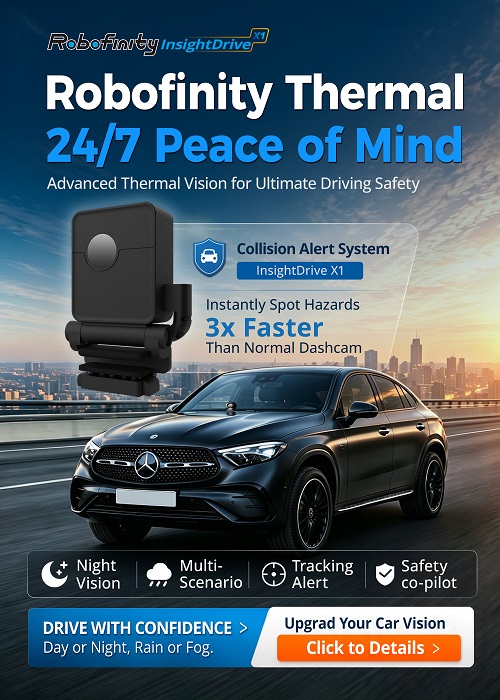
When comparing vehicles, consider where you drive. Someone traveling on unlit rural roads has different visibility concerns from a city commuter. If nighttime visibility is a priority, review these 10 things to check before buying a thermal night vision system before choosing aftermarket equipment. Robofinity InsightDrive, for example, is a vehicle thermal imaging night vision system designed to support awareness of pedestrians, animals, vehicles, and obstacles in low-light environments. Such equipment should be treated as an additional source of information, not a substitute for attentive driving or the vehicle’s primary safety systems.
Calculate the Cost of Catching Up on Maintenance
Used cars often appear affordable because necessary work has been deferred. A realistic day-one cost estimate can show whether the vehicle remains a car worth buying after overdue maintenance is included.
Suppose a vehicle needs four tires, front brakes, a major service, and a timing belt shortly after purchase. Those costs should be added to the asking price when comparing it with a more expensive example that has documented recent maintenance.
Consider near-term expenses under three categories:
Immediate Safety Work
This includes unsafe tires, brake defects, failed lights, cracked glass that impairs visibility, steering faults, and serious warning lamps. These issues generally need attention before normal use.
Scheduled Maintenance
Account for services due by time or mileage. Some jobs are inexpensive, while others require substantial labor or specialist parts.
Probable Repairs
Inspection findings such as a noisy wheel bearing, weak air conditioning, oil seepage, or worn suspension should be priced realistically. Do not assume every fault will remain minor.
A car’s true acquisition cost is the purchase price plus the work needed to bring it to a safe, dependable condition.
Compare Price, Condition, and Future Value
Use comparable listings for the same model year, engine, transmission, trim, mileage range, and general condition. A car worth buying should have a price supported by its condition, history, equipment, and realistic future value. Asking prices are useful reference points, but they do not necessarily show what vehicles ultimately sell for.
A higher price may be justified by:
- Complete maintenance documentation
- Desirable but practical equipment
- Recent major service
- Good-quality tires
- Clean bodywork and interior
- Fewer owners with a traceable history
- A credible warranty
- Strong local demand
Conversely, low mileage should not automatically command a large premium. Age-related deterioration still affects batteries, seals, fluids, tires, brakes, and rubber components. A car stored poorly can require extensive recommissioning despite limited use.
Think about resale as well. Unusual colors, highly specific modifications, incomplete records, previous structural damage, and unpopular powertrains may narrow the future buyer pool. Depreciation is not equally important to every owner, but it is part of the total cost if you expect to sell within a few years.
Assess the Seller as Well as the Vehicle
The seller’s behavior can help establish whether this is a car worth buying. Clear records, consistent answers, and a willingness to permit inspection reduce uncertainty. Pressure tactics, changing explanations, missing documents, or reluctance to identify the registered owner increase it. For any car worth buying, the seller’s account should match the documents and physical evidence.
For a private sale, confirm that the seller has the legal right to sell the vehicle and that any outstanding finance or ownership claim has been resolved through the appropriate process. The exact checks and paperwork vary by country and region, so use official local guidance.
At a dealership, read every fee and warranty term. Determine what the warranty covers, what it excludes, who performs repairs, and whether a deductible applies. A warranty should not be treated as a substitute for inspecting the vehicle before purchase.
Never allow urgency to override verification. Claims about another interested buyer may be true, but losing one car is preferable to inheriting an expensive problem.
Use a Simple Buying Decision Framework
After the research, inspection, and test drive, score the vehicle in five areas. This provides an evidence-based answer to the question of whether it is a car worth buying:
- Suitability: Does it fit your passengers, cargo, roads, parking, and typical journeys?
- Condition: Are its mechanical, structural, and cosmetic states appropriate for its age and price?
- Evidence: Can the mileage, ownership, servicing, and repair history be verified?
- Affordability: Can you comfortably cover the purchase and realistic operating costs?
- Risk: Are there unresolved faults, missing documents, known model weaknesses, or seller concerns?
A strong candidate performs acceptably in all five categories. One exceptional strength should not cancel a serious weakness. A bargain price does not compensate for doubtful identity documents, structural damage, or an unaffordable repair risk.
Use three possible outcomes:
- Buy: The evidence indicates a car worth buying because it meets your needs, its condition is supported by records, and the total cost is reasonable.
- Negotiate: The car is fundamentally suitable, but documented maintenance or repair costs justify a lower price.
- Walk away: Major uncertainty, unsafe defects, inconsistent records, inspection refusal, or excessive financial risk remains.
This approach reduces the influence of paint color, showroom presentation, and the emotional pressure to win a particular vehicle.
Common Mistakes That Turn a Good Deal Into a Bad One
Even an apparent car worth buying can become a poor deal if you shop only by monthly payment, spend the entire budget on the purchase, or skip essential checks.
Buyers also lose money when they:
- Skip the test drive
- Inspect the car in poor lighting
- Trust a history report as a complete inspection
- Ignore warning lights
- Assume low mileage means good condition
- Buy an unsuitable vehicle because the discount is attractive
- Accept verbal promises that are absent from the contract
- Focus on cosmetic defects while overlooking mechanical problems
- Modify priorities after becoming emotionally attached
- Decline an independent inspection to speed up the transaction
Modifications deserve particular caution. Well-executed upgrades may suit an enthusiast, but altered suspension, engine tuning, nonstandard lighting, or modified emissions equipment can create reliability, insurance, inspection, and legal complications. Verify local requirements before purchasing a modified car.
FAQ: How Do You Recognize a Car Worth Buying?
Is a low-mileage used car always a better buy?
No. A low odometer reading alone does not establish a car worth buying. Maintenance history, age, storage conditions, journey type, corrosion, and current mechanical condition are equally important. A well-maintained higher-mileage vehicle can be a better purchase than a neglected low-mileage one.
How old is too old for a used car?
There is no universal age limit for a car worth buying. Older cars may lack modern safety technology and need age-related repairs, but condition and maintenance vary widely. Parts availability, corrosion, insurance, reliability needs, and access to a qualified repair shop should guide the decision.
Should I buy a car with an accident history?
A repaired vehicle can still be a car worth buying, depending on the severity, repair quality, documentation, price, and local title or registration implications. Minor cosmetic damage repaired professionally may be acceptable. Structural damage or poorly documented repairs require careful independent evaluation and may affect safety and resale value.
Is a vehicle-history report enough?
No. A history report cannot by itself prove that you have found a car worth buying. It may not contain unreported collisions, private repairs, recent damage, or every maintenance event. Combine it with document checks, a physical inspection, a test drive, and an independent mechanical assessment.
What are the biggest warning signs when buying a used car?
A vehicle is unlikely to be a car worth buying when it has inconsistent identification details, unexplained mileage changes, active warning lights, signs of overheating, structural corrosion, poor collision repairs, missing ownership documents, or a seller who refuses an independent inspection.
How much should I budget for repairs after buying?
The reserve needed for a car worth buying depends on its age, complexity, condition, and maintenance schedule. Price all known immediate work before purchasing and retain a separate amount for unexpected repairs. Older luxury, performance, hybrid, and uncommon vehicles may require a larger contingency.
Decide Whether It Is a Car Worth Buying
A car worth buying suits your daily life, has a credible history, passes a careful inspection, drives properly, and remains affordable after all ownership costs are considered. The best candidate is not necessarily the cheapest, newest, or most heavily equipped. It is the one with the clearest evidence and the fewest unacceptable compromises.
Create a written shortlist, inspect each vehicle in comparable conditions, estimate immediate costs, and obtain professional help where the risk justifies it. When the documents, condition, price, and seller’s explanation align, you have stronger evidence of a car worth buying. If they do not align, keep looking; a disciplined decision before purchase is far less costly than solving avoidable problems afterward.