


Car Leasing can be an appealing option for many drivers, especially those who want lower monthly payments, access to newer models, and fewer long-term ownership concerns. But whether car leasing is a good idea depends on your driving habits, budget, and plans for the future. For some people, leasing offers flexibility and convenience. For others, buying a vehicle makes more financial sense over time. Understanding the trade-offs is the key to making the right decision.
- What It Means to Lease a Car
- The Advantages of Leasing
- Lower Monthly Payments
- Driving a Newer Car More Often
- Reduced Repair Concerns
- Easier Planning for Some Drivers
- Potential Tax Advantages for Some Uses
- The Downsides of Leasing
- You Do Not Build Ownership
- Mileage Limits Can Be Restrictive
- Wear-and-Tear Charges
- Costs Can Add Up Over Time
- Early Exit Can Be Expensive
- Is Car Leasing Better Than Buying?
- Financial Factors to Consider Before Leasing
- Situations Where Leasing Makes Sense
- You Need Predictable Short-Term Transportation
- You Use a Vehicle for Business or Image Purposes
- You Like Changing Vehicles Regularly
- You Want Warranty Coverage for Most of the Time
- Situations Where Leasing Is Usually a Poor Fit
- High-Mileage Drivers
- Budget-Conscious Buyers Seeking Long-Term Savings
- People Who Want Flexibility
- Households Prone to Change
- Questions to Ask Before You Sign a Lease
- How to Compare Leasing and Buying the Right Way
- Common Mistakes People Make With Car Leasing
- Final Thoughts
Table of Contents
- What It Means to Lease a Car
- The Advantages of Leasing
- The Downsides of Leasing
- Is Car Leasing Better Than Buying?
- Financial Factors to Consider Before Leasing
- Situations Where Leasing Makes Sense
- Situations Where Leasing Is Usually a Poor Fit
- Questions to Ask Before You Sign a Lease
- How to Compare Leasing and Buying the Right Way
- Common Mistakes People Make With Car Leasing
- Final Thoughts
What It Means to Lease a Car
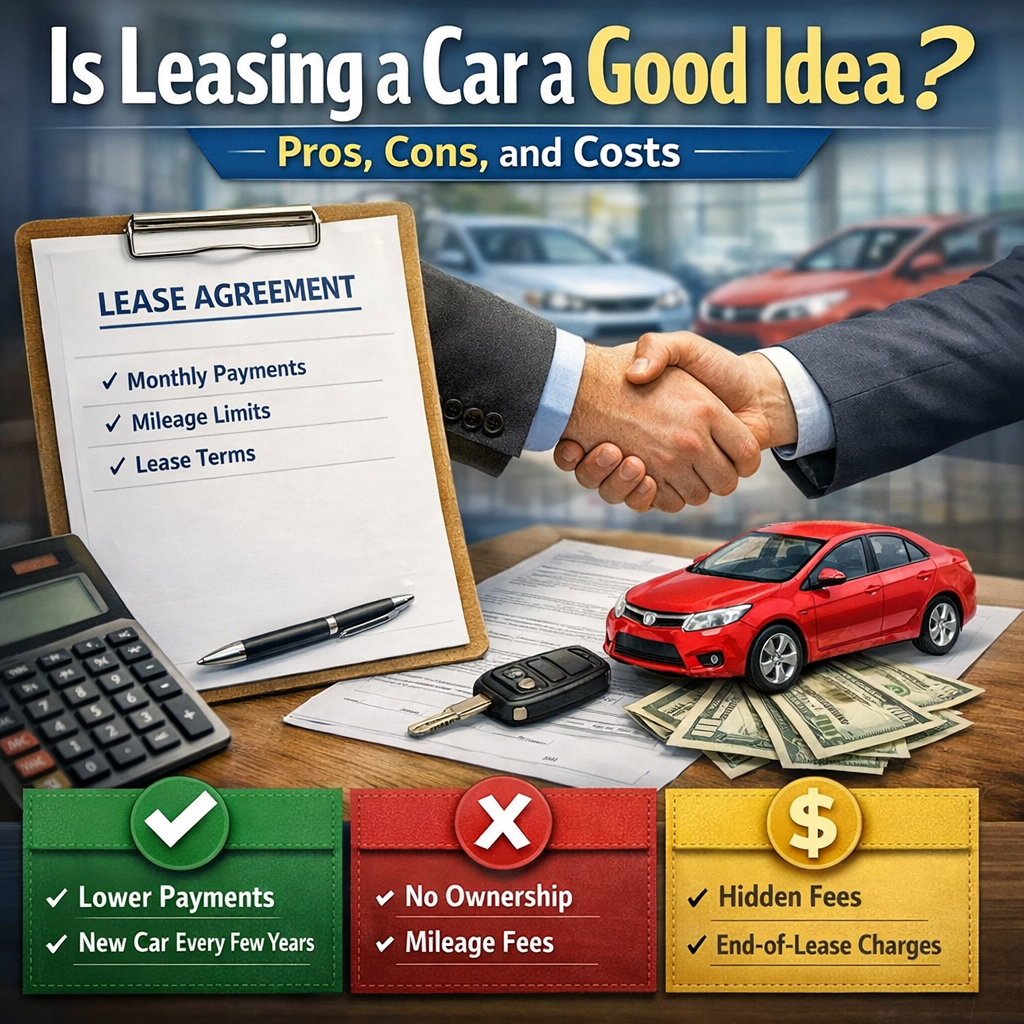
When you lease a car, you are essentially renting it for a set period, usually two to four years. Instead of paying for the full value of the vehicle, you pay for the portion of the car’s value that you use during the lease term, plus interest, taxes, and fees. That structure is what makes car leasing feel different from financing a purchase, where each payment moves you closer to full ownership.
At the end of the lease, you typically return the car to the dealership unless you choose to buy it. This arrangement makes car leasing different from buying a car with a loan, where every payment builds ownership equity over time. The choice between leasing and buying is not just about monthly cost; it is about how long you want to keep the vehicle and how much flexibility you need.
How Leasing Works
A typical lease agreement includes:
- A fixed term, often 24, 36, or 48 months
- A mileage limit, such as 10,000 to 15,000 miles per year
- Wear-and-tear expectations
- Monthly payments that are usually lower than loan payments for the same vehicle
- An option to purchase the vehicle at the end of the lease
Because you are not paying for the car’s entire value, car leasing can make more expensive vehicles seem more accessible. That is one reason it is popular with drivers who enjoy driving newer models. It can also be useful for shoppers who like to change vehicles often and want to avoid the work of selling a car privately.
Before comparing offers, it helps to understand the vehicle itself and the technology that may affect pricing. For example, this overview of a car thermal imager guide shows how advanced safety features can influence buyer interest and long-term value.
More EV News

The Advantages of Leasing
Leasing has several clear benefits that can make it attractive in the right circumstances. For some drivers, car leasing is less about owning an asset and more about managing predictable transportation costs with fewer surprises.
Lower Monthly Payments
One of the biggest reasons people choose car leasing is affordability. Monthly lease payments are often lower than loan payments for a comparable car because you are only covering depreciation during the lease term, not the full purchase price.
This can free up money in your budget for other priorities, such as savings, insurance, or household expenses. If your goal is to drive a newer car while keeping payments manageable, car leasing can be easier to fit into a monthly budget than buying a similarly priced vehicle.
Driving a Newer Car More Often
Leasing makes it easier to switch vehicles every few years. If you like having the latest safety technology, improved fuel efficiency, or updated styling, car leasing allows you to drive newer models more frequently without the hassle of selling an old car.
That convenience matters to drivers who value modern features and lower maintenance worries. It can also help if you want your car to stay under warranty for most of the time you own it, since many lease terms end before major age-related repairs become more likely.
Reduced Repair Concerns
Most lease terms line up with the manufacturer’s warranty, which can reduce the likelihood of major repair bills. For drivers who value predictability, this can be a major advantage.
Routine maintenance is still your responsibility, but you may not have to worry as much about older-car problems like transmission issues, worn-out components, or expensive engine repairs. If you dislike the uncertainty of owning a vehicle outside warranty coverage, car leasing may feel less stressful than a long-term purchase.
Easier Planning for Some Drivers
Because lease terms are fixed, it can be easier to plan around predictable vehicle costs. Many drivers appreciate knowing exactly how long they will keep a car and what to expect at the end of the term. That structure can make financial planning simpler, especially if you prefer not to think about resale value or trade-in timing.
For a broader look at how car expenses affect your overall budget, see Car Budget: How Much Can You Afford on a $100K Salary?.
Potential Tax Advantages for Some Uses
In some business situations, lease payments may be treated differently than purchase payments, which can make car leasing attractive for self-employed drivers or companies. The details depend on how the vehicle is used and on applicable tax rules, so it is worth checking with a qualified tax professional before making assumptions. For personal use, though, the main benefit is usually convenience rather than tax treatment.
The Downsides of Leasing
Even though car leasing can look attractive, it comes with important drawbacks that should not be ignored. The low payment can be tempting, but the overall contract may be less forgiving than a traditional car loan.
You Do Not Build Ownership
Unlike buying a car, leasing does not give you equity in the vehicle. Once the lease ends, you return the car or buy it at a predetermined price. If you keep leasing over and over, you may always have a payment without ever owning a car outright.
That is a major difference for drivers who want long-term value. With a purchase, there is a point when the loan ends and the monthly payment disappears. With car leasing, you are paying for the right to use the vehicle, not for the asset itself.
Mileage Limits Can Be Restrictive
Lease agreements usually include mileage restrictions, and exceeding them can be costly. If you have a long commute, travel frequently, or enjoy road trips, the mileage cap may be a serious limitation.
Extra miles can result in penalty fees at the end of the lease, which can quickly add up. This is why car leasing tends to fit people with short daily drives better than drivers who spend a lot of time on the road. If your mileage varies from year to year, it is safer to estimate high rather than low.
Wear-and-Tear Charges
Lease contracts often require you to return the vehicle in good condition. Minor scratches, dents, tire wear, or interior damage could lead to additional charges. That means you need to take good care of the car throughout the lease term.
For families with young children, pets, or frequent passengers, this can be a practical concern. Even normal use may trigger fees if the leasing company considers the damage excessive. Before signing, read the wear-and-tear section carefully so there are no surprises later.
Costs Can Add Up Over Time
While leasing may seem cheaper month to month, it can be more expensive in the long run if you continuously lease one car after another. Over many years, the total amount spent on lease payments may exceed the cost of buying and keeping a vehicle for a long time.
That is why it helps to look past the first payment and compare the full cycle. If you are likely to lease again when the contract ends, the long-term cost of car leasing deserves close attention.
Early Exit Can Be Expensive
Life changes can make a lease harder to manage than expected. If you move, lose your job, need a larger vehicle, or simply want to stop driving the car early, ending a lease before the term expires can be expensive. Early termination fees, remaining payments, and transfer costs can all make the process much pricier than many first-time lessees expect.
Is Car Leasing Better Than Buying?
The answer depends on how you use your vehicle and what you value most. There is no single rule that makes car leasing better in every case, because the right choice depends on mileage, budget, and how long you plan to keep the car.
Leasing May Be a Better Option If You:
- Prefer lower monthly payments
- Want to drive a new car every few years
- Do not drive a lot of miles each year
- Like having warranty coverage for much of the lease
- Do not plan to keep a car for a long time
Buying May Be a Better Option If You:
- Drive a lot each year
- Want to build ownership and long-term value
- Prefer fewer restrictions
- Plan to keep the car for many years
- Want to avoid ongoing monthly payments eventually
For drivers who keep cars for a long time, buying often provides better value. Once the loan is paid off, you can continue driving the car without monthly payments, which can make a major difference in long-term budgeting. In contrast, car leasing can keep transportation costs predictable, but the payments never lead to ownership unless you choose to buy the vehicle at the end.
If you are comparing ownership choices, the Federal Trade Commission’s car-buying guidance is a useful place to review key consumer protections and cost considerations.
Financial Factors to Consider Before Leasing
Before signing a lease, it helps to look beyond the monthly payment and consider the full picture. A lease quote can look affordable on the surface while still carrying meaningful costs over the life of the contract.
Upfront Costs
Leasing may require a down payment, first month’s payment, acquisition fees, taxes, registration, and other upfront charges. A low monthly payment does not always mean the lease is inexpensive overall.
If you want a fair comparison, ask for the drive-off amount and include it in the total cost of car leasing. Many drivers focus on payment size and overlook the amount due at signing, which can make the lease feel cheaper than it really is.
Insurance Costs
Leased cars often require higher insurance coverage than older vehicles, especially if the lease contract specifies comprehensive and collision coverage. That can increase your monthly transportation costs.
Depending on the car, your age, your driving history, and your location, insurance may narrow the gap between leasing and buying. It is smart to get insurance quotes before you sign anything so the monthly budget reflects the real cost of ownership or use.
End-of-Lease Fees
At the end of the lease, you may face charges for excess mileage, extra wear, missing accessories, or early termination if you need to end the agreement early. These costs can be surprising if you are not prepared for them.
To avoid surprises, review the lease return standards and the fees that apply when you turn the vehicle in. Car leasing is easiest to manage when you know exactly what the dealership will inspect and how strict the return rules are.
Long-Term Value
It is important to compare the total cost of car leasing versus buying over several years. A lease may fit your short-term budget, but buying may save more money over time if you can keep the car for many years.
Think about the entire ownership cycle: how much you pay upfront, what the monthly payments total, how much insurance costs, and what happens at the end. The smartest decision usually comes from comparing the whole package rather than isolating one attractive number.
In some cases, buyers also compare the vehicle itself before committing. If that is part of your research, the Car Night Vision Camera Price: What You’ll Pay in 2026 guide can help you understand added technology costs.
Depreciation and Residual Value
One reason car leasing can be competitive is that the payment is based partly on the vehicle’s predicted residual value at the end of the term. If the car holds its value well, the lease may be more favorable than a model with weaker resale performance. Drivers who like specific brands or trims should pay attention to residual value, because it can change the monthly payment and the buyout price later on.
Situations Where Leasing Makes Sense
Car Leasing can be a smart choice in some specific situations. The key is matching the lease structure to your actual driving habits and financial goals.
You Need Predictable Short-Term Transportation
If you only need a car for a few years and want reliable transportation with minimal long-term commitment, leasing can be practical.
This works well for people in temporary jobs, students, or anyone who expects a change in location or lifestyle soon. Instead of worrying about long-term resale value, you can focus on driving the vehicle during the term and then returning it when your needs change.
You Use a Vehicle for Business or Image Purposes
Some professionals lease cars to maintain a polished image or to access newer vehicles for client-facing roles. In certain cases, business tax considerations may also make leasing appealing.
For people who view a vehicle as part of their professional presentation, car leasing can provide a steady stream of newer models without a large commitment to one car. This can be useful if style, image, or uptime matter more than long-term ownership.
You Like Changing Vehicles Regularly
If you enjoy driving different models and staying current with automotive technology, leasing can provide variety without the complications of private resale.
Some drivers simply prefer the routine of upgrading every few years. In that case, car leasing offers a structured path to keep moving into newer vehicles while reducing the hassle of selling or trading them in.
You Want Warranty Coverage for Most of the Time
Car Leasing can be especially attractive if you do not want to own an older vehicle outside warranty coverage. Because many leases last only as long as the manufacturer’s warranty, the chance of major repair surprises is often lower than with a car you plan to keep for a decade. That peace of mind can be worth a lot if repair uncertainty is one of your biggest worries.
Situations Where Leasing Is Usually a Poor Fit
Car Leasing is not ideal for everyone. For some drivers, the restrictions and long-term cost make it less suitable than buying.
High-Mileage Drivers
If you drive long distances every week, lease mileage restrictions can become expensive and inconvenient.
Commuters, sales professionals, and road-trip enthusiasts often discover that they would need a higher mileage allowance than standard leases offer. Once you begin paying penalties for excess miles, the value of car leasing can drop quickly.
Budget-Conscious Buyers Seeking Long-Term Savings
If your main goal is to minimize transportation costs over many years, buying a reliable car and keeping it for a long time is often the better financial move.
That is especially true if you are disciplined about maintenance and choose a vehicle known for durability. When the loan ends, ownership can provide years of driving without a monthly payment, which is hard for a lease to match.
People Who Want Flexibility
If you want the freedom to modify your vehicle, drive as much as you want, or trade it in whenever you choose, ownership usually offers more flexibility than a lease.
Car Leasing comes with contract rules, and those rules can feel limiting if your life is unpredictable. For drivers who value independence and control, buying may be a better fit.
Households Prone to Change
If your household may grow, your commute may change, or your job may require you to move quickly, a lease can become a poor match. The fixed term helps with planning, but it can also become a liability if your needs shift before the contract ends. A car loan may give you more room to adapt because you can keep the vehicle, sell it, or trade it in with fewer lease-specific penalties.
Questions to Ask Before You Sign a Lease
If car leasing still seems appealing, ask a few practical questions before you commit. What is the money due at signing, and how does it compare with the monthly payment? How many miles do you realistically drive in a typical year? What happens if your commute changes, your family grows, or you need to end the lease early?
It also helps to ask whether the residual value seems fair, whether there are disposition fees, and what charges may apply at turn-in. These details can change the real cost of car leasing more than the advertised monthly payment suggests.
If you are unsure, request a full lease worksheet and compare it with a loan quote for the same vehicle. That side-by-side comparison often makes the decision much clearer. You can also ask the dealer to explain how fees are calculated so you know exactly what you are paying for.
How to Compare Leasing and Buying the Right Way
A fair comparison should look beyond the sticker price and monthly payment. First, estimate the total cost of car leasing over the full term, including taxes, fees, insurance, maintenance, and possible end-of-lease charges. Then compare that figure with the cost of buying, including interest, depreciation, maintenance, and resale value later on.
For example, a lease may look attractive if you only focus on the payment, but buying could be better if you plan to keep the car after the loan is paid off. On the other hand, car leasing may fit better if you regularly want a newer vehicle and do not want to deal with selling or trading one in every few years.
It is also wise to think about opportunity cost. Money saved on a lower lease payment can be redirected to other goals, but a purchase may eventually create more value because you own an asset. The best answer depends on how long you will keep the car and how much you drive.
Another useful comparison is the break-even point. If the lease payment plus fees and insurance is nearly the same as the loan payment, buying may offer stronger value because ownership builds equity. If the lease is substantially cheaper and fits your mileage, then car leasing may be the better short-term move.
Common Mistakes People Make With Car Leasing
One common mistake is choosing a lease based only on the monthly payment. A low payment can hide high upfront costs or expensive end-of-lease charges. Another mistake is underestimating annual mileage, which can lead to costly penalties.
Some drivers also forget to review wear-and-tear rules carefully. Small damage that seems normal to an owner can trigger charges at lease return. And because car leasing does not build equity, renewing lease after lease can keep someone in a cycle of payments for years without ownership.
Reading the contract carefully and asking direct questions before signing can help you avoid those problems. It is also worth taking photos of the car’s condition at pickup and keeping service records, because good documentation can help if there is a disagreement when the vehicle is returned.
Another mistake is assuming the buyout price will always be a bargain. Sometimes the purchase option at the end of the lease is higher than the car’s market value, so it helps to compare that number with similar used vehicles before deciding whether to keep it. The more research you do up front, the less likely you are to regret the deal later.
Final Thoughts
Car Leasing can be a good idea if you value lower monthly payments, want to drive a newer vehicle more often, and do not put a lot of miles on your car. It can also make sense if you prefer predictable short-term costs and do not mind returning the vehicle at the end of the term.
However, car leasing is not the best choice for everyone. Drivers who travel frequently, want to build long-term value, or plan to keep a car for many years will often benefit more from buying. The smartest decision is the one that fits your driving habits, financial goals, and lifestyle.
Before choosing, compare the total cost of car leasing and buying, read the contract carefully, and think honestly about how you use your vehicle. A well-informed choice can save money and help you avoid regrets later. If your needs are temporary and predictable, car leasing may be a practical solution; if you want long-term ownership and flexibility, buying is often the better path.
In the end, the right answer is not about which option sounds better in theory. It is about choosing the arrangement that matches your mileage, your budget, and the length of time you plan to keep the car.